
Last updated: August 19, 2026
Any links on this page that lead to products on Amazon are affiliate links and I earn a commission if you make a purchase. Thanks in advance – I really appreciate it!
The best bumper pull horse trailer isn’t necessarily the most expensive one. After decades hauling race and barrel horses, from South Louisiana humidity to West Texas heat, I’ve learned that construction quality, ventilation, flooring, and matching the trailer to your horses matter far more than a brand name or price tag. I’ve also learned that a trailer is only as dependable as its weakest component, whether that’s a rotted floor, a neglected brake, a worn tire, or a hitch setup that doesn’t match the load.
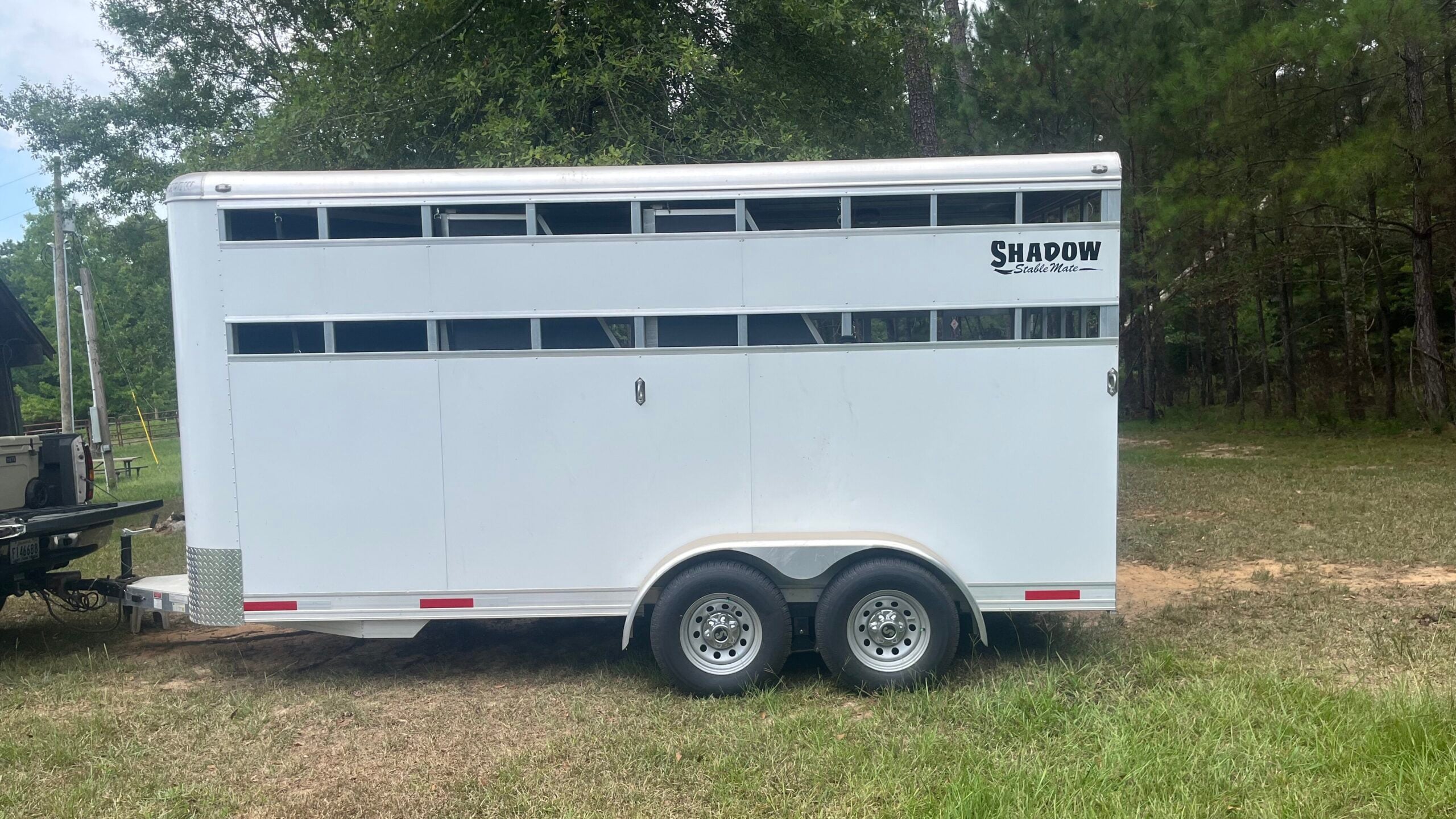
A good bumper pull horse trailer is safely built, properly maintained, well ventilated, and correctly sized for both the horses and the tow vehicle. For most owners hauling one or two horses, a bumper pull is a practical, easier-to-manage option, provided the trailer, hitch, and truck are all rated for the fully loaded weight. Construction material, ventilation, flooring, and safety hardware matter more than any single brand name.
Here’s what I actually look at when I’m evaluating a bumper pull trailer, not a dated list of specific models and prices that will be outdated in a year, but the construction, safety, loading layout, and towing details that still matter after the paint fades and the trailer has real miles under it. Whether you’re hauling to the track, a show, or just down the road to the vet, the goal is the same: a horse that arrives calm, sound, and ready to work, with legs and wind protected the whole way.
Table of Contents
Bumper Pull Horse Trailers I Would Consider
This isn’t a ranking, and I’m not going to pretend one trailer is objectively “best.” But if you’re narrowing down brands, these are the ones I’d put on a short list based on reputation and what I’ve seen hold up over years of real use.
| Brand | Why I’d Consider It | Best For |
|---|---|---|
| Featherlite | Proven all-aluminum construction and strong resale value | Owners prioritizing lightweight durability |
| Sundowner | Long-standing reputation among working horse owners | Frequent, regular haulers |
| 4-Star | Premium build quality and materials | Owners prioritizing longevity over upfront cost |
| Double D | Safety-focused custom builds, including SafeTack layouts | Owners wanting a specific loading configuration |
Notice I didn’t call one of these the winner. A well-maintained trailer that fits your horses and your hauling needs is a better investment than a premium trailer that doesn’t match your situation. Use a list like this as a starting point for research, not a substitute for inspecting the actual trailer in front of you.

Is a Bumper Pull Horse Trailer Right for You?
A bumper pull makes the most sense for many owners hauling one or two horses who want a lighter trailer, simpler storage, and a rig that does not require a bed-mounted gooseneck hitch. It can be an excellent setup for trips to the track, vet, trailhead, lesson barn, or local show—but only when the truck, hitch, trailer, and fully loaded weight are properly matched.
I would lean toward a bumper pull when I wanted a straightforward two-horse setup and did not need the extra capacity, storage, or living space that often comes with a gooseneck. I would look harder at a gooseneck when hauling several horses, carrying substantial gear, making frequent long trips, or needing a larger trailer. The decision is less about which hitch is “better” and more about the horses, trailer weight, truck, and kind of hauling you actually do.
Bumper Pull vs. Gooseneck
The honest answer is that neither one is universally “better.” A gooseneck distributes weight more evenly over the truck’s rear axle, which generally gives a more stable ride, especially with heavier loads or more than two horses. A bumper pull is lighter, easier to store, and works with a broader range of tow vehicles, including some SUVs that are properly rated and equipped for the fully loaded trailer. If you’re regularly hauling three or more horses or a loaded living-quarters trailer, a gooseneck is usually the safer call.
For one or two horses and reasonably short-to-medium hauls, a well-built bumper pull does the job without needing a dedicated tow rig. I cover the weight side of that comparison in more detail in my gooseneck trailer weight guide.
Construction Material: What Actually Holds Up
| Construction | Practical advantages | Watch-outs |
|---|---|---|
| All-aluminum | Typically lighter; resists the rust problems that affect steel; may reduce tow-vehicle demand | Usually costs more; check floor design, fasteners, welds, and corrosion around mixed-metal components |
| Steel-frame / steel-skin | Often lower purchase price; commonly repairable | Heavier; requires active rust prevention, particularly around floors, seams, undercarriage, and lower walls |
| Aluminum skin over a steel frame | Can reduce exterior corrosion while retaining a steel structural frame, provided the two metals are properly isolated | The hidden steel frame can still corrode; inspect the undercarriage and drainage carefully; weight and price vary widely by builder |
I lean toward aluminum because I haul in Louisiana humidity, where moisture and road grime can expose neglected steel quickly. But I wouldn’t buy a trailer on material alone. I still look underneath at the frame, floor supports, welds, fasteners, drainage points, and any places where dissimilar metals meet. A well-kept steel trailer can outlast a neglected aluminum one; the material matters less than how the trailer’s actually been built and cared for.
What Makes a Horse Trailer Durable?
A durable horse trailer isn’t simply aluminum or steel. It has a sound frame, a protected and properly maintained floor, secure welds and fasteners, dependable brakes and suspension, good drainage, and hardware that still works after years of opening, closing, washing, and road vibration.
When I inspect a used trailer, I start underneath. I look for rust, cracked welds, soft flooring, damaged floor supports, loose wiring, worn tires, leaking seams, and any sign that mats have been left wet against the floor. I’d rather buy a plain trailer that’s been cared for than a prettier one that’s been neglected.
Straight Load or Slant Load?
Straight load trailers stand horses side by side facing forward, and they’re typically the more compact, less expensive option for a two-horse bumper pull. Slant load trailers angle horses diagonally, which some horses find more comfortable for balance and which usually frees up more room for a tack or dressing area. Neither layout is objectively safer; it comes down to your horses’ preferences and how you plan to use the trailer. I go through the tradeoffs in detail in my straight load vs. slant load comparison.

Ventilation and Flooring
Ventilation is where I’ve seen one of the clearest practical differences in how horses handle a haul, especially in South Louisiana heat and humidity. A hot, closed-up trailer is uncomfortable before the horse ever reaches the show, trailhead, or track. Look for multiple windows and roof vents that create genuine airflow, and use them appropriately for the weather; University of Georgia Extension specifically recommends opening vents and windows in hot conditions and notes that roof vents can increase airflow.1
Flooring matters just as much and gets far less attention. A trailer floor is one of those things a lot of buyers ignore because they can’t see it. I’ve watched people get excited about paint, wheels, and cosmetic upgrades while the part actually carrying the horse deserved the closest inspection. Non-slip flooring with good traction protects a horse’s legs and footing during braking, turns, and rough road sections. Rubber mats over a solid floor are standard; whatever the surface, inspect it regularly for soft spots, rot, or rust coming through from underneath, since a floor failure mid-haul is a genuinely serious hazard.
Miles’s take: I’ve learned that horses don’t care how much a trailer costs. They care whether they can balance, breathe, and ride comfortably. Keep that in mind before you get talked into upgrades that don’t actually touch any of those three things.
Safety Features That Matter
- Padded dividers and walls: Reduce injury risk if a horse shifts or loses balance during transport.
- Secure, easy-to-operate latches: Test every latch, door, divider, and escape-door mechanism yourself. A latch that’s hard to use correctly is more likely to get used incorrectly.
- Working brakes and breakaway system: Test the trailer brakes and inspect the breakaway cable, pin, and battery before each trip, not just at purchase.
- A practical unloading plan: A front escape door or additional exit can be useful, particularly when a horse refuses to back out or a handler needs another route around the horse. But it’s not a substitute for teaching horses to load and unload quietly, maintaining the trailer, and having a safe plan for the layout you own.
- Lights, tires, bearings, and wiring: Inspect these on a regular maintenance schedule, not only when a problem appears.
Beyond the list above, a full routine inspection means checking the frame for cracks, the hinges and springs for wear, and the wiring for fraying, on a regular schedule, not just when something feels off.1
Sizing and Towing Capacity
Measure the horse’s total height and compare it with the trailer’s true interior height, allowing enough clearance for normal head movement. Tall horses often need a taller trailer, but the right height depends on the individual horse’s build and head carriage, not just his hands, and on the trailer’s interior design. Standard trailer height runs around 7 feet, with 7’6″ common for larger breeds, but take a tape measure rather than assuming. A horse that fits on paper can still hate a trailer that feels cramped. Stall width should let a horse stand naturally without feeling wedged in.
On the towing side, your truck’s actual towing capacity depends on the whole hitch assembly, receiver, insert, ball, and truck, not just the number printed in a brochure. The entire assembly is only as strong as its weakest component, so a truck rated to tow more than its hitch can handle doesn’t actually change what’s safe to pull.2
Before buying, compare the trailer’s empty weight, its GVWR, the combined weight of horses, feed, tack, water, mats, and gear, and the truck’s payload and towing ratings. With a bumper pull, tongue weight also counts against the truck’s payload. The receiver, ball mount or insert, hitch ball, and trailer coupler must all be rated for the load; you can’t safely use the truck’s published tow rating if any part of the hitch system is rated lower. I cover specific weight ranges for two-horse bumper pulls, including how dressing rooms and construction material change the numbers, in my two-horse bumper pull weight guide.
What I’d Look For Before Buying
Walk the whole trailer, not just the outside. Check the floor from underneath if you can, not just the mats on top. Rot and rust hide well.
Open and close every latch and door yourself. Don’t take a seller’s word that everything works. A sticky latch today is a safety problem down the road.
Match the trailer to your actual horses, not your ideal ones. If you’re between sizes, buy for the bigger horse you might own next, not just the one you have today.
Confirm your tow vehicle’s real capacity before you fall in love with a trailer. A great trailer that overloads your truck isn’t a great trailer for you. Know your numbers before you shop, not after.
For actual price ranges by trailer type and configuration, I keep a separate, regularly updated horse trailer cost guide rather than listing specific numbers here that would be stale within a year.
Miles’s take: After decades of hauling racehorses across four states, the trailers that held up weren’t necessarily the most expensive ones. They were the ones I inspected honestly before I bought them and kept up with afterward. A mid-priced trailer that’s well-maintained beats a top-shelf trailer nobody’s checked the latches on in a year.
Key Takeaways: Bumper Pull Horse Trailers
- Construction material is a real tradeoff, not a simple upgrade — aluminum resists rust and stays lighter; steel adds strength and costs less upfront; aluminum-over-steel balances both at a higher price.
- Ventilation and flooring matter more than most buyers realize — poor airflow is linked to respiratory stress, and floor failures are a serious, often overlooked hazard.
- Safety features only work if they’re maintained — padded dividers, secure latches, and working brakes need regular inspection, not just a one-time check at purchase.
- Your tow vehicle’s real capacity depends on the whole hitch assembly — not just the number printed on your truck’s spec sheet.
- Match the trailer to your actual horses and climate — not a brand name or a “best of” list that will be outdated within a year.
Bumper Pull Horse Trailer FAQs
What are the benefits of aluminum vs. steel bumper pull trailers?
Aluminum trailers are typically lighter and resist the rust problems that affect steel, which matters most in humid climates. Steel trailers are generally heavier and often cost less upfront; their durability depends on structural design, corrosion protection, and maintenance rather than the material alone.
Can I tow a bumper pull horse trailer with my SUV?
Often, yes, depending on your SUV’s actual towing capacity and the trailer’s fully loaded weight, including passengers, feed, tack, water, and tongue weight. Check your vehicle’s owner’s manual for its towing rating, and remember that the weakest component in the entire hitch assembly, not just the truck, determines what’s actually safe to tow.
What safety features matter most in a bumper pull trailer?
Sound flooring, dependable brakes and breakaway equipment, secure latches and dividers, good lighting, proper ventilation, and a safe loading and unloading setup. Regular inspection of the frame, wiring, hinges, and floor matters as much as the features themselves.
What are the advantages of a bumper pull trailer over a gooseneck?
Bumper pulls are generally lighter, less expensive, and compatible with a wider range of tow vehicles, including some properly rated SUVs. Goosenecks distribute weight more evenly and offer more stability for heavier loads or more than two horses, but require a truck with a bed-mounted hitch.
How do I determine the right size bumper pull trailer for my horses?
Measure the horse’s total height and compare it with the trailer’s true interior height, allowing enough clearance for normal head movement. Tall horses often need a taller trailer, but the right height depends on the individual horse’s build and the trailer’s interior design, not just a general rule.
What are the best bumper pull horse trailer brands?
There’s no single best brand for every horse owner. Brands with strong reputations among owners include Featherlite, Sundowner, 4-Star, and Double D, depending on your budget, climate, and hauling needs. The right choice comes down to the individual trailer’s condition and fit for your horses, not the name on the side.
Sources:
1. “Horse Trailer Safety,” Elevated Equine, University of Georgia.
2. “Keep the Trailer Connected to the Truck,” Purdue Extension.
If you’re still deciding between a bumper pull and a gooseneck, or working out what size trailer your truck can actually handle safely, sort those decisions out before you start shopping brands; my gooseneck weight guide and bumper pull towing guide can help you get there.
A trailer’s job is simple: get the horse there sound, calm, and ready to go to work. Brand names, options, and prices change, but the basics don’t: a trailer that fits the horse, a floor and frame you’ve inspected, airflow suited to the conditions, working brakes and lights, and a truck-and-hitch setup rated for the loaded weight. Get those right, and the rest comes down to the layout and features that fit the way you actually haul.
About Miles Henry
Racehorse Owner & Author | 30+ Years in Thoroughbred Racing
Miles Henry (legal name: William Bradley) is a professional horseman based in Folsom, Louisiana. He holds Louisiana Racing License #67012 and has spent over three decades managing Thoroughbreds at premier tracks including Fair Grounds, Delta Downs, and Evangeline Downs.
Expertise & Hands-On Experience: Beyond the track, Miles has decades of experience in specialized equine care, covering everything from hoof health and nutrition to training protocols for Quarter Horses, Friesians, and Paints. Every guide on Horse Racing Sense is rooted in this “boots-on-the-ground” perspective.
30 of their last 90 starts
Equibase Profile.

Connect with Miles:
Delores Chow
Wednesday 15th of November 2023
Why Not Hawk trailers? I see they did not make your list.
Bil
Wednesday 15th of November 2023
Thanks, I haven't used one, I'll do some research on them.