
Last updated: September 2, 2026
Any links on this page that lead to products on Amazon are affiliate links and I earn a commission if you make a purchase. Thanks in advance – I really appreciate it!
Are cowboy boots actually good for plantar fasciitis, or are you about to trade one kind of foot pain for another?
They can work for some people, but the boot matters more than the brand. Look for a stable, moderate heel, a supportive and cushioned footbed, and enough room in the toe box – and space for an orthotic if you wear one. A flat, hard, or worn-out boot can leave your heel and arch worse off by the end of the day.
I’ve spent years buying, wearing, and comparing Western boots for barn work, travel, and long days on my feet – and one thing has stayed consistent: a boot can look right and still be miserable if the arch, heel pocket, and insole don’t match your foot. Below I’ll cover what actually matters in a boot for plantar fasciitis, then get into specific men’s and women’s picks that check those boxes.
Table of Contents
What to Look for in Cowboy Boots for Plantar Fasciitis
Plantar fasciitis is a common cause of heel pain, from tension on the band of tissue that supports your arch. It’s usually sharpest during the first steps after waking up or after sitting for a while. Footwear won’t cure it, but the American Academy of Orthopaedic Surgeons notes that supportive shoes with thicker soles and extra cushioning can reduce pain with standing and walking – which is exactly where a boot’s construction starts to matter.
- Arch Support: One of the first things I check. A supportive footbed can spread pressure more comfortably across the foot instead of leaving all the work to the heel and arch.
- Heel Height: A stable, moderate heel may feel more comfortable than a flat sole for some wearers, but higher isn’t automatically better – a wide, well-built heel beats an extreme one.
- Cushioned Insole: A boot with a real cushioned footbed, or room for a custom orthotic, adds cushioning under the heel and arch, which may make standing and walking more comfortable.
- Shock-Absorbing Midsole: Matters most if you’re on your feet most of the day, since it can make repeated time on hard ground feel less punishing underfoot.
- Roomy Toe Box: Gives the toes room to move and may be more comfortable if you have forefoot crowding, bunions, or swelling.
- Quality Construction: A well-built boot holds its supportive shape longer than a cheaply made one; a compressed or worn footbed may no longer provide the cushioning and shape it had when new.
How I Judged These Boots: I didn’t rank these by stitching or brand reputation alone. I looked at the footbed and insole design, cushioning, heel stability, toe room, and whether the boot leaves space for an orthotic. Specifications change between model years, so confirm the current details on the manufacturer’s page before you buy.
Are Ariat Boots Good for Plantar Fasciitis?
Some Ariat models use ATS (Advanced Torque Stability), a comfort system Ariat describes as combining a gel-cushioned footbed, heel stabilizer, and supportive shank. Those are features worth looking for if heel and arch comfort are priorities, but the fit and the exact model still matter. Check the specific model’s footbed before you buy, not just the logo on the box.
Best Cowboy Boots for Men with Plantar Fasciitis
Quick comparison: These are the five men’s boots I would compare first based on their currently listed footbed, cushioning, and fit-related features.
| Boot | Best For | Comfort Feature to Check | Why It Made the List |
|---|---|---|---|
| Tecovas Cartwright | Someone who wants a traditional round-toe Western boot for everyday wear. | Tri-layer insole and 1.5-inch stacked heel. | A classic-looking boot with a stated cushioned insole design, a moderate stacked heel, and Goodyear welt construction that allows resoling when appropriate. |
| Chisos No. 2 | Someone who wants a traditional-looking boot with a removable comfort insole. | Leather-topped, triple-density removable comfort insole. | The removable, layered insole is a central part of the boot’s design, making this one worth considering for buyers who need to evaluate cushioning, arch position, or room for an insert. |
| Ariat Men’s Rambler Western Boot | Casual, everyday Western wear for someone who prefers a more flexible, comfort-oriented boot. | Confirm that the exact style lists Ariat ATS or another current cushioning-and-stability system. | Ariat’s comfort-focused Western boot technology can be a sensible place to start when heel and arch comfort matter, but check the specifications for the exact Rambler version before ordering. |
| Dan Post Milwaukee | Someone looking for a classic round-toe boot with a comfort-oriented insole system. | Ultimate Flex Insole and the current listed footbed construction. | The Milwaukee combines traditional Western styling with Dan Post’s named comfort-insole system, making it a practical option to compare if you want cushioning without moving to a casual pull-on boot. |
| Justin Original Work Men’s Stampede | A budget-conscious buyer who needs a work-and-everyday Western boot. | J-Flex Comfort System and the exact current insole specification. | A more price-conscious option with a named comfort-system footbed. Confirm the current model details and make sure the arch position and toe room work for your foot before relying on it for long days. |
I selected these boots by comparing their current listed footbed, insole, cushioning, heel, and fit-related features – not by brand name or stitching alone. I have not personally wear-tested every pair listed here, and manufacturers can change materials or specifications, so confirm the current product details before ordering.
1. Tecovas Cartwright

Why? The Cartwright is Tecovas’ classic round-toe boot with a tri-layer insole, a 1.5-inch stacked heel, and Goodyear welt construction. The layered insole adds cushioning underfoot while the moderate heel keeps the boot close to a traditional Western profile. Like most leather pull-on boots, the upper may still need time to conform to your foot, so do not expect break-in alone to solve pressure or fit problems.
2. Chisos No. 2

Why? The Chisos No. 2 stands out because its removable triple-density insole is a central part of the design, not an afterthought. Chisos says the leather-topped insole uses layered polymers for support and rebound, with impact-dissipating gel beneath the heel and ball of the foot. For someone who wants a traditional-looking boot but values a removable comfort insole, it is one of the more interesting options to try.
3. Ariat Men’s Rambler Western Boot
Why? The Ariat Rambler is worth considering if the exact version you are buying lists ATS technology. Ariat describes ATS as a cushioning-and-stability system with a gel-cushioned footbed and heel stabilizer. For a person who needs a more forgiving everyday Western boot, that is more relevant than decorative features or brand name alone.
4. Dan Post Milwaukee
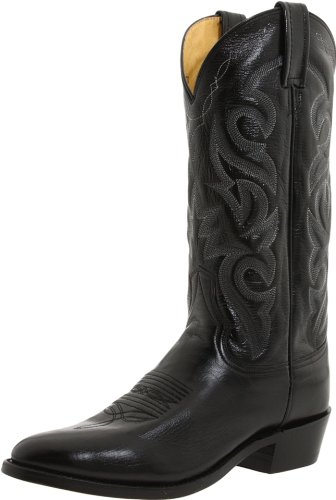
Why? The Milwaukee uses Dan Post’s Ultimate Flex Insole, a layered footbed with moisture-wicking, shock-absorbing, and stability layers. Its cushioning and stability features are worth considering if heel and arch comfort are a priority, and the classic styling holds up for both barn work and everyday wear.
5. Justin Boots Men’s Stampede

Why? The Stampede uses Justin’s J-Flex Comfort System, which Justin describes as a covered cushioned insole over a triple-density insole board. That construction makes it worth comparing if you are shopping on a budget but still want a named comfort-system footbed. As with any pull-on boot, confirm that the arch placement, heel hold, and toe room work for your foot before planning to wear it all day.
Each of these offers a different balance of traditional style and comfort technology. Whichever you pick, the insole and arch support are doing the real work for plantar fasciitis – the styling is a matter of preference.
Best Cowboy Boots for Women with Plantar Fasciitis
Women with plantar fasciitis need the same things men do – arch support, a moderate heel, real cushioning – without giving up style. Here’s what actually matters in each pick, not just the look of it.
1. Ariat Women’s Heritage Western R Toe Boot

- Best for: Someone who wants a traditional-looking western boot with Ariat’s ATS footbed instead of a plain leather insole.
- Support: ATS technology, including a gel-cushioned footbed with a heel stabilizer, plus a Duratread outsole and a medium heel.
- Watch for: A short break-in period like most leather boots.
- Bottom line: A traditional Western option worth trying if the ATS footbed sits under your arch comfortably and the R toe leaves enough room for your forefoot.
2. Justin Boots Women’s Gypsy Collection

- Best for: Someone who wants a lower, more casual heel with a removable insert they can swap for their own orthotic.
- Support: J-Flex Comfort System insole, a removable orthotic-friendly insert, and a rubber outsole for traction.
- Watch for: The lower heel sits well below a traditional cowboy heel, which some wearers prefer and others don’t.
3. Laredo Women’s Access Western Boot
- Best for: Someone who wants a tall, distinctive shaft along with a cushioned footbed.
- Support: Cushioned insole and solid leather construction.
- Watch for: The taller shaft won’t suit every calf size, and color choices are limited.
4. Durango Lady Rebel Western Boot
- Best for: All-day wear where lightweight flexibility matters more than traditional stiffness.
- Support: A contoured, ventilated, removable cushion footbed and a slip-resistant outsole.
- Watch for: Fit runs snug for some wearers, so check sizing before you buy.
5. Ariat Fatbaby Western Boots

- Best for: A casual, lower-profile Western boot for someone who prefers a shorter, more relaxed-looking style.
- Support: Check the exact current Fatbaby version for its listed footbed technology; not every model offers the same level of cushioning or stability as Ariat’s ATS-equipped boots.
- Watch for: The fit across the instep and toe box. If you have a wide forefoot, high instep, or use an orthotic, try the boot on with your normal socks before treating it as a comfort choice.
- Bottom line: This can be a comfortable casual boot, but I would put it behind a model with a clearly identified supportive or removable footbed if plantar-fascia pain is your main concern.
Boot Basics: Finding the Right Fit
Fit matters as much as any feature list. You want a snug hold around the arch and heel, with enough room up front to wiggle your toes. If a high instep makes standard pull-on boots tough to get into, a western boot with a side zipper or laces is usually easier to get on and adjust – and lace-up or zip styles give you more flexibility generally if you also deal with bunions, corns, or other pressure-sensitive spots on the foot.
Five-Minute Boot Test Before You Buy
- Wear the socks you normally use with boots, and bring your orthotic if you wear one.
- Walk on a hard floor, not just carpet, for several minutes.
- Pay attention to whether the arch support lands under your arch; a good footbed in the wrong spot is still a poor fit.
- Check that your heel feels secure without your toes being crowded or the instep being painfully tight.
- Do not assume a boot will “break in” enough to fix pressure, numbness, or sharp pain.
Custom Solutions and Care
Custom-made boots let you tailor every part of the fit to your foot, which is worth considering if off-the-shelf boots keep coming up short on arch support. Beyond the boot itself, regular stretching, maintaining a healthy weight, and simply wearing boots with real support all help manage plantar fasciitis symptoms over time.

What Foot Specialists Recommend Looking For
For illustrated instructions and a fuller conditioning program, see the AAOS Foot and Ankle Conditioning Program. If an exercise increases pain sharply or causes new symptoms, stop and ask a qualified clinician what is appropriate for you.
- Support and cushioning: Look past the shaft leather and stitching. The footbed, the amount of underfoot cushioning, and the stability of the heel are the parts that affect comfort when you are on your feet.
- Space for an insert: If you already use a custom or over-the-counter orthotic, a removable insole – or enough interior volume to accommodate one – is more important than a brand name.
- A fit that does not create new pressure points: A boot should hold the heel securely while leaving enough room at the toes and across the instep. Do not count on break-in to solve sharp pressure or numbness.
When a Boot Isn’t Enough: Supportive boots and inserts may make standing and walking more tolerable, but they do not replace medical evaluation if heel pain is persistent, severe, or changing the way you walk. Seek medical care sooner for swelling, numbness, redness, pain after an injury, or symptoms that do not improve. AAOS explains additional nonsurgical treatment options here.
A Few Other Things That Help
Boots aren’t the only lever. A few simple habits pair well with a supportive boot:
- Calf and towel stretches: A daily calf stretch against a wall, or pulling your toes toward you with a towel looped around the ball of your foot, keeps the fascia from tightening overnight.
- Arch massage: Rolling a tennis ball or frozen water bottle under the arch can ease tension after a long day.
- Heel raises: A simple rise-and-lower on your toes, done in sets, helps build tolerance in the calf and Achilles.
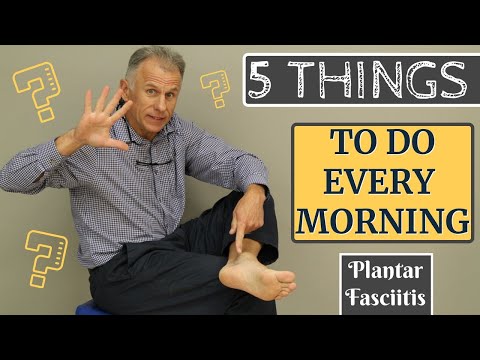
Here’s a good video with more tips on managing plantar fasciitis.
FAQs
Are cowboy boots good for plantar fasciitis?
They can be, if the boot has real arch support, a cushioned insole, and a stable, moderate heel. A flat, hard, or worn-out boot can leave your heel and arch worse off, so the specific boot matters more than the brand.
Are Ariat boots good for plantar fasciitis?
Some Ariat western boots can be a good starting point, since many models use ATS (Advanced Torque Stability) – a comfort system built around a gel-cushioned footbed and heel stabilizer. Not every Ariat boot has it, though, so check the specific model’s footbed rather than buying on brand name alone.
Do cowboy boots have arch support?
It depends on the boot. Some traditional cowboy boots have a fairly flat leather insole, while others use a shaped or cushioned footbed, a comfort-system insole, or a removable insert. Check the exact model rather than assuming that price or brand name guarantees arch support.
Can I wear orthotics in cowboy boots?
Sometimes. A removable insole makes it easier to replace the factory footbed with a custom or over-the-counter orthotic, but interior depth matters too. Bring your orthotic when you try on boots and make sure your heel still sits securely and your instep is not crowded.
When should I see a podiatrist for heel pain?
See a doctor if heel pain is severe, doesn’t improve after a few weeks of better footwear and stretching, or comes with swelling, numbness, redness, or pain after an injury. A supportive boot can help manage symptoms, but it isn’t a substitute for evaluation when pain persists or changes how you walk.
After enough days on concrete barn floors and uneven ground, you learn that a boot isn’t just something you wear – it’s something you depend on. The best boot for plantar fasciitis isn’t necessarily the most expensive or the most popular one on this list. It’s the one whose cushioning, support, and fit work for your foot and the way you actually live in it.
Try boots on later in the day when your feet have already swelled some, pay attention to how your arch actually feels in the store rather than how the boot looks, and don’t assume a higher price automatically means better support.
About Miles Henry
Racehorse Owner & Author | 30+ Years in Thoroughbred Racing
Miles Henry (legal name: William Bradley) is a professional horseman based in Folsom, Louisiana. He holds Louisiana Racing License #67012 and has spent over three decades managing Thoroughbreds at premier tracks including Fair Grounds, Delta Downs, and Evangeline Downs.
Expertise & Hands-On Experience: Beyond the track, Miles has decades of experience in specialized equine care, covering everything from hoof health and nutrition to training protocols for Quarter Horses, Friesians, and Paints. Every guide on Horse Racing Sense is rooted in this “boots-on-the-ground” perspective.
30 of their last 90 starts
Equibase Profile.

Connect with Miles: