
Last updated: September 25, 2026
If your horse is hard to catch, braces against the lead rope, or stays tense no matter how much time you’ve put into the training, you’re not alone. That kind of frustration usually isn’t because a horse is simply being stubborn. More often, it means the horse is confused, uncomfortable, worried, or not understanding what we’re asking yet.
Building trust with a horse starts with fair, predictable handling. Keep the request small enough that the horse can try, release pressure as soon as it makes an honest effort, and don’t punish fear. If a normally cooperative horse suddenly resists, look for pain, tack trouble, or a change in its routine before treating it as a training problem.
Whether I’m working with a jumpy green horse, an off-track Thoroughbred, or a horse that has learned to distrust people, the goal is always the same: make the right answer easy to find and the wrong answer hard to choose. Here’s the practical framework I use — what real trust looks like, how to rule out the wrong problem first, how to keep your handling clear, and how to help a worried horse start trying again.
Table of Contents

What Real Trust Looks Like in a Horse
A horse that stands motionless isn’t always relaxed. Sometimes it is shut down, exhausted, or afraid to move because it doesn’t know what else to do. What I’m looking for is a horse that stays mentally present, can work through a worry, and accepts ordinary handling without bracing, fleeing, or putting up a fight.
- It lets you come into its space without escalating: The horse may still be alert, but it doesn’t spin away, pin its ears, throw its head, or rush backward the moment you show up with a lead rope.
- It understands that pressure has an answer: When you ask it to step over, back up, or come forward, it tries. When it tries, you soften. The horse doesn’t have to wonder whether it will be trapped or picked on.
- It can recover after a scare: Trust doesn’t mean a horse never notices a plastic bag, barking dog, passing car, or strange trailer. It means the horse can look, breathe, and come back to the handler instead of staying stuck in panic.
- Regular chores become easier: Catching, grooming, picking feet, tacking up, loading, and standing for the farrier or veterinarian happen with less argument. That is where trust shows up in real life.
For help reading the signals in front of you, see my guide to horse body language. It covers ears, eyes, posture, tail movement, and tension. This article is about what you do once you notice the horse is worried or uncertain.
First, Make Sure You’re Not Solving the Wrong Problem
You can’t train your way through pain. If a horse is suddenly hard to catch, pins its ears while you groom, cinches up, refuses to move forward, or becomes defensive when it was normally easy to handle, I don’t start by asking for more effort. I stop and ask what changed.
- Look at the horse first: A sore foot, back pain, dental trouble, ulcers, illness, or a new injury can make a willing horse act defensive.
- Look at the tack and gear: Check the halter, bit, bridle, saddle, girth, pads, boots, and anything else touching the horse before assuming it is an attitude problem.
- Look at the setup: Tight aisles, slick footing, loose dogs, traffic, a crowded wash rack, or a horse that feels trapped can turn an ordinary task into a fight.
- Look at the routine: A feed change, less turnout, a new herd mate, travel, a harder work schedule, or inconsistent handling can leave a horse tense before you ever pick up the lead rope.
If a horse changes suddenly, my first concern is not whether it respects me. It is whether it is hurting, worried, or dealing with something I have missed. My guide to sudden behavior changes in horses gives a fuller checklist for sorting that out.
For additional veterinary guidance on protecting horse welfare and recognizing when professional care is needed, visit the American Association of Equine Practitioners. A sudden change in a horse’s behavior deserves a real evaluation when pain, illness, injury, or dangerous behavior may be involved.
Make Yourself Predictable
Trust grows when a horse can predict what you’re asking. You don’t need every horse to respond to the exact same cue, but your hands, body position, and timing need to mean roughly the same thing from one day to the next.
When I walk into a stall or pasture, I don’t charge straight at a horse’s nose. I let it see me, move in calmly, and pay attention to whether it is standing, turning away, or asking for space. With a green colt or a horse that is already worried, that first approach sets the tone for everything that follows.
- Ask one question at a time: If I want a horse to step forward, I don’t pull backward on the lead at the same time. If I ask it to stand, I don’t keep fidgeting with the rope and then wonder why it moves.
- Keep the cue clear: Use the same simple request for leading, stopping, backing, and yielding. A horse learns faster when it doesn’t have to guess what a new hand movement means today.
- Notice the try: On a nervous horse, one clean step, a quiet halt, or a breath out can be enough to soften and regroup.
- Don’t make every interaction a training session: Sometimes I just catch the horse, groom it, pick its feet, and put it back. The horse learns plenty from ordinary handling that stays calm and fair.
Being predictable doesn’t mean being robotic. It means the horse isn’t constantly surprised by your hands, voice, or body. That matters with any horse, but especially with one that has been mishandled or has learned that people are hard to read.
Don’t Confuse Pressure With Punishment
Every horse has to learn to yield to a halter, lead rope, rein, leg, or hand signal. Pressure itself isn’t the problem. The question is whether the horse understands what you are asking and whether you release when it gives you an honest answer.
If I ask a horse to step toward me and it shifts its weight in the right direction, I soften. If I ask it to move a hip and it tries, I stop pushing for a bigger response right away. That release tells the horse, “Yes, that was the answer.” The timing of the release teaches more than the amount of pressure.
I have seen people keep pulling or driving after a horse has already made the right effort. The horse starts trying harder, then gets frustrated because the pressure never goes away. That does not build a horse that trusts your request. It builds one that braces against it.
For step-by-step work on leading, yielding, and light responses from the ground, see my guide to groundwork for horse training. The exercises matter, but the timing is what tells the horse it found the right answer.
When the Horse Is Worried
When a horse is scared, pushing it straight into the thing that worries it can turn a manageable concern into a wreck. I want to work at a distance where the horse can still look, breathe, and respond instead of feeling like it has to flee or fight.
If a horse is worried about a tarp, I don’t start by dragging it over its back. I put it where the horse can see it without feeling trapped and let it stand there. If the horse can look at it, breathe, and stay with me, I may ask for one step closer. If it gets more worried, I make the job easier again.
Trailer loading works the same way. I don’t make getting all four feet inside the only acceptable answer in the first few minutes. I may let the horse stand near the trailer, smell the ramp, or place one foot on it, then quietly step back off. A calm try gives us something to build on. An hour-long battle gives the horse a reason to dread the next trailer.
- Start where the horse can think: Move far enough away from the object, place, or sound that it can still respond to a simple request.
- Watch for a change in the horse: A softer eye, lower neck, exhale, ear turning back toward you, or one quiet step may be enough progress for that moment.
- Make one part easier before asking for the next: Do not jump from looking at a tarp to walking across it, or from sniffing a trailer to shutting the door.
- Quit while you still have the horse with you: A short session that ends with a calm try is worth more than drilling until the horse is overwhelmed.
If you use treats or another form of positive reinforcement, use them with clear timing and personal-space rules. Treats can reward a calm try, but they should not teach a worried horse to crowd, nip, or push through you. My article on positive reinforcement in horse training covers that approach in more detail.
Mistakes That Set You Back
Trust usually does not disappear because of one imperfect day. It gets weaker when the horse repeatedly learns that people are confusing, pressure never lets up, or its attempts to say “I’m worried” are ignored.
- Escalating because the horse is afraid: A frightened horse may need more distance, a smaller task, or a calmer setup—not a bigger fight.
- Cornering the horse: Be especially careful in a stall, trailer, wash rack, or narrow aisle. Taking away every option and then punishing a horse for panicking is a fast way to lose ground.
- Giving mixed signals: Pulling back while asking the horse to go forward, or changing the rule every few minutes, makes the horse guess.
- Ignoring a sudden change: A horse that becomes girthy, hard to catch, aggressive, or unwilling to load may be telling you something hurts or has changed.
- Drilling past the horse’s ability to cope: Repeating the same scary job until the horse explodes or shuts down is not confidence-building.
There is a difference between helping a horse work through a reasonable worry and flooding it until it gives up. I want a horse that can think through a problem, not one that has learned nothing it does changes the pressure.

What a Neglected Mare Taught Me
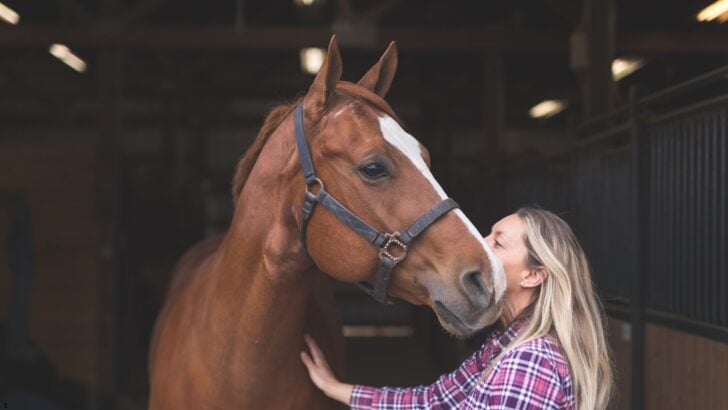
Years ago, I took in neglected horses that flinched at ordinary sounds and avoided human contact. One mare stayed with me. When I approached, she would pin her ears, tighten her whole body, and tremble. She didn’t expect people to be safe.
I didn’t fix her with a fancy exercise or by running her in a round pen. I kept the routine quiet, made my requests small, and gave her space when she showed me she had reached her limit. Some days, the work was nothing more than standing near her paddock without asking her to come closer. Other days, it was one touch, a little grooming, or taking a few quiet steps on the lead.
I had to stop looking for a breakthrough and start paying attention to the little choices she made. She would stay instead of moving away. She would watch me without pinning her ears. She would lower her head before I left. None of those moments made a dramatic story by themselves, but together they told me she was beginning to believe that I would not rush her or punish her for being afraid.
One morning, while I sat outside her paddock, she walked over and brushed my hand with her muzzle. It was a small thing, but it was her choice. That mattered more than any forced breakthrough could have.
Horseman’s take: I can’t make a horse trust me on my timetable. I can make myself easier to understand, keep my requests fair, and pay attention when the horse tells me I have asked too much. The rest has to come from the horse.
How to Build Trust With a Horse: FAQs
How long does it take to build trust with a horse?
There’s no reliable timetable. A confident, well-handled horse may settle quickly, while a fearful, inexperienced, or previously mistreated horse may need months of fair, consistent handling. Look for small changes in how the horse catches, stands, leads, recovers, and accepts care rather than judging progress by the calendar.
What are signs that a horse trusts you?
A trusting horse isn’t necessarily quiet all the time. Look for one that accepts ordinary handling, can recover after a worry, responds to clear cues, and becomes easier to catch, lead, groom, tack up, load, or stand for care over time.
Can you rebuild trust with a mistreated horse?
Often, yes, but it takes time and safe handling. Start with the horse’s health and comfort, keep your handling clear, ask for small achievable responses, and avoid forcing it through fear. Get veterinary and qualified in-person training help when the horse is unsafe or severely fearful.
Do treats help a horse trust you?
Treats can support training when timing and boundaries are clear, but food alone does not create trust. A horse also needs comfort, consistent handling, clear requests, and fair release of pressure. Do not use treats in a way that rewards crowding, nipping, or unsafe behavior.
What should I do if my horse suddenly becomes defensive or spooky?
Treat a sudden change as information. Consider pain, illness, tack or shoeing problems, a new herd situation, changes in feed or turnout, stressful events, and recent handling. Contact your veterinarian promptly if the horse seems unwell, lame, injured, or dangerous.
Knowing how to build trust with a horse is not about forcing a breakthrough or finding one perfect technique. I can make myself easier to understand, keep my requests fair, and pay attention when the horse tells me I have asked too much. That is what I remember most about the neglected mare: I did not make her trust me the morning she put her muzzle against my hand. I gave her enough time and enough reason to make that choice herself.
About Miles Henry
Racehorse Owner & Author | 30+ Years in Thoroughbred Racing
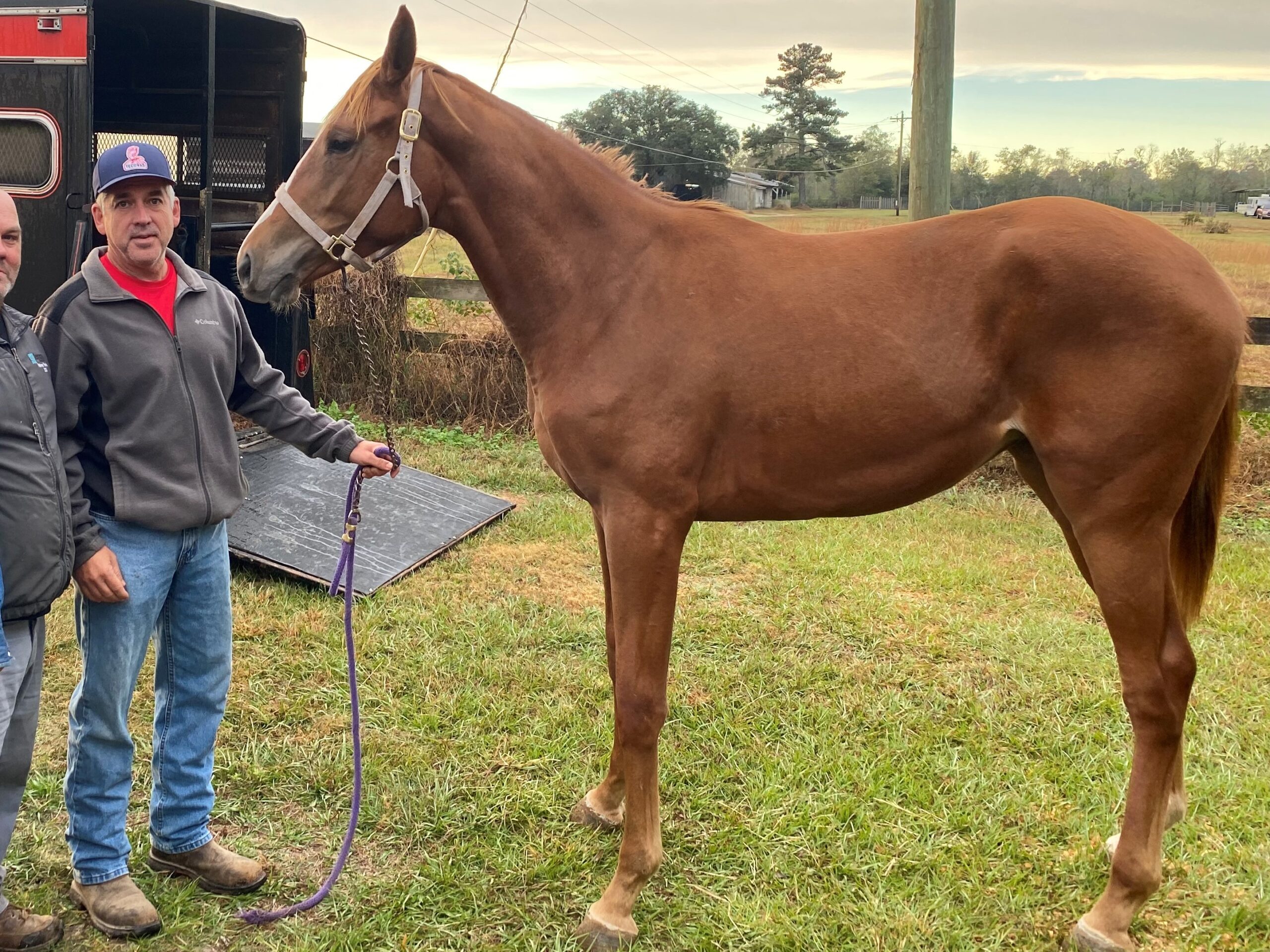
Miles Henry (legal name: William Bradley) is a professional horseman based in Folsom, Louisiana. He holds Louisiana Racing License #67012 and has spent over three decades managing Thoroughbreds at premier tracks including Fair Grounds, Delta Downs, and Evangeline Downs.
Expertise & Hands-On Experience: Beyond the track, Miles has decades of experience in specialized equine care, covering everything from hoof health and nutrition to training protocols for Quarter Horses, Friesians, and Paints. Every guide on Horse Racing Sense is rooted in this “boots-on-the-ground” perspective.
30 of their last 90 starts
Equibase Profile.

Connect with Miles: