

Last updated: August 18, 2026
In an era when horse breeders can ship semen across the country, freeze it for years, and use advanced reproductive technology, Thoroughbred breeding still follows a much older rule. A stallion must live cover a mare if their foal is going to be eligible for registration with The Jockey Club.
Live cover means a stallion physically breeds a mare through natural service. A Thoroughbred foal must be conceived this way to be eligible for registration with The Jockey Club, which does not permit conventional artificial insemination, embryo transfer, or cloning. On a commercial farm, live cover is usually carefully timed, supervised, and documented—not casual pasture breeding.
After decades around racehorses and Thoroughbred breeding, I have seen how much this single rule shapes the business—from stallion books and mare travel to breeding costs and the bloodlines breeders chase. In this article, I explain how Thoroughbred live cover works, why The Jockey Club maintains the requirement, how it compares with artificial insemination, what breeders actually pay, and whether it achieves the goals supporters associate with it.
Table of Contents
What Is Live Cover?
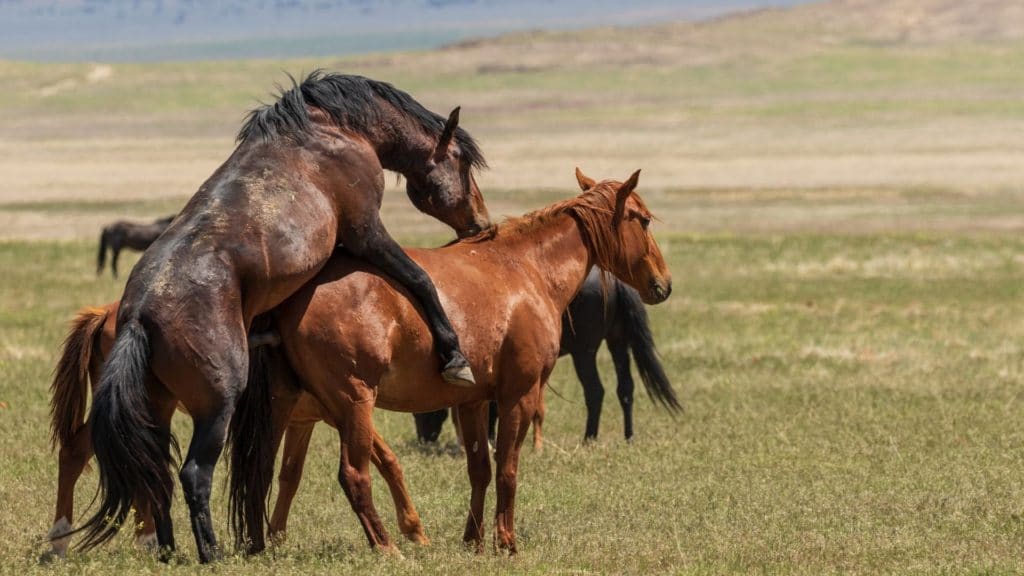
Live cover means a stallion physically mounts and breeds a mare. No semen is collected for shipping, and there is no routine use of artificial insemination. In Thoroughbred breeding, it is the natural-service requirement behind registration with The Jockey Club.
That distinction matters because “live cover” can give people the wrong picture. It doesn’t usually mean turning a mare and stallion out together and hoping for the best. At established breeding farms, timing, horse behavior, handling, veterinary work, safety, and recordkeeping all matter.
How Does Live Cover Breeding Work?
The details vary from farm to farm, but a professionally managed cover usually follows a predictable sequence. The mare is teased to assess whether she is receptive and likely in standing heat. She is then monitored by the farm veterinarian, often with ultrasound examinations, to help time breeding around ovulation.
Once the mare is ready, she is brought to the breeding shed and presented to the intended stallion. Experienced handlers manage both horses, and safety equipment may be used as needed. Stallions differ greatly in temperament and breeding behavior, and mares can react quickly, so this is not a job to rush or treat casually. The stallion’s manager records the cover date, which later becomes part of the registration trail.
From the horseman’s side: A live cover is not simply “natural” in the loose sense of the word. Good farms use planning, reproductive management, skilled handlers, and facilities designed to reduce the risk to a valuable mare, stallion, and the people working around them.

If you want the complete breeding process—from selecting a stallion to foaling and raising a young horse—see my full guide on how racehorses are bred.
Why Does The Jockey Club Require Live Cover?
The Jockey Club, established in 1894, maintains the American Stud Book and sets the registration requirements for North American Thoroughbreds. Its rules require natural service and natural gestation. They also prohibit conventional artificial insemination, embryo transfer, cloning, and other specified genetic practices from producing a foal eligible for registration.
The rulebook tells breeders what qualifies for registration. It does not reduce the policy to a short official list of reasons. Within the Thoroughbred industry, though, supporters commonly defend the live-cover requirement on three grounds: tradition, the economics of natural service, and concern that broader use of elite stallions could further concentrate bloodlines.
Tradition. Natural service has been part of the Thoroughbred registry framework for more than a century. Thoroughbred breeding is a conservative business, and changing a rule this central would require a strong case that the change benefits the breed and the industry.
Economics. From my perspective, economics may be the most practical reason the rule has remained unchanged. Live cover limits how many mares a stallion can physically breed in a season. Those limits affect stud fees, mare travel, farm work, boarding, and the value placed on a stallion’s offspring at auction. If AI were permitted, elite stallions could be used on many more mares—including mares that never travel to the stallion’s farm—and that would likely reshape the economics of the breeding business.
Genetic diversity. Supporters also argue that live cover puts a practical ceiling on a stallion’s book and may slow concentration around a few fashionable sires. It is a reasonable concern, but it is not a simple or settled genetic solution.
There is one narrow rule-book detail worth knowing. A portion of the ejaculate produced during a natural cover may be immediately placed in the uterus of that same mare as an aid to the cover. That is different from collecting, shipping, storing, and inseminating semen under a conventional AI program.
Why Can’t Thoroughbreds Use Artificial Insemination?
They can be artificially inseminated in a biological sense, but a foal conceived that way is not eligible for registration with The Jockey Club. The restriction is a registration policy, not a claim that AI cannot work in horses. In fact, AI is routinely used in Quarter Horse, Standardbred, warmblood, and many sport-horse breeding programs.
AI allows semen to be collected, evaluated, cooled or frozen, and transported to mares in other locations. That can give mare owners access to stallions without shipping a mare across the country, and it avoids the physical risk of putting a mare and stallion together for a cover.
Conception rates depend on the mare, stallion, semen quality, timing, and reproductive management. Frozen semen can be less forgiving than fresh or cooled semen, particularly when timing or semen quality is poor. But a well-managed AI program can achieve strong results, so it is not accurate to assume that live cover is automatically superior in every breeding situation.
| Topic | Live cover in North American Thoroughbreds | Artificial insemination |
|---|---|---|
| How breeding occurs | The stallion physically mounts the mare | Semen is collected and placed in the mare |
| Registration with The Jockey Club | Natural service and natural gestation are required | Does not produce a foal eligible for registration |
| Mare location | The mare generally travels to the stallion’s farm | Semen can be cooled, frozen, and transported |
| Main practical concerns | Horse and handler safety, timing, travel, and stallion workload | Semen quality, handling, shipping, timing, and veterinary management |
| Effect on stallion use | Physically limits the number of mares a stallion can cover | Can expand access to a stallion across greater distances |
Does Live Cover Protect Genetic Diversity?
This is one of the most common arguments made in support of live cover, and it deserves more than a slogan. A 2024 whole-genome study of 185 North American Thoroughbreds found a modest increase in ROH-based inbreeding estimates between its older and newer study groups: an average of 0.266 in horses born from 1965–1986 and 0.283 in horses born from 2000–2020.1
That finding does not show that live cover caused the increase or that the rule has no effect. It does show that natural service alone has not prevented rising concentration within the breed. Popular sire lines, commercial demand, fashionable nicking patterns, and breeders returning to proven families can all narrow the gene pool. Live cover limits a stallion’s physical book, but it cannot decide which stallions mare owners choose.
Miles’s take: I do not see live cover as pointless. If AI were permitted, elite stallions could be used on far more mares, including mares that never leave their home farms. That could make the concentration around already fashionable bloodlines even worse. But live cover is not a complete answer to inbreeding either. The bigger question is which stallions breeders choose to support and how heavily they use them.
How Much Does Live Cover Breeding Cost?
The stallion’s stud fee gets the most attention, but it is only one piece of the cost of breeding a mare by live cover. A realistic budget also includes transportation to and from the stallion farm, mare boarding, reproductive examinations, ultrasound work, routine and unexpected veterinary care, insurance, registration expenses, and the cost of keeping the mare through pregnancy.
Those costs vary dramatically with the stallion, farm, mare, location, and how quickly the mare conceives. Before booking a mare, I would want the complete fee schedule in writing and would ask what is included, what is billed separately, what happens if the mare does not get in foal, and whether the contract offers a live-foal guarantee.
For a more detailed look at the decisions behind stud fees, mare expenses, and the commercial side of the business, see my guide to Thoroughbred breeding economics.
Registering a Thoroughbred Foal After Live Cover
The recordkeeping starts before the foal is born. The core steps are straightforward:
Report of Mares Bred. The stallion owner, lessee, or authorized agent reports each mare bred to that stallion and the date of her last cover.
Live Foal/No Foal Report. The owner, breeder, or authorized agent reports whether the mare produced a live foal or did not produce a foal. The report is due within 30 days of the foal’s birth.
Registration and parentage verification. After the report is filed, the registration process includes the required application, identification materials, and DNA parentage verification. The current requirements, fees, forms, and deadlines are available on The Jockey Club Registry.
Is the Live Cover Rule Still the Right Call?
There is no universal agreement on that point. Critics see the rule as an outdated restriction that protects established breeding-farm economics more than the breed itself. They argue that modern DNA parentage verification has addressed concerns about accurately identifying a foal’s parents, and some favor limited changes, such as embryo transfer for a mare unable to carry a foal.
Supporters counter that AI could magnify the influence of a small number of commercially dominant stallions and accelerate bloodline concentration. They also point out that Thoroughbred breeding—stud fees, mare travel, boarding, farm operations, and auction values—has been built around natural service for generations. Changing the rule would affect far more than the breeding shed.
Key Takeaways: Live Cover Horse Breeding
- Registered North American Thoroughbreds must result from natural service. Conventional artificial insemination, embryo transfer, cloning, and other prohibited genetic practices do not produce a foal eligible for registration.
- Live cover is managed breeding, not casual pasture breeding. Teasing, reproductive exams, timing, experienced handlers, and accurate cover records are part of a professional operation.
- The rule is supported by tradition, economics, and genetic concerns. Those are commonly made industry arguments, not a simple official explanation in The Jockey Club rulebook.
- AI expands access to stallions but changes the breeding model. It can reduce mare travel and physical breeding risk while allowing wider use of selected stallions.
- Live cover may limit a stallion’s book, but it does not solve inbreeding by itself. Breeding choices and concentration around popular sire lines still matter.
Live Cover Breeding FAQs
What is live cover in Thoroughbred breeding?
Live cover is natural service: the stallion physically mates with the mare. For a foal to be registered with The Jockey Club, it must result from natural service and natural gestation; conventional artificial insemination, embryo transfer, and cloning do not qualify.
Is live cover the same as pasture breeding?
No. Live cover means physical mating, but commercial Thoroughbred covers are usually carefully managed. Farms commonly use teasing, reproductive exams, breeding-shed handling, safety equipment, cover records, and experienced personnel rather than simply turning a stallion and mare loose together.
Why can’t Thoroughbreds use artificial insemination?
The American Stud Book requires natural service and natural gestation for a foal to be eligible for registration with The Jockey Club. Within the industry, supporters commonly cite tradition, the practical limits on stallion books, and concerns about greater concentration around popular sire lines.
Does live cover protect genetic diversity in Thoroughbreds?
It may limit how many mares a single stallion can physically cover, but it is not a complete solution. A 2024 genome study found higher average ROH-based inbreeding estimates in its newer North American Thoroughbred group, showing that natural service alone has not prevented increasing concentration within the breed.
How much does live cover breeding cost?
The total cost depends on the stallion’s stud fee, mare transportation, boarding at the stallion farm, reproductive examinations, veterinary work, insurance, registration expenses, and care through pregnancy. The stud fee is only one part of the breeding budget.
Sources:
1. “Analyses of whole-genome sequences from 185 North American Thoroughbred horses, spanning 5 generations,” Scientific Reports (2024).
2. The Jockey Club, Principal Rules and Requirements of The American Stud Book.
3. The Jockey Club Registry: Overview of Registration Process.
Live cover is unlikely to disappear from North American Thoroughbred breeding anytime soon. Whatever side you take in the debate, understanding the real reasoning—not just the industry talking points—makes you a sharper owner, breeder, and racing fan.
About Miles Henry
Racehorse Owner & Author | 30+ Years in Thoroughbred Racing
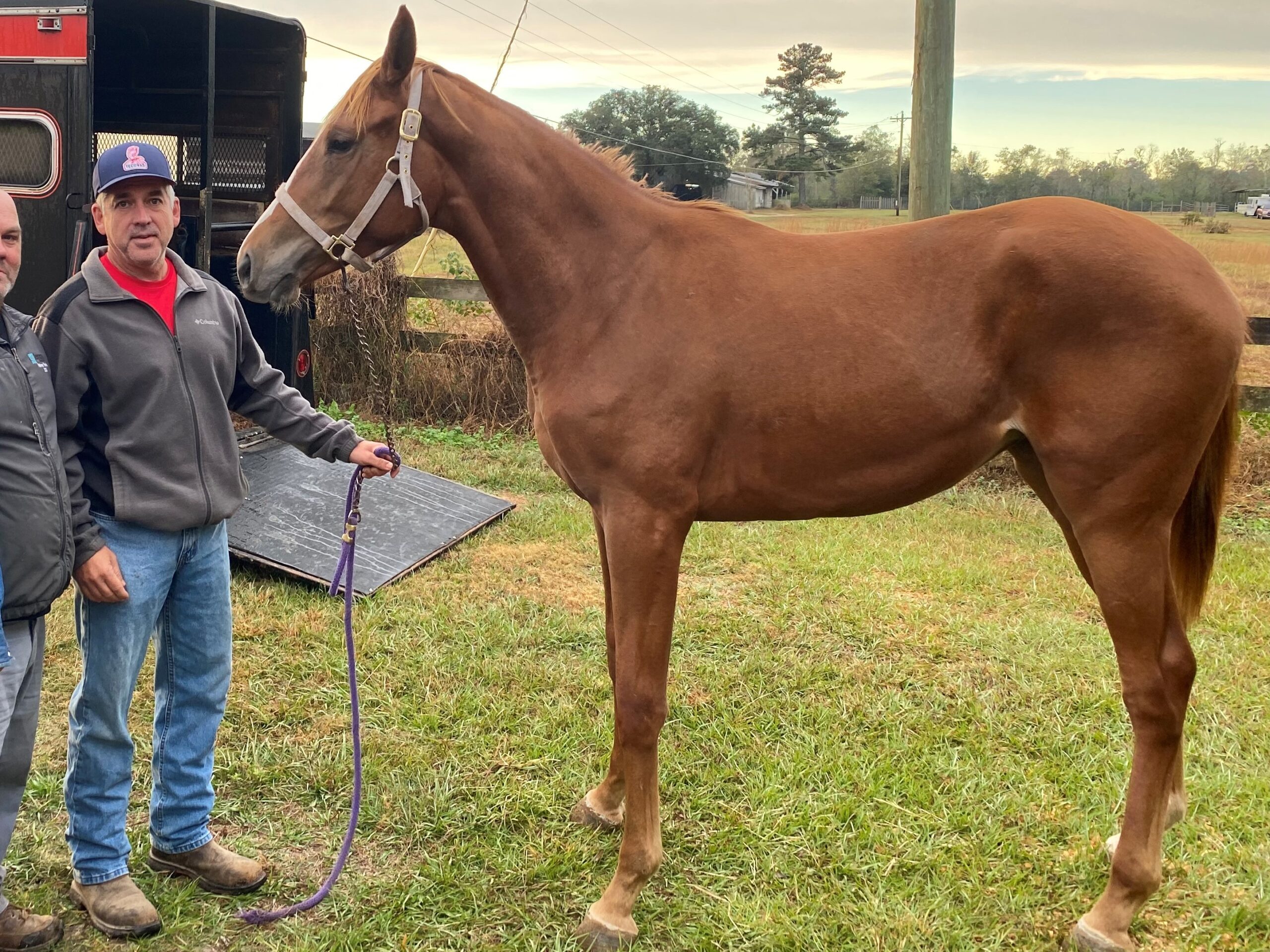
Miles Henry (legal name: William Bradley) is a professional horseman based in Folsom, Louisiana. He holds Louisiana Racing License #67012 and has spent over three decades managing Thoroughbreds at premier tracks including Fair Grounds, Delta Downs, and Evangeline Downs.
Expertise & Hands-On Experience: Beyond the track, Miles has decades of experience in specialized equine care, covering everything from hoof health and nutrition to training protocols for Quarter Horses, Friesians, and Paints. Every guide on Horse Racing Sense is rooted in this “boots-on-the-ground” perspective.
30 of their last 90 starts
Equibase Profile.

Connect with Miles: