
Last updated: April 21, 2026
While walking through a friend’s working barn here in Louisiana, my son heard a horse whinnying and a donkey braying from the same pasture. He pointed to the pair and asked why they were kept together. The answer was simple: the two animals were being used for crossbreeding.
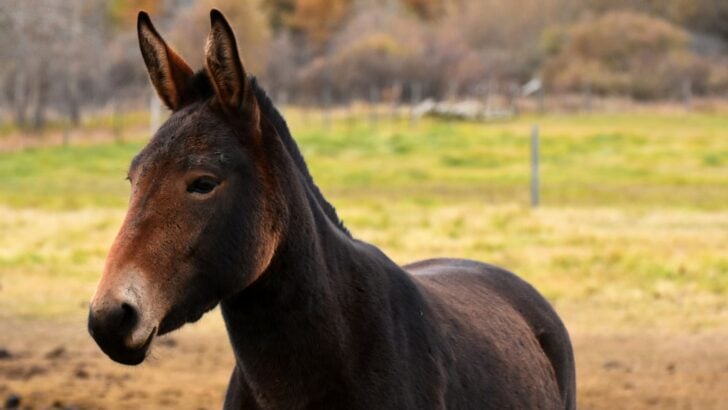
Horse and donkey breeding is the intentional process of mating a male donkey with a female horse to produce a mule. This crossbreeding is designed to capture a horse’s athletic build and combine it with a donkey’s endurance, intelligence, and renowned sure-footedness.
This guide walks through the entire mule production process: why these two distinct species are crossed, what biology drives the outcome, which mares produce the best results, and what working traits a mule foal typically inherits.
Mule Production at a Glance:
- What is a mule? The hybrid offspring of a male donkey (Jack) crossed with a female horse (mare).
- Why are mules sterile? Horses have 64 chromosomes, donkeys have 62. The resulting mule inherits 63—an odd number that prevents normal reproduction.
- What is a hinny? The rarer reverse cross: a stallion bred to a female donkey (Jenny).
- Why crossbreed them? Breeders intentionally cross horses and donkeys to produce offspring that exhibit high durability, self-preservation, and stamina in rough terrain.

Table of Contents
Why Are Horses and Donkeys Bred Together?
People have intentionally crossed horses and donkeys for centuries. Rather than simply using a horse for riding and a donkey for packing, early agricultural and military operations required an animal that could do both while surviving on minimal feed in harsh environments.
The goal of this crossbreeding is to create an animal that can exhibit “hybrid vigor” in certain working traits. By pairing the two species, breeders aim to produce offspring with the ground-covering athletic stride of the horse and the legendary resilience and caution of the donkey. Today, this standard continues for mountain packing, ranch work, and specialized trail riding where extreme stamina is required.
How Horses and Donkeys Are Bred to Produce a Mule
Successful mule production consistently comes down to one critical factor: selecting the right mare.
Genetically, a mule foal receives exactly 50% of its DNA from each parent. However, the mare shapes far more than her half of the chromosomes. She exerts a major influence on the foal’s early behavior through imprinting and daily contact during the first six months of life. A nervous, reactive mare typically produces a nervous, reactive mule. A calm, sensible mare creates the foundation for a trainable, reliable hybrid.
What experienced breeders consistently prioritize when selecting a crossbreeding mare:
- Disposition: A quiet, willing temperament is non-negotiable. Mules retain negative handling memories far longer than horses, so the mare’s mind sets the stage for everything that follows.
- Conformation: Look for a strong, short back, deep hindquarters, and a long sloping shoulder—structural strengths that compensate for the donkey’s naturally narrower build.
- Purpose-driven breed selection: Draft mares (Belgians, Percherons) produce heavy mules for logging; Quarter Horse and Paint mares produce athletic ranch mules; Gaited mares produce the smoothest-riding saddle mules.
In practical mule breeding, mare selection is far more important than most beginners realize. Do not start by researching Jacks. Start by finding a mare with the kind of mind and structure you would trust with a beginning rider—then find a Jack that complements her.

Why Are Mules Sterile?
The sterility of mules is a direct biological result of the chromosomal mismatch between horses and donkeys. Horses possess 64 chromosomes; donkeys possess 62. When they are crossbred, the resulting mule inherits 63 chromosomes.
Because 63 is an odd number, the chromosomes cannot pair up correctly during meiosis, the cell division process that creates reproductive cells. While female mules (mollies) will sometimes cycle and go into heat, they are virtually incapable of carrying a foal. This biological reality carries a significant practical implication: because mules are almost always sterile, every mule is produced through a fresh horse and donkey cross.
What Traits Does a Mule Inherit?
While every hybrid is an individual shaped by the specific parents used, there are traits commonly produced through horse and donkey crossbreeding that make mules so sought-after in working environments.
| Inherited Trait | What It Looks Like | Why It Matters for Riders |
|---|---|---|
| Sure-footedness | Narrower hooves placed with great deliberateness, especially on slopes. | Dramatically reduces the risk of stumbling on steep, rocky, or washed-out trails. |
| Self-preservation instinct | Stops and assesses before reacting to perceived danger rather than bolting. | A mule is far less likely to cause a catastrophic runaway in rough terrain. |
| Endurance and heat tolerance | Maintains stamina over long, hot working days. | Outlasts horses in demanding, multi-day trail or pack environments. |
| Feed efficiency | Holds body condition on lower-quality, sparser forage. | Reduces feeding costs, especially when packing into remote backcountry. |
| Hoof durability | Often inherits the donkey’s thick, tough hoof wall. | Many mules work comfortably barefoot over terrain that would typically require horse shoes. |

Mules and Hinnies: Two Crossbreeding Outcomes
Horse and donkey crossbreeding can produce two different hybrid animals depending on which parent is which species. A mule results from a Jack crossed with a mare. A hinny results from a stallion crossed with a Jenny (female donkey).
Hinnies are exceptionally rare because stallions are notoriously difficult to breed to donkeys, and conception rates are significantly lower. In practical terms, hinnies are also smaller—because they are carried in the smaller womb of a donkey—and tend to look more donkey-like overall. Most working equine crossbreeding programs produce mules almost exclusively.
Practical Uses of Mules Today
Mule production remains highly active and commercially relevant in the modern equestrian world. In my region of the South, a well-trained, trail-safe saddle mule routinely brings more than $15,000 at sale, and finding a good one takes patience.
Today’s mules are used across a wide range of disciplines: mountain packing, trail riding, ranch work, logging, and competitive events. Organizations like the American Mule Association actively promote mule use and educate new owners on their unique handling requirements. For those looking to understand more about the underlying instincts of the mare side of the equation, reviewing horse characteristics and behavior can provide valuable context before starting a breeding program.


FAQs About Horse and Donkey Breeding
What do you get when you breed a horse and a donkey?
Breeding a male donkey (Jack) with a female horse (mare) produces a mule. Breeding a stallion with a female donkey (Jenny) produces the much rarer hinny.
Why are mules sterile?
Horses have 64 chromosomes and donkeys have 62. The resulting mule inherits 63 chromosomes—an odd number that prevents normal reproductive cell formation, making mules almost universally sterile.
Which horse breed produces the best mule?
It depends on the intended job. Draft mares produce large working mules; Quarter Horse and Paint mares produce athletic ranch mules; Gaited mares produce smooth-riding saddle mules. Most experienced breeders prioritize temperament above breed.
Can a mule reproduce?
Almost never. While female mules (mollies) sometimes cycle, the chromosomal mismatch between horses and donkeys makes it virtually impossible for mules to produce offspring.
What is the difference between a mule and a hinny?
A mule is produced by a Jack (male donkey) crossed with a mare (female horse). A hinny is produced by a stallion (male horse) crossed with a Jenny (female donkey). Mules are larger, more common, and generally more robust.
Do mules need special tack?
Often yes. Mules typically have flatter backs and different shoulder angles than horses, causing standard horse saddles to slide forward. Most mule owners use mule-specific saddles and a crupper to keep tack in place.
About Miles Henry
Racehorse Owner & Author | 30+ Years in Thoroughbred Racing
Miles Henry (legal name: William Bradley) is a professional horseman based in Folsom, Louisiana. He holds Louisiana Racing License #67012 and has spent over three decades managing Thoroughbreds at premier tracks including Fair Grounds, Delta Downs, and Evangeline Downs.
Expertise & Hands-On Experience: Beyond the track, Miles has decades of experience in specialized equine care, covering everything from hoof health and nutrition to training protocols for Quarter Horses, Friesians, and Paints. Every guide on Horse Racing Sense is rooted in this “boots-on-the-ground” perspective.
30 of their last 90 starts
Equibase Profile.

Connect with Miles: