
Last updated: August 14, 2026
One of the hardest conversations in racing is deciding what happens when a horse has likely run his last race. We watched friends face that moment after their horse lost four straight races. He was sound and well cared for, but it was clear his racing future was limited. The real question was not whether he deserved another chance. It was what kind of home and job would suit him next.
Retired racehorses can become excellent riding, trail, barrel, sport-horse, and companion horses, but adopting one is not a shortcut to a cheap or easy horse. Some horses leave racing ready to begin a second career. Others need turnout, rehabilitation, retraining, or permanent retirement. Before adopting, evaluate the individual horse’s history, soundness, temperament, and training, then make sure you have the facility, budget, and help to manage the transition.
Many retired Thoroughbreds are called OTTBs, short for off-track Thoroughbreds. I’ve owned racehorses and spent years around the people who train, handle, and rehome them. I have seen former runners make good partners in many jobs, but I have also seen people get excited about a horse because it won races, came from a fashionable sire line, or was offered cheaply. That excitement can cloud judgment. This guide explains what happens to retired racehorses, how to find one to adopt, and what I would want to know before bringing one home.
Table of Contents
What Happens to Retired Racehorses?
Horses leave racing for different reasons. Some are sound but don’t have enough speed to compete. Some have earned enough or reached a point where the owner decides a different job is best. Others need time away from training because of an injury, a physical limitation, or the ordinary wear that comes with a racing career. There is no single path for a retired racehorse, and no responsible horseman should make it sound that simple.
Many Thoroughbreds and Quarter Horses begin second careers as trail horses, barrel horses, jumpers, eventers, dressage mounts, ranch horses, polo ponies, pleasure horses, or breeding horses. Some go through aftercare programs that provide turnout, veterinary attention, retraining, and help finding a new home. Horses that can’t safely move into another riding career may need rehabilitation, pasture retirement, or lifetime sanctuary care.
A horse coming directly from a racing barn may be fit, well handled, and used to a strict routine, but it may have little experience with turnout, trail riding, standing for a recreational rider, or working at slower speeds. That doesn’t make it a bad horse. It means the horse needs a thoughtful transition, and the next owner needs to allow time for it.
My Experience Evaluating a Former Racehorse
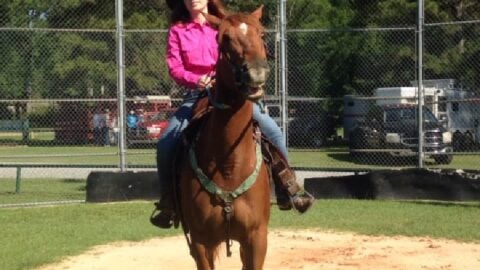
When I was looking for a barrel prospect, I decided to consider a retired racing Quarter Horse. We let people in the racing business know what we wanted and what kind of home we could offer. Before long, we got a call about an appendix-bred gelding that was available.
We didn’t take him because he had a racing background or because he was available. We talked with the owner, rode him, studied what we could about his background, and watched how he worked. He was sound, level-headed, and more comfortable to ride than I expected. He also had more Thoroughbred-type conformation than I would have ideally chosen for a barrel horse, so we had to judge the individual instead of pretending he was a perfect paper match.
The owner later asked us to give him one more chance on the track. We put him back in training and entered him at longer distances than he had been running. He was competitive, earning three seconds and a win before we brought him home for good. We did train him for barrels, and he performed well.
What that horse taught me: Don’t adopt a story. Adopt the individual horse in front of you. A race record, pedigree, price, or reputation tells you only part of the story. Look at the horse’s feet and legs, watch it move, consider its mind, understand its history, and match it to a realistic rider and job.
Is a Retired Racehorse Right for You?
For the right person, a former racehorse can be a rewarding horse to own. They’re often athletic, intelligent, accustomed to being handled, and capable of learning a new job. But a horse leaving the track is not automatically a finished lesson horse. Be honest about your experience, the help available to you, your budget, and the type of project you are willing to take on.
Consider your experience and support. Do you have the riding and ground-handling skills for a horse that may be fit, forward, or inexperienced away from the track? If not, do you have regular access to a capable trainer or horseperson who does?
Be clear about your goal. There is a big difference between looking for a finished trail horse and looking for a young, athletic project that may eventually excel in barrels, jumping, dressage, or eventing. Neither choice is wrong, but the horse, budget, and timeline will be different.
Make sure your place is ready. You need safe fencing, appropriate turnout, clean water, shelter, and a sensible plan for introducing a horse to a new environment and other horses. The horse may be used to a racetrack routine, not open pasture and a backyard schedule.
A quiet horse standing in a stall is not necessarily a quiet horse under saddle. Before I take a horse home, I want to see it caught, led, groomed, tacked up, mounted, ridden, cooled out, loaded, and handled around other horses. One short ride or a seller’s description is not enough to tell you what kind of partner you are getting.
How to Find Retired Racehorses for Adoption
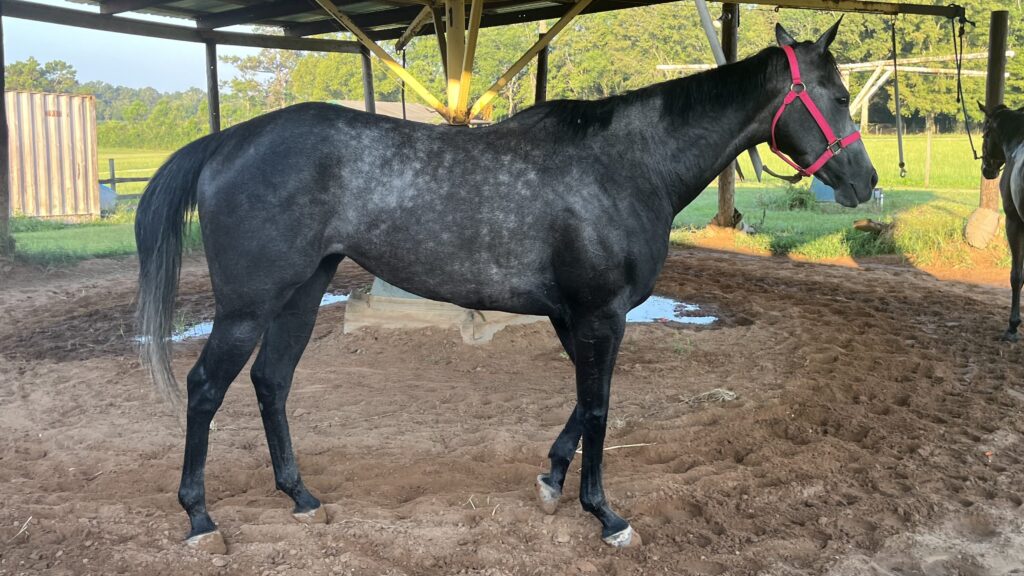
The best place to find a retired racehorse depends on your experience and the support you need. A first-time OTTB adopter will often benefit from an established aftercare or adoption organization that knows the horse, provides records, and has a matching process. An experienced horseman with reliable racing connections may be comfortable working directly with an owner, trainer, or breeder.
| Source | Who it may suit | What to verify |
|---|---|---|
| Aftercare and adoption organizations | Buyers who want guidance, records, and help matching a horse to their plans. | Contract terms, return policy, current training level, veterinary information, and disclosed limitations. |
| Online OTTB listings and racing networks | Buyers looking for Thoroughbreds at different stages after racing. | Who represents the horse, when it last raced, current training, soundness, and a buyer-arranged veterinary examination. |
| Owners, trainers, and breeders | Experienced buyers with trustworthy racing contacts. | Full history, candid answers from people who handled the horse, records, and a pre-purchase examination. |
| Auctions and sales barns | Experienced buyers with professional help and the discipline to walk away. | Disclosure, soundness risk, transport, biosecurity, quarantine, and whether the horse actually fits your plans. |
Programs do not all do the same work. Some focus on rehabilitation, retraining, and adoption. Others provide long-term sanctuary care for horses that are not candidates for another riding career. Ask what the organization has done with the horse, what it knows about the horse’s history, and what help it offers after placement. A recognizable name is not as useful as an honest assessment of the horse you are considering.
If you live near a racetrack, go early and watch the morning work. Introduce yourself respectfully to owners, trainers, riders, and grooms. Let people know what kind of horse you are looking for and what kind of home you can offer. Those relationships can lead to good direct placements, but do not treat the backstretch as a place to shop for a bargain. Do the same homework, ask for records, and have the horse evaluated as you would in any other placement.
The Mistakes I See People Make With Retired Racehorses
The biggest mistake is choosing the story instead of the horse. People may fall in love with a win photo, a famous sire, a striking color, or the idea that they are saving a racehorse. Those things can be meaningful, but they do not tell you whether the horse is sound, safe, or suited to the job you have in mind.
Assuming cheap means bargain. The cheapest horse you ever buy can become the most expensive horse you ever own. A low fee does not pay for transport, board, hay, hoof care, dental work, training, veterinary care, tack, or the time it takes for a horse to settle into a new life.
Rushing the transition. A horse that is fit for racing is not necessarily ready to be ridden like a finished trail horse next week. It may need turnout, a gradual feed adjustment, a new routine, and time to relax before starting a new discipline.
Not having professional help. A good trainer, veterinarian, and farrier are valuable for any horse, but they can be especially important when a horse is leaving a racing environment. If you are new to OTTBs or former racehorses, build that team before the horse arrives.
Slow down when the deal feels too good. If you feel pressured to decide quickly, cannot get clear answers, cannot see the horse handled or ridden, or cannot arrange an independent veterinary examination, be prepared to walk away. There will be other horses.
Questions to Ask Before You Adopt
The best question is often the one people are reluctant to ask: why is this horse leaving racing? There is nothing wrong with a horse that was not fast enough to earn its keep. But you need a straight answer about whether the change is about ability, soundness, temperament, an old injury, owner circumstances, or something else.
Why did the horse leave racing? Ask for the complete answer, not just “he was slow” or “she needs a home.” A horse may have retired because it was uncompetitive but sound, or it may have a limitation that affects the work you want to do.
When was the horse’s last race, work, or serious training day? A horse that ran last month is in a different place physically and mentally than one that has had six months of turnout and retraining.
What records are available? Ask about veterinary care, farrier work, dental care, vaccinations, deworming, feed, medications, and any past injuries or procedures. Records are useful, but they do not replace an independent veterinary examination arranged by the buyer.
What can the horse do today? Find out whether it stands for the farrier, loads, clips, bathes, cross-ties, turns out with other horses, and rides quietly away from the racetrack routine. Ask to see the horse do the work you expect it to do whenever possible.
Has the horse had time to let down? Some horses need time to relax, grow a different coat, adjust their diet, and learn a new routine before starting a second career. Rushing that process is rarely good for the horse or the new owner.
What does the adoption contract require? Read it before you become emotionally attached. Contracts may include return-to-program requirements, restrictions on resale or breeding, notification requirements, and rules about what happens if you can no longer keep the horse.
Preparing for the First Weeks Home
The move from a racing barn to a private home can be a major change. At the track, horses often live on a tight schedule with familiar people, feed, stalls, exercise, and medical routines. The first few weeks at home should be about safety, consistency, observation, and giving the horse time to settle in.
Prepare the facility before the horse arrives. Check fencing, gates, water sources, shelter, stalls, and turnout areas. Avoid hazards such as loose wire, broken boards, sharp edges, or gaps a horse can get through. A horse that has spent most of its life in a controlled racing environment may need a careful introduction to pasture, companions, and a more open routine.
Get the current feed and management details. Ask what the horse has been eating, how much turnout it receives, whether it is shod, what medications or supplements it receives, and when it was last vaccinated, dewormed, and seen by a dentist or veterinarian. Make feed changes gradually, and work with your veterinarian on a plan that fits the horse’s records, body condition, and new workload.
Build a team before you need one. Have a veterinarian, farrier, trainer, and experienced horseperson available. If you are new to OTTBs, a trainer who understands horses coming off the track can save you a lot of frustration and help you avoid asking too much too soon.
Give the horse time to decompress. Watch appetite, manure, water intake, demeanor, soundness, and behavior. Keep handling calm and consistent. Some horses adjust quickly; others need more time. If you see concerning changes or are uncertain about pain, illness, or behavior, contact your veterinarian rather than trying to diagnose the problem yourself.
FAQs About Retired Racehorse Adoption
Can beginners adopt a retired racehorse?
Sometimes, but it depends on the individual horse and the beginner’s support system. Many horses coming directly off the track are better suited to experienced riders or beginners working closely with a capable trainer. A quiet, well-trained horse with an appropriate history may suit a less experienced rider better than a recently retired, forward horse.
How much does it cost to adopt a retired racehorse?
Adoption fees vary by organization, the horse’s training, rehabilitation, location, and demand. The adoption fee is only one cost. Budget for transport, board or facilities, feed, veterinary and farrier care, dental work, tack, training, and unexpected expenses.
Should I get a pre-purchase exam for an adopted racehorse?
In most cases, yes. Ask for available veterinary records, then discuss an independent pre-purchase examination with a veterinarian you choose. The scope should fit your intended use and the horse’s history. An exam cannot guarantee the future, but it can help you make a more informed decision.
How long does a retired racehorse need to adjust to a new home?
There is no fixed timeline. Some horses settle quickly, while others need weeks or months to adapt to turnout, a different feed program, new people, and a new kind of work. Let the horse’s soundness, behavior, body condition, and veterinary guidance determine the pace rather than a calendar date.
Adopting a retired racehorse can be a good decision for both horse and rider, but it should start with clear eyes. Find out why the horse left racing, ask for records, get professional help when needed, and give the horse time to adjust. The right former racehorse can become a wonderful partner, but the right match begins with putting the horse’s needs ahead of the excitement of bringing one home.
About Miles Henry
Racehorse Owner & Author | 30+ Years in Thoroughbred Racing
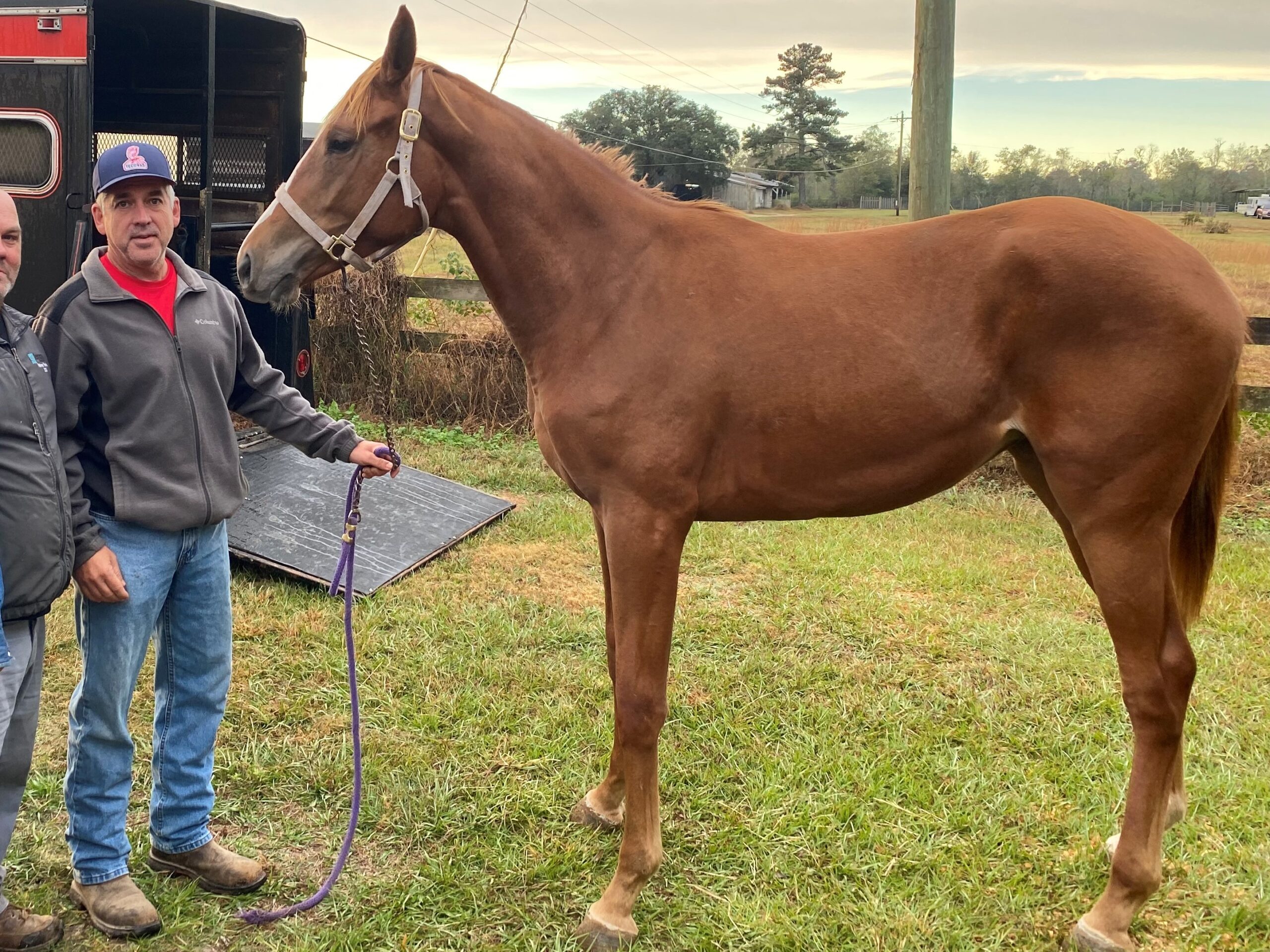
Miles Henry (legal name: William Bradley) is a professional horseman based in Folsom, Louisiana. He holds Louisiana Racing License #67012 and has spent over three decades managing Thoroughbreds at premier tracks including Fair Grounds, Delta Downs, and Evangeline Downs.
Expertise & Hands-On Experience: Beyond the track, Miles has decades of experience in specialized equine care, covering everything from hoof health and nutrition to training protocols for Quarter Horses, Friesians, and Paints. Every guide on Horse Racing Sense is rooted in this “boots-on-the-ground” perspective.
30 of their last 90 starts
Equibase Profile.

Connect with Miles: