
Last updated: August 13, 2026
The signs a horse is pregnant are easy to miss in early gestation – most are behavioral, not physical. Your mare was exposed to a stallion, and she hasn’t been acting like herself. The question every owner in that situation asks is the same: is she pregnant, and how can you tell? This guide covers what to watch for across the full 11-month gestation, what labor looks like when it’s coming, and what both mare and foal need immediately after delivery.
How do you know if a horse is pregnant? You cannot reliably confirm pregnancy by looking at a mare or judging her behavior. The dependable answer is a veterinary reproductive exam, usually transrectal ultrasound. A veterinarian can often identify a pregnancy around days 14-18 after breeding and recheck normal development and heartbeat around days 25-30.
- Possible early clue: She does not show an expected heat cycle after breeding, though this does not prove pregnancy.
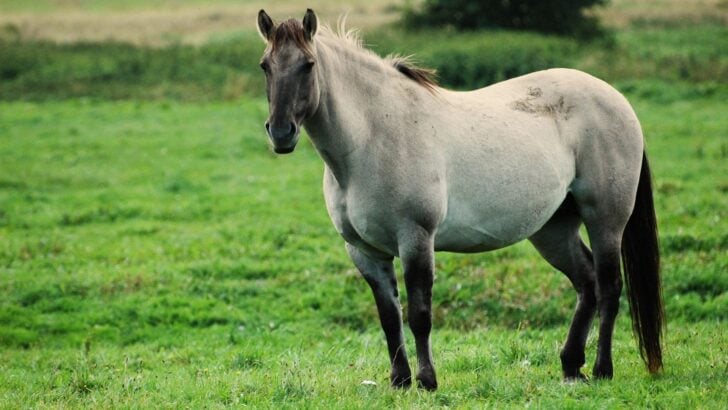
- Mid-to-late pregnancy: Her abdomen may enlarge, but many mares show little obvious change until well into gestation.
- Final weeks: Udder development, pelvic relaxation, and behavior changes can indicate foaling is approaching—not that pregnancy is newly confirmed.
Do not wait for physical signs if pregnancy status matters. Early ultrasound also helps identify twins, which is important because twin pregnancies pose serious risks for the mare and foals.
Veterinary care matters throughout pregnancy. A reproductive veterinarian should guide pregnancy monitoring, particularly for mares carrying twins, older mares, and mares with reproductive or health problems. Ultrasound examinations are important for early confirmation and twin detection, and every owner should have a clear veterinary plan for foaling emergencies. This article is informational and cannot replace care tailored to your mare.
Table of Contents
Signs a Mare Is Pregnant
No single physical sign confirms pregnancy – the only reliable confirmation is a veterinary ultrasound. That said, several observable changes appear across the gestation period that give owners a reasonable basis to suspect pregnancy and prompt a vet call.
Missed estrus cycle: A mare in foal typically stops cycling. If she was cycling regularly and stops after exposure to a stallion, that’s the first behavioral signal to watch for. Understanding the equine estrus cycle helps you establish what’s normal for your mare before breeding.
Increased appetite and thirst: Most pregnant mares eat and drink more than usual, particularly as the fetus grows and energy demands increase. Some mares show a noticeably different pattern in what they want to eat.
Behavior changes: Restlessness, increased irritability, and reduced tolerance for handling are all reported. Some mares become protective of their space, particularly around other horses.
Belly enlargement: The belly grows visibly, but not until mid-pregnancy. Expecting early visual confirmation is the most common mistake owners make – a mare at two months looks the same as she did before breeding.
Udder development: The udder begins filling with colostrum in the weeks before foaling. Waxing – the appearance of a waxy discharge at the teat ends – typically signals foaling is 12-48 hours away.
Foal movement: In the final weeks, you can often see and feel the foal moving against the mare’s flank, usually more active in the late afternoon and evening.
Sleep changes: Some mares sleep less or appear less settled as pregnancy progresses, particularly in the third stage.
If this is your first foaling experience, involve a veterinarian early. Health complications are more manageable when caught early, and the risks are higher for mares carrying twins, mares over 15, and mares with prior pregnancy problems. A vet can confirm pregnancy by ultrasound around day 14-16 post-breeding, which is far earlier than any physical sign will appear.
Gestation Period and the Three Stages of Pregnancy
A mare’s gestation period averages 11 months (approximately 340 days), though normal pregnancies range from 320 to 360 days. The pregnancy is divided into three stages, each with distinct changes in the mare and developing foal.
| Stage | Timeframe | What’s Happening | Management Notes |
|---|---|---|---|
| Stage 1 | Conception to day 60 | Embryo travels through the uterus and attaches to the uterine lining; a veterinarian can evaluate early pregnancy and check for twins; there are usually no outward physical signs. | A veterinarian can confirm pregnancy and check for twins early in gestation. Discuss work, turnout, vaccinations, parasite control, and nutrition with your veterinarian. |
| Stage 2 | Day 61 to day 270 | The fetus develops rapidly; belly enlargement may become visible; the mare’s nutritional needs increase as gestation advances; foal movement may sometimes be felt or seen later in this stage. | Some healthy mares can continue light, familiar exercise, but workload should be individualized with veterinary guidance. Monitor body condition and adjust nutrition as pregnancy advances. |
| Stage 3 | Day 271 to delivery | The foal gains weight rapidly; the mare’s udder may begin to develop; the body prepares for foaling; and physical or behavioral signs of impending labor may appear in the final days or weeks. | Prepare a clean, safe foaling area; monitor the mare closely; maintain appropriate forage, water, and nutrition; and have an emergency veterinary plan in place. |
During stage one, the most you’ll typically notice is a possible increase in appetite and the absence of an estrus cycle. During stage two, belly growth becomes obvious and the mare’s feed requirements increase to support the growing foal. During stage three, the priority shifts to preparing for foaling – clean stall or paddock, access to the vet, and close monitoring in the final weeks.
The small percentage of mares that carry twins face significantly higher risk – twin pregnancies in horses are associated with spontaneous abortion or the survival of only one foal. Early ultrasound allows a vet to reduce twins to a singleton, which is standard practice in managed breeding programs.

Most owners focus on confirming early pregnancy, but the majority of management decisions happen in the final weeks before foaling. This is when monitoring becomes critical – behavioral signs that were subtle throughout gestation become more obvious, and the physical changes that signal imminent delivery can appear within hours rather than weeks.
Signs Labor Is Near
Mares typically foal at night and with little warning – they have evolved to foal quickly and quietly to avoid predator attention. The signs below appear in the hours leading up to delivery, and recognizing them early gives you time to prepare and call the vet if needed.
- Waxing: Waxy, yellowish discharge at the teat ends – typically signals 12-48 hours to foaling, though some mares wax days in advance and some not at all.
- Udder fully distended: The udder becomes tight and full with colostrum.
- Softening of the vulva and hindquarters: The muscles around the tailhead and hindquarters relax visibly as delivery approaches.
- Agitation and restlessness: The mare paces her stall, lies down and gets up repeatedly, looks back at her flanks.
- Sweating: Particularly along the neck, flanks, and behind the elbows.
- Tail twitching: Incessant twitching and looking at the belly.
- Excessive urination: More frequent and sometimes irregular urination in the hours before labor.
- Kicking at the belly: A sign of discomfort from early contractions – can resemble mild colic; watch closely to distinguish.
The Three Stages of Labor
Labor in horses moves quickly once it begins – the active delivery phase is one of the fastest of any large mammal. Understanding the three stages helps you know what’s normal and when to call the vet.
Stage 1: Early labor
The mare may become visibly uncomfortable—restless, sweaty, prone to looking at her flank, lying down and getting up, or urinating more frequently. She can resemble a horse with mild colic. Stage 1 commonly lasts about 1-4 hours, though the timing varies. It ends when the chorioallantoic membrane ruptures and the water breaks.
Stage 2: Active delivery
Stage 2 is the active delivery of the foal and is normally rapid—often about 5-15 minutes. The usual presentation is two front feet, one slightly ahead of the other, followed by the nose resting on the forelegs. If you see a thick red membrane before the foal, only one leg, hind feet first, no progress, or a delivery approaching 20 minutes, treat it as an emergency and call your veterinarian immediately. Unless you are trained and directed by your veterinarian, do not attempt to correct a suspected malpresentation yourself.
Red bag emergency: If a thick, bright-red, velvety membrane appears at the vulva before the foal, call your veterinarian immediately. This can indicate premature placental separation, which may deprive the foal of oxygen.
Stage 3: Placenta delivery
The placenta should pass within three hours of the foal’s delivery – often within 15-30 minutes. If it has not passed within three hours, call the vet. A retained placenta is a serious complication that can lead to laminitis, septicemia, and death if not addressed. Do not attempt to pull the placenta; wait for veterinary guidance.
The 1-2-3 rule for newborn foals:
- Foal stands within 1 hour of birth
- Foal nurses and consumes colostrum within 2 hours
- Placenta passes from the mare within 3 hours
Any of these milestones missed warrants an immediate veterinary call.
What the Mare and Foal Need After Birth
Colostrum is the foal’s most important early source of passive immune protection. A foal that has not stood and nursed promptly should be assessed by a veterinarian. Do not assume adequate colostrum transfer simply because the foal appeared to nurse; your veterinarian may recommend an examination and blood test to confirm that passive transfer was adequate.
For the mare, the immediate priorities after foaling are monitoring for complications, ensuring she can stand and move comfortably, and providing free access to hay and water. Notable post-foaling signs that warrant immediate veterinary attention include excessive or foul-smelling discharge, difficulty rising, visible abdominal pain, or signs of retained placenta.
A mare’s return to work should depend on her recovery, the difficulty of foaling, her veterinary examination, and her nursing and breeding status. Do not use a fixed two-week timetable; ask your veterinarian when work is appropriate for that mare.

Breeding After Foaling – The Foal Heat Window
Most horse breeders aim for a foal from their broodmares every year. Given the 11-month gestation period, that requires breeding the mare again within weeks of foaling – not months. The first estrus cycle after foaling is called “foal heat,” and it is the primary window most breeders use to maintain an annual foaling schedule.
Foal heat is the first estrus cycle after foaling and commonly occurs about 5-11 days postpartum. Whether breeding on foal heat is appropriate depends on uterine involution, the mare’s health, the foaling history, and a veterinary reproductive examination. Breeding early may support an annual foaling schedule, but the mare’s reproductive health comes first.
Horseman’s Perspective: For Thoroughbred racehorse breeders, the annual foaling schedule isn’t just a management preference – it’s a competitive factor. Every Thoroughbred in the Northern Hemisphere officially turns one year older on January 1, regardless of actual birth date. A foal born in January has nearly 12 months of development before competing as a two-year-old. One born in late November has barely two months. That developmental gap matters at the level of two-year-old maiden races. The pressure to breed early after foaling isn’t impatience – it’s the economics of the racing calendar working backward through the breeding shed.
FAQs: Signs a Horse Is Pregnant
How early can you tell if a horse is pregnant?
A veterinarian can detect pregnancy by ultrasound as early as day 14-16 after breeding. A heartbeat is typically audible around day 28-30. Physical signs visible to the owner – belly enlargement, udder development – don’t appear until mid-pregnancy at the earliest. If you suspect your mare is pregnant, don’t wait for visible signs; schedule an ultrasound.
What are the first signs a mare is pregnant?
The earliest observable sign is a missed estrus cycle after exposure to a stallion. Some mares also show increased appetite, mild behavior changes, and reduced tolerance for handling in early pregnancy. None of these are definitive – veterinary ultrasound is the only reliable confirmation.
What’s the shape of a pregnant mare’s belly?
Early in pregnancy the belly shows no visible change. By mid-pregnancy the belly enlarges noticeably. In the final weeks it drops lower and may flatten slightly on the sides as the foal positions for delivery.
Can you ride a horse that is pregnant?
Generally yes, through approximately the seventh or eighth month of pregnancy, provided the mare is in good health and has no history of miscarriage. Light work is usually safe in stages one and two. Riding should stop in stage three as the mare approaches delivery. Always confirm with a veterinarian based on your specific mare’s condition.
Can you transport a pregnant mare?
Early in pregnancy, transport is generally safe with normal precautions. Research has shown that transporting mares in the late stages of pregnancy induces stress and acute cortisol release that can trigger early labor. Late-stage transport should only occur when medically necessary, and a veterinarian should be consulted before moving a mare in the final trimester.
How long is a horse pregnant?
The average equine gestation period is approximately 11 months, or around 340 days. Normal pregnancies range from 320 to 360 days. Pregnancies significantly shorter than 320 days (premature foals) or significantly longer than 360 days (overdue) warrant veterinary attention.
What is foal heat and when does it occur?
Foal heat is the first estrus cycle after foaling and commonly occurs about 5-11 days postpartum. A veterinarian should evaluate uterine recovery and the mare’s overall condition before recommending breeding. Thoroughbred breeders may target this cycle to support an annual foaling schedule, but it is not appropriate for every mare.
What is colostrum and why does it matter?
Colostrum is the thick, yellow first milk a mare produces in the days around foaling. It contains concentrated antibodies that provide the foal’s immune protection for the first weeks of life before its own immune system develops. Foals must consume colostrum within the first 12 hours of life – absorption capacity drops sharply after that. A foal that does not nurse within two hours of birth should be assessed by a veterinarian.

Key Takeaways: Signs a Horse Is Pregnant
- Ultrasound is the only reliable early confirmation – visible physical signs don’t appear until mid-pregnancy; a vet can confirm by day 14-16 post-breeding
- The earliest observable sign is a missed estrus cycle – followed by appetite changes and behavior shifts, none of which are definitive on their own
- Gestation averages 11 months across three stages, each with distinct management requirements; stage three requires the most preparation and monitoring
- Foaling moves fast – active delivery should complete within 20-30 minutes of water breaking; anything longer is a veterinary emergency
- The 1-2-3 rule covers the critical first hours – foal stands within one hour, nurses within two, placenta passes within three; missed milestones need a vet
- Colostrum absorption window is short – foals must nurse within 12 hours of birth; capacity to absorb antibodies drops significantly after that point
- For Thoroughbred breeders, foal heat timing is a competitive factor – the January 1 universal birthday means early-year foals have a developmental advantage as two-year-olds; that pressure runs directly through foal heat breeding decisions
About Miles Henry
Racehorse Owner & Author | 30+ Years in Thoroughbred Racing
Miles Henry (legal name: William Bradley) is a professional horseman based in Folsom, Louisiana. He holds Louisiana Racing License #67012 and has spent over three decades managing Thoroughbreds at premier tracks including Fair Grounds, Delta Downs, and Evangeline Downs.
Expertise & Hands-On Experience: Beyond the track, Miles has decades of experience in specialized equine care, covering everything from hoof health and nutrition to training protocols for Quarter Horses, Friesians, and Paints. Every guide on Horse Racing Sense is rooted in this “boots-on-the-ground” perspective.
30 of their last 90 starts
Equibase Profile.

Connect with Miles: