
Last updated: December 31, 2025
Any links on this page that lead to products on Amazon are affiliate links and I earn a commission if you make a purchase. Thanks in advance – I really appreciate it!
Muscle breakdown → kidney failure/death [Merck].
CALL VET NOW if dark urine, rigid muscles, or refusal to move. Do NOT walk horse.
Tying up in horses can be life-threatening. My barrel mare’s muscle enzyme levels (CK, creatine kinase) hit 47,000 after a clean run. To put that in perspective, anything over 500 is a concern—she was at 100 times the normal limit. The vet warned her kidneys were on the verge of shutting down.
I didn’t check her enzymes because of a hunch; I checked them because she was ‘tucked up’ in the flanks, her muscles felt like solid marble, and she was sweating profusely while standing perfectly still. These are the red flags. I knew if I didn’t get a CK/AST bloodwork reading immediately, I wouldn’t know if her kidneys were in danger.

Table of Contents
Emergency Protocol: Act in Minutes
If your horse feels stiff or ‘planted’ after a ride, use this severity guide to determine if you are looking at a minor cramp or a life-threatening tying up event (rhabdomyolysis), when in doubt, treat it as an emergency.
| Severity | Symptoms | VET ACTION NOW |
|---|---|---|
| Mild | Short stride, mild hindquarter firmness, light sweat stops in 15min | STOP exercise. Stall. Same-day vet consult + CK/AST bloodwork recommended [KER] |
| Moderate | Obvious stiffness, continued sweat 20+min, rapid HR | EMERGENCY VET: Aggressive IV fluids + NSAIDs per vet protocol. Monitor kidneys [Merck] |
| Rhabdo (LIFE-THREATENING) | Rock-hard muscles + dark urine = myoglobin poisoning kidneys NOW | HOSPITALIZATION: Aggressive IV fluids per vet protocol. High risk of acute kidney failure without immediate care [AAEP] |
| Normal | Relaxed gait, pale urine, normal muscle tone | Annual bloodwork if at-risk breed (QH/TB) |
6-Step Response (While Waiting for Vet):
- STOP MOVEMENT IMMEDIATELY—walking causes more muscle tears + myoglobin release.
- CALL VET: Report urine color, muscle location, sweat level.
- Keep calm/quiet. Shade if outdoors. Offer (don’t force) water.
- Remove tack carefully—cut if needed.
- NO medications unless vet directs.
- Vet protocol: Aggressive IV fluids to flush myoglobin before kidney injury occurs.

Prevention: 8 Protocols I Use Successfully, Zero Tying Up in Last 10 years
| Trigger | Why | Prevention | Hammond Proof |
|---|---|---|---|
| Insufficient warm-up | Cold muscles tear under load | 15min walk before trot/canter [KER] | Every ride. Zero cold-weather cases. |
| 2+ rest days | Glycogen overload | Daily turnout 6-8hrs, grain reduction per vet | 12 horses rain-or-shine. |
| Electrolytes (LA Humidity) | Disrupts muscle relaxation | Free-choice salt 24/7 [AAEP] | Daily bucket checks. |
| High-starch grain | Abnormal glycogen storage | Forage-first, low NSC if genetic [KER PSSM] | No sweet feed since 2018. |
| Sudden work increase | Muscle not adapted | 10% intensity/week max [SmartPak] | 4-6wk build for barrels. |
| VitE/Selenium deficiency | Oxidative muscle damage | Forage test yearly, vet-guided supp [KER] | LA soil baseline tested. |
| Genetic (2+ episodes) | PSSM1/RER cellular defect | UC Davis test $45 hair sample [UC Davis VGL] | 2 horses confirmed PSSM2. |

Chronic Cases: Test After 2nd Episode
Decision Rule: 1st episode = fix management. 2nd, despite protocols = genetic testing (PSSM1: 6-12% QHs [UC Davis], RER: ~5-10% TB fillies [KER]).
💡 Miles’ Note: It’s Not Always Just “Tying Up”
I claimed a 4-year-old gelding at Louisiana Downs named Corked. Shortly after getting him home, he showed classic signs of tying up. I assumed it was the diet change or travel stress, but the vet found something deeper: EPM. Neurological issues can often mimic muscle disorders—always get the bloodwork done to know exactly what you’re fighting.
CK/AST Bloodwork & Kidney Timeline
Muscle tears release CK (creatine kinase)—the immediate marker of damage—and myoglobin into the blood. In severe cases, myoglobin “plugs” the renal tubules, causing kidney toxicity. AST (aspartate aminotransferase) is a secondary enzyme that confirms the total extent of the damage over a longer period. Renal injury can develop within hours of the initial “tie-up” [Merck].
| Marker | Normal | Severe | The Timeline |
|---|---|---|---|
| CK | <300 IU/L | >50,000 | Peaks 6-12hr; clears within 24-48hr [KER] |
| AST | <400 IU/L | >5,000 | Rises slowly; stays elevated 7-14 days [AAEP] |
| Kidney (BUN) | Baseline | Elevated | Reflects active kidney strain or failure. |
Frequently Asked Questions About Tying Up in Horses
Can I prevent tying-up just by warming up longer?
For sporadic tying-up caused by inadequate warm-up, yes—extending warm-up time to 15-20 minutes of walking before harder work significantly reduces risk. However, if your horse has chronic tying-up from genetic conditions like PSSM or RER, warm-up alone won’t prevent episodes. You must also address diet (low-starch, high-fat for PSSM), ensure daily turnout, manage electrolytes properly, and follow veterinary protocols specific to the genetic condition. Warm-up is critical but not sufficient by itself for horses with muscle disorders.
How long after a tying-up episode can my horse return to work?
This depends entirely on severity and bloodwork trends. Most owners make the mistake of riding as soon as the horse “walks sound,” but the muscle tissue is still fragile.
Mild episodes (CK < 5,000): Return to hand-walking in 3–5 days if CK is dropping.
Moderate to Severe (CK > 10,000): Typically 2–4 weeks of stall rest or “closet” turnout.
Miles’ Rule: I don’t care how good they look in the field; we do not resume training until the vet confirms CK is at baseline (under 1,000) and AST is consistently declining. Forcing an early return risks permanent scarring and muscle “tie-back.”
Should I give electrolytes every day to prevent tying-up?
Not necessarily. In our Louisiana humidity, electrolytes are a tool, not a daily “magic pill.”
The Foundation: 24/7 free-choice salt and clean water. If they aren’t drinking, electrolytes can actually make dehydration worse by pulling water from the cells.
When to Dosing: I supplement only during heavy work weeks, heat indices over 100°F, or when I see white salt residue on the coat. Pro Tip: Monitor water buckets daily. If a horse’s intake drops while on electrolytes, back off and call the vet—they may have an underlying imbalance that a supplement won’t fix.
Can a horse fully recover from severe tying-up, or is there permanent damage?
Many horses recover completely from even severe episodes if treated aggressively within the first 2-4 hours. Critical factors for full recovery include: immediate IV fluid therapy to protect kidneys, complete rest until CK normalizes, and addressing the root cause to prevent recurrence. However, repeated severe episodes or delayed treatment can cause permanent muscle scarring (fibrosis), chronic pain, and irreversible kidney damage. Horses with genetic myopathies like PSSM or RER can live productive lives with proper lifelong management, but they require consistent dietary protocols and exercise routines. Prognosis depends on episode severity, treatment speed, and whether the underlying cause is identified and corrected.
Is there genetic testing I should do before buying a performance horse?
Yes, and it’s the best $45 you’ll ever spend.
The QH/Stock Check: Request a PSSM1 (GYS1) test through UC Davis or MSU.
The TB/Standardbred Check: There is no single-gene test for RER, but a high-strung horse with a “tucked” look and elevated baseline CK is a red flag. Miles’ Insight: I’ve seen great horses with PSSM2 perform at a high level, but you need to know the status upfront to negotiate the price and plan for specialized (and more expensive) low-starch feed. A horse that ties up during a pre-purchase trial isn’t a “project”—it’s a liability.
My horse tied up once two years ago and hasn’t since. Do I still need to worry?
A single “one-off” usually means you hit a specific trigger: a sudden South Louisiana cold snap, a grain-heavy rest day, or a lack of warm-up. If it hasn’t happened in two years, your management is likely working. The Red Line: If a second episode occurs despite your protocols, the “bad luck” excuse is gone. Two episodes mean it is time to test for PSSM or RER. Keep your records: I log every “stiff” day in my barn book so I can spot patterns before they become emergencies.
How much does emergency tying-up treatment cost?
Emergency treatment for severe tying-up can run roughly $800–$1,500 for farm call, IV fluids, pain control, and bloodwork, but costs vary by region and severity; a PSSM1 genetic test is usually around $45.
In this video, Dr. Harry Anderson addresses environmental and nutritional stress that may cause horses to “ty-up” and how to overcome the incidents.

Final Thoughts: Consistency is the Cure
Tying-up is rarely just “bad luck.” In my 30 years with performance horses, I’ve learned it is almost always preventable with vet-guided management and a strict eye on the humidity index. The rule is simple: One episode = tighten your protocols. Two episodes despite protocols = genetic testing time.
Your veterinarian is your best partner here. By keeping your routine consistent and your diet forage-focused, you can keep your barn tying-up free, even in the thickest Louisiana summer.
Explore More Management Tips:
- Shiny Coat Nutrition: How muscle stress shows up in the coat first.
- Horse Hives: Distinguishing allergic skin reactions from muscle tremors.
- Gastric Ulcers: Why a stressed gut leads to a tight back.
About Miles Henry
Racehorse Owner & Author | 30+ Years in Thoroughbred Racing
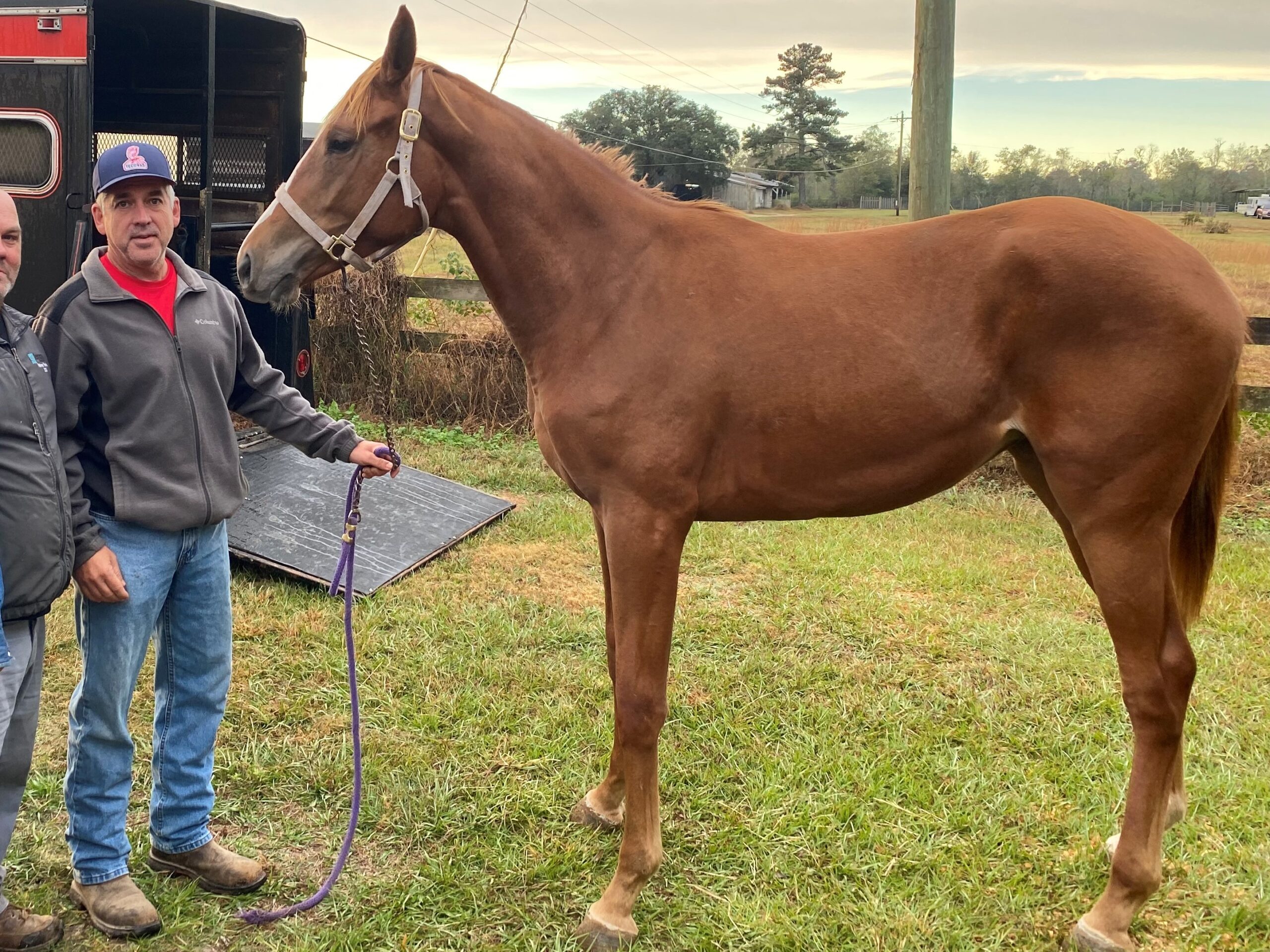
Miles Henry (legal name: William Bradley) is a professional horseman based in Folsom, Louisiana. He holds Louisiana Racing License #67012 and has spent over three decades managing Thoroughbreds at premier tracks including Fair Grounds, Delta Downs, and Evangeline Downs.
Expertise & Hands-On Experience: Beyond the track, Miles has decades of experience in specialized equine care, covering everything from hoof health and nutrition to training protocols for Quarter Horses, Friesians, and Paints. Every guide on Horse Racing Sense is rooted in this “boots-on-the-ground” perspective.
30 of their last 90 starts
Equibase Profile.

Connect with Miles: