
Last updated: April 20, 2026
Any links on this page that lead to products on Amazon are affiliate links and I earn a commission if you make a purchase. Thanks in advance – I really appreciate it!
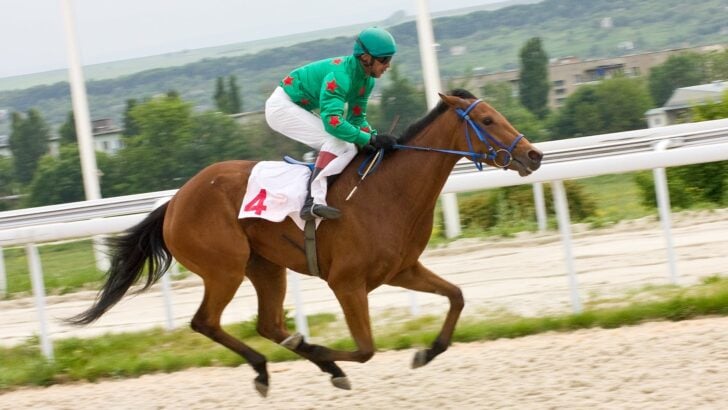
When a racehorse breaks down on the track, the decision to euthanize often happens within minutes. To people watching from the grandstand or at home, it can look like a rushed, callous choice. It isn’t. The biology of a horse’s leg makes that decision, in the most serious cases, the most humane option available — and understanding why requires understanding what a horse’s leg actually is and what happens when it fails at speed.
I’ve been a licensed Louisiana racehorse owner (#67012) for over 30 years. I’ve seen horses recover from fractures and return to competition. I’ve also been at the barn when the decision went the other way, and I’ve watched veterinarians make calls that I know were right even when they were painful. This article explains the biology, the veterinary decision-making process, and the real cases that illustrate when recovery is possible and when it isn’t. It is part of our Horse Racing Explained series — a complete guide to how the sport works.

Table of Contents
Why a Horse’s Leg Is So Vulnerable
Horses evolved as prey animals built for speed and flight. That evolutionary design produced extraordinary athletes — but it came with a structural trade-off that has no parallel in most other large mammals. A horse’s leg, from the knee down, contains almost no muscle. What you see when you look at a horse’s lower leg is bone, tendon, ligament, and a thin covering of skin. There is virtually nothing to cushion a fracture, nothing to stabilize a broken bone, and very little blood supply to support healing.
A Thoroughbred racehorse weighs between 900 and 1,200 pounds. That weight is distributed across four hooves, each roughly the size of a dinner plate, at the end of legs that taper dramatically from the knee down. During a race at full gallop, each foreleg absorbs a peak force equivalent to approximately three times the horse’s body weight at the moment of ground contact — roughly 3,600 pounds on a single leg, thousands of times per race. The engineering that makes this possible — long lever arms, spring-like tendons, precise bone geometry — is remarkable. But it is also unforgiving. When the geometry fails, it tends to fail catastrophically.
The Three Problems That Make Leg Fractures So Dangerous
When most people ask why racehorses are euthanized after breaking a leg, they’re thinking about the fracture itself. But the fracture is often not the immediate cause of euthanasia. It’s what the fracture triggers that makes recovery impossible or unconscionable in the worst cases. There are three interlocking problems, and they compound each other.
Problem 1: The Horse Cannot Stay Off Its Leg
Humans with broken legs heal lying down. A horse cannot. Horses have a unique anatomical system — the stay apparatus — that allows them to sleep standing up by locking their legs without muscular effort. But they cannot sustain a lying position for extended periods without serious consequences. A horse that lies down for too long develops pressure injuries to muscles and organs, impaired circulation, and a condition called recumbency myopathy — tissue death from sustained compression. Colic, the leading cause of death in horses, becomes dramatically more likely in recumbent animals because gut motility depends on movement.
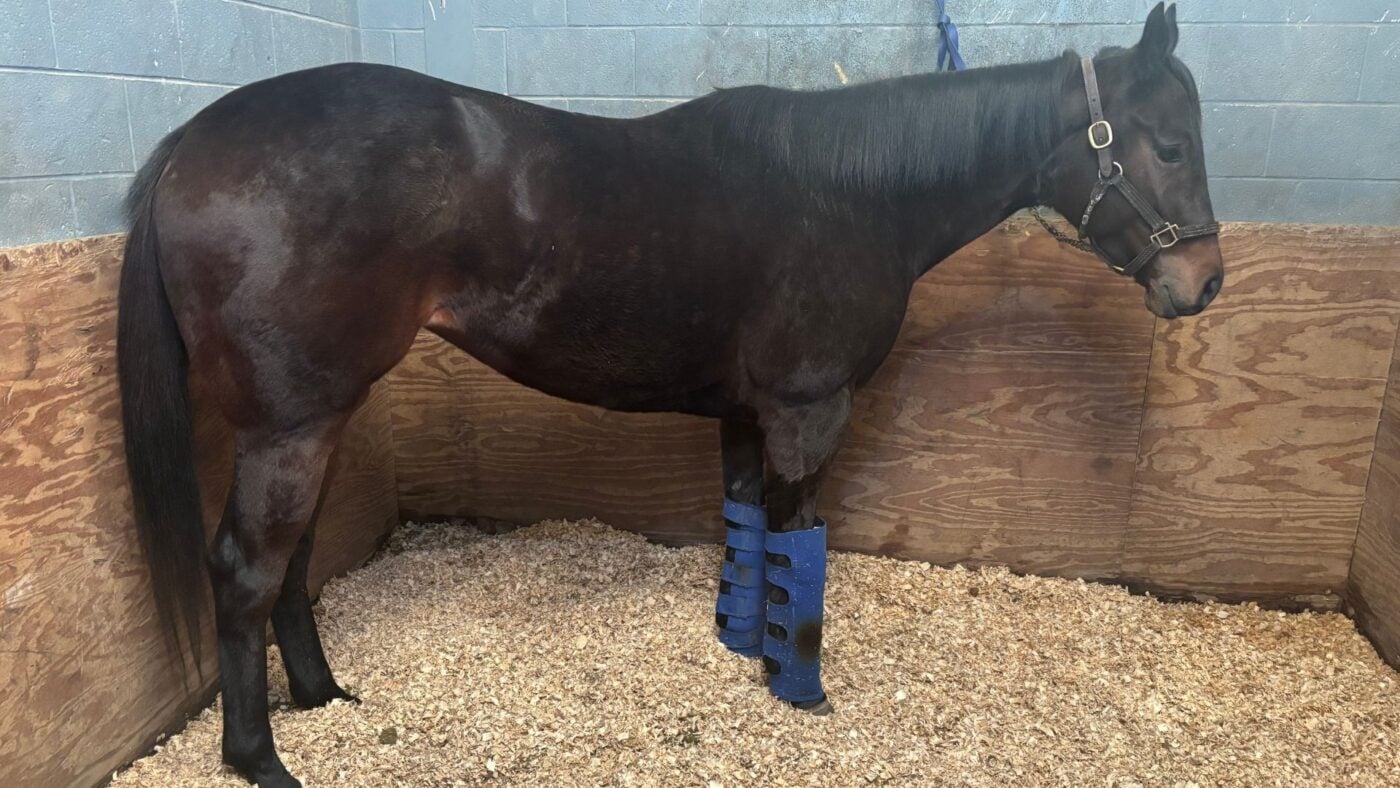
This means a horse recovering from a serious leg fracture must stand for the majority of every day, for months. On a leg that cannot bear weight. The engineering required to make that possible — specialized casts, slings, and surgical fixation — exists, but it works only when the fracture is in the right location, the right type, and the horse is a cooperative patient. Many horses are not cooperative patients. They fight the restraints, they panic, they thrash — and they re-fracture.
Problem 2: Laminitis in the Supporting Limb
When a horse injures one leg seriously, it immediately shifts its weight to the other three — and especially to the opposite leg. In a 1,000-pound animal, that weight shift is not trivial. The leg absorbing the extra load, particularly the opposite foreleg, is subjected to forces it was never designed to sustain continuously. Over days and weeks, this abnormal loading causes a condition called support-limb laminitis — inflammation and disruption of the laminar tissue that connects the hoof wall to the coffin bone inside.
Laminitis is exquisitely painful. In severe cases, the coffin bone rotates downward and can penetrate the sole of the hoof. It is extraordinarily difficult to treat, and in a horse already compromised by a major fracture, it is often fatal. Support-limb laminitis was the condition that ultimately required the euthanasia of Barbaro — not the original fracture, which his surgical team managed with remarkable skill, but the laminitis that developed in his left front leg as he bore weight on it for months. It is the most common secondary cause of death or euthanasia in horses recovering from serious leg injuries.
Problem 3: Poor Blood Supply and Infection Risk
The lower leg of a horse has limited blood circulation compared to other parts of the body. This is partly by design — the reduced vascular density in the lower limb helps prevent excessive blood loss from minor injuries in a prey animal — but it means that healing is slow, infection risk is high, and the tissue’s ability to recover from surgical intervention is limited. An open fracture — one where bone breaks through the skin — carries a very high risk of osteomyelitis (bone infection) in horses because of this poor vascularity. In humans, open fractures are serious. In horses, they are frequently fatal because the antibiotics and surgical debridement that work in species with better circulation cannot keep pace with the rate of infection in equine lower limb tissue.
Types of Fractures and What They Mean
Not all fractures are the same, and not all fractures require euthanasia. The type, location, and severity of the break determine whether treatment is viable.
| Fracture Type | Description | Prognosis | Notes |
|---|---|---|---|
| Stress fracture | Hairline crack from repetitive loading; bone not displaced | 80–90% recovery — Good outcome with rest and monitoring | Often caught on imaging before they become catastrophic |
| Slab fracture | Vertical split in carpal (knee) bones | 64–71% return to function — Good with surgery | Surgically repairable; requires months of rehab |
| Condylar fracture | Break at the lower end of the cannon bone (the long bone between the knee and fetlock) | 50–70% success — Moderate, depends on severity | Barbaro’s original injury; surgically repairable but risks are real |
| Sesamoid fracture | Break in the small bones behind the fetlock (the joint just above the hoof) | Variable — depends on how many bones are involved | Ruffian’s injury; multiple sesamoid fractures carry poor prognosis |
| Complete long bone fracture | Full break through the cannon bone, tibia, or femur (the major bones of the upper and lower leg) | Poor to grave — especially in adults | Weight-bearing impossible; fixation often fails under body weight |
| Open (compound) fracture | Bone breaks through the skin | Grave — high infection risk | Osteomyelitis risk is severe due to poor lower limb circulation |
Location matters as much as type. A fracture high on the limb — in the femur or pelvis — is almost always unsurvivable in an adult horse because the bone cannot be immobilized effectively and the horse cannot be kept off it. A fracture in the lower cannon bone, by contrast, may be surgically repairable because that area can be cast and stabilized while the horse bears modified weight on a specially constructed support.
When Horses Survive Leg Fractures
Recovery from a serious leg fracture is possible, and it happens more often than the high-profile euthanasia cases suggest. The horses that make it share a consistent profile: the fracture is in a surgically accessible location, it is caught early before significant displacement occurs, the horse is a manageable patient during recovery, and the secondary complications are caught and managed aggressively.
I’ve had direct experience on both sides of this. Two sister Thoroughbred mares I owned both suffered slab fractures during training — vertical splits in the carpal bone that ended their racing careers before they started. With prompt veterinary care and months of rehabilitation, both recovered fully and went on to second careers as pleasure horses. Slab fractures have a 60–70% chance of returning a horse to function, according to the veterinary literature, and the outcome matched those odds for both mares.
A colt I owned named Percy recovered from a cannon bone fracture through surgery and stall rest, and returned to racing within a year. The key in his case was early identification — he showed subtle lameness that we didn’t ignore, got imaging immediately, and the fracture was caught before it became displaced. That timing made the difference between a repairable injury and a catastrophic one.
| Treatment Option | Best Used For | Recovery Time | Success Rate |
|---|---|---|---|
| Stall rest and casting | Stress fractures, minor incomplete breaks | 3–6 months | High for appropriate cases |
| Internal fixation (plates and screws) | Slab, condylar, and repairable complete fractures | 6–12 months | 50–90% depending on fracture type |
| Stem cell / PRP therapy | Soft tissue support during bone healing | Adjunct to surgical recovery | Emerging evidence; reduces complication rates |
| Specialized slings and support | Horses that cannot bear weight during early recovery | Weeks to months | Limited by horse cooperation and complication risk |
When Euthanasia Is the Right Decision
The decision to euthanize a horse is made by a veterinarian, in consultation with the owner, based on a clinical assessment of the injury, the horse’s overall condition, and an honest prognosis. It is not made lightly, and it is not made for convenience. The AVMA Guidelines for the Euthanasia of Animals and the AAEP euthanasia guidelines both emphasize that the primary consideration is the prevention of suffering — not economics, not convenience, and not the horse’s racing value.
The fractures that lead to euthanasia on the track are typically those involving complete displacement of a major bone, open fractures with contamination, fractures in locations that cannot be immobilized, or situations where the horse is in such severe pain that any attempt at treatment would constitute prolonged suffering. A shattered cannon bone with multiple fragments, for example, cannot be reconstructed to support 1,000 pounds of body weight — the engineering simply doesn’t exist to make that work consistently. A fracture involving the femur or pelvis in an adult horse is almost never surgically survivable. An open fracture at the fetlock with bone exposed to track surface contamination carries an infection risk that is, in most cases, incompatible with recovery.
This article provides educational information about equine injury and veterinary decision-making. All decisions regarding the treatment or euthanasia of any horse should be made by a licensed veterinarian based on individual case assessment.
Famous Cases: Barbaro, Ruffian, and What They Taught Us
Barbaro (2006)
Barbaro’s breakdown during the 2006 Preakness Stakes — two weeks after his Kentucky Derby victory — became one of the most widely covered animal medical cases in American history. He suffered a lateral condylar fracture of the right hind leg: a break at the lower end of the cannon bone, with multiple fragments. His surgical team at the University of Pennsylvania’s New Bolton Center performed a five-hour operation that stabilized the original fracture with 27 screws and a steel plate.
Barbaro survived the surgery and the early recovery. What ultimately required his euthanasia, eight months later, was laminitis — specifically, the catastrophic laminitis that developed in his left hind leg and both front feet as he bore compensatory weight during recovery. The coffin bone in his left front hoof rotated and eventually penetrated the sole. Despite extraordinary veterinary effort and genuine progress at multiple points in his recovery, the laminitis became unsurvivable. His case is the clearest illustration of Problem 2 — the fracture was treated successfully; the secondary injury killed him.
Ruffian (1975)
Ruffian was undefeated in 10 starts, widely considered the fastest filly in American racing history, when she broke both sesamoid bones in her right foreleg during a match race against Kentucky Derby winner Foolish Pleasure at Belmont Park. The sesamoids are small bones behind the fetlock that act as pulleys for the deep digital flexor tendon — when both fracture simultaneously, the fetlock drops and the horse is essentially running on soft tissue.
Ruffian survived emergency surgery but woke from anesthesia in a state of extreme distress and thrashed violently before she could be restrained, re-fracturing the repaired leg and causing irreparable damage. She was euthanized on the operating table. Her case illustrates a different dimension of the problem: even when surgery is technically successful, recovery requires the horse to remain still and cooperative during a period when their instincts and pain level may work against them. It also accelerated interest in improved anesthetic and recovery protocols for equine surgery — protocols that are now significantly better than they were in 1975.

Prevention: What the Industry Is Doing
The racing industry’s injury prevention efforts have accelerated significantly since HISA (the Horseracing Integrity and Safety Authority) assumed federal oversight of safety standards in the United States. The data shows real progress in some areas, with ongoing challenges in others.
| Period | Fatality Rate per 1,000 Starts | Context |
|---|---|---|
| Pre-HISA (2018–2020 avg.) | ~1.60 | Baseline before federal standardization |
| 2024 Full Year | 0.90 | Significant improvement under HISA protocols |
| 2025 First Half | 1.06 | Mixed progress; nine tracks improved year-over-year |
| Synthetic tracks (all periods) | ~0.41 | Consistently lower than dirt; not universally adopted |
The specific interventions making the most difference are mandatory pre-race veterinary examinations, standardized track surface monitoring, advanced imaging requirements for horses with prior injuries, and real-time biomechanical monitoring systems like StrideSAFE, which is now deployed at multiple major tracks. Synthetic surfaces continue to show the largest single-factor reduction in catastrophic injury rates — roughly 60% fewer catastrophic injuries than comparable dirt tracks — but the adoption of synthetic surfaces has been slow due to cost and resistance from some segments of the industry.
The most effective prevention tool remains early detection of stress injuries before they become catastrophic. A stress fracture caught on imaging during a routine check is a manageable, often fully recoverable injury. The same stress fracture that completes during a race at 40 mph is frequently unsurvivable. The morning check I described in our training article — checking legs for heat, watching how the horse moves, noticing changes in attitude — is exactly the front line of this prevention system. The tools that make it work at the track level are the same ones that work in any barn.
FAQs: Why Are Racehorses Euthanized After Breaking a Leg?
Why are racehorses euthanized after breaking a leg?
Racehorses are euthanized after serious leg fractures because their anatomy makes recovery impossible or inhumane in many cases. A horse cannot lie down for extended periods without developing life-threatening complications, meaning it must remain standing throughout recovery — on a leg that cannot bear weight. Shifting weight to other legs triggers laminitis, a severely painful hoof condition that is often worse than the original injury. Poor blood circulation in the lower leg makes infection risk high and healing slow. When a fracture is irreparable, or when the secondary complications are unsurvivable, euthanasia is the humane choice.
Can racehorses survive a broken leg?
Yes — many do. The outcome depends heavily on the fracture type and location. Stress fractures heal with rest and monitoring. Slab fractures (vertical splits in the knee bones) have a 60–70% return-to-function rate with surgery. Condylar fractures (at the lower end of the cannon bone) are surgically repairable with 50–70% success rates. Complete fractures of major long bones, fractures in locations that cannot be immobilized, and open fractures with contamination carry much poorer prognoses. Early detection dramatically improves outcomes across all fracture types.
Why can’t horses just have their leg in a cast?
Casts are used in equine fracture treatment, but they address only part of the problem. The cast immobilizes the fracture site, but it cannot resolve the other issues: the horse still cannot lie down without complications, it still shifts weight to other legs which triggers laminitis risk, and it still must support 1,000+ pounds on the healing limb. In humans, a cast plus bed rest solves the problem. In horses, bed rest is not possible, and the weight-bearing demands on the healing bone are far beyond what any human fracture management requires.
What is laminitis and why does it kill horses with broken legs?
Laminitis is a painful inflammation of the laminar tissue that connects the hoof wall to the coffin bone inside the hoof. In severe cases, the coffin bone rotates downward and can penetrate the sole of the hoof, causing chronic pain that is extremely difficult to manage. A horse recovering from a leg fracture shifts its weight continuously to its other legs, particularly the opposite limb. This sustained abnormal loading causes support-limb laminitis in the overloaded leg. This was the secondary condition that ultimately required the euthanasia of Barbaro — his surgical team managed the original fracture successfully, but the laminitis that developed during recovery became unsurvivable.
Why do horses often panic after a fracture, making treatment harder?
Horses are prey animals with a deeply wired flight response. When they feel severe pain and loss of control over their movement, their instinct is to run — even on a broken leg. This instinctive response can cause horses to thrash, attempt to rise, or struggle against restraint, re-fracturing surgically repaired bones and causing additional injuries. Ruffian’s death was directly related to this response — she woke from surgery in extreme distress and re-fractured her repaired leg before she could be controlled. Managing this response is one of the major challenges in equine fracture recovery, and improved anesthetic and recovery protocols since the 1970s have meaningfully reduced this risk.
What was wrong with Barbaro’s leg and why did he die?
Barbaro suffered a lateral condylar fracture — a break at the lower end of the cannon bone — during the 2006 Preakness Stakes. His surgical team performed a five-hour operation that stabilized the fracture with 27 screws and a steel plate, and he survived the initial surgery successfully. He was euthanized eight months later not because of the original fracture, which was managed well, but because of catastrophic laminitis that developed in his other legs as he bore compensatory weight during recovery. The laminitis caused the coffin bone in his left front hoof to rotate and penetrate the sole, eventually reaching a point where further treatment would only prolong suffering.
How common are catastrophic leg injuries in racehorses?
Under HISA’s 2024 data, the fatality rate in U.S. horse racing was approximately 0.90 per 1,000 starts — meaning roughly one fatality for every 1,111 race starts. This represents a significant improvement from pre-HISA rates of approximately 1.60 per 1,000. Synthetic tracks show rates approximately 60% lower than dirt tracks. Not all racing fatalities are leg fractures — cardiac events and other causes also contribute — but catastrophic musculoskeletal injuries are the most common cause. The overall trend is downward, though the reduction is unevenly distributed across tracks.
Is euthanizing racehorses ethical?
The consensus among veterinary and animal welfare organizations — including the AVMA and AAEP — is that euthanasia of a horse with an unsurvivable or inhumane-to-treat injury is the most ethical option available, because it ends severe suffering immediately. The ethical questions in racing are more appropriately directed at whether enough is being done to prevent the injuries in the first place: track surface standards, pre-race veterinary screening, training load monitoring, and the conditions under which horses are raced. Those are legitimate and ongoing debates. Euthanasia itself, in the cases where it is chosen, is generally the most humane act possible given the circumstances.
Conclusion
The question of why racehorses are put down after breaking a leg is ultimately a question about biology. The horse’s anatomy — designed over millions of years for speed — creates a set of constraints that veterinary medicine has made progress against but has not overcome. A broken leg in a horse is not like a broken leg in a human. It is three simultaneous problems: the fracture itself, the inability to rest the injury during healing, and the cascade of secondary conditions that the injury triggers. When all three converge in an unsurvivable configuration, euthanasia is not a failure of care. It is the most direct expression of it.
The industry’s obligation is to reduce the number of times that question has to be answered — through better track surfaces, better pre-race screening, better training practices, and the willingness to acknowledge when a horse is telling you something is wrong before a race, not after. The progress is real and measurable. It is also incomplete, and the work continues.
For more on how training practices affect injury risk and what morning monitoring actually looks like at the barn level, see our guide to training racehorses for speed. For a full overview of how the sport works — from race types to ownership economics — the Horse Racing Explained hub is the place to start.
Have you watched a horse recover from a serious injury, or do you have questions about a specific case or fracture type? Drop it in the comments — the specific situations are always more useful than the general questions.
Sources
- PubMed — Long-term outcome of slab fractures in horses: pubmed.ncbi.nlm.nih.gov
- PubMed — Survival and complications in equine fracture repair: pubmed.ncbi.nlm.nih.gov
- BEVA / Equine Veterinary Journal — Condylar fracture management: beva.onlinelibrary.wiley.com
- ACVS — Fractures in horses: surgical repair: acvs.org
- AVMA — Guidelines for the Euthanasia of Animals: avma.org
- AAEP — Euthanasia guidelines: aaep.org
- HISA — Safety metrics and fatality data: hisaus.org
- AVMA — Barbaro case: veterinarian’s account: avma.org
This article provides educational information about equine anatomy, fracture management, and veterinary decision-making. All decisions regarding the treatment or euthanasia of any horse should be made by a licensed veterinarian based on individual case assessment. Statistical data reflects published sources and is subject to update.
About Miles Henry
Racehorse Owner & Author | 30+ Years in Thoroughbred Racing
Miles Henry (legal name: William Bradley) is a professional horseman based in Folsom, Louisiana. He holds Louisiana Racing License #67012 and has spent over three decades managing Thoroughbreds at premier tracks including Fair Grounds, Delta Downs, and Evangeline Downs.
Expertise & Hands-On Experience: Beyond the track, Miles has decades of experience in specialized equine care, covering everything from hoof health and nutrition to training protocols for Quarter Horses, Friesians, and Paints. Every guide on Horse Racing Sense is rooted in this “boots-on-the-ground” perspective.
30 of their last 90 starts
Equibase Profile.

Connect with Miles: