
Last updated: July 22, 2026
Any links on this page that lead to products on Amazon are affiliate links and I earn a commission if you make a purchase. Thanks in advance – I really appreciate it!
Why do horses lick people? Most often, it’s the salt on your skin — horses crave sodium and other minerals that hay and standard feed don’t fully provide. Beyond that, licking can be a social or affectionate gesture, a stress response when a dry mouth is refilling with saliva, simple curiosity, or a sign of boredom. Rarely, persistent licking or chewing can point to a dental or neurological issue worth a vet visit.
Table of Contents
Salt: The Most Common Reason
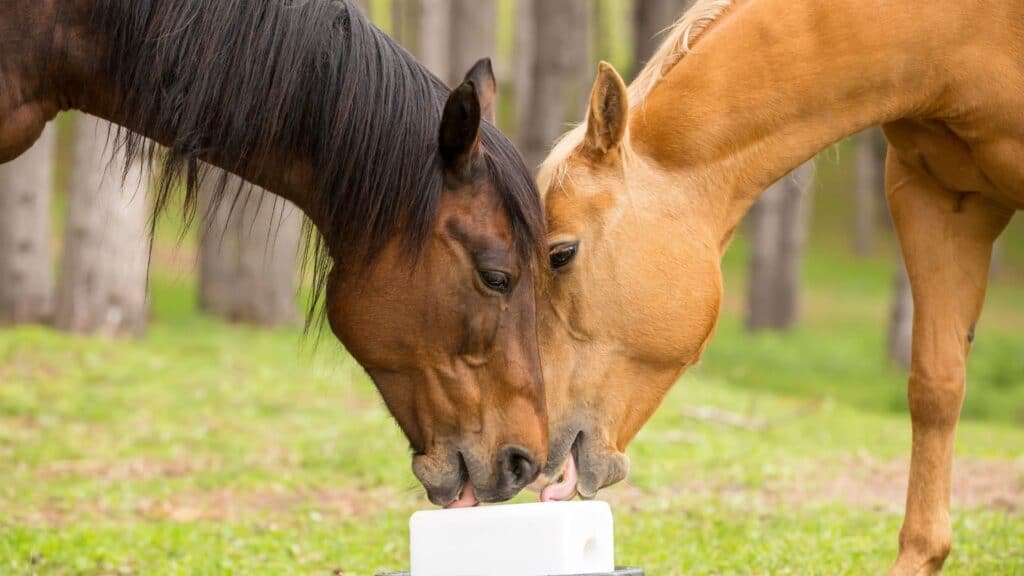
Ask any experienced horse owner why their horse licks people, and salt is usually the first answer. Human skin carries a thin layer of salt from sweat, and horses are drawn to it the same way they’re drawn to a salt block in the pasture. Hay and standard feed don’t supply much sodium or trace minerals on their own, so a horse running short will look for it wherever it can — including you.
This craving tends to show up more after exercise, when a horse has lost salt through sweat the same way a person does. If your horse licks you consistently, especially after a workout, it’s worth checking that it has reliable access to a salt lick or mineral lick in the pasture or stall — not to stop the licking necessarily, but to make sure a real nutritional need is being met rather than assumed away.
Miles’ Take: a plain salt or mineral lick is one of the cheapest, lowest-effort things you can add to a stall or paddock. It won’t necessarily stop a horse that’s licking you for social reasons, but it takes the nutritional question off the table so you can actually tell the difference.

Social Bonding and Affection
Horses are herd animals, and that instinct doesn’t switch off just because they’re living with people instead of other horses. In a herd, horses groom each other, stand close together, and use touch to reinforce social bonds. Many horses extend that same behavior to the humans they spend the most time with — a lick can simply be a horse treating you the way it would treat another horse it trusts.
This is especially common in horses that spend a lot of time alone or without regular turnout with other horses. A horse that doesn’t get much social contact from its own kind may direct more of that grooming behavior toward the person who feeds and handles it.
It’s worth being cautious about one older idea here: the notion that every interaction with a horse is a contest over “dominance,” and that a horse that licks, noses, or pushes on you is testing whether it or you is “in charge.” Modern equine behavior research has moved away from that framing. Horses do test boundaries — a horse that gets away with pushy behavior will keep doing it, simply because it worked, not because it’s staging a coup for herd leadership. The practical fix is the same either way: consistent, clear handling and a defined personal space, taught through patient repetition rather than a battle of wills.

Stress and the Licking-Chewing Response
A startled horse’s mouth dries out for the same reason a person’s does under stress — the nervous system diverts resources away from saliva production during a fight-or-flight moment. Once the moment passes and the horse relaxes, saliva production ramps back up, and you’ll often see a horse lick and chew as that saliva returns. Horses that spook easily may show this pattern more often than calmer horses simply because they’re triggered more frequently.
This licking-and-chewing response doesn’t always target a specific object or person — sometimes it’s just the horse processing the moment, with or without you nearby. If you happen to be close by when it happens, it can look like the horse is licking you specifically, when really the timing is coincidental to the stress response resolving.
Curiosity, Instinct, and Taste
Horses explore the world with their mouths in a way that goes beyond eating. Tasting something is partly how a horse checks whether it’s safe, and that curiosity extends to hands, clothing, and skin — especially with young or particularly inquisitive horses.
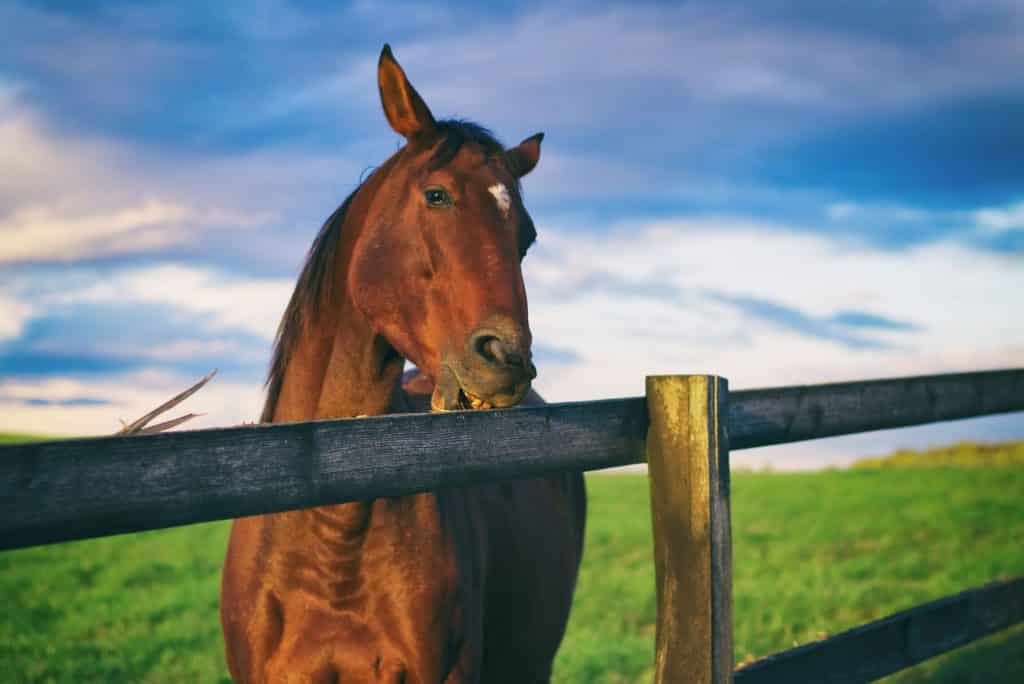
Horses also have a strong innate drive to chew. In the wild, they spend most of their waking hours foraging, and that near-constant chewing instinct doesn’t disappear just because a domesticated horse’s feed schedule is more concentrated. When forage isn’t readily available, that instinct gets redirected toward whatever’s chewable — wooden fencing, stall walls, lead ropes, or your hand.
The most reliable fix is giving the horse more to chew on throughout the day: slow-feeding hay through a hay net so a flake lasts longer, switching to a lower-calorie forage like straw where appropriate, or using a grazing muzzle if weight management is also a concern. Talk to your vet before making a significant forage change, since the right answer depends on the horse’s workload and condition.
Boredom and Stable Vices
Licking or chewing that develops into a genuine stable vice, like cribbing, is a different situation from the chewing-instinct behavior above. This tends to show up in horses that are understimulated — kept alone, without turnout, or without enough to occupy their mind during long hours in a stall.
If a stable vice develops, talk to your vet before trying to solve it yourself. Some cases respond well to adding a companion animal or more turnout time; others need a more structured approach. Bitter-tasting deterrent products exist for surfaces a horse is chewing on, and horses can absolutely taste them — but they’re a management tool for a specific surface, not a fix for the underlying boredom or isolation driving the behavior.
When Licking Signals a Health Problem
When to call the vet: occasional licking is normal horse behavior. But a sudden change in licking or chewing habits, especially paired with abnormal chewing, difficulty eating, weight loss, or gait changes, is worth a veterinary exam. Dental problems and TMJ issues can alter how a horse holds and moves its jaw, and some neurological conditions can affect mouth behavior as well as gait. This is uncommon, but it’s exactly the kind of thing that’s easy to dismiss as a quirky habit until it isn’t.
What It Means When a Horse Licks You
Put together, a lick from your horse is rarely one single thing. Horses communicate through body language, scent, and physical contact far more than through the vocalizations we tend to associate with animal communication, and licking fits into that toolkit in several different ways depending on context. A horse that licks you while being groomed or handled calmly is very often showing comfort and trust. A horse that licks you right after a hard workout is very often chasing salt. A horse that licks fence posts and stall walls with the same energy is very often just chewing out of instinct or boredom.
None of that requires you to diagnose the exact motive every time. What matters more is paying attention to the pattern: when it happens, how often, and whether anything else has changed. That’s usually enough to tell the difference between an affectionate quirk and something worth a vet visit.

Key Takeaways
- Salt is the most common driver — hay and standard feed don’t fully cover a horse’s sodium and mineral needs, and human skin carries salt from sweat
- Licking is often social, not submissive — herd animals use touch to bond, and the old “dominance test” framing has largely been replaced by more accurate learning-theory explanations
- Stress can cause it too — a startled horse’s dry mouth refills with saliva once it relaxes, producing a licking-chewing response that isn’t really about you
- Chewing instinct and boredom are different problems — one is solved with more forage access, the other needs more mental stimulation or social contact
- Rare, but worth knowing: sudden changes in licking or chewing, especially with other symptoms, warrant a vet visit rather than an assumption
Below is a YouTube video on why horses lick and chew.

FAQs About Why Do Horses Lick People
Why does my horse lick me all the time?
Most often it’s a craving for the salt on your skin, especially if the licking increases after exercise. It can also be a social or affectionate habit, particularly in horses that don’t get much contact with other horses.
Does a horse licking you mean it loves you?
It’s a reasonable sign of comfort and trust, especially if it happens during calm handling or grooming. It’s not the same as human affection, but it does reflect a horse treating you the way it would treat a trusted herd member.
Is it bad to let a horse lick you?
Occasional licking is harmless. It’s worth setting a boundary if licking turns into nipping, mouthing, or pushy behavior, since that pattern can escalate if it’s never addressed — not because the horse is plotting dominance, but because behavior that gets no response tends to continue.
Why does my horse lick and chew after training?
This is usually a stress-response pattern — the horse’s mouth dried out during a tense or demanding moment, and licking and chewing shows up as saliva production returns once the horse relaxes. It’s generally considered a good sign that the horse is processing and settling.
Should I give my horse a salt block if it licks me?
It’s a reasonable first step if you suspect a mineral gap, and it’s inexpensive and low-risk either way. It won’t necessarily stop social licking, but it rules out an unmet nutritional need as the cause.
When should I worry about a horse’s licking or chewing?
If the behavior changes suddenly, or shows up alongside difficulty eating, weight loss, or gait changes, it’s worth a veterinary exam. Dental issues, TMJ problems, and some neurological conditions can affect mouth behavior, though this is uncommon.
Related articles:
About Miles Henry
Racehorse Owner & Author | 30+ Years in Thoroughbred Racing
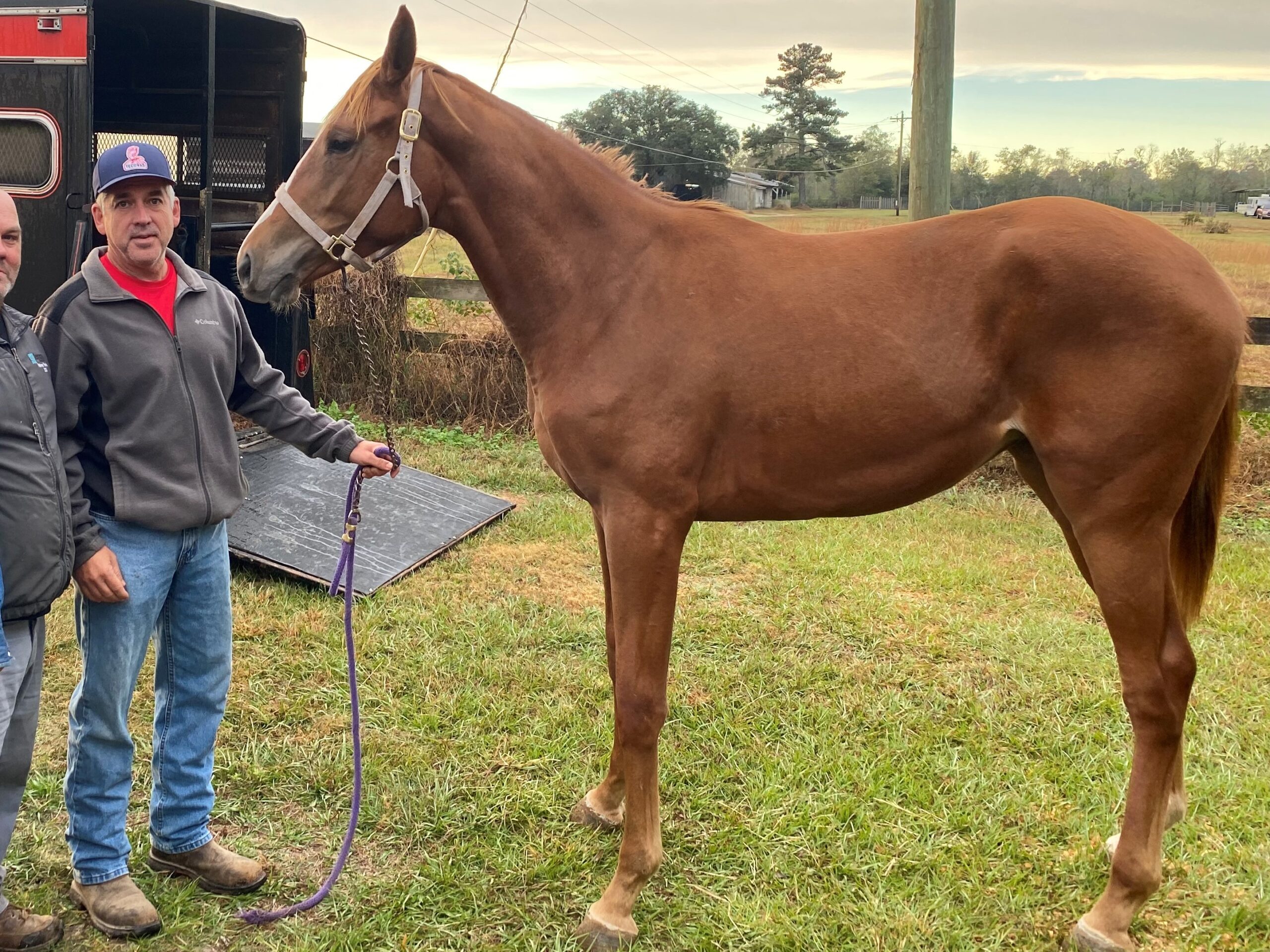
Miles Henry (legal name: William Bradley) is a professional horseman based in Folsom, Louisiana. He holds Louisiana Racing License #67012 and has spent over three decades managing Thoroughbreds at premier tracks including Fair Grounds, Delta Downs, and Evangeline Downs.
Expertise & Hands-On Experience: Beyond the track, Miles has decades of experience in specialized equine care, covering everything from hoof health and nutrition to training protocols for Quarter Horses, Friesians, and Paints. Every guide on Horse Racing Sense is rooted in this “boots-on-the-ground” perspective.
30 of their last 90 starts
Equibase Profile.

Connect with Miles: