
Last updated: May 26, 2026
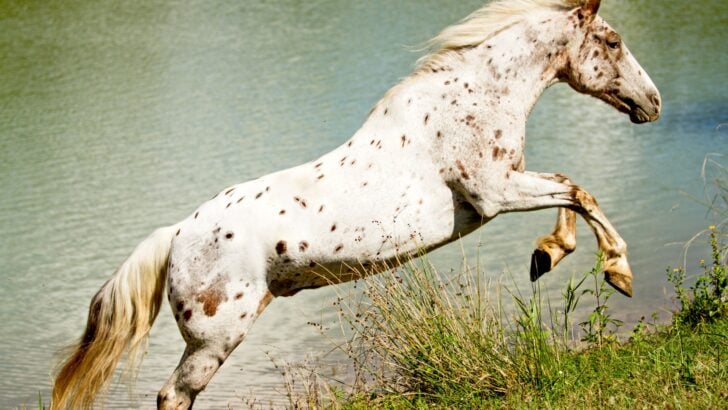
The Appaloosa horse never fails to turn heads — spotted coat, sharp intelligence, and genuine versatility across Western and English disciplines. Bred for speed, stamina, and steady temperament, these horses excel on the trail, in the arena, and working cattle. I’ve spent years riding and caring for Appaloosas, and I’m always impressed by their smarts, work ethic, and the fascinating range of coat patterns the breed produces.
What is an Appaloosa horse? An Appaloosa is a spotted horse breed developed by the Nez Perce of the Pacific Northwest, recognized by the Appaloosa Horse Club (ApHC) since 1938. The breed is defined by four characteristics that appear together: a spotted coat pattern (Leopard Complex gene), mottled skin around the muzzle and eyes, striped hooves, and visible white sclera around the eye.
| Characteristic | Detail |
|---|---|
| Height | 14.2–16 hands (58–64 inches) |
| Weight | 950–1,250 lbs (430–567 kg) |
| Lifespan | 25–35 years |
| Origin | Nez Perce, Pacific Northwest (Idaho / PNW region) |
| Registry | Appaloosa Horse Club (ApHC) — 700,000+ registered; ~10,000 new annually |
| Coat patterns | Blanket, Leopard, Snowflake, Varnish Roan, Frost, Few Spot |
| Primary health risk | Equine Recurrent Uveitis (ERU) — 8× more common than in other breeds |
| Disciplines | Western, English, endurance, trail, family riding |
About this guide: Appaloosa genetic and health information is sourced from the UC Davis Veterinary Genetics Laboratory and Appaloosa Horse Club breed standards.
Table of Contents
Appaloosa History and Cultural Significance

The story of the Appaloosa begins with the Nez Perce tribe in the Pacific Northwest. In the 18th century, these skilled horsemen began selectively breeding horses for agility, intelligence, endurance, and their distinctive spotted coats — markings that provided natural camouflage and became a hallmark of the tribe’s horsemanship. The name “Appaloosa” derives from the Palouse River region of Idaho where the breed was concentrated.
After the Nez Perce War of 1877, the breed nearly vanished. U.S. Army policies dispersed their herds, and the genetic lines that produced the spotted patterns came close to being lost permanently. Thanks to dedicated preservationists, the Appaloosa Horse Club (ApHC) was founded in 1938, ensuring the breed’s survival. Today the Appaloosa is one of the largest horse registries in the world — over 700,000 horses registered, approximately 10,000 new registrations annually.
The modern chapter of that story is still being written. In the 1990s, the Nez Perce tribe launched the Nez Perce Horse breeding program, deliberately crossing Appaloosas with Akhal-Tekes to restore the athleticism, endurance, and distinctive characteristics of their original horses. The resulting Nez Perce Horse is a registered breed in its own right — a living continuation of the tribe’s horsemanship traditions, not just a historical footnote.
Appaloosa Colors, Coat Patterns, and Genetics
The Appaloosa’s spotted coat is driven by the Leopard Complex (LP) gene — a dominant mutation confirmed by the UC Davis Veterinary Genetics Laboratory. The LP gene’s effects are modified by PATN genes, which influence the size, shape, and distribution of spots. This interaction between LP and PATN genes produces the breed’s wide range of pattern expressions. For a deeper technical breakdown, see our science of horse coat colors guide.

Common Appaloosa Coat Patterns
| Pattern | Description | Key Identifier |
|---|---|---|
| Blanket | White overlay over the hips, often with dark spots within the white area | Most recognized breed trait; white confined to hindquarters |
| Leopard | Dark spots distributed over a white or light base coat — the “Dalmatian” pattern | Spots over the entire body, not confined to hips |
| Snowflake | White spots on a darker base coat; spots can increase in number as the horse matures | Pattern progresses with age — more spots appear over time |
| Varnish Roan | Dark hairs interspersed with white specifically on the face and bony areas | Mottling concentrated on face and prominences; contrast increases with age as light areas lighten further |
| Frost | White hairs concentrated along the topline and hips; often transitional toward varnish roan | Rare variant — subtle pattern most visible along the spine |
| Few Spot Leopard | Nearly white horse with minimal spotting; can appear almost solid | Requires parent lineage documentation for registration |
The color shift — what buyers need to know: Many Appaloosa foals are born with a solid or minimal pattern and do not develop their full spotting until later in life. When evaluating a prospect, rely on lineage and parent patterns rather than the current coat to anticipate the horse’s future appearance. A foal that looks nearly solid at birth may develop a striking leopard or blanket pattern by age 3 to 5.

Physical Characteristics and Temperament
Beyond the spotted coat, the Appaloosa has four physical characteristics that must appear together for ApHC registration — they are the biological markers of the Leopard Complex mutation, not just cosmetic traits.
The four ApHC registration markers:
- Spotted coat pattern — any of the recognized LP gene expressions listed above
- Mottled skin — pigmented and non-pigmented patches around the muzzle, eyes, and genitalia; unique to the breed
- White sclera — the visible white of the eye is more pronounced than in most breeds; a consistent identifier at any age
- Striped hooves — alternating light and dark vertical striping; generally strong and healthy
Appaloosas typically stand 14.2 to 16 hands and weigh 950 to 1,250 pounds, with an athletic, sturdy build and well-muscled hindquarters inherited from their Quarter Horse and Thoroughbred influences. Their temperament is one of the breed’s most underrated attributes — they are intelligent, curious, and eager to please, with a capacity for deep bonds with consistent handlers. They respond well to positive reinforcement and are generally suitable for riders of all experience levels.

Appaloosa Health: Common Issues and Care
Appaloosas are generally hardy, but the same LP gene that produces their distinctive coat creates specific genetic health vulnerabilities that every owner must manage proactively.
Equine Recurrent Uveitis (ERU) — the primary health concern: Appaloosas are approximately 8 times more likely to develop ERU (moon blindness) than other breeds. This chronic, painful eye inflammation affects up to 10% of the breed and is directly linked to the leopard spotting gene — horses with more pronounced spotting carry higher risk. Confirmed by UC Davis VGL ERU testing.
- Signs to watch for: Squinting, tearing, cloudiness, sensitivity to light
- Management: Annual eye exams starting before age 2; UV-protective fly masks year-round in sunny climates; prompt veterinary treatment at first signs — delayed treatment accelerates vision loss
- Breeding note: Homozygous LP (LP/LP) horses also carry Congenital Stationary Night Blindness (CSNB) — permanent inability to see in low light. Genetic testing identifies LP/LP status before purchase.
General Care Requirements
| Care Category | Annual Cost (USD) | Appaloosa-Specific Notes |
|---|---|---|
| Feed and forage | $2,000–$4,000 | High-quality forage, balanced minerals; copper and zinc support coat quality |
| Farrier care | $600–$1,200 | Striped hooves require the same farrier schedule as any horse; hoof strength varies by individual management and nutrition, not stripe color |
| Routine vet care | $800–$1,500 | Include annual ERU eye screening; UC Davis LP genetic test recommended at purchase |
| UV protection | $200–$400 | Light-colored mottled skin burns; UV fly masks and zinc sunscreen on unpigmented areas essential in summer |
| Emergency / ERU treatment | $500–$3,000+ | ERU flare-ups require immediate vet attention; cyclosporine implants for chronic cases can run $1,500–$2,500 |
| Initial purchase | $8,000–$25,000 (well-started pleasure horses); performance-proven competition horses with show records run $30,000–$60,000+ | Registered patterns with ApHC papers command a 20%+ premium over unregistered horses; top cutting and reining Appaloosas can exceed $100,000 |
Versatility and Disciplines
The Appaloosa’s combination of Quarter Horse athleticism, Thoroughbred stamina, and an inherently curious temperament makes it one of the genuinely versatile breeds — not a marketing claim but a reflection of how the Nez Perce bred them: to do many things well under demanding conditions. I’ve seen Appaloosas used in cutting competitions at ranches around the Fair Grounds circuit and they hold their own against Quarter Horses far more often than their reputation suggests.
Where Appaloosas excel:
- Western disciplines: Western pleasure, reining, cutting, barrel racing, trail, ranch work — the breed’s primary competitive arena where it has the deepest registry support
- English disciplines: Dressage, show jumping, eventing — increasingly competitive, particularly in lower-level eventing where stamina matters more than pure scope
- Endurance riding: Hardy and reliable for long-distance work; the LP gene carries no performance penalty and the breed’s natural stamina is genuine
- Family and trail riding: Calm, reliable, and suitable for riders of all ages when properly trained; their intelligence means they remember routes and respond well to novice cues
Training principle — variety keeps them sharp: Appaloosas thrive on mental challenge. Rotating disciplines weekly — trail one day, reining the next, arena work on weekends — prevents the boredom that makes intelligent horses difficult. A bored Appaloosa will find its own entertainment, which is rarely what you want. Consistent positive reinforcement during transitions builds confidence across disciplines faster than repetitive drilling in a single discipline.

Appaloosa vs. Paint Horse
Appaloosas and Paint Horses are frequently confused because both have distinctively patterned coats, but they are genetically unrelated and visually distinct once you know what to look for.
| Feature | Appaloosa | Paint Horse |
|---|---|---|
| Pattern gene | Leopard Complex (LP) gene | Tobiano, Overo, or Tovero genes |
| Pattern type | Spots, blankets, roaning — often subtle gradients | Bold, sharp-edged white patches over a solid base color |
| Mottled skin | Yes — required for registration | No |
| White sclera | Prominent — a registration marker | Not a defining trait |
| Striped hooves | Yes — a registration marker | No |
| Origin | Nez Perce tribe, Pacific Northwest | Quarter Horse and Thoroughbred foundation stock |
| Registry | Appaloosa Horse Club (ApHC) | American Paint Horse Association (APHA) |
| Primary health risk | ERU (moon blindness), CSNB | HYPP in some Quarter Horse bloodlines; OLWS in frame overo patterns |
For a complete comparison including pattern genetics and registration criteria, see our American Paint Horse guide.
Buying and Owning an Appaloosa
Three things to confirm before buying any Appaloosa, in order of importance.
Pre-purchase checklist — three non-negotiables:
- LP genetic test result: Know whether the horse is LP/n (heterozygous, lower ERU and CSNB risk) or LP/LP (homozygous, higher ERU risk and confirmed CSNB). This single piece of information changes the management protocol for the horse’s entire life. UC Davis tests for approximately $25 from a hair sample.
- Eye examination: Have a veterinarian perform a full ophthalmic exam before purchase. Existing uveitis damage may not be immediately visible but will be apparent under examination. Any sign of ERU in a horse under 5 is a significant red flag.
- ApHC papers and pattern registry: Registered patterns unlock premium show classes and boost resale value by 20% or more. For solid-colored or “few spot” prospects, require parent photos and lineage documentation before accepting any claim about future pattern development.

FAQs
Are Appaloosas good for beginners?
Yes, with consistent training. Appaloosas are intelligent, willing, and generally eager to please — traits that make them suitable for novice riders when the horse has been properly started and the rider receives instruction. Their intelligence is double-edged: they learn quickly and retain both good habits and bad ones. Consistent positive reinforcement from the beginning is more important with this breed than with more forgiving, less curious horses.
How long do Appaloosa horses live?
With proper care, Appaloosas typically live 25 to 35 years — robust longevity driven in part by their hardy Nez Perce breeding heritage. The primary factor that shortens Appaloosa lifespan is untreated or poorly managed ERU. Proactive eye monitoring and prompt treatment of uveitis flare-ups significantly extend quality of life in affected horses.
Are Appaloosas fast?
Yes. Appaloosas are athletic horses registered and competitive in ApHC speed events and barrel racing. They are not as fast as Quarter Horses at a quarter mile or Thoroughbreds at classic distances, but they combine speed, stamina, and versatility well. The LP gene carries no performance penalty.
Are all spotted horses Appaloosas?
No. Several other breeds produce spotted patterns through entirely different genetic mechanisms. Pintos and Paint Horses carry Tobiano or Overo genes. Knabstruppers carry their own European spotted gene. Pony of the Americas (POA) is a registry cross combining Appaloosa and pony genetics. True Appaloosas are identified by the four LP gene markers together: coat pattern, mottled skin, white sclera, and striped hooves — not just spots.
What is moon blindness in Appaloosas?
Moon blindness is the common name for Equine Recurrent Uveitis (ERU), a chronic autoimmune inflammation of the eye that is 8 times more common in Appaloosas than in other breeds. Flare-ups cause pain, cloudiness, and light sensitivity, and repeated episodes progressively damage vision. It is the most important health consideration when buying or owning an Appaloosa. Genetic testing identifies LP/LP horses (highest risk) and annual ophthalmologic exams catch early damage before it becomes irreversible.
Are Appaloosa horses rare?
No. With over 700,000 horses registered with the ApHC and approximately 10,000 new registrations annually, the Appaloosa is one of the largest horse registries in the world. The breed came close to extinction in the early 1900s following the Nez Perce War, but the ApHC’s 1938 founding stabilized and grew the population significantly. Specific patterns like the few spot leopard are uncommon within the breed, but the breed itself is widely available across North America.
What is the difference between Appaloosa and Quarter Horse?
Quarter Horses are defined by conformation, speed at a quarter mile, and working cattle ability — coat color is irrelevant to registration. Appaloosas are defined by the LP gene markers (spots, mottled skin, white sclera, striped hooves) and often carry significant Quarter Horse breeding in their background. An Appaloosa-patterned horse with Quarter Horse breeding is registered with the ApHC; a solid-colored horse from the same breeding lines is registered with AQHA. The two registries do not overlap.


Key Takeaways: Appaloosa Horse
- The breed is defined by four markers, not just spots — spotted coat, mottled skin, white sclera, and striped hooves must all be present for ApHC registration; spots alone do not make an Appaloosa.
- The LP gene creates both the spots and the health risks — the same gene that produces the coat also elevates ERU risk 8x; there is no way to have one without the potential for the other.
- LP/LP horses have CSNB permanently — homozygous Appaloosas cannot see in low light at any point in their life; this affects training, turnout, and riding decisions.
- Annual eye exams are non-negotiable — ERU is progressive and treatable when caught early; delayed treatment leads to vision loss that cannot be reversed.
- Foal coat does not predict adult pattern — rely on parent lineage and LP genetic testing, not the current coat appearance, when evaluating a young horse’s future appearance.
- ApHC registration adds 20%+ to resale value — confirm papers and pattern registry status before purchase; ask for parent documentation on few-spot prospects.
- The breed is versatile and widely available — over 700,000 registered horses, competitive in Western and English disciplines, suitable for trail and family riding; not rare, not a niche breed.
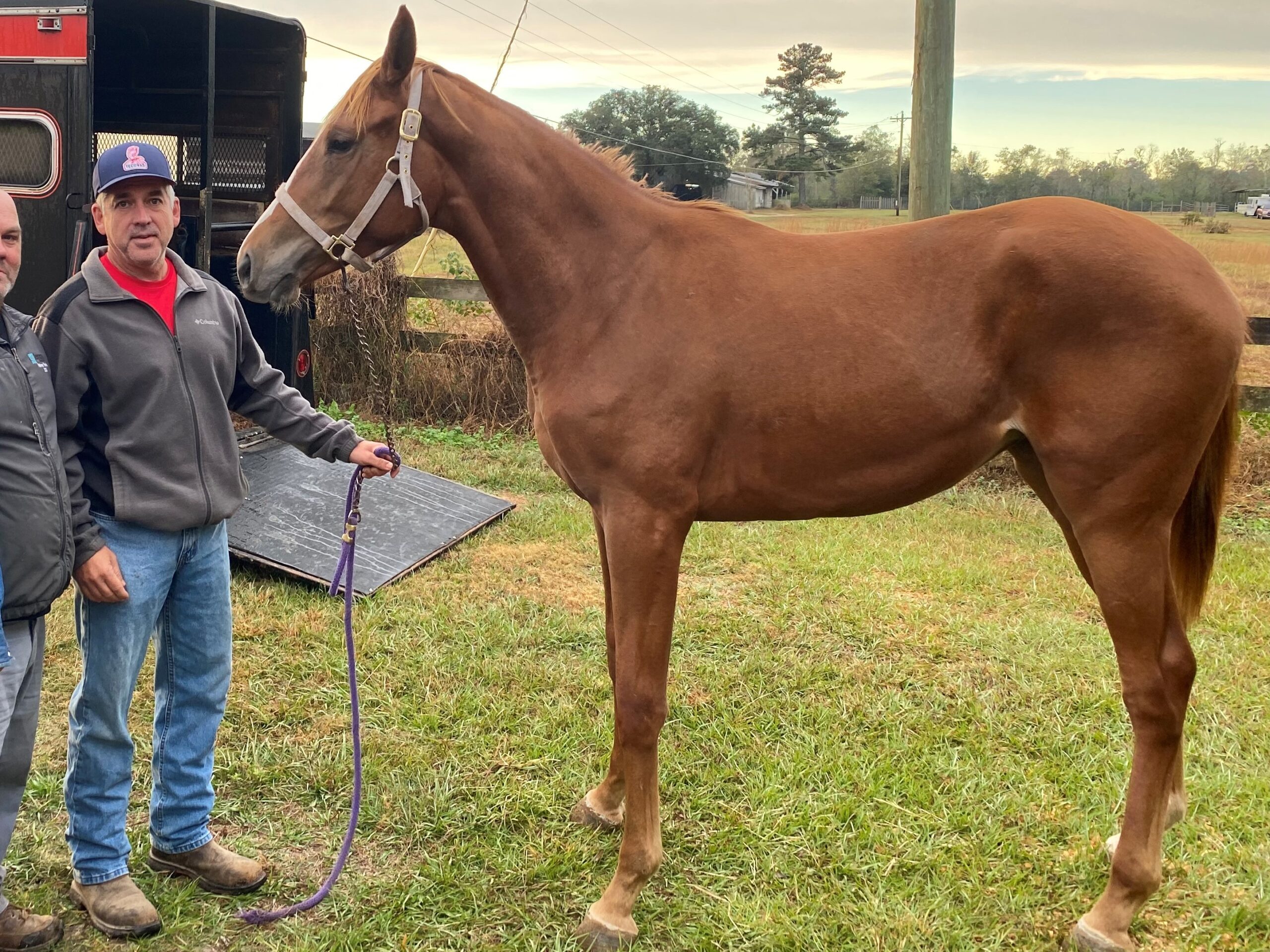
About Miles Henry
Racehorse Owner & Author | 30+ Years in Thoroughbred Racing
Miles Henry (legal name: William Bradley) is a professional horseman based in Folsom, Louisiana. He holds Louisiana Racing License #67012 and has spent over three decades managing Thoroughbreds at premier tracks including Fair Grounds, Delta Downs, and Evangeline Downs.
Expertise & Hands-On Experience: Beyond the track, Miles has decades of experience in specialized equine care, covering everything from hoof health and nutrition to training protocols for Quarter Horses, Friesians, and Paints. Every guide on Horse Racing Sense is rooted in this “boots-on-the-ground” perspective.
30 of their last 90 starts
Equibase Profile.

Connect with Miles: