
Last updated: November 2, 2026
If you’ve seen a spotted horse on a trail ride or at a show and wondered whether it was an Appaloosa, the spots alone won’t tell you. Some Appaloosas have hardly any spots at all, and plenty of spotted horses aren’t Appaloosas.
There’s more to the breed than the coat. Here’s where Appaloosas came from, how the patterns are inherited, what it takes to register one, and the eye problems worth knowing about before you buy or breed one.
Table of Contents
Appaloosa Horse at a Glance
| Trait | Details |
|---|---|
| Height | 14 to 16 hands |
| Weight | About 950 to 1,250 pounds |
| Origin | Horses of the Nez Perce people, Pacific Northwest |
| Registry | Appaloosa Horse Club (ApHC), more than 700,000 horses registered since 1938 (running total) |
| Color genetics | Leopard complex (LP) gene, plus pattern genes such as PATN1 |
| Common patterns | Blanket, leopard, few spot, snowflake, varnish roan, frost |
| Key health concern | Equine recurrent uveitis (moon blindness); night blindness in LP/LP horses |
| Uses | Trail, ranch work, Western and English showing, endurance, family riding |
Height and weight are typical ranges, not a breed standard, and match the Washington State University Extension 4-H horse judging manual. The registration total comes from the Appaloosa Horse Club.
Appaloosa Color Patterns and Genetics

The Appaloosa’s spotting comes from the leopard complex gene, or LP. LP is incompletely dominant, so one copy and two copies can affect the coat differently. A horse with one copy (N/LP) usually shows pigmented spots inside its white pattern, while a horse with two copies (LP/LP) often has few or no dark spots, according to the UC Davis Veterinary Genetics Laboratory. How much white shows is influenced by other genes, including PATN1, and some horses that carry LP show little or no pattern at all. That’s why two Appaloosas can look so different. These are the patterns you’ll see most:
| Pattern | What it looks like |
|---|---|
| Blanket | A white area, usually over the hips, often with dark spots inside it |
| Leopard | A white horse with dark spots over the whole body |
| Few spot | A mostly white horse with a little color left around the flank, neck, and head |
| Snowflake | White flecks on a dark body that usually increase with age |
| Varnish roan | Dark and light hairs mixed together, with darker marks over the bony areas of the face and legs |
| Frost | Roaning over the croup and hips |

Appaloosa coats often change as the horse ages. A foal can look nearly solid and show more white over time, and varnish roans in particular tend to lighten as they get older. If you’re looking at a young horse, a genetic test can tell you whether it carries LP, but it won’t predict every detail of the adult coat.

Appaloosa Characteristics and Registration
Besides the coat, Appaloosas often show three other identifying traits:
Mottled skin. Speckled patches of pigmented and pink skin, especially around the muzzle and eyes.
Striped hooves. Vertical light and dark stripes in the hoof wall.
White sclera. White visible around the iris when the eye is in its normal position, not just when the horse rolls it.

Spots alone don’t make a horse eligible, though. Under the ApHC registration rules, a pedigreed Appaloosa needs at least one parent registered as a Regular Appaloosa. The other parent can be an ApHC horse or come from an approved association: the AQHA, the Jockey Club, or the Arabian Horse Association, with some restrictions.
An eligible horse with an Appaloosa coat pattern may qualify for Regular registration. A solid-colored horse may also qualify if it has mottled skin and white sclera, or mottled skin and striped hooves with no white leg markings. A solid horse without those traits is registered as Non-Characteristic.
Those approved outcrosses are why Appaloosas don’t all share one build. Some are compact, muscular stock horses, and others are taller and leaner, depending on how much Quarter Horse, Thoroughbred, or Arabian blood is in the pedigree.
Temperament and Uses

Appaloosas are versatile. You’ll find them on trail rides, working cattle, in Western and English classes, and in endurance riding. Around here, I see them most often on trail rides, and the ones I’ve known have held up well. Some are competitive in rodeo events, too, including barrel racing.
A lot of them make good family horses, but training and disposition matter more than breed reputation. Don’t assume an Appaloosa suits a beginner because of the breed, and don’t pick one for the color. Judge the individual, not the spots, and match the horse to the job you have for it.

Appaloosa History
The Nez Perce were excellent horsemen and breeders, and they built big herds in the Pacific Northwest. Settlers called their spotted horses “a Palouse horse,” after the Palouse River, and over time the name became Appaloosa. The Nez Perce War of 1877 scattered those herds, and the breed nearly disappeared, according to the Appaloosa Horse Club.
Interest came back in the 1930s. A 1937 Western Horseman article, “The Appaloosa, or Palouse Horse,” drew attention to the breed, and the Appaloosa Horse Club was chartered in 1938 with Claude Thompson of Moro, Oregon, as its first president. You still see what those early breeders were after in the good ones today: an athletic, durable horse.
The Nez Perce have their own program now, too. The tribe started the Nez Perce Young Horsemen Program in 1994, and in 1998 the Tribal Executive Committee established the Nez Perce Horse Registry, which crosses Appaloosas with Akhal-Tekes, the Central Asian breed, according to the University of Idaho Library.
Appaloosa Health: Moon Blindness and Night Blindness
Two eye conditions worth knowing about in Appaloosas are moon blindness and night blindness. They aren’t the same problem: moon blindness causes inflammation that can damage vision, while LP-associated night blindness affects horses born with two copies of LP. Not every Appaloosa has either condition.
Moon blindness: eye inflammation that can threaten vision
Moon blindness, or equine recurrent uveitis (ERU), is a leading cause of blindness in horses. It can cause painful flare-ups, but Appaloosas are especially prone to an insidious form that can damage the eye with few obvious outward signs, according to UC Davis. A horse can seem comfortable while inflammation is affecting its vision.
Research has found greater ERU risk in horses with two copies of LP (LP/LP) than in horses with one or no copies. UC Davis recommends regular exams by an equine ophthalmologist for LP/LP horses. But LP doesn’t explain all the inherited risk, and a genetic test doesn’t diagnose moon blindness or replace an eye exam.
Watch for squinting, tearing, cloudiness, or sensitivity to light, and call your vet promptly if you notice a change. Don’t wait for symptoms before arranging the eye exams your vet recommends—the insidious form can be easy to miss.
Night blindness: trouble seeing in low light
Horses with two copies of LP have congenital stationary night blindness (CSNB), meaning they can’t see in low-light conditions. It’s present from birth and doesn’t appear to get worse with age, according to UC Davis. Horses with one copy of LP don’t have this LP-associated condition.
A night-blind horse may be nervous in the dark. Keep that limitation in mind for turnout, trailering, and riding at dusk. What looks like reluctance may be a horse struggling to see, not one refusing to cooperate.
If you’re buying an Appaloosa, ask about any history of eye trouble and have your vet examine the eyes during the pre-purchase exam. Knowing the horse’s LP status helps you understand inherited risks, but it isn’t a substitute for checking the horse in front of you.
Appaloosa Breeding: What to Expect
Coat inheritance depends on the parents’ LP status. A horse with one copy (N/LP) bred to a horse with no copies (N/N) has a 50-50 chance of passing LP to each foal. A horse with two copies (LP/LP) passes LP to every foal. Even then, how much white the foal ends up with depends on the pattern genes it inherits, so you can’t promise a buyer a leopard or a blanket. And since some LP horses show little pattern, a solid-looking coat doesn’t tell you whether a horse carries it.
That’s why it’s worth testing breeding stock with the UC Davis leopard complex test before you plan a mating. It tells you how many copies each horse carries and flags LP/LP horses, which have congenital night blindness and carry the highest known genetic risk for moon blindness. Check the foal’s registration eligibility before breeding, too, since the outcross has to come from an approved breed.

Appaloosa vs. Paint Horse
Appaloosas and Paints both have patterned coats, but the patterns come from different genes and look different once you know what to look for.
| Feature | Appaloosa | Paint Horse |
|---|---|---|
| Pattern genes | Leopard complex (LP) and pattern genes like PATN1 | Tobiano and overo pattern genes, such as frame overo and splash |
| What the pattern looks like | Spots, blankets, and roaning, often changing with age | Larger white patches with sharper edges |
| Mottled skin, striped hooves, white sclera | Common, and used for registration | Not used to identify the breed |
| Registry | Appaloosa Horse Club (ApHC) | American Paint Horse Association (APHA) |
| Approved outcrosses | Quarter Horse, Thoroughbred, Arabian | Quarter Horse and Thoroughbred |
| Color-linked health concern | ERU risk; night blindness in LP/LP horses | A 25% chance of a lethal white foal when both parents carry the frame overo mutation |
Paints have their own range of patterns, covered in this breakdown of American Paint Horse colors.
Appaloosa Horse FAQs
Are all spotted horses Appaloosas?
No. The leopard complex gene also shows up in other breeds, including the Pony of the Americas, the Knabstrupper, and the Noriker. A spotted coat alone doesn’t make a horse an Appaloosa.
Do all Appaloosas have night blindness or moon blindness?
No. Night blindness (CSNB) affects horses with two copies of LP, not every Appaloosa. Moon blindness risk is higher in the breed, highest in LP/LP horses, but higher risk doesn’t mean every Appaloosa will develop it. A leopard complex test tells you how many copies a horse carries, and regular eye exams catch problems early.
If you’re shopping for an Appaloosa, look past the spots. Get the eyes checked by a vet, know the horse’s LP status, see how he handles at dusk as well as midday, and judge him on how he moves and does his job. If you’re comparing other spotted breeds, the Pony of the Americas carries the same leopard complex gene in a smaller package.
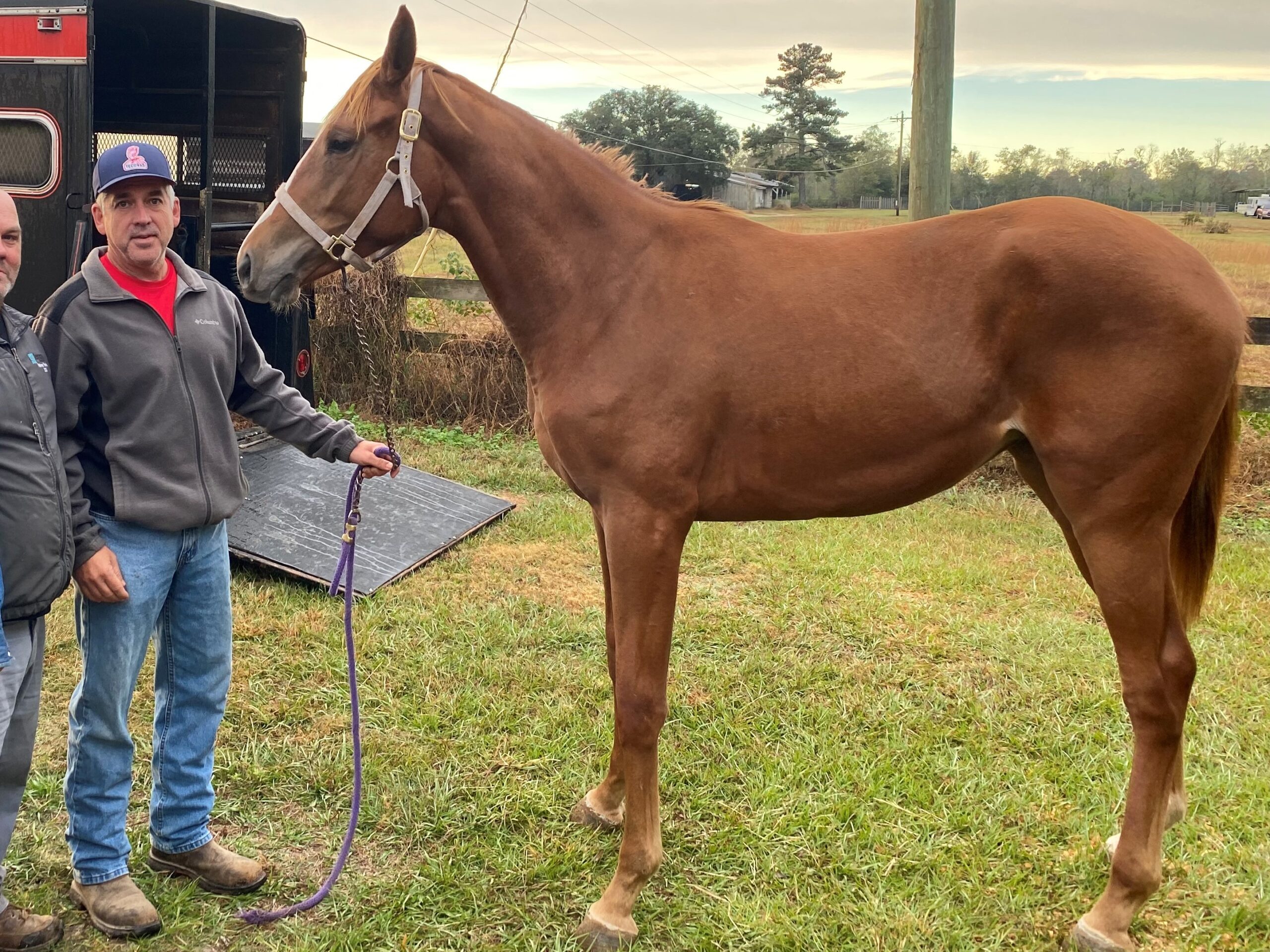
About Miles Henry
Racehorse Owner & Author | 30+ Years in Thoroughbred Racing
Miles Henry (legal name: William Bradley) is a professional horseman based in Folsom, Louisiana. He holds Louisiana Racing License #67012 and has spent over three decades managing Thoroughbreds at premier tracks including Fair Grounds, Delta Downs, and Evangeline Downs.
Expertise & Hands-On Experience: Beyond the track, Miles has decades of experience in specialized equine care, covering everything from hoof health and nutrition to training protocols for Quarter Horses, Friesians, and Paints. Every guide on Horse Racing Sense is rooted in this “boots-on-the-ground” perspective.
30 of their last 90 starts
Equibase Profile.

Connect with Miles: