
Last updated: August 20, 2026
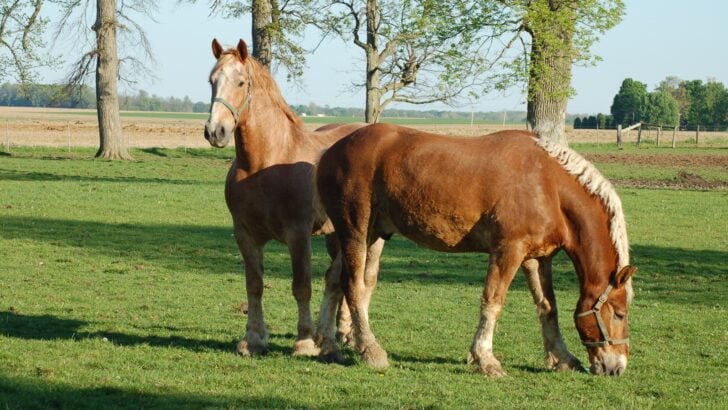
Put a Belgian and a Clydesdale in the same pasture, and the differences are obvious. But ask which breed is better, and the answer gets a lot more complicated.
Clydesdales are usually taller, while Belgians are usually heavier and more densely muscled. The Belgian’s compact build is well suited to traditional heavy pulling work, while the Clydesdale’s height, movement, and presence have made it one of the world’s most recognizable draft breeds. Neither is simply better; they were developed for different purposes.
In this comparison, I’ll break down the differences that matter most to horse owners: size, build, temperament, handling, and what I look for before choosing either breed.
Table of Contents
Belgian Horse vs. Clydesdale: At a Glance
| Trait | Belgian | Clydesdale |
|---|---|---|
| Origin | Brabant region, Belgium | Clyde Valley, Scotland |
| Height | 16.2 to 17 hands, typically | 16 to 18 hands, typically |
| Weight | About 1,800 to 2,400 pounds; unusually large individuals can exceed this | About 1,600 to 2,000 pounds; larger mature males may exceed 2,000 |
| Build | Compact, low center of gravity, heavily muscled | Taller, leaner, feathered legs |
| Gait | Steady, powerful, ground-covering | Elevated, high-stepping, animated |
| Best known for | Raw pulling power; one of the most common draft breeds in North America | Show presence; the Budweiser hitch |
These are typical ranges, not hard limits. Individual horses on both sides regularly fall outside them, and exact figures vary by source and bloodline.
Height and Weight: Who’s Actually Bigger?
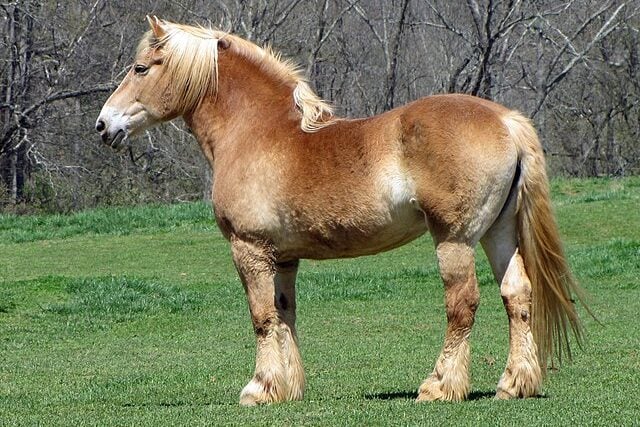
It depends what you mean by “bigger.” For height, the edge usually goes to the Clydesdale; modern Clydesdales commonly reach 17 to 18 hands, sometimes more. For sheer mass, the edge usually goes to the Belgian, which tends to carry a shorter back and denser muscling that adds up to more pounds even at a similar or slightly shorter height.
The most famous individual example is Brooklyn Supreme, a Belgian stallion who stood 19.2 hands and weighed 3,200 pounds, still recognized as the heaviest Belgian ever recorded. It’s worth being precise here: Brooklyn Supreme isn’t the official record holder for the heaviest horse overall. That distinction is usually credited to Sampson, a 19th-century Shire gelding reportedly heavier still, though record-keeping from that era is disputed and not verified the way modern measurements are. Breed standards and historical records vary, especially for exceptional individuals from earlier eras, so treat size records as interesting benchmarks rather than guarantees of what any given horse will weigh. Belgian and Clydesdale fans both tend to round up their own breed’s record-holders in casual conversation, so it’s worth knowing the real numbers. For more record-setting drafts across breeds, see the world’s largest horse breeds.
Build and Movement
The visual difference between these breeds is easy to spot once you know what you’re looking at. Belgians are built low and wide: a short back, a deep chest, and heavily muscled hindquarters that translate directly into pulling power. Their movement matches that build, a steady, powerful, ground-covering walk and trot built for sustained work rather than show.
Clydesdales often present as taller and more leggy, with less of the low, blocky mass many people associate with a Belgian. The breed’s signature feathering, long, silky hair covering the lower legs, adds to the visual effect. Clydesdales are widely recognized for their more animated, higher action, especially in harness, a big part of why the breed became a show and promotional favorite in the first place. The Belgian’s build reflects a different kind of output entirely, the sustained pulling power draft breeds are built for, closer to a full workday of steady effort than a short burst of speed.
Standing beside a Belgian, the first thing you notice isn’t just weight, it’s substance. They have that deep-bodied, powerful look that comes from generations selected for pulling. A Clydesdale gives a different impression entirely. More leg, more animation, and a presence that makes people stop and look, which is a big reason the breed became such an iconic symbol in the Budweiser hitch.
Temperament and Handling
Both breeds have earned the “gentle giant” label honestly. Draft breeds in general were selected over generations for a calm, cooperative disposition, since a powerful horse that spooked easily was a liability around farm equipment and other people. Belgians and Clydesdales both fit that mold, and it’s a big part of why both remain popular with families and beginner handlers despite their size.
I wouldn’t lean too hard on breed alone here. Size doesn’t inherently make a horse harder to handle, but it does raise the stakes if a horse hasn’t been well trained. A well-started 2,000-pound horse of either breed is a genuine pleasure to work around. A poorly handled one is a real safety concern regardless of breed label.
What I Would Check Before Buying Either Breed
If I were looking at a Belgian or Clydesdale, breed would be only the starting point. On a horse this size, I pay close attention to the feet, legs, body condition, and how freely he walks away from me and back. I also want to see him handled calmly on the ground, since 1,800 to 2,200 pounds of horse leaves little room for poor manners.
Feathering may be part of the Clydesdale look, but it also means being diligent about cleaning and checking the lower legs and skin underneath it. With either breed, I’d ask about turnout, hoof care, diet, soundness history, and whether the horse has actually done the kind of work I intend to ask of him, not just whether he looks the part.

If I Were Choosing Between a Belgian and a Clydesdale
Choose a Belgian if you want maximum pulling power, you prefer a heavier and more compact horse, you’re doing real farm or logging work, or you want the more common draft breed in North America, which tends to make Belgians somewhat easier to find and more affordable.
Choose a Clydesdale if you love height and presence, you want driving or show appeal, or you appreciate the breed’s distinctive movement and feathered look. For someone who values that animated harness presence, the Clydesdale is hard to overlook.
If you want to ride, both breeds can be ridden with a properly fitted draft saddle. Neither breed is usually a first choice for speed- or agility-focused competition, though individual horses can be useful pleasure, trail, driving, and lower-level riding partners. Match the individual horse’s training and soundness to your goals rather than assuming the breed alone settles the question.
Miles’s take: I wouldn’t pick a Belgian over a Clydesdale, or the reverse, based on breed reputation alone. I’d go look at the individual horse, his feet, his ground manners, and how he moves, and let that decide it. Both breeds have plenty of good, sound individuals and plenty of poorly kept ones.
Common Myths About These Breeds
“Belgians and Clydesdales are the largest horse breeds in the world.” Not quite. The Shire regularly matches or exceeds both in height and holds the all-time weight record through Sampson. Belgians and Clydesdales are genuinely large, just not automatically the largest.
“Clydesdales are heavier than Belgians because they’re taller.” Usually the opposite. Height and weight don’t track together in draft breeds the way people assume; the Belgian’s compact, heavily muscled frame typically outweighs the taller, leaner Clydesdale.
“Every horse of either breed fits the ‘typical’ size range.” Genetics, diet, and individual variation mean plenty of Clydesdales run smaller than average and plenty of Belgians don’t reach the upper weight range at all. Breed averages describe a range, not a guarantee.
Quick Verdict: Belgian vs. Clydesdale
Largest overall build: Belgian. Taller appearance: Clydesdale. Heavy pulling work: Belgian. Show and driving presence: Clydesdale. Temperament: Essentially a tie. Best horse for you: Depends entirely on the individual horse and the job you need done.
Key Takeaways: Belgian vs. Clydesdale
- Height and weight don’t move together — Clydesdales usually stand taller, but Belgians usually carry more weight on a shorter frame.
- Brooklyn Supreme, the famous 3,200-pound Belgian, is the heaviest Belgian on record, not the heaviest horse ever — that record belongs to a Shire named Sampson.
- Build reflects purpose — the Belgian’s low, compact frame favors pulling power; the Clydesdale’s height and animated gait favor show and driving work.
- Both are genuinely gentle breeds — but size raises the stakes of poor training regardless of breed label.
- Match the individual horse to the job — soundness, training, and temperament matter more than which breed name is on the papers.
Belgian vs. Clydesdale FAQs
Is a Belgian horse bigger than a Clydesdale?
It depends on the measure. Clydesdales are typically taller, often reaching 17 to 18 hands, while Belgians are typically heavier thanks to a more compact, densely muscled build. Neither breed is simply “bigger” across the board.
Which is stronger, a Belgian or a Clydesdale?
For raw, slow pulling work, a Belgian’s compact, heavily muscled build often gives it a reputation for more pulling power. But I wouldn’t call every Belgian stronger than every Clydesdale. Individual size, conditioning, footing, harness setup, and training matter greatly when a horse is actually asked to pull.
What is the heaviest horse ever recorded?
A Shire gelding named Sampson is usually credited as the heaviest horse ever, though records from that era are disputed. Brooklyn Supreme, a Belgian who weighed 3,200 pounds, is the heaviest Belgian on record and is sometimes mistakenly cited as the overall record holder.
Can you ride a Clydesdale or a Belgian?
Yes, both breeds can be ridden with a properly fitted draft saddle, and both are used for trail and pleasure riding. Neither breed is usually a first choice for speed- or agility-focused competition, though individual horses can be useful pleasure, trail, driving, and lower-level riding partners.
Are Belgians or Clydesdales good for beginners?
Both breeds have a real reputation for a calm, cooperative temperament, which is part of why both remain popular with families. That said, evaluate the individual horse’s training and ground manners rather than assuming size and breed reputation alone make any horse beginner-safe.
Sources consulted: Typical Belgian size ranges were cross-checked against the Belgian Draft Horse Corporation of America and The Livestock Conservancy. Historic claims involving Sampson and Brooklyn Supreme should be treated as widely reported historical figures, not as modern independently verified records.
Neither breed wins this comparison outright, because they were never built for the same job. For someone prioritizing heavy pulling work, a Belgian’s compact build is often a practical fit. For someone who values height, feathering, and animated harness presence, the Clydesdale is hard to overlook. Either can make an excellent partner when the individual horse is sound, trained, and suited to the job.

About Miles Henry
Racehorse Owner & Author | 30+ Years in Thoroughbred Racing
Miles Henry (legal name: William Bradley) is a professional horseman based in Folsom, Louisiana. He holds Louisiana Racing License #67012 and has spent over three decades managing Thoroughbreds at premier tracks including Fair Grounds, Delta Downs, and Evangeline Downs.
Expertise & Hands-On Experience: Beyond the track, Miles has decades of experience in specialized equine care, covering everything from hoof health and nutrition to training protocols for Quarter Horses, Friesians, and Paints. Every guide on Horse Racing Sense is rooted in this “boots-on-the-ground” perspective.
30 of their last 90 starts
Equibase Profile.

Connect with Miles: