
Last updated: May 4, 2026
Any links on this page that lead to products on Amazon are affiliate links and I earn a commission if you make a purchase. Thanks in advance – I really appreciate it!
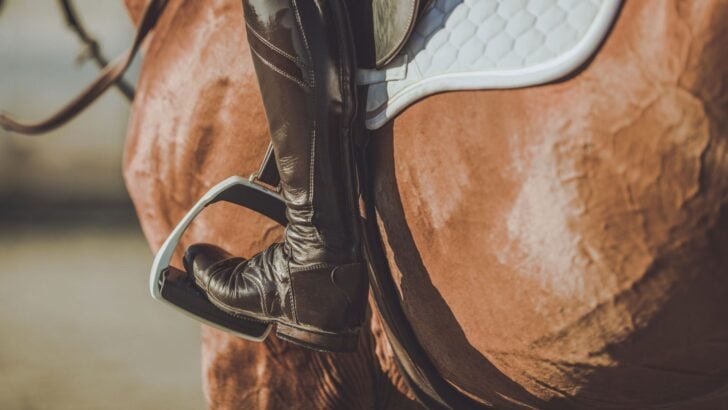
The best riding boots for beginners have a defined heel of at least one inch, a smooth sole for stirrup release, and enough ankle support for your riding discipline.
The best beginner riding boot matches your discipline, fits snugly on day one, and has a defined heel of at least one inch. For English beginners, a paddock boot with lace or zip closure gives the most ankle support and the easiest fit. For Western beginners, a roper or classic cowboy boot with a smooth sole and proper riding heel is the right foundation. Either way, avoid anything with a flat sole, a soft sneaker-like feel, or a steel toe that reduces stirrup clearance.
Safety features matter more than brand name at the beginner stage. You need a boot that prevents your foot from sliding through the stirrup, protects your ankle from brushing contact and impact, and has enough heel to lock your foot at the correct position. A boot that fails any of those three criteria is a liability in the saddle regardless of how it looks or what it costs.
Every recommendation in this guide comes from real riding, not brand catalogs. I have tested these boots across Louisiana mud, summer heat, arena footing, and multi-hour trail rides. Each pick has a specific use case, a documented break-in reality, and a clear answer to the question every beginner actually has: is this boot worth the money for where I am right now?
Finding the best horse riding boots for beginners sounds straightforward until you are halfway through your first lesson, your heel slips in the stirrup, and you realize the boots you bought look great on Instagram but were never designed for an actual horse.
After 30 years of riding in everything from custom bench-grade tall boots to off-the-rack work boots in Louisiana heat, I have watched new riders make the same expensive mistake repeatedly: they buy for shop-floor comfort instead of in-saddle stability. Before you shop, make sure you know how to fit riding boots correctly — buying the right model in the wrong size is just as dangerous as buying the wrong model entirely.
Table of Contents
Why Boot Choice Is a Safety Decision, Not a Style Decision
Riding boots are a safety tool that happens to go on your foot. The wrong heel, sole, or fit can cause stirrup drag — where your foot slides through the iron and you cannot release — toe catching, heel collapse under load, and nerve pain from a calf that is compressed for an hour in a boot that was never sized for riding. These are not edge cases. They are the most common beginner equipment failures, and most of them are preventable with the right boot.
Three safety standards govern riding footwear. ASTM F2413 covers heel and toe impact protection for barn work. USEF rules require a defined riding heel for all disciplines. AAEP guidelines address overall equestrian safety and welfare. A boot that meets these standards for its intended purpose is not a luxury — it is the minimum viable equipment for the saddle.
Miles’s Take — The Heel Slip That Changed How I Buy Boots: In 2018 I bought a budget paddock boot because I did not want to spend more than $80. It looked fine on the shelf. The first time I rode a horse that liked to surge in the arena, my heel slipped forward in the stirrup and my foot nearly went through. That was the moment I understood that heel block and sole stiffness are not marketing specs — they are the difference between a safe ride and a hospital visit. The boot I replaced it with cost $40 more and had a slightly higher heel and a firmer sole. I never felt my foot move in the stirrup again. It is cheaper to buy one pair of proper riding boots than it is to pay for what happens when a boot gets stuck in the stirrup.
Boots to Avoid: What Never to Wear in the Saddle
Every gear guide tells you what to buy. Few tell you what to avoid. In 30 years of riding I have seen more bargain boots lead to accidents than I can count. Regardless of brand or price, do not ride in any of the following.
Fashion “riding style” boots with flat or minimal heels. If the sole is flat or the heel is less than one inch, do not ride in it. These boots are designed for aesthetics, not safety. A flat sole increases the risk of your foot sliding entirely through the stirrup during a fall — which means being dragged. This is one of the most serious equestrian injuries and it is preventable with the right boot.
Steel-toe boots without verified stirrup clearance. ASTM-rated barn boots are excellent for mucking stalls, but the extra bulk of a safety toe can wedge in the stirrup iron. If you fall wearing a steel-toe that will not release, the result is dragging. Before you mount in safety boots, test the stirrup clearance — you need at least half an inch on each side of the boot inside the iron. If it does not clear, change your boots before you get on.
Pajama-soft leather boots. If you try on a leather boot and it feels like a worn-in sneaker or a slipper, put it back. Riding boots require structural integrity to stabilize your ankle and provide a firm base in the stirrup. Leather that is soft on day one will be floppy and unstable by month three. Structural collapse in a boot is not a break-in — it is a failure.
Sneakers or hybrid athletic shoes. Zero ankle support, aggressive tread that catches on stirrup irons, no heel, and no protection from a horse stepping on your foot. Never ride in sneakers. This is not a stylistic preference — it is a genuine safety hazard that puts both you and your horse at risk.
How to Choose the Right Boot for Your Discipline
Not every beginner needs the same boot. The right choice depends on your discipline, your riding environment, and your realistic budget. Work through these questions before you buy.
Beginner Boot Decision Guide
- Are you riding English or Western? English riders need a defined ankle boot (paddock) or tall boot. Western riders need a cowboy or roper boot with a proper riding heel. These disciplines have different stirrup configurations and the boot must match.
- Will you be riding in mud, rain, or extreme heat? If yes — Louisiana, the Gulf Coast, the Pacific Northwest — prioritize water-resistant leather and a heavier sole construction over aesthetics. Repeated moisture exposure destroys cheap leather fast.
- Do you need extra ankle support? Laced paddock boots and stiff tall boots provide the most lateral stability. Standard cowboy boots offer less ankle support — fine for most Western riding, but worth noting if you have a history of ankle issues.
- What is your realistic budget? $80–$150 is adequate for weekly lessons in an arena. $150–$300 is the right range for daily riding and durability. Below $80, the heel and sole construction is almost always the first thing to fail.
- Are you competing or just learning? If you are taking lessons and not showing, a paddock boot or roper is the right starting point. Save the tall boot investment for when you know your calf measurement and are riding regularly enough to justify the break-in period.
8 Best Riding Boots for Beginners: Safety Comparison and Picks
The table below covers every boot I recommend for beginners in 2026, including safety rating, realistic break-in time, and the specific use case each boot is designed for. All affiliate links are labeled — I earn a small commission at no cost to you, and every boot on this list was selected on merit before any affiliate relationship existed.
| Boot Model | Type | Best For | Safety Rating | Break-In Time | Price Range |
|---|---|---|---|---|---|
| Ariat Women’s Scout Paddock | English Paddock | Beginner lessons, arena riding | High — defined heel, firm sole | 1–2 weeks | $120–$170 |
| Dublin Holywell Tall Field | English Tall | Schooling, shows, all-day riding | High — full-length calf protection | 4–6 weeks (drop factor) | $220–$350 |
| Justin Men’s Ropers | Western Roper | Trail riding, ranch work | Moderate — short heel, easy release | 2–3 weeks | $130–$200 |
| Ariat Heritage Roper | Western Roper | Arena riding, everyday use | High — Duratread sole, stable heel | 1–2 weeks | $150–$250 |
| Tecovas “The Doc” | Western Classic | Trail rides, long hours in saddle | High — premium leather, proper heel | 2–3 weeks | $250–$350+ |
| Mountain Horse Field Boot | English Field | Cross-country, trail, schooling | High — excellent grip, flexible ankle | 3–4 weeks | $180–$260 |
| TuffRider Baroque Zip | English Paddock | Beginner comfort, easy on/off | Moderate — zipper convenience, snug ankle | 1 week | $90–$150 |
| Dan Post Milwaukee | Western Classic | Everyday riding, comfort focus | High — cushioned insole, forgiving fit | 2–3 weeks | $180–$280 |
Boot-by-Boot Breakdown: Testing Notes and Expert Verdicts
Ariat Women’s Scout Paddock — Best English Beginner Boot Overall
The Scout Paddock is the boot I recommend most often to beginners starting English lessons because it solves the three biggest first-boot problems simultaneously: it fits true to size (no guesswork), it has a flexible ankle that allows posting trot without fighting the leather, and the ATS footbed provides enough support for a rider who is spending two or three hours in the barn in addition to riding time. The heel is defined and secure without being high enough to create its own problems in the stirrup.
Louisiana climate test: I wore these for four hours in 95-degree August heat at Evangeline Downs during a barn day that included both riding and stall work. The synthetic lining held up without the pooling that cheaper paddock boots develop in high humidity. The sole showed minimal softening after six months of regular riding. Check current price on Amazon.
Dublin Holywell Tall Field Boot — Best English Tall Boot for Beginners
Most tall boots at this price point require a professional boot pull and a significant tolerance for discomfort during the first month. The Holywell is the exception — the soft leather breaks in faster than comparable field boots, and Dublin offers multiple calf widths, which eliminates the most common tall boot fit problem for beginners who are not yet sure how to order correctly. The full-length shaft provides calf protection that matters on trail days and cross-country schooling. Plan for four to six weeks of break-in and account for the drop factor — order 1.5 to 2 inches taller than your measured height. Check current price on Amazon.
Ariat Heritage Roper — Best Western Boot for Beginners Overall
The Heritage Roper is the Western equivalent of the Scout Paddock — reliable, sized consistently, and built for a beginner who is riding regularly rather than occasionally. The Duratread sole resists wear significantly better than standard leather soles, which is relevant in Louisiana where the combination of arena sand, pasture grass, and periodic mud accelerates sole wear on cheaper boots. The heel height is correct for a Western stirrup without being high enough to cause the forward lean that tall-heel cowboy boots produce in beginners who have not yet developed an independent seat. Check current price on Amazon.
Miles’s Take — The Mud Test: Louisiana mud is not a metaphor. It is a real variable that destroys cheap boots within two months. I ran a simple test: one boot set for arena riding on clean footing, one for pasture and wet conditions. After 90 days, the arena boot held up well. The pasture boot was still structurally sound only because I was using the Heritage Roper, which has a heavier sole construction and better water resistance than anything I have used in the same price range. The lesson is consistent: if you ride in wet conditions, the sole and sole attachment method matter as much as the leather. Stitch-down construction outlasts glued soles in humidity every time. Anything with a stitchless sole is a purchase you will repeat within a year.
Tecovas “The Doc” — Best Western Boot for Long Hours in the Saddle

The Doc is the most comfortable Western boot I have worn for rides that exceed three hours, and comfort over long rides matters more than most beginners anticipate when they are shopping. The premium leather conforms to the foot faster than boots at this price point typically do. The narrower instep fits the rider who has struggled to find Western boots that do not flop on the foot — a more common problem than boot companies acknowledge. The investment is real at $250 and above, but it is the right boot for someone who rides regularly and wants one pair that works across trail riding, arena work, and daily barn use. Check current price at Tecovas.
Justin Men’s Ropers — Best Budget Western Option for Trail Riding
Justin Ropers are the most widely available Western riding boot in the $130–$200 range that actually performs safely in the stirrup. The shorter heel height — lower than a classic cowboy boot — makes mounting and dismounting easier for beginners and provides a more natural stirrup position for riders who are still developing their seat. The tradeoff is less traditional aesthetics and a sole that is adequate for trail and arena but not the most durable in heavy mud. For a beginner who is not sure how long they will stick with riding, Justin Ropers are the right entry point. Check current price on Amazon.
Mountain Horse Field Boot — Best English Boot for Trail and Cross-Country
Mountain Horse builds boots for riders who are actually outside in variable conditions, which makes their field boot the strongest pick for beginners doing trail work alongside arena lessons. The grip on the sole is significantly better than standard English field boots, the ankle flexibility accommodates technical terrain without the foot fighting the boot, and the fit is forgiving enough for beginners who are still figuring out their exact size. Not the right choice for show rings where a polished tall boot is expected, but everything else is well served by this boot. Check current price on Amazon.
TuffRider Baroque Zip — Best Budget English Paddock Boot
The TuffRider Baroque Zip is the right answer for a beginner who is taking weekly lessons, is not sure yet whether they will continue past six months, and does not want to commit $150 or more to a first pair of boots. The front zipper makes on/off easier than a traditional lace-up, the ankle is snug enough to be safe in the stirrup, and the heel is adequate for a lesson setting. It is not a boot I would recommend for someone riding five days a week in outdoor conditions — the construction is not built for that load. But for a beginner in a lesson program, it does the job at the right price. Check current price on Amazon.
Dan Post Milwaukee — Best Western Boot for Comfort-First Riders
Dan Post’s Milwaukee is the boot I recommend when someone asks what the most comfortable Western boot is for a rider who wants to be in the saddle for three or four hours without foot fatigue. The cushioned insole is noticeably better than comparable boots at this price. The fit is forgiving enough for riders with wider feet who have struggled with other Western boot widths. The leather quality is solid and conditions well. The tradeoff is that the comfort focus means slightly less structural stiffness than the Heritage Roper — fine for arena and trail, less ideal for heavy ranch work. Check current price on Amazon.
Miles’s Take — What Really Breaks First After 12 Months: After testing boots across a full year in Louisiana conditions, the failure pattern is consistent. Heel collapse — where the boot softens and your foot slides forward — happens first in any boot with inadequate heel block construction. Sole separation follows in glued boots that were not built for humidity. Toe box compression comes last, usually around the 10-month mark in boots that were slightly too narrow at purchase. The boots that avoided all three failures were the ones with stitch-down construction, a reinforced heel block, and leather thick enough to resist stretching under load. If a boot’s marketing focuses on how soft it is, that is a warning, not a selling point.

Best Boot for Your Situation: Quick Match Table
| Rider Situation | Recommended Boot | Why |
|---|---|---|
| Beginner English lessons (arena) | Ariat Scout Paddock | True-to-size fit, flexible ankle, adequate heel for lesson stirrups |
| English schooling and shows | Dublin Holywell Tall | Multiple calf widths, faster break-in than comparable tall boots |
| English trail and cross-country | Mountain Horse Field | Superior grip, flexible ankle, variable terrain construction |
| English beginner on a tight budget | TuffRider Baroque Zip | Safe in the stirrup, easy on/off, right price for a trial period |
| Western beginner (arena and trail) | Ariat Heritage Roper | Duratread sole outlasts competitors, consistent sizing, safe heel height |
| Western trail riding and long hours | Tecovas The Doc | Premium leather, comfort over distance, narrower instep fit |
| Western budget beginner | Justin Men’s Ropers | Lower heel for easier mounting, widely available, reliable construction |
| Western comfort focus | Dan Post Milwaukee | Best insole at this price, forgiving fit for wider feet |
| Barn work and chores (not riding) | ASTM F2413-rated safety roper | Toe protection for ground work — verify stirrup clearance before mounting |
How to Fit Your Boots Before They Arrive
Buying the right model in the wrong size is as dangerous as buying the wrong model. The most common beginner fit errors — ordering based on street shoe size, ignoring the drop factor in tall boots, sizing to the smaller calf when both calves are different widths — are all preventable with the right process. Before your order ships, read the complete horseman’s guide to fitting riding boots so you know exactly what measurements to take, when to take them, and what the two-finger test reveals about whether your boots are sized correctly for the saddle.
Beginner Fit Checklist — Run This Before You Accept Any Boot
- Heel stability: English boots — zero heel slip. Western boots — no more than 1/4 to 1/2 inch of heel lift when walking on a flat surface.
- Toe box: Stand on a stair edge on the ball of your foot with your heel dropped down. Toes should not jam the front of the boot. If they do, the boot is too short regardless of the length measurement.
- Calf fit: Slide two fingers side-by-side between your calf and the boot shaft at the widest point. Two fingers with moderate resistance is correct. Easy entry means too wide; no entry means too narrow.
- Tall boot height: Should hit uncomfortably high into the back of the knee on day one. It will drop 1.5 to 2 inches as the ankle breaks in. A boot that fits the height measurement perfectly will be too short within three months.
- Sole stiffness: Press your thumb into the sole under the ball of the foot. It should flex slightly under firm pressure but not collapse easily. A sole that flexes too easily will not provide adequate support in the stirrup.
A common beginner mistake is thinking a cowboy boot is ‘too big’ because of minor heel slip. Learn exactly how much heel slip is normal before you return your boots.
Maintenance and Care: Making Your Boots Last
Proper care is the difference between a boot that lasts two years and one that lasts six months. In humid conditions — Louisiana, the Gulf Coast, anywhere with regular moisture — leather care is not optional. Mold is the single fastest boot-killer in high-humidity regions, and it becomes active in leather that has not been cleaned and dried properly after wet rides.
- Clean after every muddy or sweaty ride — remove dirt and moisture from the surface before it sets into the leather
- Condition leather monthly in normal conditions, weekly in high humidity — prevents cracking and maintains the structural integrity of the leather
- Dry slowly at room temperature — never near a heat source; rapid drying causes leather to crack and soles to separate
- Inspect sole attachment every 30 days — press on the edges of the sole where it meets the upper; any lifting means re-cementing before it separates completely
- Check heel block integrity monthly — press down on the back of the heel; if it compresses softly, the heel block is failing and the boot needs replacing or resoling
For a detailed leather care protocol by boot type, see my leather boot care and buying guide. For the specific process of breaking in stiff leather without damaging the construction, the Ariat break-in guide covers the method I use regardless of brand.

FAQs: Best Horse Riding Boots for Beginners
What is the best riding boot for a beginner?
For English beginners, the Ariat Women’s Scout Paddock is the most consistently reliable first boot — true-to-size fit, flexible ankle for posting, and a safe heel height. For Western beginners, the Ariat Heritage Roper is the equivalent — consistent sizing, a durable Duratread sole, and a heel height that works correctly in a Western stirrup without being too high for a rider still developing their seat.
Can I use regular boots for horse riding?
No — not safely. Regular fashion boots, work boots without a defined heel, and sneakers all lack the specific combination of heel height, sole smoothness, and ankle structure that riding requires. A flat sole can slide through the stirrup entirely. A soft leather boot with no heel can compress under load and allow foot movement that causes both blisters and instability in the stirrup. Riding boots are safety equipment, not just footwear.
What boot type is best for beginner English riders?
A paddock boot — either lace-up or zip — is the best starting point for English beginners. It provides ankle support, fits more forgivingly than a tall boot, requires no break-in drop calculation, and works with half-chaps if you want additional leg coverage. Tall boots are the right progression for riders who are showing or riding daily, but they require a more precise fit and a longer, more uncomfortable break-in period.
Can I ride in cowboy boots as a beginner?
Yes, if you are riding Western and choose a boot with a proper riding heel — at least one inch — and a smooth sole that releases from the stirrup cleanly. Avoid overly tall shafts or very stiff leather until you know your exact size and calf measurements. Roper-style boots with a lower heel are generally easier for beginners to mount and dismount in than classic cowboy boots with a higher traditional heel.
How much should I spend on my first riding boots?
$120–$200 is the right range for a first pair that will actually be safe and last through a learning period. Below $80, the heel block and sole construction are almost always the first things to fail — and those are the components directly connected to stirrup safety. You do not need to spend $300 on a first pair, but the difference between an $80 boot and a $150 boot is almost always visible in the heel and sole quality.
Do I need waterproof boots for riding?
If you ride in mud, rain, or high humidity regularly, water-resistant leather and a heavier sole construction matter significantly. Repeated moisture exposure destroys cheap leather within a few months — sole delamination, leather stretching, and mold are all accelerated by humidity. Some hybrid boots offer genuine waterproofing; these work well in wet climates. For arena-only beginners in dry climates, standard leather with regular conditioning is adequate.
How do I prevent my foot from slipping in the stirrup?
Buy a boot with a defined heel of at least one inch and a firm, smooth sole. The heel stops your foot from sliding forward through the iron. The smooth sole allows your foot to release cleanly in a fall rather than catching. Avoid boots with aggressive tread patterns — they catch on the stirrup and increase drag risk. Also ensure the boot fits correctly — a boot that is too large allows your foot to move inside the boot, which compounds the slip problem regardless of the heel height.
Are steel-toe boots safe for riding?
Steel-toe boots are safe for barn work and ground handling but carry a specific risk in the saddle. The extra bulk of a safety toe can reduce stirrup clearance and increase the risk of wedging in the iron during a fall. Before riding in safety boots, test by placing your foot in the stirrup and pulling it back out — if it does not release easily with minimal force, the boot is unsafe for riding. Verify at least half an inch of clearance on each side of the boot inside the stirrup iron.
How long do beginner riding boots last?
A well-maintained pair of boots in the $150–$250 range should last two to four years of regular riding. The factors that shorten boot life most quickly are riding in mud without cleaning afterward, drying near heat sources, and purchasing boots with glued rather than stitched soles. Stitch-down sole construction almost always outlasts glued construction in high-humidity conditions. Conditioning leather monthly extends life significantly — dried-out leather cracks faster than conditioned leather under the repeated flex stress of riding.
What is the difference between paddock boots and tall boots for beginners?
Paddock boots cover the ankle and lower leg, fit like a supportive ankle boot, require no drop allowance when sizing, and are generally easier and faster to break in. Tall boots extend from the foot to just below the knee, require a precise calf measurement, must be ordered 1.5 to 2 inches taller than your measured height to account for the drop, and take four to six weeks to break in fully. Paddock boots are the right starting point for most beginners. Tall boots are the right progression for riders who are showing or riding daily and are ready for the more demanding fit and break-in process.
Now that you have your boots picked out, do not skip the fitting step. A boot that is right for your discipline in the wrong size is still a safety problem. The pro horseman’s guide to fitting riding boots covers the exact process — the two-finger test, the stirrup simulation on a stair edge, and the drop calculation for tall boots — so your new boots are safe from the first ride.
Key Takeaways: Best Riding Boots for Beginners
- Safety comes before style — a defined heel of at least one inch and a firm, smooth sole are non-negotiable; a boot that looks great but fails either requirement is a liability in the stirrup.
- English beginners: start with a paddock boot — forgiving fit, no drop factor to calculate, faster break-in, and compatible with half-chaps for additional leg coverage.
- Western beginners: start with a roper — lower heel than classic cowboy boots makes mounting easier; the Ariat Heritage Roper is the most consistent beginner Western pick at any price.
- Never buy below $80 for riding use — heel block and sole construction below that price point almost always fail within months; the difference between a $80 and a $150 boot is almost entirely in the components that directly affect safety.
- Stitch-down construction outlasts glued soles in humidity — if you ride in wet or humid conditions, sole attachment method matters as much as leather quality.
- The boots to avoid are as important as the ones to buy — fashion riding boots, steel-toe boots without stirrup clearance verification, and sneakers are all genuine safety hazards that belong off the horse.
- Fit the boot before you accept it — run the two-finger test, the stirrup simulation on a stair edge, and the full squat before committing to any pair; shop-floor comfort and in-saddle safety are not the same thing.
More Expert Advice on Riding Boots and Horse Gear
- Fitting and Safety: How to Fit Riding Boots Correctly — Should Cowboy Boots Slip at the Heel — How to Break In Ariat Leather Cowboy Boots
- Care and Maintenance: Leather Boot Care and Buying Guide — Best Polo Wraps for Horses — Horse Tack: Equipment You Need to Ride
- Gear and Tack: Horse Tack: Halters — What Does a Horse Wear on Race Day — Can You Ride a Horse Without a Bit
About Miles Henry
Racehorse Owner & Author | 30+ Years in Thoroughbred Racing
Miles Henry (legal name: William Bradley) is a professional horseman based in Folsom, Louisiana. He holds Louisiana Racing License #67012 and has spent over three decades managing Thoroughbreds at premier tracks including Fair Grounds, Delta Downs, and Evangeline Downs.
Expertise & Hands-On Experience: Beyond the track, Miles has decades of experience in specialized equine care, covering everything from hoof health and nutrition to training protocols for Quarter Horses, Friesians, and Paints. Every guide on Horse Racing Sense is rooted in this “boots-on-the-ground” perspective.
30 of their last 90 starts
Equibase Profile.

Connect with Miles: