Last updated: July 31, 2026
Most riders think DUI laws only apply to cars, but horses can fall into the mix too. The answer depends on how your state defines a “vehicle.”
Yes, in some states you can get a DUI (or DWI) for riding a horse while intoxicated — it depends on how that state’s law defines “vehicle.” States like California and Kentucky have laws or court rulings broad enough to cover horseback riders. States like Arizona and Texas generally limit DUI to motor vehicles, so a horse doesn’t qualify — though you can still face charges such as public intoxication, reckless endangerment, or animal cruelty.
Below is a state-by-state breakdown showing where horse DUI charges can apply, where they generally do not, and where the law remains uncertain.
Table of Contents
Quick Answers: Arizona, New Mexico, and Bikes vs. Horses
These are the questions riders ask most, so here they are up front before the full state breakdown below.
Can You Get a DUI on a Horse in Arizona?
No. Arizona’s DUI statute (A.R.S. Section 28-1381) requires a motor vehicle, and a horse doesn’t meet that definition — so you cannot be charged with DUI for riding a horse while intoxicated in Arizona, even above the 0.08% legal limit. That doesn’t mean riding drunk is legal, though: Arizona law (A.R.S. Section 28-625) gives a horseback rider on a public road the same rights and duties as a car driver for traffic purposes, and an intoxicated rider can still be cited for disorderly conduct, public intoxication, or reckless endangerment.
About the author: Sonja Bradley is an attorney licensed in the State of Louisiana with experience in Louisiana DUI law. She contributes legal articles to HorseRacingSense.com covering questions that affect horse owners and riders. This article is general information, not legal advice for your specific situation.
Can You Get a DUI on a Horse in New Mexico?
Not clearly settled, based on the sources available. New Mexico is commonly listed alongside Alabama, Georgia, Kansas, and Oklahoma as a state where a horse DUI charge could apply under a broad reading of the vehicle definition, but there’s no single, well-documented New Mexico case establishing a firm precedent either way. If this matters to your specific situation, check the current statute language or ask a New Mexico attorney rather than relying on a general guide.
DUI on a Bike vs. a Horse
Bicycles and horses end up in the same legal gray area for a similar reason: neither is a motor vehicle, so whether DUI applies comes down to how broadly each state’s statute defines “vehicle.” States that have prosecuted impaired horseback riders under a broad vehicle definition have sometimes applied the same reasoning to bicycles, and states that limit DUI strictly to motor vehicles exclude both. The two aren’t always treated identically within a state, though — always check the specific statute rather than assuming a state’s horse answer automatically applies to bikes, or vice versa.
Disclaimer: This article is for general information only and is not legal advice. Laws change, and enforcement varies by jurisdiction and officer discretion. If you’ve been charged with a crime, contact a licensed criminal defense attorney in your state.
Understanding DUI Laws and Horseback Riding
When people hear “DUI,” they picture a car. But it really comes down to how a state defines “vehicle” — and in a surprising number of states, that definition is broad enough to include a horse. If you’re riding while impaired to the point that you can’t safely control the animal, you could be facing a DUI charge in those states.
What Riders Should Actually Understand Here
Most people asking this question are focused on whether a horse legally counts as a vehicle. The more important issue is why these laws exist in the first place: a rider who’s been drinking is still responsible for controlling a large animal on a public road, around other traffic, pedestrians, and hazards a horse can spook at. Whether or not your state’s statute happens to define “vehicle” broadly enough to cover a horse doesn’t change that underlying reality — it only changes which specific charge you’re facing if something goes wrong.
States that extend vehicle-code duties to horseback riders are usually doing it for the same reason they extend those duties to bicycles or golf carts: impaired operation of anything moving on a public road creates real risk, regardless of what’s providing the locomotion.
Why the Law Varies So Much by State
Most DUI laws were written when lawmakers were thinking about cars and trucks, not horses. That’s why the answer changes so much from one state to another. Some states, like California and Kentucky, wrote (or interpreted) their vehicle codes broadly enough to sweep in horses. Others, like Arizona, Texas, and Washington, tied DUI specifically to motorized or self-propelled vehicles, which excludes a horse by definition. A handful of states, like North Carolina, actually flipped positions — a court ruling briefly treated horses as vehicles before the legislature stepped in and rewrote the law to exclude them.
Where DUI doesn’t apply, that’s rarely the end of the story. Riders in those states can still face public intoxication, disorderly conduct, reckless endangerment, or animal cruelty charges — and where the horse itself is endangered, that last one carries its own serious consequences.
State-by-State DUI on Horseback Laws
This table reflects publicly available statutes, court rulings, and legislative history as of this writing. State laws change, and this is not a substitute for checking current statutes or consulting an attorney licensed in your state. The status column uses four categories: Clearly Applies (a statute or court ruling directly supports a DUI charge), Generally Does Not Apply (law or precedent excludes horses), Could Apply — Unsettled (a broad vehicle definition might reach horses, but no clear case confirms it), and No Reported Case Found (no known horse-specific precedent either way).
| State | Horse DUI Status | Details / Alternative Charges |
|---|---|---|
| Alabama | Could Apply — Unsettled | Broad DUI laws may include horses as vehicles on public roads. Alternatives: public intoxication, reckless endangerment. |
| Alaska | No Reported Case Found | No horse-specific cases; DUI law focuses on motor vehicles. Alternatives: disorderly conduct, public intoxication. |
| Arizona | Generally Does Not Apply | Horses are not motor vehicles under A.R.S. Section 28-1381. Alternatives: public intoxication, disorderly conduct. |
| Arkansas | Could Apply — Unsettled | Broad vehicle definitions may apply. Alternatives: public intoxication, animal welfare violations. |
| California | Clearly Applies | Cal. Vehicle Code Section 21050 applies vehicle-code duties, including DUI, to anyone riding an animal on a public road — confirmed in People v. Fong (1993). Multiple riders have been arrested under this law. |
| Colorado | Generally Does Not Apply | DUI limited to motor vehicles. Alternatives: reckless endangerment, public intoxication. |
| Connecticut | No Reported Case Found | No known horse DUI cases; likely excludes non-motorized transport. Alternatives: disorderly conduct. |
| Delaware | No Reported Case Found | Broad DUI law, but untested for horses. Alternatives: public intoxication, reckless operation. |
| Florida | Clearly Applies | Florida’s vehicle definition is broad enough that riders have been arrested and charged, including a well-publicized 2017 case involving a woman riding a horse on a highway. |
| Georgia | Clearly Applies | O.C.G.A. Section 40-6-4 gives horseback riders the same duties as drivers, and DUI law (Section 40-6-391) applies to any moving vehicle. |
| Hawaii | No Reported Case Found | No horse-specific DUI rulings. Alternatives: disorderly conduct, public intoxication. |
| Idaho | No Reported Case Found | DUI law is likely motor-focused, but untested for horses. Alternatives: public intoxication, reckless endangerment. |
| Illinois | No Reported Case Found | DUI law focuses on motor vehicles; horses likely excluded. Alternatives: disorderly conduct. |
| Indiana | No Reported Case Found | No clear horse DUI precedent. Alternatives: public intoxication, animal endangerment. |
| Iowa | No Reported Case Found | No known horse DUI cases. Alternatives: public intoxication, reckless conduct. |
| Kansas | Clearly Applies | Kansas courts have held a saddle horse is a “vehicle” under the state’s broad definition (Conrad v. Dillinger, 1954), a ruling North Carolina courts later cited. |
| Kentucky | Clearly Applies | A specific statute covers non-motor vehicles, including horses. Alternatives if not charged: public intoxication, animal cruelty. |
| Louisiana | Generally Does Not Apply | RS 14:98 focuses on motor vehicles. A 2015 incident near Baton Rouge resulted in a public drunkenness charge, not DWI, for a man riding a horse. |
| Maine | No Reported Case Found | No horse DUI cases reported. Alternatives: disorderly conduct, public intoxication. |
| Maryland | Could Apply — Unsettled | Transportation Section 21-104 gives animal riders driver duties, and Section 21-902 bars impaired driving of “any vehicle” — a real legal theory, though untested by a reported horse case. |
| Massachusetts | No Reported Case Found | No horse-specific DUI rulings. Alternatives: public intoxication, disorderly conduct. |
| Michigan | Generally Does Not Apply | Courts have limited DUI to motor vehicles. Alternatives: public intoxication, animal endangerment. |
| Minnesota | Generally Does Not Apply | DUI law explicitly covers motor vehicles. Alternatives: disorderly conduct, public intoxication. |
| Mississippi | No Reported Case Found | No clear horse DUI precedent. Alternatives: public intoxication, reckless conduct. |
| Missouri | No Reported Case Found | Prior motorized-bike rulings suggest a motor-vehicle focus; horses likely excluded. Alternatives: public intoxication. |
| Montana | Generally Does Not Apply | DUI law requires a non-animal-powered vehicle, excluding horseback riding by definition. |
| Nebraska | Generally Does Not Apply | DUI applies only to motor vehicles. Alternatives: public intoxication, disorderly conduct. |
| Nevada | Could Apply — Unsettled | Broad DUI statutes may include horses. Alternatives: public intoxication, reckless endangerment. |
| New Hampshire | No Reported Case Found | No horse DUI precedent. Alternatives: disorderly conduct, public intoxication. |
| New Jersey | Generally Does Not Apply | DUI law excludes human- and animal-powered transport. Alternatives: public intoxication. |
| New Mexico | Could Apply — Unsettled | Broad vehicle definitions may cover horses; New Mexico is commonly cited alongside Alabama, Georgia, Kansas, and Oklahoma as a state where horse DUI charges could apply. |
| New York | Mixed / Partial | An older stagecoach DUI case exists for horse-drawn vehicles; horseback riding specifically remains unclear. Alternatives: public intoxication. |
| North Carolina | Generally Does Not Apply | Horses were briefly considered vehicles under State v. Dellinger (1985), but the legislature amended G.S. 20-138.1(e) in 1989 to explicitly exclude horses from DWI. Alternatives: public intoxication. |
| North Dakota | No Reported Case Found | No known horse DUI cases. Alternatives: disorderly conduct, public intoxication. |
| Ohio | Mixed / Partial | Ohio has pursued DUI charges over impaired horse-drawn buggy operation; horseback riding specifically remains untested. Alternatives: public intoxication. |
| Oklahoma | Could Apply — Unsettled | Broad DUI statutes may include horses. Alternatives: public intoxication, reckless endangerment. |
| Oregon | No Reported Case Found | DUI covers boats and rafts broadly; horses aren’t specified. Alternatives: public intoxication, disorderly conduct. |
| Pennsylvania | Generally Does Not Apply | Under Commonwealth v. Bartman, the Pennsylvania Supreme Court ruled animals don’t meet the legal definition of a “device” or vehicle for DUI. Alternatives: public intoxication. |
| Rhode Island | No Reported Case Found | No horse DUI precedent. Alternatives: disorderly conduct, public intoxication. |
| South Carolina | No Reported Case Found | No horse DUI cases. Alternatives: public intoxication, reckless conduct. |
| South Dakota | No Reported Case Found | No clear horse DUI rulings. Alternatives: public intoxication, animal endangerment. |
| Tennessee | Generally Does Not Apply | DUI applies only to motor vehicles. Alternatives: public intoxication, disorderly conduct. |
| Texas | Generally Does Not Apply | DWI requires a motorized vehicle; charges against horse and mule riders have been dropped on this basis. Alternatives: public intoxication, animal endangerment. |
| Utah | Generally Does Not Apply | Utah courts have held horses are not vehicles for DUI purposes. Alternatives: public intoxication, reckless conduct. |
| Vermont | Could Apply — Unsettled | Broad DUI statutes may include horses. Alternatives: public intoxication, animal cruelty. |
| Virginia | No Reported Case Found | Statutes don’t specify horses. Alternatives: disorderly conduct, public intoxication. |
| Washington | Generally Does Not Apply | RCW 46.04.320 requires a self-propelled motor vehicle for DUI, explicitly excluding horses. Alternatives: reckless endangerment. |
| West Virginia | No Reported Case Found | No horse DUI precedent. Alternatives: public intoxication, reckless conduct. |
| Wisconsin | No Reported Case Found | Prior lawnmower DUI cases suggest broad definitions; horses remain untested. Alternatives: public intoxication. |
| Wyoming | No Reported Case Found | No horse DUI cases reported. Alternatives: public endangerment, animal cruelty. |
This table is for informational purposes only, not legal advice. Laws and enforcement practices change — verify with your state’s current statutes or a licensed attorney before relying on any entry here.

State-by-State Analysis and Notable Cases
Here’s a closer look at how a handful of states actually apply — or explicitly don’t apply — DUI law to horseback riders, along with the cases and statutes behind each answer.
(Arizona and New Mexico are covered up top, since that’s what most readers here are looking for — see the quick answers above if you skipped down.)
California: Yes — and It’s Been Enforced
California Vehicle Code Section 21050 states that anyone riding an animal on a public road has the same duties as a vehicle driver. The appellate court in People v. Fong (1993) 17 Cal.App.4th Supp. 1 referenced that statute in holding that persons riding animals on public roads are subject to the vehicle code, including DUI law — and California Highway Patrol has made arrests on that basis, including a widely reported 2023 incident.
North Carolina: Used to Be Yes, Now It’s No
This one has an interesting history. In State v. Dellinger (1985), the North Carolina Court of Appeals upheld a DWI conviction for a man riding his horse home from a bar with a blood alcohol concentration of 0.18, ruling that North Carolina’s broad statutory definition of “vehicle” included horses. That held for about four years. In 1989, the legislature amended G.S. 20-138.1(e) to explicitly exclude horses from the definition of “vehicle” for DWI purposes, reversing Dellinger going forward. Today, you cannot be charged with a DWI for riding a horse in North Carolina — though public intoxication charges remain on the table.
Texas: Motorized Only
Texas DWI law requires operation of a motorized vehicle, and a horse doesn’t meet that definition. Charges against horse (and mule) riders in at least one Austin-area incident were dropped for exactly this reason. Texas reflects the more traditional, motor-vehicle-only reading of DUI law.
Florida: Enforcement Ahead of a Clean Legal Definition
Florida defines a vehicle as a “device,” which doesn’t cleanly include a horse — but enforcement hasn’t always followed that technicality. A 2017 case involving a woman riding a horse down a Florida highway drew national attention when she was arrested and charged, and it isn’t the only such incident reported in the state. The gap between the statutory definition and actual enforcement practice is worth knowing if you ride in Florida.
Below is a news report on that 2017 Florida case.

Louisiana: Motor Vehicles Only, With a Real-World Example
Louisiana has a genuine horseback riding culture, but RS 14:98 focuses on motor vehicles and doesn’t extend to horses. A 2015 incident near Baton Rouge illustrates the state’s approach in practice: a man riding a horse was ticketed for public drunkenness rather than DWI.
Kentucky: One of the Broadest Statutes
Kentucky’s DUI statute specifically covers non-motor vehicles, which includes horses ridden on public roads. It’s one of the more clear-cut “yes” states on this list.
Washington: Explicitly Excluded
Washington’s vehicle code requires a self-propelled motor vehicle for a DUI charge, which explicitly rules out horses. Other charges, like reckless endangerment, remain possible.
Michigan and Colorado: Motor Vehicles Only
Both states define DUI around motor vehicle operation. Michigan includes a horse in its broader definition of “vehicle” for some purposes, but its DWI law applies only to motor vehicles specifically, so riders face public drunkenness charges rather than DUI. Colorado’s DUI law is similarly limited to motor vehicles, though the state has separate statutes addressing impaired operation of an animal that acknowledge the same underlying safety concern.
This isn’t an exhaustive list of every state’s case law — for the rest, see the table above, and verify anything relevant to you against your state’s current statutes.
Horse-Drawn Carriages and DUI Laws
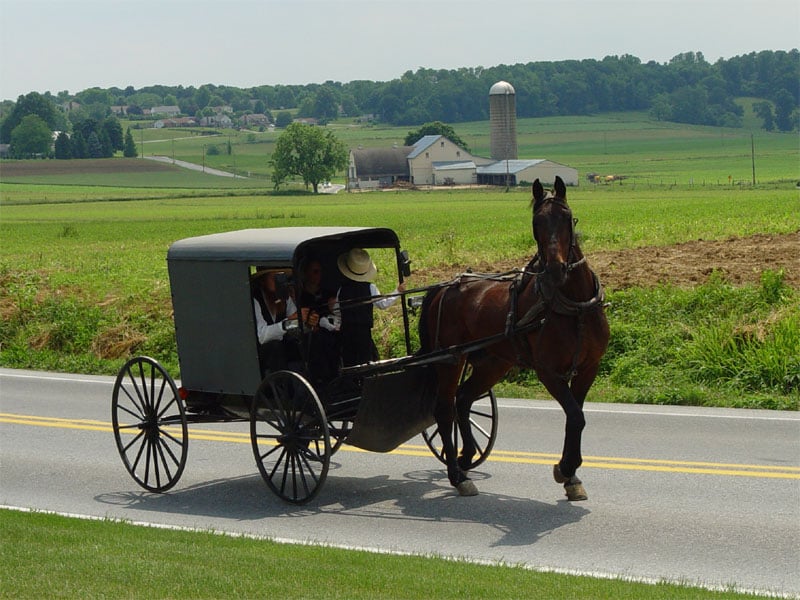
Horse-drawn carriages are a different legal animal, so to speak. In states with meaningful carriage traffic — Pennsylvania’s Amish communities are the clearest example — DUI laws generally do extend to carriage operators. Makes sense when you think about it: a carriage is a manufactured device pulled along a road, which fits most states’ “vehicle” definitions far more comfortably than a ridden horse does. Ohio has pursued DUI charges over impaired buggy operation on this same theory. If you’re driving a carriage, cart, or buggy rather than riding, assume DUI law applies to you even in a state where it wouldn’t apply to a horseback rider.
Public Safety and Animal Welfare Considerations
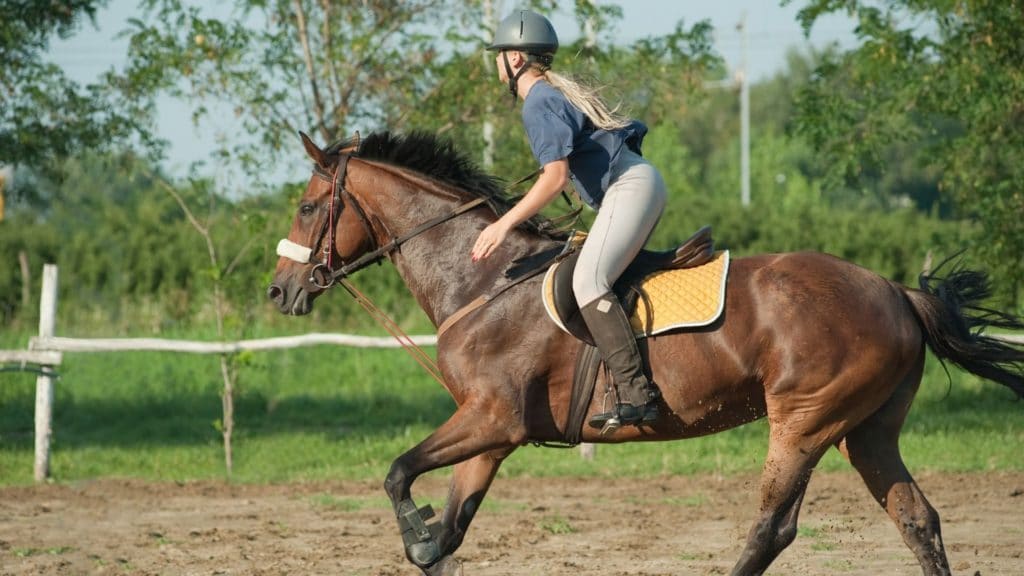
Whether or not DUI charges technically apply, riding impaired carries real risk. An intoxicated rider has slower reaction time and worse judgment of distance and speed — the same deficits that make drunk driving dangerous apply just as much on horseback, for the rider, the horse, and anyone else nearby.
There’s an animal welfare dimension too. Horses respond to a rider’s balance, pressure, and body language, and an impaired rider sends inconsistent, confusing signals. That can translate into stress for the horse and a higher risk of an accident that hurts the animal, not just the rider. In states where DUI charges don’t apply, this is often where animal cruelty or neglect charges come in instead.
Practical Advice for Riders
A few practical points, regardless of what your state’s DUI law technically says:
- Plan ahead. If alcohol is going to be part of the day, arrange transportation for yourself and a way to get the horse home that doesn’t involve you riding it.
- Know your state’s actual law. “DUI doesn’t apply to horses here” doesn’t mean you’re free of legal exposure — public intoxication and reckless endangerment charges are available almost everywhere.
- Ride with someone sober. A sober companion is a real safeguard, not just a legal hedge.
- Have a fallback for the horse. Stabling a horse overnight at a venue and getting yourself home by other means beats trying to ride home impaired.
FAQ: DUI on Horseback
Can you get a DUI on a horse?
In some states, yes. It depends on whether that state’s DUI or DWI statute defines “vehicle” broadly enough to include an animal being ridden on a public road. California and Kentucky are examples where it can apply; Arizona, Texas, and Washington limit DUI to motor vehicles, so it doesn’t.
Can you get a DUI on a horse in Arizona?
No. Arizona’s DUI law requires a motor vehicle, and a horse doesn’t qualify. You can still be cited for public intoxication, disorderly conduct, or reckless endangerment if your riding puts others at risk.
Can you get a DUI on a horse in New Mexico?
Not clearly settled. New Mexico is often listed among states where a broad vehicle definition could support a horse DUI charge, but there’s no single well-documented case confirming it. Check current state statutes or ask a local attorney if this applies to you directly.
Is it illegal to ride a horse while drunk?
It depends on the state and the charge. Even where DUI specifically doesn’t apply to horses, riding while intoxicated can still lead to charges like public intoxication, disorderly conduct, or animal cruelty if the horse is endangered.
The Bottom Line
Whether you can get a DUI on a horse depends entirely on your state’s legal definition of “vehicle” — and that definition varies more than most riders expect. Some states, like California and Kentucky, treat a horse on a public road the same as a car. Others, like Arizona and Texas, limit DUI to motorized vehicles and exclude horses by definition. A few states, like North Carolina, have actually gone back and forth on the question over time.
Even where DUI itself doesn’t apply, riding impaired isn’t legally risk-free — public intoxication, reckless endangerment, and animal cruelty charges are available in nearly every state, and the underlying safety concern is real regardless of which statute technically covers it. If you’ve been charged with anything related to riding under the influence, talk to a criminal defense attorney licensed in your state rather than relying on a general guide like this one.
Key Takeaways
- It depends on your state’s definition of “vehicle” — there’s no single national answer to whether you can get a DUI on a horse
- California, Kentucky, and Georgia have clear legal paths to a horse DUI; Arizona, Texas, and Washington explicitly don’t
- North Carolina flipped positions — a 1985 court ruling treated horses as vehicles, but the legislature reversed that by statute in 1989
- “No DUI” doesn’t mean no consequences — public intoxication, reckless endangerment, and animal cruelty charges remain available almost everywhere
- Horse-drawn carriages are treated differently than horseback riding in most states, and DUI law more often applies to them
Sonja Bradley is an attorney licensed in the State of Louisiana with experience in Louisiana DUI law. This article provides general information and is not legal advice.
While the law varies by state, horse owners and riders should understand one thing that doesn’t: avoiding a DUI charge is only part of the issue. An impaired rider is still responsible for the safety of the horse, themselves, and everyone sharing the road.
If you’ve been charged with a crime or need legal counsel, contact an experienced criminal defense attorney in your state to protect your rights. Driving a car or riding a horse on a public road while impaired is never a good idea. You can visit Sonja Bradley’s website for more information.

Sonja Bradley is a Licensed Attorney in the State of Louisiana. She has been in private practice for 18 years.
1250 SW R.R. Ave.
Hammond LA 70403
(985) 542-5293