
Last updated: August 30, 2026
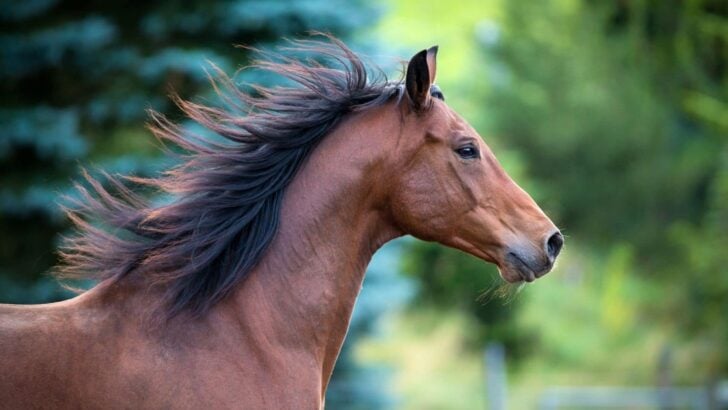
Recently we were at a horse show and noticed the perfectly groomed manes and tails on many of the competitors. Seeing that made me want to break down exactly how owners get that smooth, straight-hanging look.
Quick Answer: A straight-hanging mane and tail comes mostly from consistent care, not a single trick: regular conditioning, careful finger-detangling instead of hard brushing, letting the hair fully dry before combing, and length (weight naturally pulls hair straighter over time). Some owners do use flat irons for shows, but horse hair reacts differently to heat than human hair and there’s real risk of burns if the horse moves – if you go this route, use extreme caution, low heat, and never around the dock.
Grooming is genuinely good bonding time with your horse, and a well-cared-for mane and tail is also just easier to maintain long-term. Here’s what actually works.
Why Isn’t My Horse’s Mane or Tail Straight?
A few things usually cause a wavy, frizzy, or fanned-out look instead of a smooth, straight hang: natural texture (some horses just have wavier hair, similar to curly human hair genetics), damage from over-brushing or dry hair breaking into shorter, wilder-looking pieces, product buildup weighing hair down unevenly, and simply not enough length or weight for gravity to do its part. Most horses with a “straightened” show look aren’t fighting their natural texture – they’re just being cared for consistently enough that the hair looks its best.
Grooming Technique That Actually Straightens Hair
Detangle With Your Fingers First
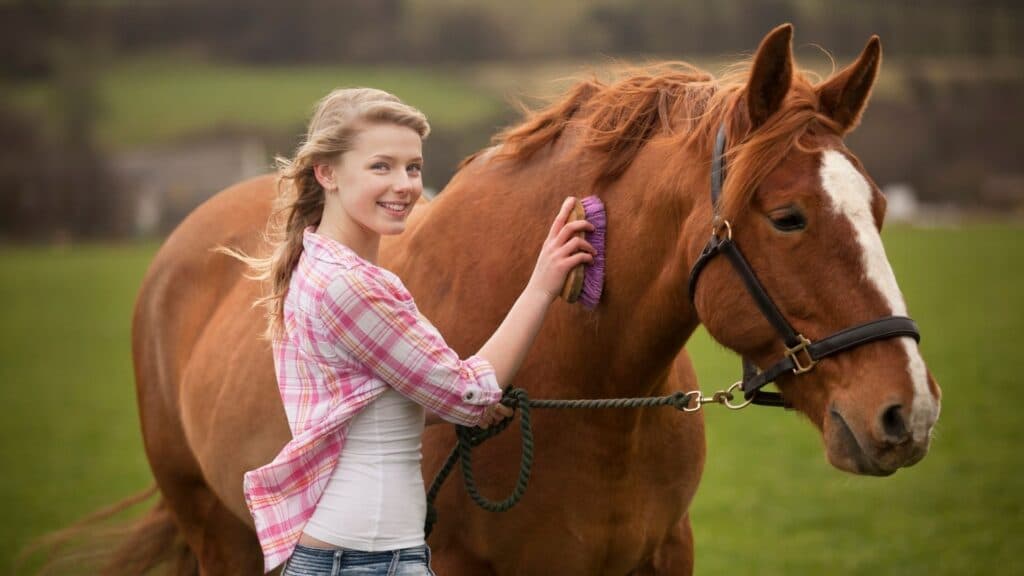
Your fingers work better than any brush for the first pass – they untangle without breaking hair the way a stiff brush or human hairbrush will. Once the worst tangles are out, use a wide-tooth comb or a dandy brush, and always start at the bottom of the tail, working upward. If you hit a tangle working bottom-up, you’re only pulling through the hair already below it, not yanking the whole length. Consistent technique like this, over weeks, is what actually produces straighter-looking hair – not any single product or tool.
Let It Dry Before You Comb It
Wet hair stretches and is more prone to breaking, so combing it wet is one of the fastest ways to end up with a thinner, frizzier tail instead of a straighter one. Wash and condition, then let the hair dry mostly or fully before you comb through it.
Don’t Brush Every Day
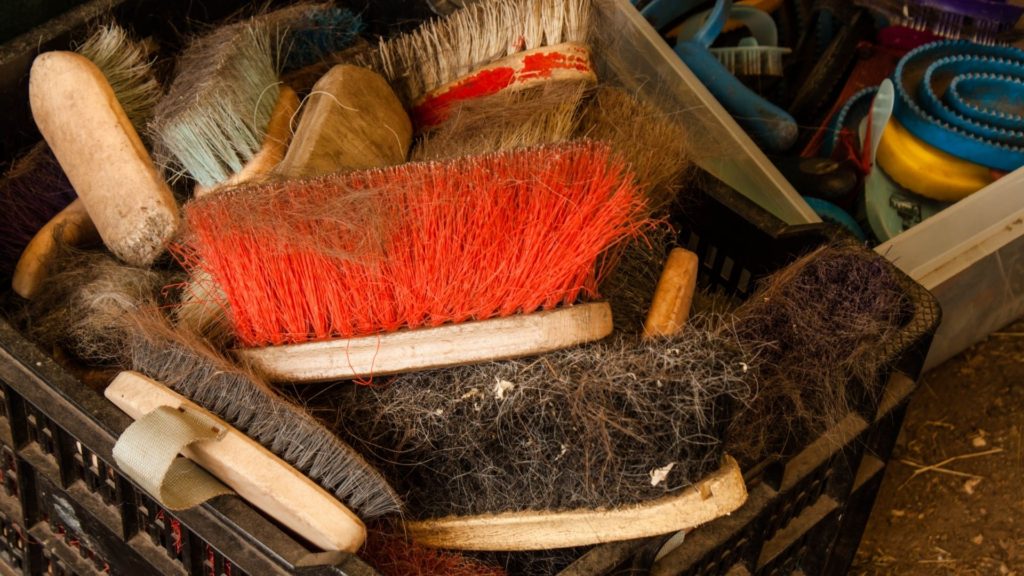
Brushing the mane and tail every single day is one of the more common mistakes I see – it pulls out long strands that take a long time to regrow, and the mane or tail gets thinner over time instead of fuller and straighter-looking. A few times a week, combined with careful finger-detangling as needed, is usually enough.
Length and Weight Matter
A longer mane or tail hangs straighter simply because there’s more weight pulling it down – it’s basic physics, the same reason longer human hair often looks straighter than short hair of the same texture. If you’re growing out a mane, keeping it consistently conditioned and detangled (rather than trimmed short) will get you a naturally straighter hang over time.
Conditioning Routine
Wash the tail and mane weekly for the first month if they need real attention, then every two weeks after that – daily washing isn’t necessary and can dry out the hair. Rinse shampoo out thoroughly; a gummy feel or light gray residue near the base of the tail usually means shampoo is still trapped in there.
After shampooing, a wash-out conditioner helps clean residue left by minerals in the water and gives the hair a chance to actually absorb moisture. Follow with a leave-in conditioner once rinsed. That combination – clean, conditioned, fully dry, then carefully combed – is what actually produces the tangle-free, straight-hanging look people are after, more reliably than any single product.
Keeping the skin and hair moisturized matters beyond looks too – a dry, itchy tail is one of the more common reasons horses rub their tails raw, and a dirty tail can attract parasites. Apply conditioner to the dock and massage it in for a couple of minutes, then work the rest through the length by hand.
Braiding for a Straighter Look
A loose, wide braid can train hair to lie flatter and give a more uniform, straightened appearance, especially on a mane that wants to fall to both sides. Keep braids loose and comfortable – tight overnight braiding is a real way to leave hair brittle and prone to breaking by morning. If you’re using something to hold the braid, a soft human hair tie works fine and is gentler than a stiff braiding elastic.
What About Flat Irons?
Use real caution here. Horse hair isn’t structured the same way human hair is, and heat can affect it differently – some horse owners report it can shrivel the hair or strip its natural oils in a way human hair doesn’t react. There’s also a real physical risk: if a horse moves while you’re working near the dock or close to the skin, a burn is a genuine possibility. If you choose to use a flat iron, keep it on the lowest effective heat setting, work on clean and fully dry hair, never let it near the skin or dock, and consider it a show-day technique rather than a routine habit.
Plenty of owners get a straight, show-ready look without heat at all – consistent conditioning, proper drying before combing, and avoiding daily over-brushing usually gets you most of the way there. If you do want that extra polish for a specific event, treat a flat iron as an occasional tool, not a regular part of your routine.
Skip Tail Extensions If You Can Help It
You may have spotted a horse with unnaturally thick tail hair where the lower half doesn’t taper the way natural hair does – that’s usually a tail extension, hair glued or clipped onto the horse’s natural tail. They’re a quick fix for a full, straight look, but they’re an artificial solution – actual grooming and conditioning gets you a genuinely healthier tail, not just one that looks fuller in photos.
If you do use extensions, they need real care too: shampoo and condition them like natural hair, but keep the tightly bound top section – where they’re attached – dry, since moisture there can make the attachment point look rotten. Never soak an extension in a bucket, and only reattach it once it’s completely dry.
Banging a Tail for a Uniform Look
“Banging” a tail means trimming the bottom straight across, usually a couple of inches below the fetlock depending on the horse’s natural length. It gives a thick, boxy, finished appearance and gets rid of the wavy, uneven, dead-end look that makes a tail seem less straight than it actually is. Comb the hair out fully, wet it slightly, and cut the longest hairs across the bottom with sharp scissors or clippers for a clean line.

A Horseman’s Take: None of this works without decent nutrition behind it. A horse on a poor diet will have dull, brittle hair no amount of conditioner fixes – protein and the right amino acids are what actually build healthy hair from the inside. Grooming is genuinely good time with your horse, but it’s maintenance on top of a diet that’s already doing its job, not a substitute for one.
FAQs
Is it safe to use a flat iron on a horse’s mane or tail?
It carries real risk and isn’t something to do casually. Horse hair may react differently to heat than human hair, and a horse moving unexpectedly near a hot iron is a genuine burn risk. If you use one, keep it on low heat, work on dry hair only, and stay well away from the dock and skin.
What’s the best way to detangle a horse’s tail without breaking hair?
Start with your fingers to work out the worst tangles, then use a wide-tooth comb or dandy brush starting at the bottom of the tail and working upward. This way you’re only pulling through hair below any knot, not the full length above it.
Should I brush my horse’s mane and tail every day?
No – daily brushing tends to pull out long strands and can leave the mane or tail thinner over time. A few times a week, with careful finger-detangling in between, is usually enough to keep hair healthy without over-thinning it.
Do tail extensions damage a horse’s natural tail?
They can, especially if the weight pulls on the natural hair or if the attachment point is kept too wet, which can damage both the extension and the hair it’s attached to. They’re a cosmetic shortcut rather than a way to improve the natural tail’s health.
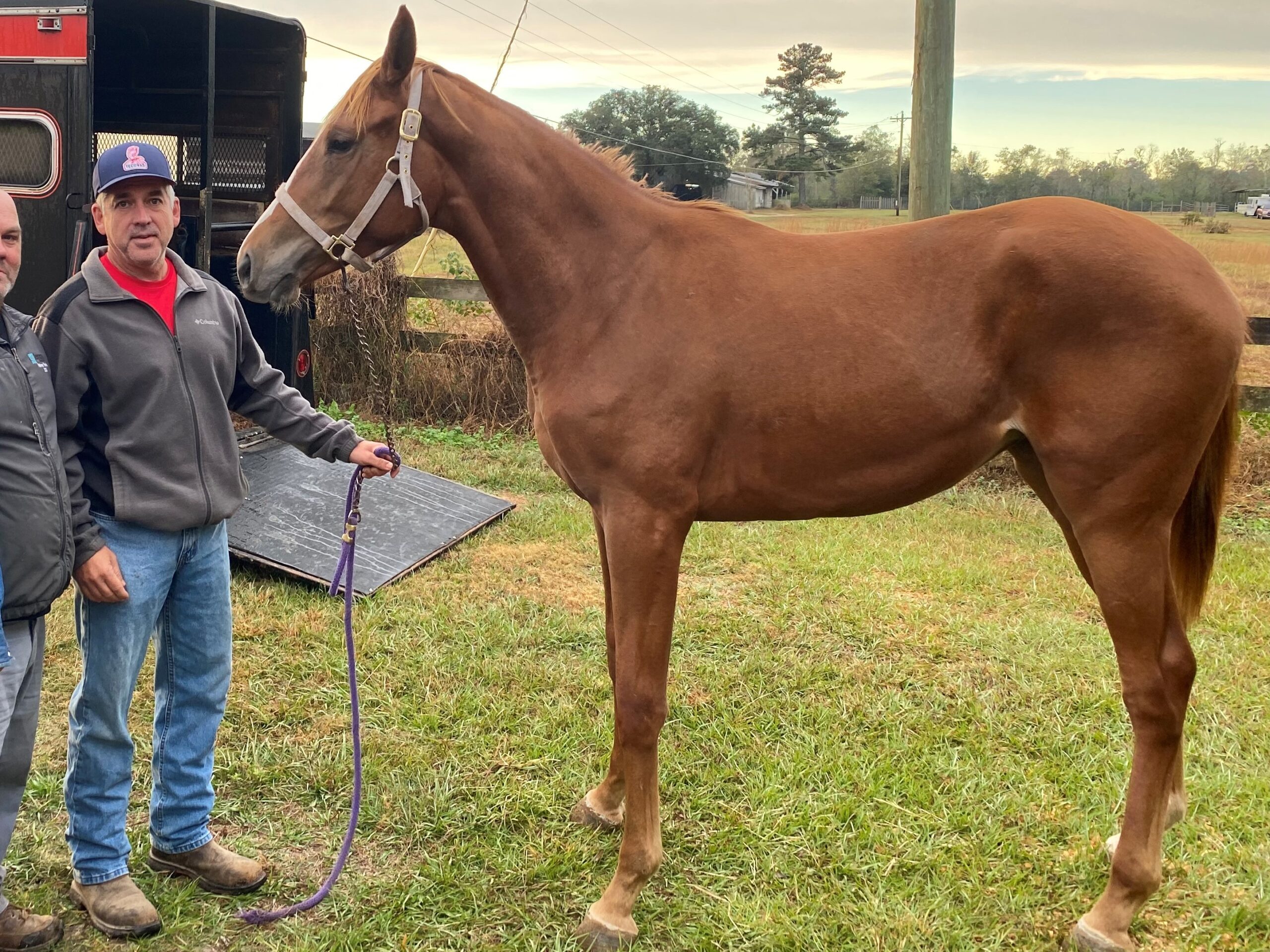
About Miles Henry
Racehorse Owner & Author | 30+ Years in Thoroughbred Racing
Miles Henry (legal name: William Bradley) is a professional horseman based in Folsom, Louisiana. He holds Louisiana Racing License #67012 and has spent over three decades managing Thoroughbreds at premier tracks including Fair Grounds, Delta Downs, and Evangeline Downs.
Expertise & Hands-On Experience: Beyond the track, Miles has decades of experience in specialized equine care, covering everything from hoof health and nutrition to training protocols for Quarter Horses, Friesians, and Paints. Every guide on Horse Racing Sense is rooted in this “boots-on-the-ground” perspective.
30 of their last 90 starts
Equibase Profile.

Connect with Miles: