

Last updated: October 14, 2026
Any links on this page that lead to products on Amazon are affiliate links and I earn a commission if you make a purchase. Thanks in advance – I really appreciate it!
A long, full tail takes a long time to grow, and one muddy week, a careless step, or a night in the shavings can undo a lot of it. If you’re trying to protect that hair, you’ve probably wondered whether a tail bag is worth it and which kind to get.
The key is choosing the right style for your horse’s situation and putting it on without pulling the hair or trapping moisture. Below are the main types, a few bags worth considering, how to put one on, how to size it, and the mistakes that can damage the tail you’re trying to protect.
Table of Contents

What Does a Tail Bag Do for a Horse?
A tail bag protects a tail you’ve already cleaned and put up. Once the hair is washed, conditioned, and brushed out, it gets braided, folded up, and slipped into the bag, where it stays out of the mud, manure, and bedding. People use them for a few practical reasons:
- Keeping a show tail clean: Bag the tail after you wash it, and it’ll still be clean when you take it down at the show.
- Growing a long tail: Keeping the hair braided and covered helps prevent it from being stepped on, snagged, or rubbed out, so it can grow longer and fuller. It also means less brushing, and tail hair breaks easily every time you drag a brush through a tangle.
- Bad weather: In wet, muddy months, a bag keeps the tail from turning into a mess of knots and mud.
- Hauling: A bag keeps the tail clean on the trailer and protects it from rubbing against the trailer wall.
The tradeoff is flies. A horse’s tail is its main fly swatter, and a bagged tail can’t do that job well. During peak fly season, only leave a tail bag on a horse that’s stabled or wearing a fly sheet in turnout, and use fly spray.
Types of Tail Bags
Tail bags are fabric sleeves made to cover and enclose a braided tail. They come in a few main styles: soft lycra, tougher nylon, and braid-in sleeves with a separate tube for each section of the braid. The right one depends on how your horse lives and what you want the bag to do:
| Type | What it’s like | Best for |
|---|---|---|
| Lycra or spandex | Soft, stretchy, and lightweight | Everyday use and stalled horses |
| Nylon or waterproof | Tougher and sheds water and mud | Wet weather, with daily checks if the horse is turned out |
| Fleece-lined | Soft lining with extra warmth | Cold climates and sensitive tails |
| Braided or multi-tube | Separate tubes for each section of the braid | Very long tails that tangle easily |
| Fringed | A bag with tassels or fringe at the bottom | Some fly-swatting ability while the tail is bagged |
Most bags close at the top with hook-and-loop tape or ties. Hook-and-loop is quicker, and ties let you adjust the fit.
Some people use an old sock or a pair of pantyhose in a pinch. That can work for a night, but household materials can bind, hold moisture, or come apart in turnout. A bag made for the job is safer for anything longer.
Best Tail Bags for Horses
There’s no single best-ever tail bag. The right one depends on what you’re protecting: a show tail, a muddy turnout tail, or a tail you just want to keep out of the bedding. For a stalled horse, start with lycra. For wet weather, go with a tougher waterproof bag. If flies are the main concern, look for fringe or a multi-tube design. These picks are based on each bag’s design and listed features. Lengths and materials change often, so check the current listing before you order.
| Tail bag | Best for | Material |
|---|---|---|
| Showman Lycra Braid-In | Long show tails | Lycra, braid-in tubes |
| Mustang Tail Sack | Wet weather | Waterproof fabric |
| Harrison Howard With Fringe | Fly season | Nylon with fringe |
| Tough-1 Lycra (6-Pack) | Several horses or spares | Lycra |
Showman Lycra Braid-In Tail Bag
Best for long show tails. The Showman is a lycra braid-in bag, with separate tubes for the sections of the braid, so the tail stays divided instead of balled up in one sleeve. It’s a good fit for a horse whose tail you’re growing out or keeping show-ready.
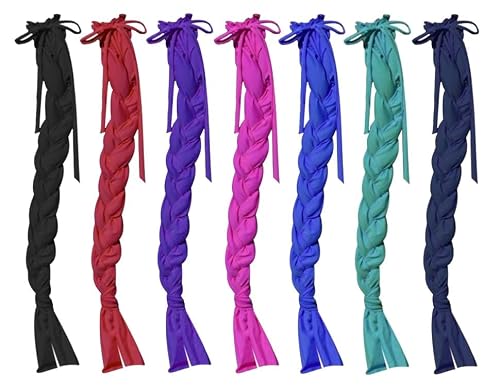
Classic Equine Slick Tail Bag
Best for wet weather. The Classic Equine Slick Tail Bag is made from lightweight, water-repellent material, so it’s a practical choice when you’re fighting mud and rain. The spandex ties make it quick to put on and let you adjust the fit. It won’t breathe as well as lycra, though, so check underneath it more often in humid weather. If your horse wears one in turnout, check it daily—any bag or strap can snag on a fence.

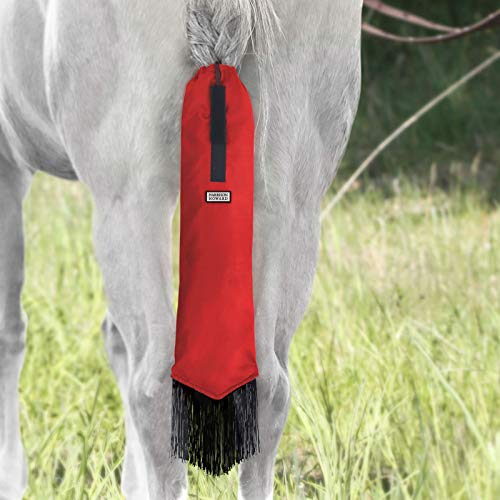
Harrison Howard Tail Bag With Fringe
Best during fly season. Harrison Howard’s bag is lightweight nylon with a fringe at the bottom. The fringe lets the horse swish with some fly-swatting ability, though it won’t work as well as a loose tail. The listing says it’s machine washable.
Weaver Leather Lycra Spandex Tail Bag
Best for everyday use. The Weaver is a simple, lightweight lycra-spandex bag that slips over a braided tail and keeps it out of the bedding, dust, and trailer grime. At 28 inches long, it gives most horses enough coverage without a lot of extra bag hanging below the tail. It’s a good basic choice for a stalled horse, show prep, or hauling—just check that it stays snug and doesn’t slide down.

How to Put a Tail Bag on a Horse
Once you’ve done it a few times, putting a tail up takes only a few minutes. These steps follow Horse Illustrated’s tail-wrapping guide:
- Wash and dry the tail. The tail has to be completely dry before it goes into a bag. A wet tail can mildew and break. A good grooming routine makes this part easier.
- Brush it out. Detangle the tail gently, working from the bottom up, so you’re not braiding knots into it.
- Braid loosely. Start the braid below the tailbone, split the hair into three sections, and braid down without pulling tight near the top. If you’re using a multi-tube bag, each section goes into its own tube.
- Fold the braid. Fold the braid up on itself so it fits in the bag.
- Put on the bag. Slide the bag over the braid and fasten it at the top of the braid, below the tailbone. Never tie anything around the tailbone itself.
- Check it often. Look at the fit every day, and take the bag down at least once a week to brush out the tail, check the skin and hair, and rebraid. Wash the bag while you’re at it. Take it off right away if you see rubbing, swelling, or a bag that’s shifted or caught.
How Long Should a Tail Bag Be?
Tail bags come in different lengths for ponies, average horses, and drafts, and some are made for very long tails. To pick the right size, measure from the bottom of the tailbone to the end of the hair, then compare that with the bag’s length on the listing. Remember that you’ll be folding the braid, so the bag doesn’t need to be as long as the loose tail.
A bag that’s too short won’t hold the folded braid, and one that’s far too long will hang down and get stepped on. If you’re between sizes, go by the listing’s length chart rather than the size name, since one brand’s “standard” can be another’s “long.”
Are Tail Bags Safe for Horses?
A properly fitted tail bag is generally safe, but it isn’t something you put on and ignore. The biggest mistakes are simple ones:
- Tying it too tight or too high: A bag or braid that’s too tight can restrict blood flow and damage the hair follicles. Never tie a bag, string, or band around the tailbone itself. Fasten it below the end of the tailbone, through the braided hair.
- Bagging a wet tail: Damp hair in a bag can lead to mildew, irritation, and breakage.
- Leaving it on too long: A bag left on for weeks can let the tail mat and lose hair.
- Ignoring the flies: A bagged tail can’t swat well, so use fly spray, a fly sheet, or a fringed bag when the flies are bad.
- Missing the signs: If your horse keeps swishing hard or rubbing its tail, take the bag down and check for irritation or a bad fit. Some horses just don’t tolerate tail bags well.
Used correctly, a tail bag is one of the simplest ways to keep a tail clean and help it grow. Check it often, keep it clean and dry, and take it down whenever your horse tells you it’s bothering him.
About Miles Henry
Racehorse Owner & Author | 30+ Years in Thoroughbred Racing
Miles Henry (legal name: William Bradley) is a professional horseman based in Folsom, Louisiana. He holds Louisiana Racing License #67012 and has spent over three decades managing Thoroughbreds at premier tracks including Fair Grounds, Delta Downs, and Evangeline Downs.
Expertise & Hands-On Experience: Beyond the track, Miles has decades of experience in specialized equine care, covering everything from hoof health and nutrition to training protocols for Quarter Horses, Friesians, and Paints. Every guide on Horse Racing Sense is rooted in this “boots-on-the-ground” perspective.
30 of their last 90 starts
Equibase Profile.

Connect with Miles: