Last updated: August 30, 2026
Our neighbors keep horses and ponies in the same pasture, and my grandson asked the natural question: can horses and ponies breed?
Yes — ponies and horses are the same species and can breed to produce fertile offspring. A pony is not a baby horse or a separate animal; it is a mature equine that remains smaller throughout its life. If you are considering a horse-pony cross, the individual sire and mare matter far more than the label itself — especially their size, conformation, temperament, health, and the mare’s foaling considerations.
The biology is the easy part. The questions I would ask before breeding a horse and pony are where things get interesting: How big might the foal get? What traits might it inherit? Is the pairing actually a good match? In this article, I’ll walk through those considerations and some of the most well-known horse-pony crosses.
Table of Contents
Why Horses and Ponies Can Interbreed
Horses and ponies are both domestic horses, so there’s no species barrier between them. “Pony” describes a mature horse of a certain size and type – it isn’t a different animal, just a smaller type of horse. That’s exactly why they interbreed as easily as any two horse breeds would. If you’re wondering whether a pony is genetically just a young horse, it isn’t – a pony stays pony-sized for life, while a foal of any adult size grows out of being small. I cover that distinction in more detail in is a pony a baby horse.
Size Differences to Consider
In many contexts, 14.2 hands is used as the dividing line: animals under it are called ponies, and those over it are called horses. But breed rules vary, and type matters too – some breeds are classified as ponies or horses regardless of whether an individual falls slightly above or below that number. Shetland ponies can stand as short as 7 hands, while Welsh ponies commonly reach 13 to 14 hands – both are ponies. On the horse side, Shires commonly exceed 17 hands, while the Fjord tops out around 14 to 15 hands and is built stocky and compact, more like a typical pony – a good reminder that height alone doesn’t tell the whole story.
That range matters more than most people expect when picking a cross. Breeding a very large horse to a very small pony mare isn’t automatically dangerous, but it’s not something to do casually either – foal size, the mare’s own comfort carrying the pregnancy, and delivery all deserve real thought before you commit to a specific pairing.
What Happens When You Breed a Horse and Pony?
Breeding a horse with a pony can produce a genuinely excellent all-around equine – but it pays to think through the temperament and physical characteristics of both parents first, not just hope for the best. A responsible breeding decision starts with the individual mare, stallion, and management plan, not the novelty of the cross itself.
| Consideration | What to evaluate |
|---|---|
| Mare size and breeding plan | The physical difference between sire and mare, the mare’s reproductive history, veterinary input, and a foaling plan |
| Conformation and soundness | Feet, legs, joints, back, bite, movement, known hereditary concerns, and whether both parents are useful, sound individuals |
| Temperament | The individual mare and stallion’s disposition and trainability – not just general breed stereotypes |
| Intended foal | A realistic plan for expected adult height, discipline, home, training, and cost |
| Registration | Whether the proposed foal can be registered anywhere, and whether that matters to you |
| Management | Stud access, disease testing, vaccination, nutrition, reproductive veterinary care, and safe foaling supervision |
Temperament: Choose the Individual Parents, Not Just the Breeds
Many pony breeds have a reputation for being clever, tough, and full of opinions, but a breed label only tells you so much. A quiet, well-handled pony can be a terrific child’s mount; a spoiled or poorly trained one can be harder to manage than plenty of full-sized horses. The same is true on the horse side: some lines and breeds are known for more sensitivity or energy, while others are often selected for a steadier disposition, but the individual mare and stallion are what you are actually breeding.
Look at both parents in everyday situations. How do they handle turnout, farrier work, loading, veterinary care, new environments, and pressure under saddle or in harness? A foal can inherit useful qualities from either side, but no horse-pony cross comes with a guaranteed temperament. Good handling, appropriate early training, and consistent management will matter just as much once that foal is on the ground.

Physical Traits and Conformation
Many traditional pony breeds developed in rugged environments and are known for dense bone, sturdy feet, thick coats, and economical keep. Still, individual breed type varies a great deal – compare a Shetland, a Welsh, a Connemara, and a Pony of the Americas. Compared with many traditional pony types, many riding-horse breeds tend to have longer legs and necks and a lighter overall build, but there’s plenty of overlap, which is why height alone doesn’t tell the whole story. See my full horses vs. ponies comparison for the complete physical breakdown.
Don’t breed around obvious structural problems simply because the cross sounds appealing. Feet, limb alignment, movement, back and hip structure, bite, and overall soundness all matter – a foal can inherit strengths and faults from either parent, and good intentions don’t correct poor conformation.
Why a Large Stallion and Small Mare Need Extra Planning
You’ll often hear breeders say the mare determines the size of the foal. There’s some truth behind that idea, but I would never treat it as a guarantee that a difficult foaling can’t happen.
The science behind that breeder belief is genuinely interesting. In a classic 1938 study, researchers crossed Shire horses and Shetland ponies in both directions – Shire stallion on Shetland mare, and the reverse. Foals carried by the small Shetland mares were much lighter at birth than foals carried by the large Shire mares, even when the sire was reversed. That’s useful evidence that the mare’s own body and placenta meaningfully influence fetal growth – almost certainly because uterine and placental capacity cap how large a foal can get before birth. That size difference persisted into adulthood, not just at birth.
Difficult births can happen for several reasons, including fetal position, fetal size, and problems with the mare – which is exactly why I wouldn’t treat a mare’s ability to limit fetal growth as a safety guarantee. A significant size mismatch is a good reason to involve an equine veterinarian before breeding and to have a specific plan for foaling supervision and emergency care – the AAEP recognizes that a difficult delivery can require controlled vaginal delivery, assisted delivery, or a cesarean section, so this isn’t a situation to plan for after the fact.
Why Horse-Pony Crosses Are Popular With Families
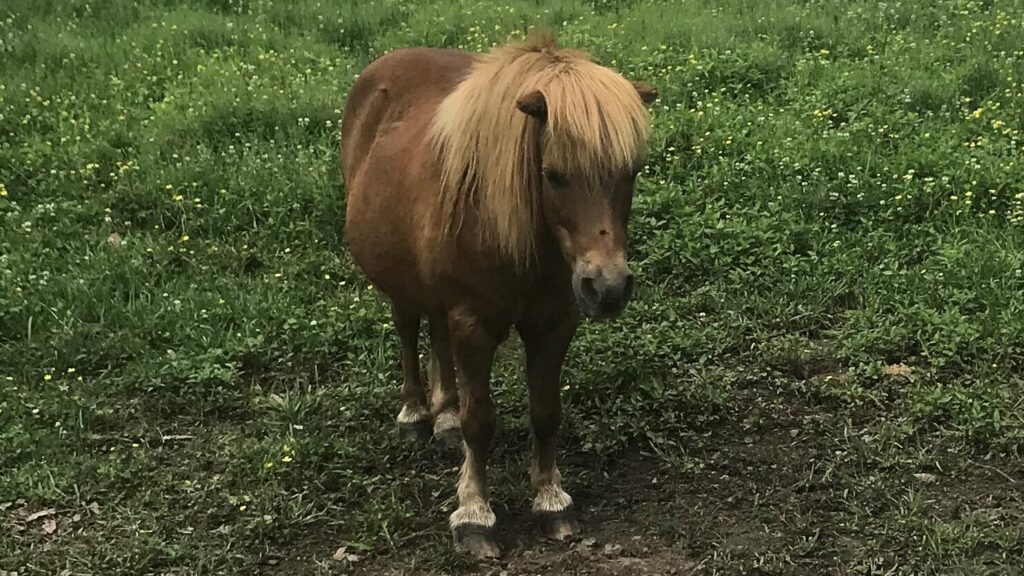
A lot of interest in horse-pony crosses comes from families weighing their first equine for a young or beginner rider – not necessarily anyone planning to breed one themselves. The appeal makes sense: a well-bred cross can combine a pony’s manageable size and easier handling with a horse breed’s build, athleticism, or specific discipline strengths. That combination often lands in a comfortable middle ground for a growing kid who’s outgrown a small pony but isn’t ready for a full-sized horse yet.
If you’re shopping for a family or beginner mount rather than planning a breeding, the individual horse’s training, temperament, and soundness still matter far more than whatever cross produced it. See my guides to horse temperament for beginner riders and good kids’ horse breeds for more on choosing the right first horse or pony.
Shetland Pony Crosses
It’s genuinely hard to picture a Shetland stallion breeding an Appaloosa mare, but it happens. Shetland blood has influenced several pony and crossbred programs, but the best-known example by far is the Pony of the Americas.
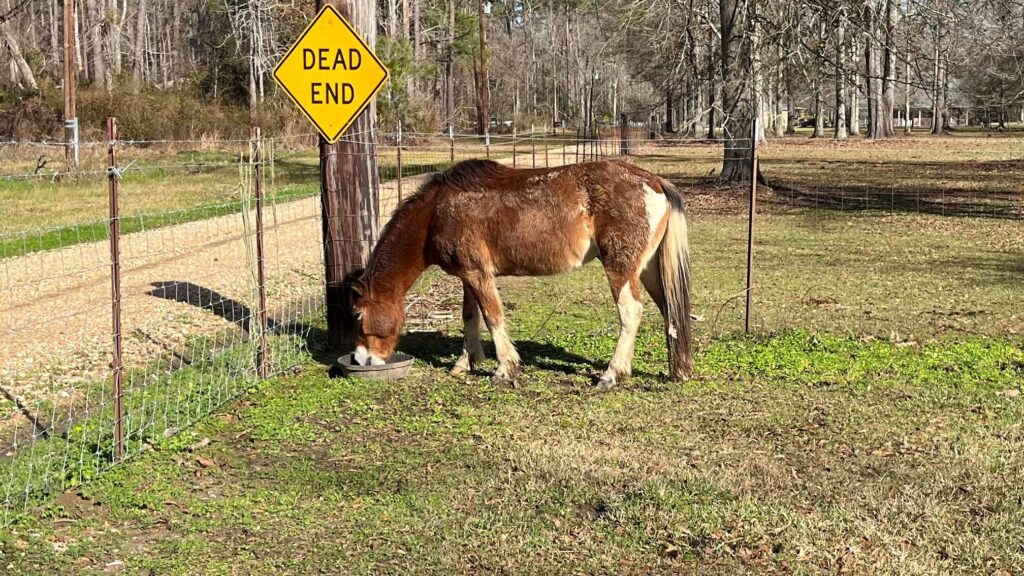
Shetlands evolved in the harsh environment of Scotland’s Shetland Islands, where forage was scarce but the ponies were still expected to work – which bred real toughness and a long lifespan into the breed. They’re intelligent and generally gentle, if occasionally stubborn, and they make excellent children’s ponies. Their combination of substantial bone and a calm temperament is exactly what makes them such a popular choice for horse crosses aiming for that same combination.

Pony of the Americas: A Real Crossbreeding Success Story
The Pony of the Americas exists because of an accident. In 1954, a neighbor offered Iowa Shetland breeder Les Boomhower an Arabian-Appaloosa mare that had accidentally been bred to a Shetland stallion. Skeptical of the unplanned cross, Boomhower waited until the foal was born before agreeing to buy the mare. The resulting colt turned out spotted with a black, hand-shaped mark on his flank – Boomhower named him Black Hand.
Black Hand impressed Boomhower enough that he called together fellow Shetland breeders and founded an entirely new registry built around that unplanned foal as the breed’s foundation stallion. Pony of the Americas horses have since been crossed with plenty of other horse and pony breeds while keeping their compact size and, in many cases, that distinctive Appaloosa coat pattern. The breed remains a favorite for young riders, and the Pony of the Americas Club is one of the most active youth-oriented equine associations in the country for kids under 18.
Below is a video about the Pony of the Americas’ National Congress.

Can Horses and Ponies Breed: FAQs
Can a pony and a horse have a baby?
Yes. A pony and a horse can breed because both are domestic horses, so they can mate and produce fertile offspring. But its eventual height, build, temperament, and athletic ability aren’t guaranteed – those depend on the individual parents and how the foal is raised and trained.
Is it safe to breed a large horse to a small pony mare?
It requires real caution. A mare’s own body size meaningfully limits how large her foal grows before birth, which reduces some risk – but it’s not a guarantee, and oversized foals can still cause serious complications. Work with your veterinarian before breeding a significant size mismatch, and have a delivery plan in place well before the due date.
What is a well-known example of a horse-pony cross?
A well-known example involving Shetland blood is the Pony of the Americas. Its foundation stallion, Black Hand, was an Arabian-Appaloosa-Shetland cross, and the breed was developed as a sturdy, versatile youth mount with Appaloosa-type color.
Is a pony just a baby horse?
No – a pony is a fully mature equine that stays small its entire life, genetically and permanently. A baby horse of any adult size is called a foal, and it grows out of being small. See our full breakdown for the complete explanation.
What is a horse-and-pony cross called?
There’s no single universal name. Most people simply call the animal a horse-pony cross, or use the name of a recognized breed or registry if it qualifies, like the Pony of the Americas. “Pony” doesn’t describe a baby horse – it describes an adult equine of pony type.
About Miles Henry
Racehorse Owner & Author | 30+ Years in Thoroughbred Racing
Miles Henry (legal name: William Bradley) is a professional horseman based in Folsom, Louisiana. He holds Louisiana Racing License #67012 and has spent over three decades managing Thoroughbreds at premier tracks including Fair Grounds, Delta Downs, and Evangeline Downs.
Expertise & Hands-On Experience: Beyond the track, Miles has decades of experience in specialized equine care, covering everything from hoof health and nutrition to training protocols for Quarter Horses, Friesians, and Paints. Every guide on Horse Racing Sense is rooted in this “boots-on-the-ground” perspective.
30 of their last 90 starts
Equibase Profile.

Connect with Miles: