Last updated: September 12, 2026
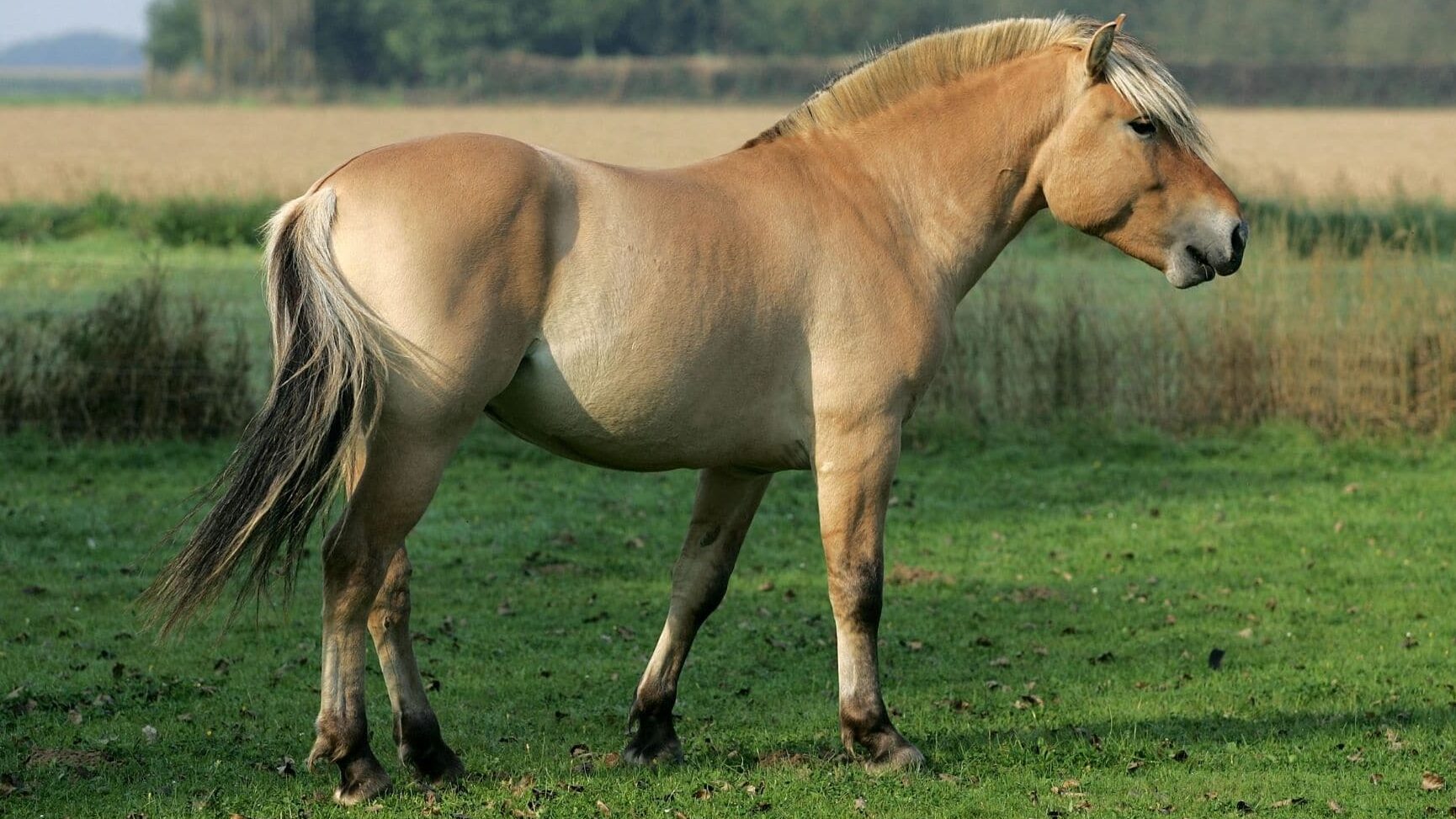
You may have seen a striking dun-colored horse with a dark dorsal stripe and a two-tone mane standing upright along its neck and wondered what breed it was. That unmistakable look belongs to the Norwegian Fjord Horse, one of the world’s oldest and most recognizable horse breeds.
The Norwegian Fjord Horse is a compact, sturdy, versatile breed known for its dun coloring, dorsal stripe, two-tone mane, willing nature, and ability to take part in riding, driving, and light draft work. Fjords are often admired by beginners and experienced horse owners because many are sensible, dependable horses. Still, the individual horse’s training, soundness, ground manners, and temperament matter more than the breed name.
In this guide, I’ll cover what Fjord horses are really like, their temperament, size, care needs, suitability for adult riders, common uses, and what I would look for before bringing one home.
Table of Contents
Norwegian Fjord Horse at a Glance
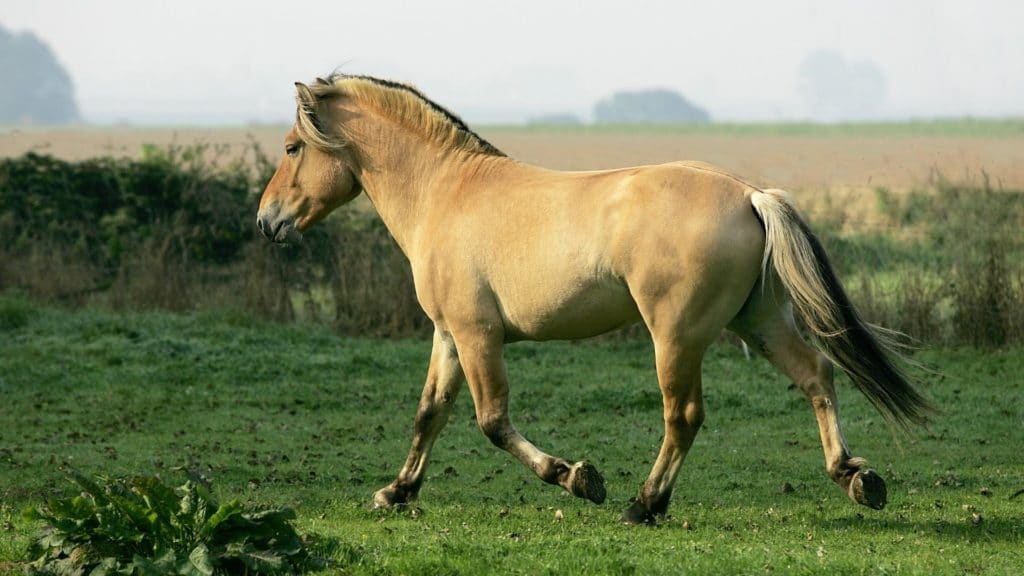
Norwegian Fjords are compact, stout horses that often look smaller than they feel under saddle. They are generally broad through the chest and barrel, strong through the back and hindquarters, and substantial for their height.
| Trait | What to know |
|---|---|
| Breed | Norwegian Fjord Horse |
| Typical height | Commonly around 13 to 15 hands, with individual variation |
| Build | Compact, broad, muscular, and strongly built |
| Recognized colors | Brown dun, red dun, gray, white dun, and yellow dun |
| Distinctive markings | Dorsal stripe, primitive markings, and a two-tone mane |
| Common uses | Riding, driving, pleasure riding, trails, and light draft work |
| Beginner suitability | Often promising, but depends on training, manners, soundness, and temperament |
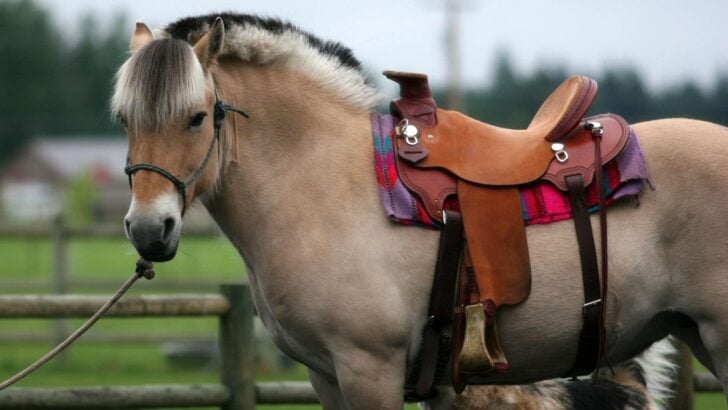
The Fjord’s five recognized colors are all dun variations. The NFHR color guide recognizes brown dun, red dun, gray, white dun, and yellow dun. Brown dun is the color most people picture first, with a tan or golden body, darker points, a dorsal stripe, and a dark center stripe in the mane. But gray, red dun, white dun, and yellow dun are also genuine Fjord colors.
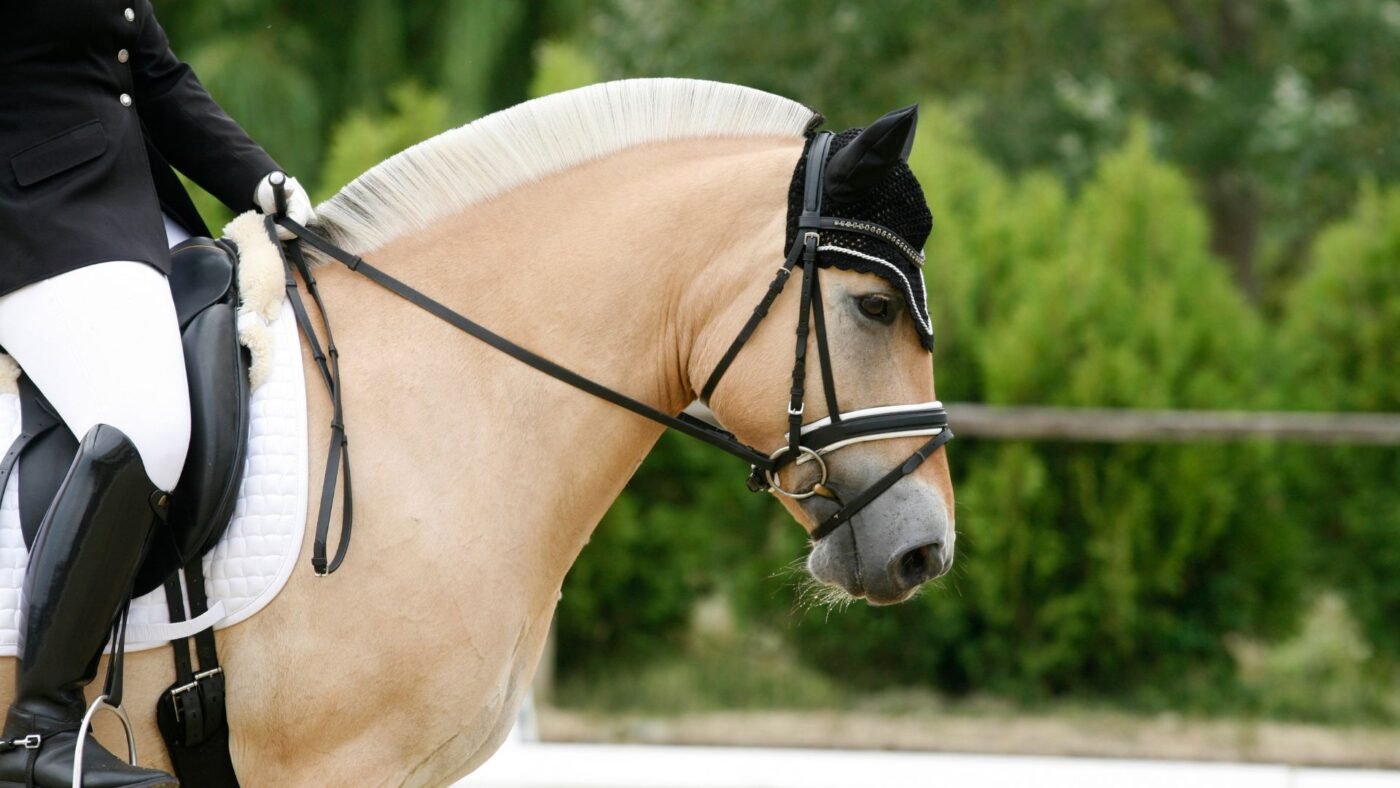
The upright mane is another hallmark of the breed. Many owners clip it in the traditional Fjord style, leaving the darker center hair slightly longer to emphasize the curve of the neck. It is a sharp look, but it is optional. A long-maned Fjord is still a Fjord. For more on the color pattern behind those markings, see my guide to dun horse colors and markings.
Are Fjord Horses Good for Beginners?
A well-trained Norwegian Fjord can be an excellent choice for a beginner rider. Their cooperative nature, sturdy build, manageable size, and willingness to work are some of the reasons Fjords have earned a reputation as sensible, versatile horses.
- They are often easier to handle physically. Their compact size can make grooming, saddling, leading, and mounting feel less intimidating than working around a taller horse.
- They are sturdy and versatile. Fjords are not delicate horses. A suitable individual can often enjoy trail riding, pleasure riding, driving, and general family use.
- They tend to respond well to consistency. Many Fjords are intelligent, willing horses that thrive with clear expectations, regular handling, and a steady routine.
- They can build rider confidence. A mature Fjord with good brakes, respectful ground manners, and experience outside the arena can give a newer rider a reliable partner to learn with.
But I would never buy a horse for a beginner based on breed alone. A young Fjord with limited training or an older horse with poor manners can still be too much horse for an inexperienced rider. The breed may put a Fjord on your shopping list, but the individual horse is what determines whether it is the right match.
My take: I would choose an older, proven Fjord with good habits over a young horse with potential every time for a first-time owner. A beginner does not need the horse with the most promise; they need the horse that already knows its job.
If you are searching for your first horse, my guide to the best horse breeds for beginners explains what traits matter most when comparing breeds and individual horses.
What Fjord Horses Are Really Like
Fjords have a reputation for being sensible, sturdy, useful horses. Many are people-oriented and enjoy having a job, whether that job is trail riding, driving, basic arena work, or simply being a reliable pleasure horse.
But a Fjord is still a horse. They can spook, get fresh, become herd-bound, test boundaries, or develop bad habits if their training and handling are inconsistent. A calm breed reputation does not replace good horsemanship.
Their intelligence can be a real advantage. A well-managed Fjord often learns routines quickly and becomes a dependable partner. The flip side is that smart horses also learn what they can get away with. A Fjord that crowds people, pulls on the lead rope, drags toward grass, or ignores basic cues can be surprisingly strong and frustrating to handle.
Their compact size can fool people. A shorter horse with a broad body, strong neck, and plenty of confidence can still be more horse than an inexperienced owner expects.
My take: A pretty Fjord with bad manners is still a bad horse to own. I care more about what happens when the saddle comes off than what the horse looks like standing in a pasture.
What I’d Check Before Buying a Fjord
Before buying a Fjord, I would spend more time watching the horse live a normal day than watching a polished sales video. A horse may look quiet in a clipped arena video and still be difficult to catch, hard to load, sour away from home, or rude on the ground.
Here is what I would want to see.
- Age and actual experience: A mature horse with a useful record is usually a safer choice for a beginner than a young Fjord that is green or lightly started.
- Ground manners: Watch the horse be caught, haltered, led, tied, groomed, saddled, bridled, mounted, and loaded. A horse that is rude on the ground can be more dangerous than one that is mildly forward under saddle.
- Behavior away from the barn: Ride the horse away from its pasture mates if possible. See whether it walks out willingly, stands quietly, and remains manageable when another horse leaves.
- Riding manners: Test steering, stopping, backing, standing at the mounting block, transitions, and willingness to go forward without being rushed or nagged.
- Real-world exposure: Ask to see how the horse handles dogs, traffic, four-wheelers, gates, trail obstacles, puddles, other horses, and unfamiliar areas if those are part of your planned use.
- Soundness: Have a veterinarian perform a pre-purchase examination appropriate for the horse’s age, intended use, and condition. Do not skip this step because a horse looks sturdy or is being sold as a beginner mount.
- Weight and feeding history: Ask about pasture access, hay type, grain, body condition, prior laminitis, hoof soreness, and any metabolic testing. Easy-keeper management is a real part of Fjord ownership.
- Registration and records: If registration matters to you, verify it with the Norwegian Fjord Horse Registry. Also ask for vaccination, dental, farrier, and veterinary records.
From the barn: The easiest horse to buy is often the hardest horse to live with. Spend more time watching the horse than watching the sales video.
Bring a trainer, instructor, or experienced horseperson with you if you can. You want somebody who will notice the things you may overlook because you have fallen in love with the horse’s color, size, or personality.
For a more complete buying process, read how to find the right first horse.
What Can Fjord Horses Do?
Fjords are versatile horses. Their practical build and willing nature have made them useful for riding, driving, and light draft work.
- Trail riding: A trained Fjord can be a useful choice for relaxed trail rides, varied footing, and recreational riding outside the arena.
- Pleasure riding: Many Fjords make enjoyable horses for everyday riding, basic arena work, and riders who want a practical partner.
- Dressage and schooling: Fjords can be enjoyable mounts for riders who want to develop basic flatwork, balance, transitions, and responsiveness.
- Driving: Their strength, compact build, and willingness can make Fjords well suited to recreational driving and, with appropriate training, competition driving.
- Light draft and farm work: Their build and traditional utility suit light pulling work when the horse is properly conditioned and trained for harness.
Versatility does not mean every Fjord will enjoy every job. A horse trained for driving may need more preparation for trails. A quiet trail horse may not be ready for a busy show atmosphere. Buy the horse that already has experience in the work you plan to do, or budget for qualified training after purchase.

Fjord Horse Care: Easy Keepers Need Management
Fjords are often considered easy keepers, which can be a real advantage for owners looking for a horse that maintains condition without heavy feeding. The downside is that they can gain weight easily if pasture, hay, treats, and exercise are not managed carefully.
I would monitor a Fjord’s body condition regularly, watch for a thickening neck crest or excess weight, and make small adjustments early rather than waiting until the horse becomes difficult to bring back into shape.
Like any horse, a Fjord’s needs depend on age, workload, forage quality, pasture access, and overall health. They are hardy horses, but hardy does not mean maintenance-free. Regular hoof care, appropriate nutrition, and consistent exercise are still essential.
Because overweight horses can face an increased risk of problems such as insulin dysregulation and laminitis, horses showing signs like a cresty neck, abnormal fat deposits, or hoof soreness should be evaluated with guidance from a veterinarian.
My take: An easy keeper is a blessing until the horse gets ahead of you. I would rather make small feed and turnout adjustments early than spend months trying to correct a weight problem.
For more practical horse management tips, see my guides on how to tell if a horse is overweight, preventing laminitis in horses, and choosing hay for horses.
Grooming, Mane Care, and Hoof Care
Fjords need the same basic horse care as any other breed. That includes clean water, appropriate forage, routine grooming, safe turnout, shelter, vaccination and dental care planned with your veterinarian, parasite control, and regular hoof care.
The traditional Fjord mane trim is optional, but many owners enjoy keeping it. The mane is clipped short so it stands upright, while the darker center stripe is left slightly longer to show off the arch of the neck. If you prefer a longer mane, that is fine too.
Do not assume a Fjord needs less hoof care because the breed is hardy. Every horse needs regular professional hoof care, whether it goes barefoot or wears shoes.
The right farrier schedule depends on hoof growth, wear, footing, conformation, soundness, workload, and the horse’s individual needs. Pick out the feet regularly, watch for thrush, check for heat or tenderness, and address cracks, loose shoes, or changes in movement promptly.
How Much Does a Fjord Horse Cost?
Fjord horses typically cost several thousand dollars, but prices vary widely based on age, training, registration, location, soundness, and experience. A young or lightly started Fjord may be less expensive, while a trained horse with trail miles, driving experience, or a proven record with riders may cost significantly more.
The most important factor is not finding the cheapest Fjord; it is finding a horse that is sound, well-trained, and suited to your goals. A lower purchase price can quickly become more expensive if the horse needs extensive training, corrective care, or ongoing maintenance.
When budgeting for a Fjord, remember the additional costs of ownership:
- Pre-purchase veterinary examination
- Transportation
- Saddle and tack
- Farrier and routine veterinary care
- Feed and forage
- Boarding, fencing, and shelter
- Training or lessons
- Emergency veterinary expenses
Like any horse, the purchase price is only the beginning. The best Fjord for you is the one that fits your experience level, riding goals, and ability to provide proper care.
FAQs About Fjord Horses
Are Fjord horses easy to train?
Many Fjords are willing and intelligent, which can make them enjoyable to train. But intelligence also means they can learn undesirable habits when handling is inconsistent. Clear rules, regular work, and patient training matter.
Are Fjord horses horses or ponies?
Fjords are horses, although their compact height and stout build sometimes make people mistake them for large ponies. Height alone does not determine whether an equine is classified as a horse or pony.
How tall are Norwegian Fjord horses?
Many Fjords stand around 13 to 15 hands. The NFHR breed standard gives a desired height range of about 13.1 to 14.3 hands, although individual horses can fall outside that range.
Can adults ride Fjord horses?
Many adults ride Fjords. Their sturdy build often makes them feel larger than their height suggests, but rider fit depends on the individual horse’s build, soundness, fitness, saddle fit, and the total load carried.
What is special about a Norwegian Fjord horse?
Fjords are known for their compact, strongly built conformation; dun colors; dark dorsal stripe; primitive markings; two-tone mane; and reputation as useful, versatile riding and driving horses.
About Miles Henry
Racehorse Owner & Author | 30+ Years in Thoroughbred Racing
Miles Henry (legal name: William Bradley) is a professional horseman based in Folsom, Louisiana. He holds Louisiana Racing License #67012 and has spent over three decades managing Thoroughbreds at premier tracks including Fair Grounds, Delta Downs, and Evangeline Downs.
Expertise & Hands-On Experience: Beyond the track, Miles has decades of experience in specialized equine care, covering everything from hoof health and nutrition to training protocols for Quarter Horses, Friesians, and Paints. Every guide on Horse Racing Sense is rooted in this “boots-on-the-ground” perspective.
30 of their last 90 starts
Equibase Profile.

Connect with Miles: