
Last updated: November 19, 2026
Picture a war horse and you probably see a huge horse carrying an armored knight. But armies needed more than big horses.
Here’s how those horses were used, and why a good cavalry mount wasn’t necessarily the right horse to pull a gun.
Table of Contents

War Horse Breeds by Battlefield Role
A cavalry mount and an artillery horse had different jobs. Armies needed horses for riding into battle, pulling guns, and hauling supplies, so there’s no single best horse breed for the military.
| Role | Breeds and horse types | What mattered |
|---|---|---|
| Heavy cavalry | Destriers, powerful medieval chargers | Strength, training, and courage for the charge |
| Light cavalry and raiding | Arabian, Barb, Mongolian horse, courser | Speed, endurance, and quick recovery |
| Renaissance cavalry | Andalusian and other European riding horses | Agility and trainability |
| Cavalry and officers’ mounts | Thoroughbreds and crosses; Morgans in the American Civil War | Soundness, stamina, and training |
| Artillery and supply | Percheron, Shire, Belgian, mules | Pulling power and a calm mind under fire |
| Everyday army work | Rouncey and common riding horses | Availability and reliability |
Horse Breeds Used in War
Medieval names such as destrier, courser, and rouncey described a horse’s role or type, not a modern registered breed. The sections below cover both those types and the breeds used in later armies. For an earlier period, the horses of ancient Rome had their own roles in battle.
Destrier and Courser (Medieval War Horses)

The destrier was a knight’s prized war horse, a highly trained and expensive mount used in combat and tournaments. It wasn’t a breed. A courser was generally lighter and faster, used when a knight needed speed and endurance more than power, for raids, pursuit, and longer journeys. Many soldiers and squires rode rounceys, all-purpose horses that did the everyday work of medieval armies. I go deeper into these types in medieval horses.
Arabian

The Arabian, one of the oldest light horse breeds, was prized for its endurance and quick recovery. European breeders often crossed Arabians into their own horses to add stamina. Napoleon’s famous horse Marengo was described as an Arab.
Barb
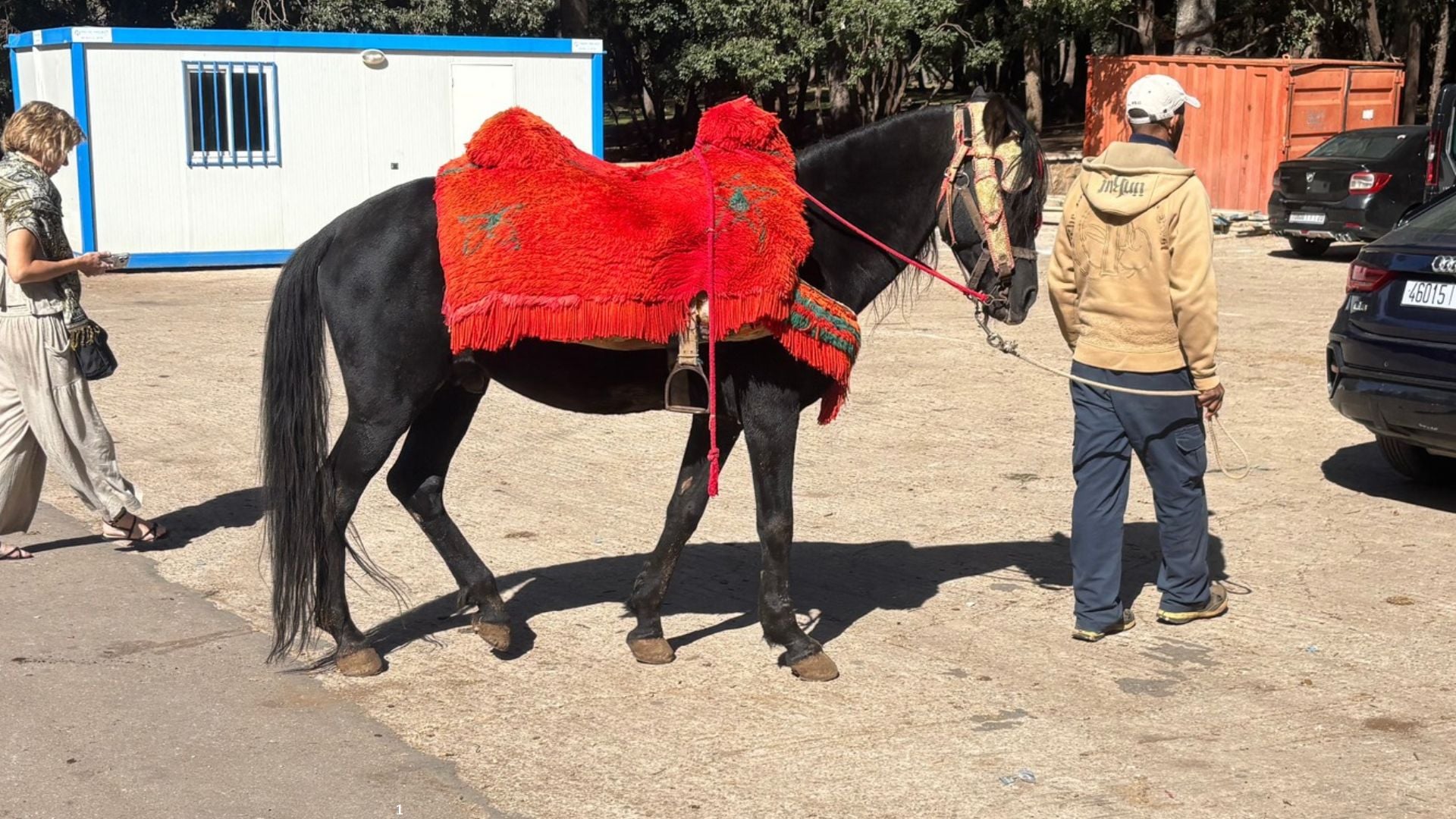
The Barb of North Africa was valued by Berber and Moorish cavalry for its speed, toughness, and agility in rough country. Barbs crossed into Spain with the Moorish invasion of 711 and influenced Spanish horse breeding for centuries.
Mongolian Horse
Mongol armies relied on hardy steppe horses as they swept across Asia under Genghis Khan. They were small, but they carried riders over long campaigns and could forage on the open steppe. Mongol warriors brought several horses each and switched to fresh ones on the march. I cover them in what horses the Mongols rode.
Andalusian
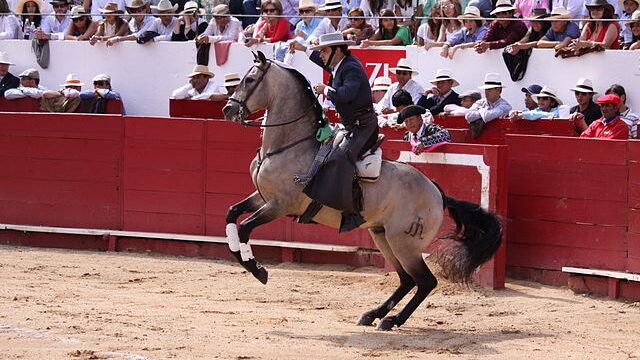
The Andalusian, or Pura Raza Espanola, was a prized riding and military horse in Renaissance Europe. Its athleticism, trainability, and ability to work in collection suited the demanding riding of the period. Spanish conquistadors brought these horses to the Americas, where they helped found many New World breeds.
Thoroughbred

Developed in 17th and 18th century England for racing, the Thoroughbred has three surviving direct male lines tracing to imported stallions: the Byerly Turk, the Darley Arabian, and the Godolphin Arabian, sometimes called the Godolphin Barb. Tradition says the Byerly Turk was a captured Turkish cavalry horse, though historians debate the story. Thoroughbreds and their crosses were valued for speed and stamina, and some served as cavalry mounts, officers’ horses, and messengers in the 1800s and early 1900s. As a Thoroughbred owner, I find that part of their history especially interesting. It’s easy to think of them only as racehorses.
Morgan
The Morgan was America’s tough, versatile horse, and Morgans served in the Civil War alongside horses of many backgrounds. General Philip Sheridan’s famous horse Rienzi, later renamed Winchester, was a 16-hand black horse “of Morgan blood,” according to the Smithsonian. Sheridan rode him from Winchester to Cedar Creek, Virginia, in 1864 to rally his army, and the horse is now at the National Museum of American History.
Percheron and Shire (Draft Horses)
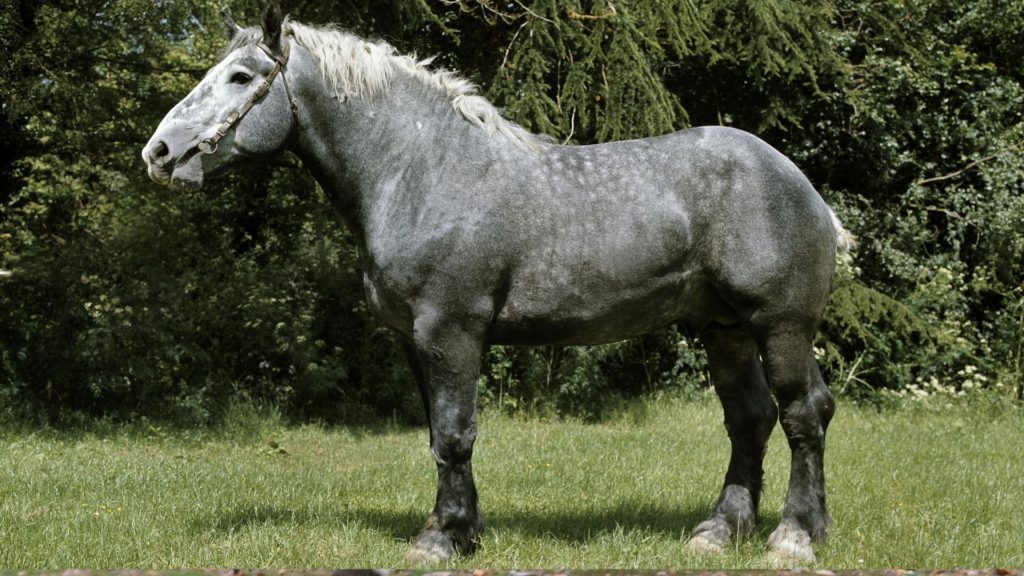
In World War I, horses were essential for moving guns, ammunition, and supplies. Draft breeds like the French Percheron and the British Shire did that hauling over roads that had turned to mud. For that work, a calm temperament mattered as much as strength. A horse that panicked was a danger to everyone around it.
Were Medieval War Horses Really Huge?
Probably not as big as you think. A 2022 University of Exeter study of horse remains from 171 archaeological sites in England, dated AD 300 to 1650, found that horses of the period were often under 14.2 hands, which would count as pony-sized today. The sample wasn’t limited to confirmed war horses, so it doesn’t set a standard height for a destrier. Still, horses of 15 or 16 hands were rare in the sample, with the first examples around 16 hands dating to 1200 to 1350.
The researchers note that films often show war horses of 17 or 18 hands, the size of a modern Shire. Their findings suggest medieval English war horses were generally smaller than that familiar image, with temperament and suitability for the work mattering alongside size.
Horses in World War I and II
World War I depended on horses for far more than cavalry. They moved guns, ammunition, and supplies, and the British Army shipped more than 600,000 horses and mules from North America, according to the National Army Museum. The museum says 75 percent of the horses that died perished from disease or exhaustion. The charity Brooke estimates that eight million horses, donkeys, and mules died during the war.
Horses stayed important in World War II, too. Germany used about 2.8 million horses during the war, according to its Federal Archives, even as armies mechanized.

Famous War Horses in History
- Bucephalus: Alexander the Great’s horse. Ancient writers say Alexander tamed him as a boy by turning him to face the sun, after noticing the horse was afraid of his own shadow. Tradition places his death after the Battle of the Hydaspes in 326 BC, and Alexander named a city, Bucephala, in his honor.
- Marengo: Napoleon’s small gray Arab, named for his 1800 victory at Marengo. According to the National Army Museum, he was captured after Waterloo and taken to England, and his skeleton is now displayed at the museum in London.
- Comanche: Captain Myles Keogh’s horse survived severe wounds at the Little Bighorn in 1876. He recovered, was retired from ridden service, and lived until 1891. His preserved remains are at the University of Kansas Natural History Museum.
War Horse FAQs
What is the best horse breed for the military?
It always depended on the job. Light, tough horses like Arabians and Mongolian horses suited raids and long campaigns, trained destriers suited armored knights, and draft breeds like Percherons and Shires suited hauling artillery and supplies.
Are horses still used by the military today?
Yes. Some military units still use horses for ceremonial duties, including Britain’s Household Cavalry Mounted Regiment.
Could draft horses be ridden into battle?
Yes, but being able to carry a rider wasn’t the same as being suited to cavalry work. Heavy draft breeds were generally better suited to hauling guns and supplies than to the speed and maneuvering cavalry demanded.
About Miles Henry
Racehorse Owner & Author | 30+ Years in Thoroughbred Racing
Miles Henry (legal name: William Bradley) is a professional horseman based in Folsom, Louisiana. He holds Louisiana Racing License #67012 and has spent over three decades managing Thoroughbreds at premier tracks including Fair Grounds, Delta Downs, and Evangeline Downs.
Expertise & Hands-On Experience: Beyond the track, Miles has decades of experience in specialized equine care, covering everything from hoof health and nutrition to training protocols for Quarter Horses, Friesians, and Paints. Every guide on Horse Racing Sense is rooted in this “boots-on-the-ground” perspective.
30 of their last 90 starts
Equibase Profile.

Connect with Miles: