
Last updated: July 27, 2026
Horse breeds used in war have shaped history from medieval heavy cavalry to WWI artillery horses. Each breed was selected for speed, strength, or endurance depending on the battlefield role. You look at paintings of medieval knights or photographs from the Western Front, and one thing stands out: the horses. For thousands of years, warfare depended on breeding the right horse for the right job — and the wrong horse for the wrong job could cost an army a battle. Heavy cavalry needed shock and power. Scouts needed speed and endurance. Artillery units needed patience and raw pulling strength.
The most important horse breeds used in war by battlefield role:
- Destrier — medieval heavy cavalry; elite knight’s mount, compact and powerful, not a draft horse
- Arabian — desert raids, light cavalry, and long-distance campaigns; endurance and intelligence over 4,000 years
- Andalusian — Renaissance heavy cavalry and officer mounts; natural collection for close-quarters combat
- Thoroughbred — Napoleonic through WWI light cavalry, scouts, and messengers; speed and stamina
- Percheron — WWI artillery transport; calm under bombardment, powerful enough for Flanders mud
- Shire — WWI and WWII heavy logistics; Britain’s backbone for supply lines and heavy equipment
- Morgan — American Civil War; both Union and Confederate cavalry relied on their endurance and toughness
Table of Contents

How Armies Selected War Horses
Military commanders matched horses to battlefield roles the way modern militaries match vehicles to missions. Selection was always function-driven — you wouldn’t send a massive Shire to scout, nor a Thoroughbred to pull a heavy cannon. The table below shows how that matching worked across military history.
| Military Role | Primary Breed | Key Trait Required | Era |
|---|---|---|---|
| Heavy Cavalry | Destrier, Friesian, Andalusian | Shock impact and power for armored charge | Medieval to Renaissance |
| Light Cavalry | Thoroughbred, Arabian, Barb | Speed and quick recovery for hit-and-run tactics | Napoleonic to WWI |
| Artillery Transport | Percheron, Shire, Belgian | Calmness under heavy gunfire; pulling power | WWI and WWII logistics |
| Officer Mounts | Andalusian, Morgan, Thoroughbred | Obedience and presence in chaotic skirmishes | All eras |
| Scouts | Arabian, Mustang, Thoroughbred | Endurance and intelligence for long-range patrol | Civil War and frontier campaigns |
The Six Most Important War Horse Breeds
Early military horses were classified by job — destrier, courser, rouncey — rather than by modern breed registries, which didn’t exist. Here are the bloodlines that shaped warfare across centuries.

Destrier (Medieval War Type)
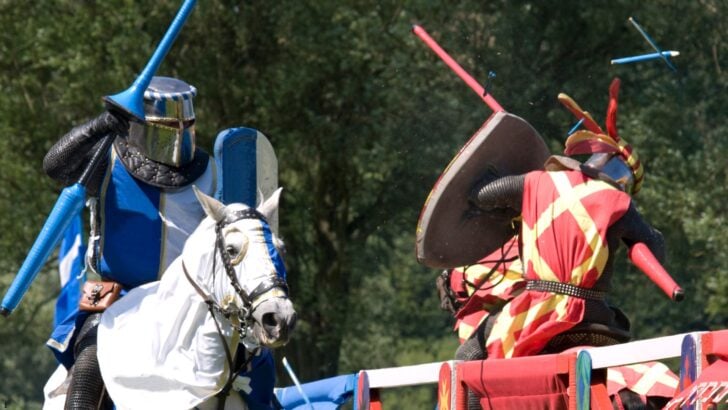
The destrier was the medieval knight’s elite mount — not a specific breed but a classification for the most expensive, highly trained stallions. They carried knights in full armor into battle and tournaments. Contrary to Hollywood’s depiction of massive draft horses, historical evidence suggests destriers were compact, muscular, and agile — likely around 15–16 hands tall, though exact size remains debated by historians — similar to a powerful baroque horse or stout Andalusian. Knights paid a fortune for well-trained destriers — sometimes the equivalent of several farms. They were used from roughly 1000–1500 AD across Europe for heavy cavalry charges, tournaments, and close-quarters combat.
Arabian

The Arabian horse shaped light cavalry for over 4,000 years. Bedouin tribes bred them for desert warfare — long raids across harsh terrain with minimal water and forage. Their endurance, intelligence, and quick recovery made them prized by generals from Alexander the Great to Napoleon. Every Thoroughbred traces to three Arabian foundation stallions. Nearly every modern light horse breed carries Arabian ancestry because European cavalry forces repeatedly crossed local horses with Arabians to improve stamina. Napoleon’s famous mount Marengo was an Arabian. Their physiological advantages — superior cardiovascular efficiency, denser bone structure, and the ability to survive on poor forage — made them invaluable for campaigns where supply lines were uncertain.
Barb (North African War Horse)
The Barb is one of the most overlooked breeds in cavalry history despite its enormous influence. Used by Berber and Moorish cavalry across North Africa and Moorish Spain, the Barb was valued for explosive speed over short distances, exceptional toughness, and agility in difficult terrain. Moorish armies riding Barbs crossed into Spain in 711 AD and dominated Iberian warfare for centuries. Their influence on the horses of Renaissance Spain — particularly the Andalusian — is direct and well-documented. The Barb is also considered one of the foundation types behind the Thoroughbred alongside Arabian bloodlines, meaning its genetics run through modern racing even if the breed itself remains little known outside North Africa.
Andalusian (Pure Spanish Horse)
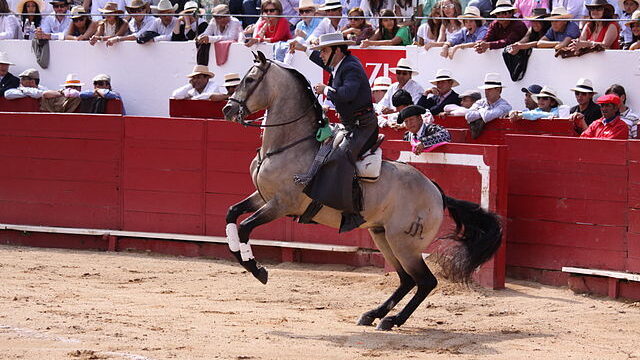
The Andalusian, or Pura Raza Española, was the prestige war horse of Renaissance Europe. Spanish conquistadors rode them to the Americas. European nobility favored them for their natural collection — the ability to shift weight to the hindquarters, enabling quick turns, rearing, and strikes that were lethal before gunpowder dominated battlefields. Before ranged weapons made heavy armor obsolete, hand-to-hand combat demanded a horse that could maneuver in tight quarters while carrying an armored rider. The Andalusian’s influence on cavalry doctrine spread across every territory of the Spanish Empire and is the ancestor of many New World breeds.
Thoroughbred

Developed in 17th and 18th century England specifically for speed and stamina, the Thoroughbred became the definitive light cavalry horse of the modern era. Every Thoroughbred traces to three foundation stallions of Eastern origin — primarily Arabian or Turkoman — imported during this period, including the Byerly Turk, captured as a Turkish cavalry horse at the Battle of Buda in 1686. Thoroughbreds were used extensively in the Napoleonic Wars, the American Civil War, the Boer War, and WWI cavalry units. Thousands served on the Western Front as officer mounts, messengers, and scout horses. Their speed over distance and courage under fire made them the standard light cavalry mount across multiple armies for over two centuries. Meanwhile, Mongol armies relied on small, durable steppe horses capable of traveling vast distances — often with riders carrying multiple remounts — showing that raw speed wasn’t always the decisive factor in cavalry superiority.
Percheron
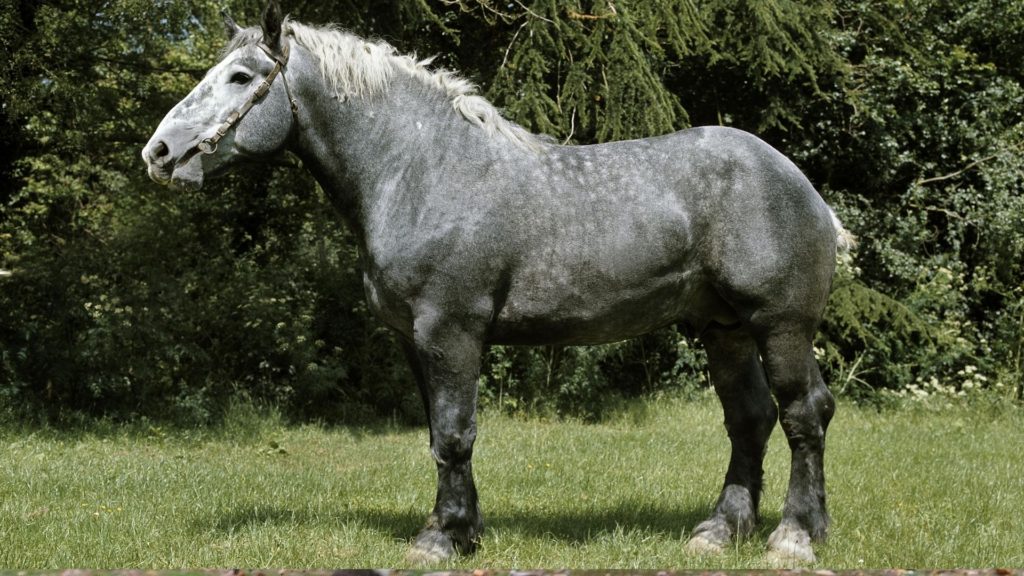
The Percheron originated in France’s Le Perche region and became one of the most important military horses of WWI. Unlike most draft breeds, Percherons had a dash of Arabian blood that gave them more energy and forward movement than other heavy drafts. This made them ideal for pulling artillery and supply wagons through the deep Flanders mud where early motor vehicles failed. Their defining military quality wasn’t just pulling power — it was calm temperament under bombardment. A horse that panicked under shellfire was a liability. Percherons that stood steady while guns fired around them were invaluable. British, French, and American armies all relied heavily on them. Millions of draft horses served in WWI; losses to mud, disease, and shellfire were catastrophic.
Shire

The Shire is descended from the medieval Great Horse and became Britain’s primary heavy draft breed. Shires were used extensively in WWI for hauling supplies, moving heavy equipment, and pulling artillery when roads disappeared into shell-cratered mud. Their calm temperaments and sheer strength — capable of pulling over 5,000 pounds — made them invaluable for the unglamorous logistics work that kept armies functioning. Shires and their crosses were the backbone of WWI British supply lines. Many served and died far from home; very few returned. The breed nearly went extinct after the war when mechanization removed the need for heavy draft horses.
How War Horse Roles Changed Over Time
| Era | Dominant Breed/Type | Strategic Advantage |
|---|---|---|
| 1000–1500 | Destrier, Courser | Heavy armor and close combat required immense power and trainability for complex battle maneuvers |
| 1500–1700 | Andalusian, Friesian | Gunpowder reduced armor, but cavalry remained crucial for shock maneuvers — agility and bravery over raw size |
| 1800–1815 | Arabian, light drafts | Napoleonic campaigns demanded endurance and the ability to forage on minimal feed across vast distances |
| 1861–1865 | Thoroughbred, Morgan | Civil War emphasized raids and long-range scouting — stamina for 50-mile marches and quick recovery |
| 1914–1918 | Percheron, Shire | Trench warfare shifted focus to pulling artillery through deep mud — calm temperament under bombardment was essential |
| 1939–1945 | Mechanization dominant | Tanks replaced mass cavalry, but horses remained vital for reconnaissance in forests and mountains where vehicles couldn’t operate |
Essential Support War Horse Breeds
These breeds weren’t the headline cavalry mounts but they made armies function. In simple terms, the destrier was built for shock combat, the courser for speed and raids, and the rouncey for everyday military work — three roles that together supported medieval cavalry operations.
Courser
The courser was the medieval fast-attack horse — the breed of choice when speed mattered more than armor. Lighter than a destrier, used for raids, scouting, and quick strikes, the courser filled the light cavalry role before purpose-bred light cavalry breeds emerged. Mounted archers, scouts, and raiding parties needed a horse that could cover ground quickly and return. Coursers needed speed and endurance rather than the ability to carry heavy armor, making them the preferred mount for everything from reconnaissance to pursuit after a broken enemy line. This made them essential for reconnaissance and pursuit roles where heavier horses would fatigue too quickly.
Friesian
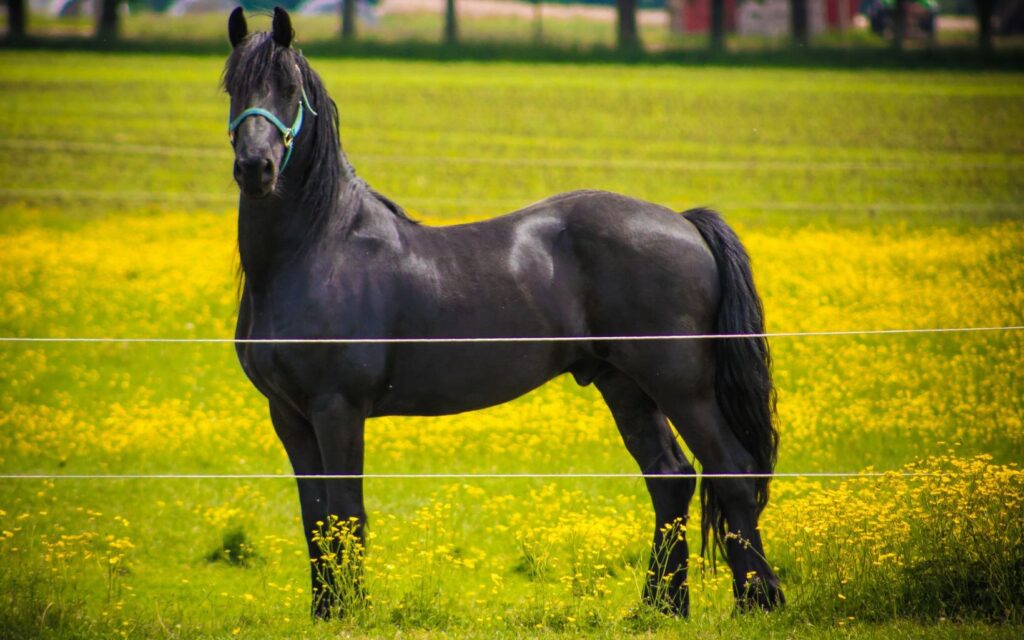
Originating from Friesland in the Netherlands, Friesians were highly valued during the Middle Ages for their strength, presence, and versatility on the battlefield. They were used alongside destriers for heavily armored knights and for ceremonial roles. Their imposing black appearance and high-stepping action made them the prestige mount for display as much as function — a horse that looked formidable before the fighting even started.
Rouncey
The rouncey was the workhorse of medieval armies — affordable, reliable, and available in large numbers when expensive destriers and coursers were not. While knights spent fortunes on their mounts, most soldiers rode rounceys. The all-purpose medieval horse for common soldiers, squires, and general riding, rounceys were used for baggage, scouting, and travel. The logistics of medieval warfare — moving thousands of soldiers, their equipment, and their supplies across vast distances — depended entirely on the unglamorous rouncey. Their availability and reliability made them the logistical backbone of most medieval armies.
Morgan
The Morgan was America’s war horse — compact, durable, and capable of covering ground on minimal feed in conditions that wore out larger breeds. An American breed that played a significant role in the Civil War, Morgans were tough and could handle long marches on minimal feed. Both Union and Confederate cavalry used them extensively for their endurance and calm temperaments. Sheridan’s famous Rienzi — the horse that carried him on his legendary 20-mile ride to rally his troops at Cedar Creek — was a Morgan. They were the working cavalry horse of the American theater while Thoroughbreds served as officer mounts.
Why Different Wars Needed Different Horses
Military needs changed as weapons evolved. Medieval knights needed horses that could carry 300-plus pounds of armor and rider into close combat. Napoleonic cavalry needed horses that could march 30 miles a day for weeks on campaign. WWI needed horses that could pull heavy guns through shell-cratered mud without panicking at artillery bombardment.
Each era selected horses for specific traits. Medieval warfare rewarded power and courage. Gunpowder-era warfare rewarded speed and endurance. Industrial-age warfare rewarded pulling power and calm temperaments. Understanding which horse worked for which war explains why certain breeds survived and spread while others faded — the Andalusian’s dominance in Renaissance cavalry directly led to the founding of breeds across the Americas, while the near-extinction of draft horses after WWI mechanization nearly took the Shire with it. Even as tanks came to dominate WWII, over 2.7 million horses were still used by the German army alone — evidence that mechanical warfare didn’t replace horses as quickly as textbooks suggest. Today, horses still serve in special operations and mounted police units where vehicles cannot operate, making them one of the longest-serving military assets in human history.

The Most Famous War Horses in History
Behind every famous cavalry commander was a horse that became as celebrated as the rider. These animals weren’t just mounts — they were tactical partners whose qualities directly shaped the battles they fought in.
Bucephalus — Alexander the Great’s black stallion, ridden in nearly every major battle of his campaigns from Granicus to Hydaspes. According to ancient sources, Bucephalus was too fierce for ordinary handlers until the young Alexander noticed the horse was afraid of his own shadow and turned him to face the sun. He carried Alexander through the conquest of Persia, Egypt, and into India — a campaign spanning over 11,000 miles. When Bucephalus died after the Battle of Hydaspes in 326 BC, Alexander founded a city in his honor: Bucephala. He was an Akhal-Teke or similar Oriental breed.
Marengo — Napoleon’s grey Arabian stallion, named after the Battle of Marengo in 1800 where Napoleon secured his grip on northern Italy. Marengo carried Napoleon through the Egyptian campaign, Austerlitz, Jena, Wagram, and finally Waterloo. He was captured by the British after Waterloo and spent the rest of his life in England, where his skeleton is preserved at the National Army Museum in London. His presence at Waterloo is documented in Jacques-Louis David’s famous paintings of Napoleon crossing the Alps.
Comanche — the only U.S. Army survivor found on the field after the Battle of Little Bighorn in 1876, where Custer’s 7th Cavalry was wiped out. A mixed-breed horse assigned to Captain Myles Keogh, Comanche survived multiple wounds and was subsequently retired from service. He became a regimental mascot and symbol of survival, present at military ceremonies until his death in 1891. His mounted remains are preserved at the University of Kansas Natural History Museum.
FAQs About Horse Breeds Used in War
What was the most common horse used in WWI?
While officers rode Thoroughbreds and Arabians, WWI’s workhorses were Percherons, Shires, and Belgians pulling artillery through Flanders mud where trucks failed. Historians estimate approximately 8 million horses, donkeys, and mules died across all armies during WWI. The British Army alone lost around 484,000 horses. Only about 62,000 British horses returned home — the rest died from combat, disease, starvation, or were sold to European buyers because shipping them back was deemed too expensive.
Are war horses still used today?
Not for massed cavalry charges, but horses still serve in modern militaries and security forces. Special operations units sometimes use them in mountainous or heavily forested terrain where vehicles can’t operate. Mounted police units worldwide rely on calm, well-trained horses for crowd control and patrol in areas inaccessible to vehicles.
Did armies use mares in war?
It varied by culture and era. Bedouin horsemen traditionally preferred mares for desert warfare because they were quieter — less likely to whinny and reveal positions — and had strong homing instincts. European armies generally favored geldings for easier management in large groups. Stallions were too aggressive around each other, and mares came with foaling interruptions. During large-scale conflicts like WWI, however, any sound horse could be requisitioned regardless of sex.
What’s the difference between a destrier and a courser?
A destrier was the elite great horse of medieval knights — powerful, highly trained, and expensive. Used for heavy combat and tournaments. A courser was lighter and faster, used for scouting, raiding, and situations where speed mattered more than shock impact. The destrier was the tank; the courser was the fast-attack vehicle.
What breed did knights ride?
Medieval knights rode destriers — elite war horses selected for power, agility, and courage rather than belonging to a single registered breed (modern breed registries didn’t exist). They were typically compact, muscular stallions around 15–16 hands tall, capable of carrying an armored knight and still moving quickly. Likely ancestors of modern Andalusians, Friesians, and some warmblood breeds.
How many horses died in WWI?
Historians estimate approximately 8 million horses, donkeys, and mules died across all armies during WWI. The British Army alone lost around 484,000 horses. Only about 62,000 British horses returned home after the war — the rest died from combat, disease, starvation, or were sold to European buyers because shipping them back was deemed too expensive. The Western Front, with its mud, shellfire, and gas attacks, was catastrophic for horses.
Why were Arabians so important to cavalry?
Arabians had superior cardiovascular efficiency, denser bone structure, and the ability to survive on minimal water and poor forage — developed over 4,000 years of desert warfare breeding. These traits made them invaluable for long campaigns where supply lines were uncertain. European cavalry forces repeatedly crossed local horses with Arabians to improve stamina, which is why Arabian bloodlines shaped nearly every modern light horse breed.
Could draft horses be ridden into battle?
While draft horses like Percherons and Shires were sometimes ridden for mounted infantry or logistics roles, they were too slow and heavy for effective cavalry charges. Their strength was in pulling — artillery, wagons, and supplies. However, medieval destriers were ridden into battle because they were more compact and athletic than today’s massive draft horses. The destrier and the modern heavy draft share ancestry but are not the same animal.
Which horse breed has the longest history as a war horse?
The Arabian is among the breeds with the longest documented history in warfare — with evidence of selective breeding for desert cavalry spanning at least 4,000 years by Bedouin tribes. Few other breeds have been continuously developed for military use across so many centuries, cultures, and geographic regions. Its influence on modern cavalry horses through European improvement programs from the 16th century onward is well documented.
- Selection was always mission-driven — commanders matched breeds to battlefield roles the way modern militaries match vehicles to missions
- The destrier was not a draft horse — historical evidence points to compact, athletic stallions around 15–16 hands, not the massive animals Hollywood depicts
- The Arabian shaped light cavalry for 4,000 years — its influence extends to most modern light horse breeds through centuries of European cavalry improvement programs
- WWI killed approximately 8 million horses — the Percheron and Shire bore the brunt of the logistics work; very few returned home
- Gunpowder changed everything — the shift from shock cavalry to artillery transport mirrors the shift from medieval to industrial warfare and explains which breeds thrived
- The Morgan is the underrated American war horse — Sheridan’s famous ride and the backbone of Civil War cavalry on both sides
- Horses still serve today — special operations and mounted police continue using horses where vehicles cannot operate
For more on the breeds covered here, see the profiles for the Arabian horse, Andalusian, Percheron, and medieval horse breeds — and the deep-dive on the Mongol horse and Genghis Khan’s campaigns.
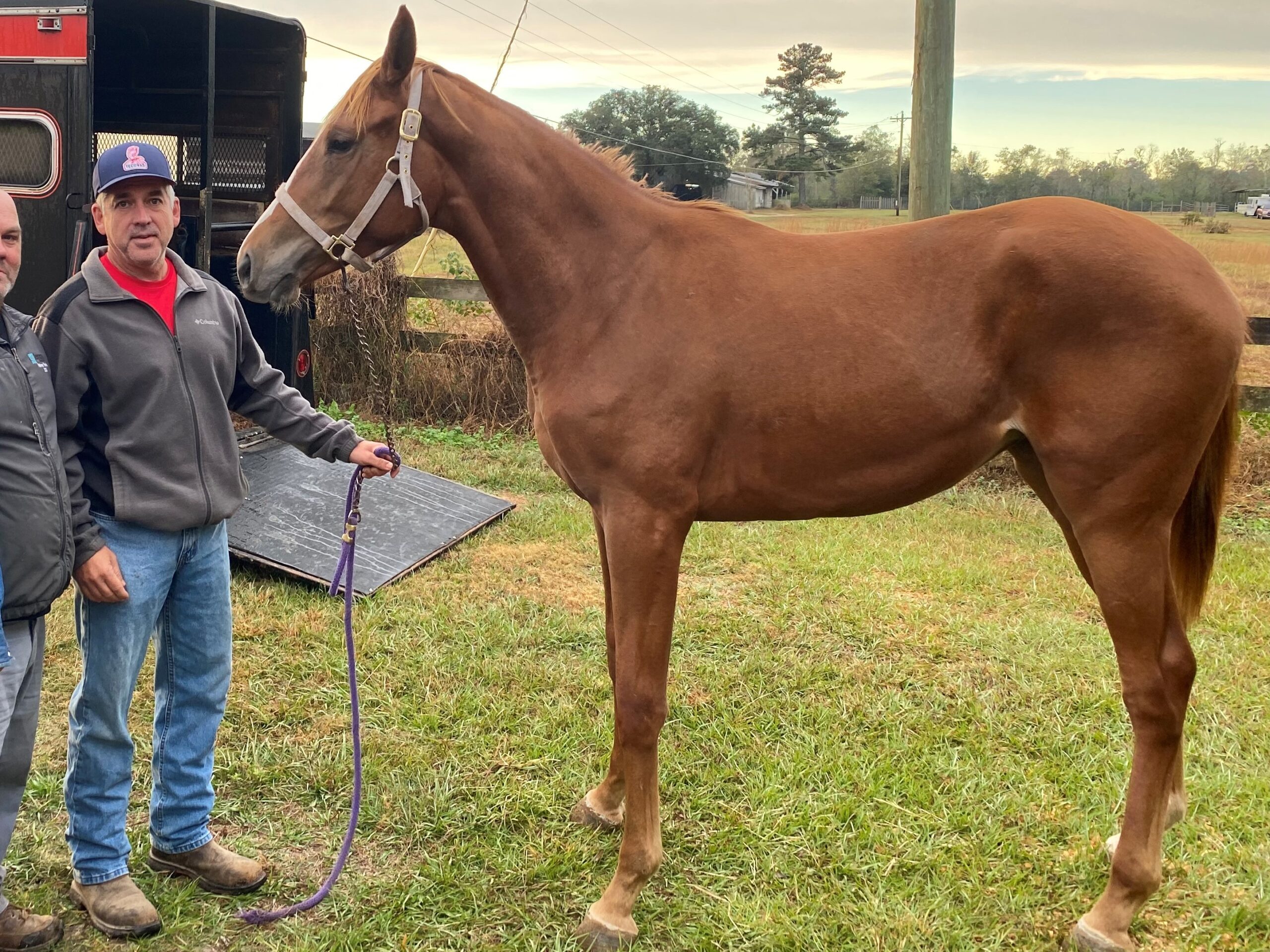
About Miles Henry
Racehorse Owner & Author | 30+ Years in Thoroughbred Racing
Miles Henry (legal name: William Bradley) is a professional horseman based in Folsom, Louisiana. He holds Louisiana Racing License #67012 and has spent over three decades managing Thoroughbreds at premier tracks including Fair Grounds, Delta Downs, and Evangeline Downs.
Expertise & Hands-On Experience: Beyond the track, Miles has decades of experience in specialized equine care, covering everything from hoof health and nutrition to training protocols for Quarter Horses, Friesians, and Paints. Every guide on Horse Racing Sense is rooted in this “boots-on-the-ground” perspective.
30 of their last 90 starts
Equibase Profile.

Connect with Miles: