
Last updated: July 21, 2026
A 2,000-pound Belgian team doesn’t look fast. They don’t scramble. At the Old Farmer’s Day pulling competition in Loranger, Louisiana, I watched a pair move a loaded sled that would have stalled a pickup truck — steady rhythm, no wasted effort, the kind of power that doesn’t need to announce itself. I’ve spent 30 years measuring horses in fractions of a second at Fair Grounds and Delta Downs. Draft horses operate on a completely different scale, and the breed you choose — Belgian, Clydesdale, Percheron, Shire, or Suffolk Punch — matters more than most people realize before they buy one.
What is a draft horse? A draft horse is a heavy breed developed specifically for pulling loads — characterized by massive bone structure, powerful musculature, and a calm “cold-blooded” temperament. The five main breeds are the Belgian, Clydesdale, Percheron, Shire, and Suffolk Punch. Belgians are the best starting point for most first-time owners; Percherons are the most versatile; Shires are the tallest; Clydesdales are the showiest.
| Breed | Best For | Height | Weight | Key Trait |
|---|---|---|---|---|
| Belgian | Heavy farm work, beginners | 16.2–18h | 1,800–2,400 lbs | Stoic powerhouse; most common in the US |
| Clydesdale | Parades, carriages, exhibitions | 16–18h | 1,800–2,200 lbs | Flashy high-stepper with heavy leg feathering |
| Percheron | Riding, trail use, versatility | 16–17.2h | 1,800–2,400 lbs | Athletic, clean-legged, easiest to groom |
| Shire | Maximum size, heritage display | 17–19+h | 2,000–2,500 lbs | Gentle giant; tallest of the draft breeds |
| Suffolk Punch | Small acreage, conservation | 16–17h | 1,800–2,000 lbs | Quiet easy keeper; critically endangered |
About this guide: Written by Miles Henry, licensed Louisiana racehorse owner (#67012) with 30+ years at Fair Grounds, Delta Downs, and Evangeline Downs. Miles has observed draft horses working throughout Louisiana’s farm and festival circuit — including competitive pulling events at the Old Farmer’s Day festival in Loranger — and applies the same hands-on evaluation he uses with Thoroughbreds to every breed he covers.
Table of Contents
What Is a Draft Horse?
A draft horse (or “draught” horse) is a heavy breed developed specifically for pulling loads, characterized by massive bone structure, powerful musculature, and “cold-blooded” temperament — meaning calm, steady behavior versus the high-strung nature of hot-blooded Thoroughbreds. They stand 16 to 19 hands and weigh between 1,600 and 2,500 pounds depending on breed. Their historical roles — plowing, logging, artillery, and heavy freight — built the infrastructure of pre-industrial North America.
Today, draft horses are used for sustainable forestry, small-scale farming, equine-assisted therapy, exhibition hitches, and pleasure riding. Their “cold-blooded” temperament makes them accessible to horse owners who want power without the reactive behavior that comes with hot-blooded breeds.
Louisiana insight: In our humid Southern climate, Percherons have a real advantage over feather-legged breeds. Fewer skin infections, less time grooming mud out of heavy feathering after a rainy day. Belgians dominate heavy clay soil pulling competitions around here, but for trail riding and general use, I lean Percheron every time.
Draft Horse Breed Comparison
The five major draft breeds differ meaningfully in build, temperament, and best use. Data aggregated from breed association standards — individual horses vary by bloodline and conditioning.
| Breed | Best For | Height | Weight | Key Trait |
|---|---|---|---|---|
| Belgian | Heavy farm pulling | 16.2–18h | 1,800–2,400 lbs | Stoic powerhouse |
| Clydesdale | Parades / carriages | 16–18h | 1,800–2,200 lbs | Flashy high-stepper |
| Percheron | Riding / versatility | 16–17.2h | 1,800–2,400 lbs | Athletic and clean-legged |
| Shire | Maximum size | 17–19+h | 2,000–2,500 lbs | Gentle giant |
| Suffolk Punch | Small acreage work | 16–17h | 1,800–2,000 lbs | Quiet easy keeper |
5 Key Draft Breeds: Personality and Practicality
1. Belgian: America’s Workhorse Standard
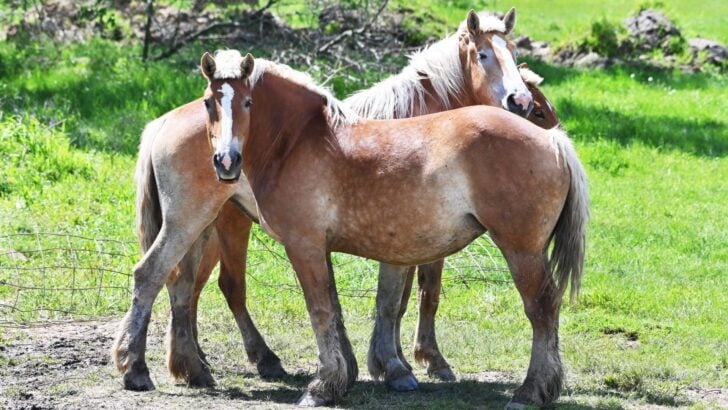
The most common draft horse in the United States — dominant in Amish country, pulling competitions, and working farms. The Belgian’s compact build with massive hindquarters and low center of gravity makes it the record holder for heaviest loads pulled. Their stoic, forgiving temperament makes them the most accessible draft breed for first-time owners.
Best for: Heavy farm work, logging, pulling stumps, beginners transitioning from light horses. Full Belgian profile →
2. Clydesdale: The Parade Showstopper
Taller and leaner than Belgians, with the heavy white leg feathering and high-stepping “action” that made them famous through Budweiser advertising. Their animated movement suits hitches, parades, and carriage work better than raw pulling. They require more grooming maintenance than clean-legged breeds, particularly in wet climates.
Best for: Carriage driving, parades, show hitches, and exhibition. Full Clydesdale profile →
3. Percheron: The Versatile Athlete

Of French origin with Arabian ancestry influence, the Percheron has a refined head and neck, clean legs without feathering, and an athletic movement that makes it the most commonly ridden draft breed. They are the draft horse you will most likely see jumping or doing trail work. Their clean legs are a practical advantage in muddy climates.
Best for: Riding, trail use, versatility, and humid Southern climates. Full Percheron profile →
Miles’s Take — Percheron in the South: If you’re riding in Louisiana or any humid climate, grooming a feathered horse after a rainy day is a genuine chore. Scratches thrive in those muddy, wet conditions and once they take hold in heavy feathering, you’re fighting them all season. The Percheron’s clean legs make them the easiest draft to maintain down here. Same power, half the grooming time.
4. Shire: The Skyscraper
The tallest draft breed, with Sampson (21.2h) holding the all-time height record. Shires combine extreme size with a famously docile nature — one of the gentlest large animals you will encounter. Their heavy feathering requires consistent maintenance, and their sheer size creates real logistics: oversized stalls, custom trailers, and farriers comfortable handling dinner-plate-sized hooves.
Best for: Maximum size, heritage displays, and owners who want the full draft horse experience. Full Shire profile →
Miles’s Take — Shire ownership reality: There is something deeply humbling about standing beside a horse that outweighs you by nearly a ton. But from a management perspective, remember: everything is upsized. You aren’t just buying a bigger horse — you’re looking at 14×14 stalls, custom-height trailers, and a farrier who is comfortable handling hooves the size of dinner plates. Budget accordingly before you fall in love with the size.
5. Suffolk Punch: The Rare Pure Worker
A critically endangered conservation breed — always chestnut colored, shorter and rounder than other drafts, bred purely for farm work without the carriage flash of Clydesdales or Shires. Their quiet temperament and easy-keeper metabolism make them ideal for small acreage operations. Owning a Suffolk Punch means contributing to active conservation of one of Britain’s rarest breeds.
Best for: Small acreage work, conservation farms, and rare-breed preservation. See all largest draft breeds →
Why Draft Horses Are Making a Comeback
The resurgence of draft horses is not nostalgia — it reflects two sectors where they offer measurable practical advantages over machinery.
Sustainable Forestry and Soil Health
Heavy logging machinery compacts soil up to 3 feet deep, killing root zones critical for new tree growth. Horses disturb only surface layers, which recover naturally within a growing season. In Minnesota’s Cedar River horse logging operations — where equipment was banned on sensitive soils — horse teams achieved 60% less understory damage compared to machinery, according to University of Minnesota Extension research. For a complete cost analysis, see our sustainable draft farming guide.

Equine-Assisted Therapy
Drafts’ slow gait and unflappable temperament provide neurological calming that smaller, more reactive horses cannot reliably deliver. A 2022 Rutgers University study found that veterans caring for draft crosses showed significant cortisol reduction and measurable PTSD symptom improvement. The animals’ size — which might seem intimidating — appears to create a sense of safety and presence that drives the therapeutic effect.
How to Choose Your Draft Breed
Match your land, climate, and goals to the right breed before you start shopping. The decision matrix below covers the most common use cases.
| Your Goal | Best Breed | Key Reasons | Full Profile |
|---|---|---|---|
| Beginner / Farm Work | Belgian | Most available in the US; stoic, forgiving temperament; proven in heavy pulling | Belgian → |
| Trail Riding / General Use | Percheron | Athletic and clean-legged; most likely draft breed you can ride and jump | Percheron → |
| Parades and Exhibition | Clydesdale | Show-stopping white feathering; high-stepping action; ideal for hitches | Clydesdale → |
| Maximum Size | Shire | Tallest draft breed; extremely docile; strong heritage appeal | Shire → |
| Conservation / Rarity | Suffolk Punch | Critically endangered; massive power in a compact, easy-keeper frame | All breeds → |
| Humid / Southern Climate | Percheron | Clean legs mean fewer skin infections, less grooming time in wet conditions | Percheron → |
Watch draft horses working in a small farm setting — three minutes that shows how their temperament and power translate to practical work:

Ownership Costs and Health Risks
Daily Feeding Requirements
A 2,000 lb draft horse requires 40–50 lbs of hay daily — roughly 2–2.5% of body weight, per North Dakota State University Extension feeding guidelines. That is approximately double a riding horse’s consumption. Plan for half a ton of hay per month per horse, at $400–$600 monthly depending on region and hay type.
Specialized Equipment
- Draft tack: 30–50% more expensive than standard light horse tack, often custom-ordered for specific measurements
- Farrier: Premium rates apply; not all farriers are trained or comfortable handling drafts
- Stalls and trailers: Must accommodate 18h+ height — standard stalls and horse trailers are undersized for most draft breeds
Draft-Specific Health Risks
- Chronic Progressive Lymphedema (CPL): Progressive leg swelling common in feather-legged breeds — Clydesdales and Shires especially
- PSSM Type 1: Muscle cramping disorder; over 20% of draft horses carry the gene according to current breed health data
- Laminitis: Extra body weight creates elevated risk, particularly in easy-keeper breeds on rich pasture
- Handling safety: A 2,000 lb animal with no ill intent can cause serious injury — experienced handlers are essential

FAQs About Draft Horses
Best draft horse for first-time owners?
Belgians are the best choice for most first-time draft owners — the most common breed in the US, generally calm, and easier to source than other drafts. Their stoic temperament is forgiving for handlers transitioning from light horses. Read the full Belgian profile.
Can you ride draft horses?
Yes. Draft horses can be ridden, especially Percherons and Clydesdales. You will need an extra-wide saddle with a draft tree for proper fit — standard saddles are too narrow for most draft horses’ broad backs. Percherons are the most commonly ridden draft breed. Percheron riding info.
Are draft horses expensive to keep?
Yes — significantly more than light horses. Feed alone runs $400–$600 per month for a 2,000 lb draft eating 40–50 lbs of hay daily. Specialized tack, farrier costs, and oversized infrastructure (stalls, trailers) add further to the total cost of ownership.
What are common draft horse health risks?
The main draft-specific risks are Chronic Progressive Lymphedema (CPL) in feather-legged breeds, PSSM Type 1 muscle disorder (found in over 20% of drafts), laminitis from their easy-keeper metabolism, and general safety concerns from handling a 2,000 lb animal.
Which draft horse breed is the calmest?
Belgians and Shires are widely regarded as the calmest draft breeds — steady, patient, and low flight response. All five major draft breeds are considered “cold-blooded” compared to hot-blooded Thoroughbreds, but temperament varies by individual horse and training history as much as breed. See all draft breed profiles.
Drafts vs. tractors for small farms — who wins?
Draft horses can outperform tractors on small farms where soil preservation and fuel costs matter. They cause significantly less soil compaction than heavy machinery, allowing root zones to recover naturally, and run on renewable feed rather than fuel. The tradeoff is higher daily labor and feeding requirements. See the sustainable farming cost analysis.

Key Takeaways: Draft Horse Breeds
- Belgians are the best starting point for most owners — the most common, the most forgiving temperament, and the easiest to source; if you are new to drafts, start here
- Percherons are the most versatile — the only draft breed commonly ridden, jumped, and used on trails; their clean legs make them the practical choice for humid or wet climates where feathering creates grooming and health problems
- Clydesdales are built for show, not maximum pulling — their animated high-stepping movement suits hitches and parades, not raw farm work; their heavy feathering requires consistent maintenance
- Shires demand infrastructure investment — you are not just buying a bigger horse; you need oversized stalls, custom trailers, and a farrier comfortable with hooves the size of dinner plates; budget before you fall in love with the size
- Feed costs are double a light horse — 40–50 lbs of hay per day for a 2,000 lb draft means $400–$600 per month in hay alone, before vet, farrier, and equipment costs
- Draft horses are genuinely making a comeback — not as nostalgia but for proven practical reasons: soil-preserving forestry, sustainable farming, and therapy programs where their calm temperament outperforms machinery
- Health risks are breed-specific but real — CPL in feather-legged breeds, PSSM in over 20% of drafts, and laminitis risk from easy-keeper metabolism; know the risks before you choose a breed

About Miles Henry
Racehorse Owner & Author | 30+ Years in Thoroughbred Racing
Miles Henry (legal name: William Bradley) is a professional horseman based in Folsom, Louisiana. He holds Louisiana Racing License #67012 and has spent over three decades managing Thoroughbreds at premier tracks including Fair Grounds, Delta Downs, and Evangeline Downs.
Expertise & Hands-On Experience: Beyond the track, Miles has decades of experience in specialized equine care, covering everything from hoof health and nutrition to training protocols for Quarter Horses, Friesians, and Paints. Every guide on Horse Racing Sense is rooted in this “boots-on-the-ground” perspective.
30 of their last 90 starts
Equibase Profile.

Connect with Miles: