
Last updated: May 18, 2026
I’ll never forget the first time I stood next to a Shire stallion at the Louisiana State Fair. At just over 18 hands, he towered above me — yet when I reached up to stroke his massive neck, he lowered his head gently. That moment captured what makes these enormous horses so remarkable: their size is matched only by their temperament. After 30 years working with horses, from nimble Quarter Horses to powerful Thoroughbreds at Louisiana racetracks, I’ve developed a deep appreciation for the heavy breeds that shaped agricultural history.
Which horse breed is the largest? The answer depends on how you measure. The Shire holds the height record — the tallest individual ever recorded was “Sampson,” a Shire at 21.2 hands (over 7 feet at the shoulder). The Belgian Draft generally carries the most weight — “Brooklyn Supreme,” a Belgian, reached 3,200 lbs at his peak.
- Tallest breed: Shire — 17–19+ hands; tallest ever was Sampson at 21.2 hands
- Heaviest breed: Belgian Draft — 2,000–2,600+ lbs; heaviest ever was Brooklyn Supreme at 3,200 lbs
- Most versatile large breed: Percheron — 15–19 hands, rides, drives, and crosses well
- Most endangered large breed: Suffolk Punch — classified “Critical” by both the Livestock Conservancy and the UK’s Rare Breeds Survival Trust
About this guide: Written by Miles Henry, licensed Louisiana racehorse owner (#67012) with 30 years of experience working with horses across disciplines, breeds, and sizes. I’ve attended draft horse shows and pulling competitions throughout Louisiana and Mississippi and have spoken with breed specialists and conservation advocates for each breed covered here.
Table of Contents
How We Define the Largest Horse Breeds
When people search for the largest horse breeds, they may mean the tallest, the heaviest, or those with the greatest overall mass. In this guide, “largest” is based on a combination of height at the withers (measured in hands), average and maximum adult weight, and overall body mass and bone density. Because of these criteria, heavy draft horses dominate the list. For a deeper explanation of what defines a draft horse — including history, uses, and care — see the complete guide to draft horses and their many uses.
How Tall Is an 18-Hand Horse?
Horse height is measured in hands, with one hand equaling four inches. An 18-hand horse stands 72 inches — exactly 6 feet — at the withers, the ridge between the shoulder blades, before accounting for the neck and head. A standing human adult at 5’9″ reaches roughly the shoulder of an 18-hand horse. The tallest draft horses reach 19 hands (76 inches) and beyond — taller than the top of most doorframes. When a Shire or Belgian Draft raises its head, it can easily clear 8 feet.

Largest Horse Breeds by Height and Weight
| Breed | Height | Weight | Key Features | Conservation Status |
|---|---|---|---|---|
| Shire | 17–19+ hands | 1,800–2,400 lbs | Massive frame; heavy leg feathering; bay, black, or gray | Vulnerable |
| Belgian Draft | 16–18 hands | 2,000–2,600+ lbs | Compact, blocky build; mostly chestnut with flaxen mane and tail | Stable |
| Clydesdale | 16–18 hands | 1,800–2,200 lbs | Flashy white markings and feathering; high-stepping gait | Vulnerable |
| Percheron | 15–19 hands | 1,800–2,600 lbs | Clean legs (no feathering); commonly gray or black; refined head | Watch List |
| Suffolk Punch | ~16 hands | ~1,900 lbs | Always chestnut; compact, powerful build; minimal feathering | Critical |
Conservation status reflects listings from The Livestock Conservancy and the Rare Breeds Survival Trust (RBST).

The Largest Horse Ever Recorded
Two horses hold all-time records — one for height, one for weight — and both illustrate just how extreme these breeds can get.
| Record | Horse | Breed | Measurement | Year |
|---|---|---|---|---|
| Tallest horse ever | Sampson (later renamed Mammoth) | Shire | 21.2½ hands (86.5 inches — over 7 feet at the withers) | Measured 1850, foaled 1846 |
| Heaviest horse ever | Brooklyn Supreme | Belgian Draft | 3,200 lbs; 19.2 hands | Foaled 1928; peak weight 1930s |
Sampson’s record has stood for over 170 years — no horse has come close to 21 hands since. Brooklyn Supreme weighed roughly the same as three average riding horses combined. Both records reflect what selective breeding for pure size can produce at the extreme end, and both are considered outliers even within their respective breeds.
The Shire Horse: England’s Towering Champion
The Shire is what most people picture when they think of a massive horse. Developed in England’s Midlands, these horses trace their lineage to medieval “great horses” that carried armored knights into battle. Despite weighing as much as a small car, Shires move with surprising grace.

Miles’s Take — Shire Mare at a Mississippi Draft Farm: During a visit to a draft horse farm in Mississippi, I watched a Shire mare named Grace navigate a tight turn with a loaded wagon. Her handler told me she was 18.1 hands and weighed about 2,100 pounds. She responded to voice commands like a trained cutting horse. That combination of size and responsiveness is what makes Shires special — they are not just big, they are remarkably sensitive to light direction for their scale.
Shire horse at a glance:
- Height: 17–19+ hands (some exceed 19); tallest ever was Sampson at 21.2 hands
- Weight: 1,800–2,400 lbs
- Colors: Bay, black, gray, or brown
- Temperament: Calm, willing, intelligent
- Features: Long, silky feathering on legs; broad forehead; arched neck
- Uses: Showing, parades, driving, forestry, leisure riding
- Registry: Shire Horse Society (UK); American Shire Horse Association
Shires weren’t just warhorses. By the 18th and 19th centuries, they powered Britain’s agricultural and industrial revolutions — pulling canal barges, hauling brewery wagons, and working fields from dawn to dusk. By the 1960s, only a few hundred Shires remained worldwide. Today, while still classified as vulnerable, their numbers have grown thanks to dedicated breed societies and renewed interest in heritage agriculture and sustainable forestry work.
Belgian Draft: The Heavyweight Contender

If Shires are tall and elegant, Belgians are compact and powerful. Originating in Belgium, they were bred specifically for heavy farm work. What strikes me most about Belgians is their incredible muscle density — they pack enormous power into a relatively short frame.
Miles’s Take — Belgian Pair at Loranger’s Old Farmers Day: I watched a pair of Belgians at a pulling competition at Loranger’s Old Farmers Day in Louisiana. They weighed about 2,200 pounds each and moved a load that seemed impossible. Their handler explained that Belgians have a lower center of gravity than taller breeds, giving them superior pulling leverage. Watching them lean into that load with every muscle engaged, I understood why American farmers trusted these horses to clear land, pull stumps, and work from sunup to sundown without complaint. The Belgian’s power-to-height ratio is unlike anything else in the draft world.
Belgian Draft at a glance:
- Height: 16–18 hands
- Weight: 2,000–2,600+ lbs; heaviest ever was Brooklyn Supreme at 3,200 lbs (19.2 hands)
- Colors: Commonly chestnut with flaxen mane; also bay and roan
- Temperament: Patient, gentle, willing workers
- Features: Compact, muscular build; minimal feathering; low center of gravity
- Uses: Farm work, pulling competitions, logging, parades
- Registry: Belgian Draft Horse Corporation of America
Belgians became America’s most popular draft breed for practical reasons. They thrived across different climates — from cold northern states to hot southern regions like Louisiana. Their calm temperament made them safer around children and inexperienced handlers. Most importantly, they were incredibly efficient workers. For more detail on the breed’s characteristics and history, see the Livestock Conservancy’s Belgian profile.
Clydesdale: Scotland’s Feathered Giant
Thanks to Budweiser’s famous hitch, Clydesdales might be the most recognizable draft horses in America. But there’s much more to this Scottish breed than commercials and parades. Clydesdales combine size with an energetic, high-stepping gait that makes them natural showhorses.
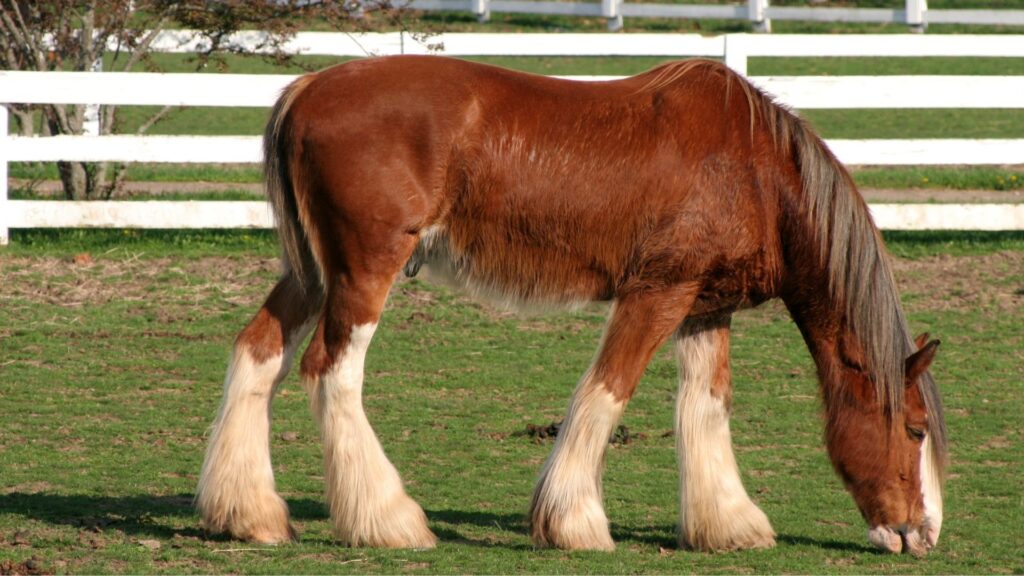
Miles’s Take — Clydesdale at the Dixie National: I remember seeing a Clydesdale gelding at the Dixie National in Jackson, Mississippi — about 17 hands with distinctive white markings up his legs and face. When he trotted past, you could hear his hooves striking the ground in that characteristic Clydesdale cadence. It’s not just the sound — it’s the rhythm of it. A Clydesdale in motion at a trot is one of the most dramatic things you’ll see at any horse show, which is exactly why they’ve spent 150 years pulling parade wagons and winning breed championships.
Clydesdale at a glance:
- Height: 16–18 hands
- Weight: 1,800–2,200 lbs
- Colors: Bay most common; also black, brown, chestnut — extensive white leg markings
- Temperament: Spirited but docile, intelligent, trainable
- Features: White leg markings and facial blazes; silky white feathering; high-stepping trot
- Uses: Showing, driving, parades, promotional work
- Registry: Clydesdale Horse Society; Clydesdale Breeders of the USA
Clydesdales developed in Scotland’s Clyde Valley in the 18th century. Local farmers bred them for coal hauling and agricultural work, but what set Clydesdales apart was their flashy movement. They had to look good pulling wagons through city streets for delivery companies, which encouraged breeders to select for that dramatic, high-stepping trot — a trait that transferred perfectly to the show ring and the parade route.
Percheron: France’s Versatile Powerhouse
Percherons stand out among draft breeds for their versatility. Strong enough for farm work, refined enough for riding, and athletic enough for competitive driving. After 30 years watching horses across disciplines, I’ve seen Percherons do everything from pull logs to compete in dressage — and do both well.
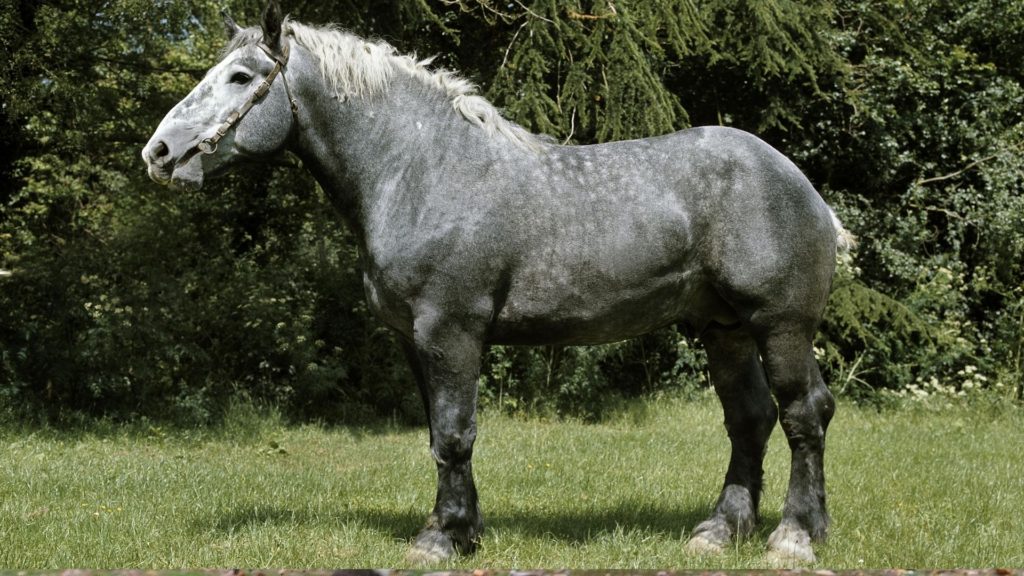
Percheron at a glance:
- Height: 15–19 hands (wide range)
- Weight: 1,800–2,600 lbs
- Colors: Predominantly gray (often dappled) or black
- Temperament: Intelligent, willing, energetic but manageable
- Features: Clean legs (minimal feathering); refined head from Arabian influence
- Uses: Riding, driving, logging, pulling competitions, crossbreeding for sport horses
- Registry: Percheron Horse Association of America
The Percheron is currently listed on the Livestock Conservancy’s Watch List. Percherons originated in the Perche region of France. During the Crusades, Arabian horses were crossed with local heavy breeds, producing horses that combined strength with endurance and refinement. This heritage gave Percherons their athleticism and stamina — crucial for pulling French mail coaches at speed — and explains why a trainer in Covington, Louisiana once showed me a 16.2-hand Percheron gelding that moved like a warmblood. Percherons remain popular for crossbreeding today because they pass that athletic quality to their offspring.
Suffolk Punch: The Compact Giant
The Suffolk Punch might seem an odd inclusion in an article about the largest horses — at around 16 hands, they’re the shortest breed discussed here. But what they lack in height they make up in substance. These compact powerhouses punch above their weight class, which is exactly where the name comes from.

Suffolk Punch at a glance:
- Height: ~16 hands (15.2–17 hands)
- Weight: ~1,900–2,000 lbs
- Colors: Always chestnut — ranging from light to dark; the only draft breed with a single color requirement
- Temperament: Hardworking, docile, willing, notably long-lived
- Features: Compact build; clean legs; round, powerful hindquarters; low center of gravity
- Uses: Farm work, forestry, heritage preservation
- Registry: The Suffolk Horse Society
Suffolk Punch — critically endangered: Both the Livestock Conservancy in the US and the Rare Breeds Survival Trust in the UK list the Suffolk Punch as “Critical” — meaning the breed faces a very real risk of extinction. All modern Suffolk Punches trace back to a single stallion foaled in 1768, giving the breed remarkable genetic purity and dangerous vulnerability. Conservation efforts focus on increasing breeding numbers while maintaining genetic health. If you have the facilities and commitment, supporting this breed through purchase or breeding contributes directly to preventing the loss of one of history’s oldest working horse breeds.

FAQs About Large Horse Breeds
How do you define the largest horse breeds?
Largest is defined by height at the withers, adult weight, and overall body mass. Because of this, draft breeds dominate the list. The Shire holds the height record; the Belgian Draft holds the weight record. For a full breakdown, see the size comparison table above.
Can you ride the largest draft horse breeds?
Yes, many of the largest horse breeds can be ridden and are often used for trail riding and farm work. However, proper saddle fit, gradual conditioning, and realistic expectations are essential due to their size and build. Learn more about riding suitability in our draft horse riding guide at horseracingsense.com/shire-horses-good-riding-draft-breed-facts/
Do the largest horse breeds have shorter lifespans?
Draft horses generally live 20–25 years with proper care, similar to many light breeds. Their larger size can increase joint stress, but with good management they often remain sound into their late teens and early twenties. See our full guide on horse longevity at horseracingsense.com/how-long-do-horses-live/
Are the largest horse breeds harder to care for than regular horses?
Yes. The largest horse breeds require more space, larger stalls, heavier-duty fencing, and more time for grooming and hoof care. While many draft horses are easy keepers metabolically, their size alone increases daily management demands significantly. Feed costs alone can run 50–100% higher than for a light horse.
Why are draft horses so gentle?
Draft horses were selectively bred for temperament as much as for size and strength. Horses used in farming, logging, and city work needed to be calm, obedient, and safe around people and equipment. Nervous or aggressive horses were removed from breeding programs. Over centuries, this selection produced breeds known for their naturally docile, steady, and people-oriented nature.
Are draft horses always the largest breeds?
Draft breeds dominate the largest-horse category because they were bred for strength and heavy work. Some warmbloods and sport horses can be tall — reaching 17+ hands — but they generally don’t match draft breeds in body mass and bone density. The comparison table above shows the five biggest breeds ranked by height and weight.
How much does it cost to own one of the world’s largest horse breeds?
Owning one of the largest horse breeds typically costs more than owning a light horse due to higher feed consumption, larger facilities, and increased farrier and veterinary expenses. Annual costs commonly range from $5,000 to well over $15,000 depending on region and workload. A detailed cost breakdown is available in our draft horse ownership guide at horseracingsense.com/draft-horse-breeds-smallest-biggest-gentlest/

The world’s largest horse breeds represent something that’s hard to find elsewhere in the equine world — genuine power combined with genuine gentleness. After 30 years around horses of every kind, I still find myself stopping when one of these animals comes into view. There is something about standing next to a creature that weighs over a ton and watching it respond to a quiet word that puts a lot of things in perspective. These breeds shaped agriculture, built cities, and carried armies. They deserve both our admiration and our effort to keep their populations from declining further.
Key Takeaways: World’s Largest Horse Breeds
- Tallest breed is the Shire — 17–19+ hands; Sampson holds the all-time record at 21.2 hands (over 7 feet at the shoulder)
- Heaviest breed is the Belgian Draft — regularly 2,000–2,600+ lbs; Brooklyn Supreme reached 3,200 lbs and still holds the weight record
- Most versatile is the Percheron — wide height range, athletic movement from Arabian influence, works well for riding and crossbreeding
- Suffolk Punch is critically endangered — listed Critical by both the Livestock Conservancy and the RBST; supporting the breed through purchase or breeding directly aids conservation
- Three of five breeds are at-risk — Shire (Vulnerable), Clydesdale (Vulnerable), and Percheron (Watch List) all face population pressures despite their fame
- Draft horse temperament is the result of deliberate selection — centuries of removing nervous or aggressive horses from breeding programs produced the gentle giants we know today
- Size multiplies every management cost — feed, facilities, farrier, and veterinary expenses all run higher for draft breeds; budget accordingly before buying

About Miles Henry
Racehorse Owner & Author | 30+ Years in Thoroughbred Racing
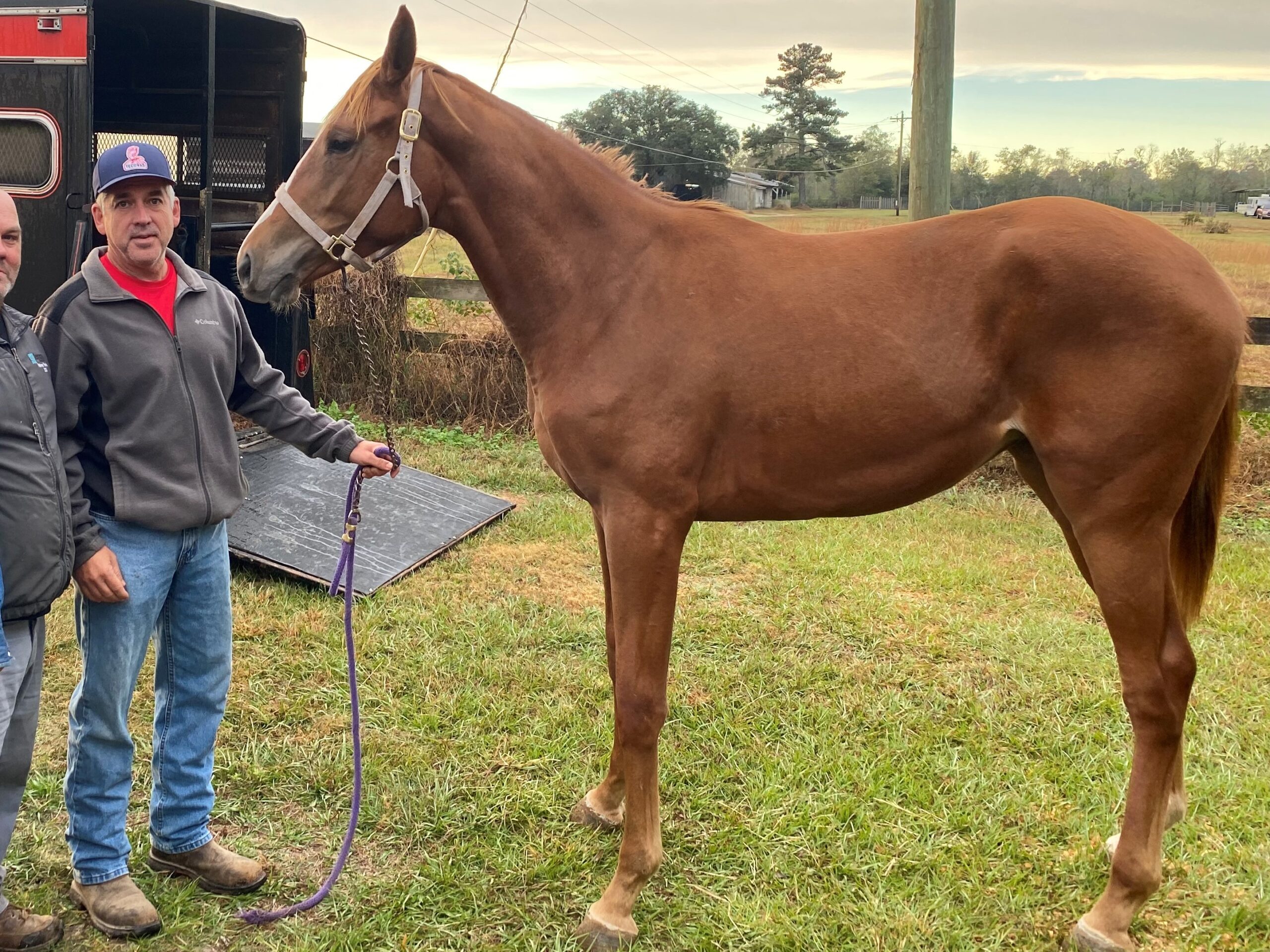
Miles Henry (legal name: William Bradley) is a professional horseman based in Folsom, Louisiana. He holds Louisiana Racing License #67012 and has spent over three decades managing Thoroughbreds at premier tracks including Fair Grounds, Delta Downs, and Evangeline Downs.
Expertise & Hands-On Experience: Beyond the track, Miles has decades of experience in specialized equine care, covering everything from hoof health and nutrition to training protocols for Quarter Horses, Friesians, and Paints. Every guide on Horse Racing Sense is rooted in this “boots-on-the-ground” perspective.
30 of their last 90 starts
Equibase Profile.

Connect with Miles: