

Last updated: August 13, 2026
Any links on this page that lead to products on Amazon are affiliate links and I earn a commission if you make a purchase. Thanks in advance – I really appreciate it!
A horse doesn’t always tell you where a problem starts. Sometimes the first sign is subtle – refusing a lead, acting differently under saddle, or just not moving the way you know that horse normally moves. When that happens, owners start looking at everything: feet, tack, training, soreness, fitness, and sometimes chiropractic care.
Chiropractic care can help some horses, particularly as part of a broader performance-care plan. I use it as a maintenance and support tool alongside veterinary care, proper shoeing, conditioning, and training – not as a cure-all or a substitute for a soundness exam when something is genuinely wrong.
In this article, I’ll explain where chiropractic care can fit into a horse’s overall program, the signs I would want a veterinarian to evaluate first, what the research says, and how I choose a practitioner for my own performance horses.
Table of Contents
What Equine Chiropractic Is – and Isn’t
Equine chiropractic focuses on restricted motion in a horse’s spinal and pelvic joints. Practitioners use adjustments in an effort to improve joint mobility – it isn’t putting a displaced bone back into place, despite how the term “adjustment” sounds. Practitioners may associate reduced mobility or stiffness with factors such as training load, past injury, uneven work, and compensatory movement. Those signs can also have other causes, which is why a proper veterinary evaluation matters.
Signs Worth Discussing With Your Vet
Behavioral changes: Resistance to saddling, reluctance to move into certain gaits, or a sudden change in willingness to work.
Gait and posture issues: Uneven stride length, difficulty picking up or holding a specific lead, crossfiring, or a subtly asymmetric way of moving.
Sensitivity to touch: Flinching or pinning ears when groomed or saddled in a specific area.
Post-injury or post-surgery recovery: Some practitioners use chiropractic alongside standard rehabilitation to support a return to normal movement.
The hard part is that none of these signs automatically mean your horse needs chiropractic care. They can also point to feet, saddle fit, training issues, injury, or other problems. That’s exactly why the vet comes first.
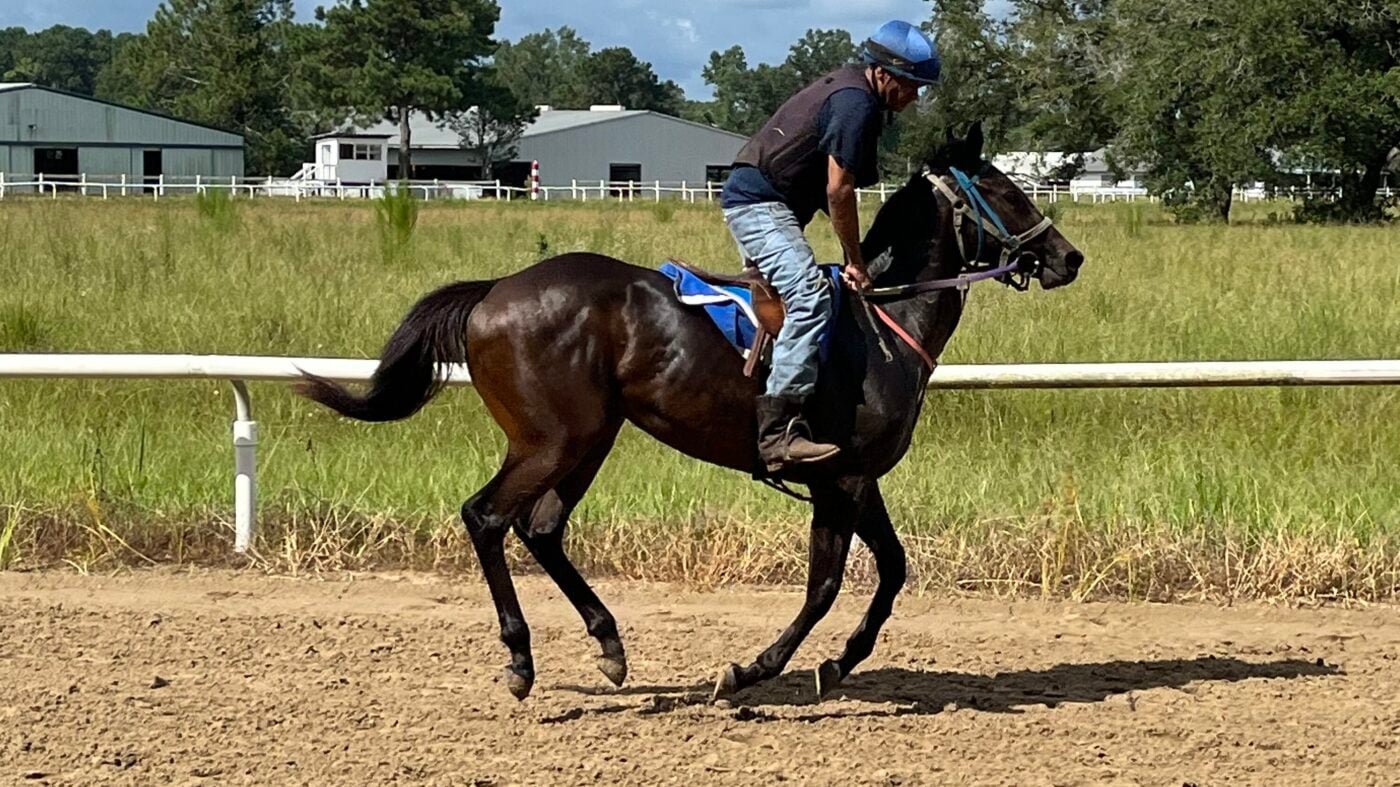
My colt began crossfiring, which told me something in his back end needed a closer look. When my veterinarian-chiropractor was out checking my horses, she found what she described as restricted motion on one side of his rib cage and in the pelvic/SI area. It matched what I had been seeing under saddle. She adjusted him, and he let out a noticeable sigh. She will recheck him in two weeks and decide whether he needs more care.

Chiropractic Care for Racehorses: Where It Fits
In a racehorse barn, a change in movement or attitude can have a long list of causes: a foot issue, sore shins, a developing soft-tissue injury, gastric discomfort, tack, training load, a rider change, or a true lameness problem. That’s why I’d never use chiropractic as the first explanation for a horse that suddenly won’t train, won’t change leads, or comes back from a work feeling different.
Once the attending veterinarian has examined the horse and the farrier, trainer, and rider have compared notes, chiropractic may be one part of a broader performance-care plan. I pay close attention to whether the horse’s behavior, appetite, attitude, stride, and recovery change together – a single good or bad gallop isn’t enough to prove an adjustment solved anything.
For a horse in regular work, I also want the practitioner to understand the demands of the job – repetitive clockwise and counterclockwise work, fast breezes, gate schooling, shipping, racing surfaces, and the need to keep a horse sound through a demanding schedule. The useful question isn’t “does every racehorse need chiropractic?” It’s “what problem are we trying to solve, how will we measure the response, and what other causes have we ruled out?”
Before You Call a Chiropractor
Before scheduling an equine chiropractic visit:
- Have your veterinarian rule out injury, lameness, or a medical cause first
- Ask what certifications the practitioner holds and verify them directly
- Choose someone with real, specific experience with horses, not general animal chiropractic
- Expect a real examination before any adjustment is made
- Be cautious of anyone promising to fix every problem, or offering a fixed treatment schedule before assessing your horse
- Ask about the full fee structure – farm-call charge, multiple-horse pricing, exam fee, and rechecks – before booking
Costs vary by region, travel distance, and whether multiple horses are seen. In my area, a visit runs about $165 when my veterinarian-chiropractor adjusts a horse.
What the Research Actually Shows
The research is limited and mixed. In a 2022 blinded, controlled study of polo horses with multiple-limb lameness and Quarter Horses with primary hind-limb lameness, horses received four chiropractic treatments over three weeks. The researchers found improvement in some subjective lameness and spinal stiffness measures, but no consistent treatment effect on objective lameness measures. That’s encouraging, but it doesn’t establish chiropractic as a proven treatment for lameness or poor performance – and some veterinarians and researchers remain skeptical of the underlying theory more broadly.
In practical terms, I view chiropractic as a possible adjunct after a veterinarian has evaluated the horse – not as a shortcut around a lameness exam, imaging, hoof evaluation, or a proper rehabilitation plan.
How to Choose a Qualified Practitioner
Start with your regular veterinarian, especially if the horse has new lameness, pain, poor performance, a neurological concern, or a recent injury. When considering an animal chiropractor, verify the individual practitioner’s current professional license, animal-chiropractic education, certification status, equine experience, and whether state law allows that person to treat horses in your location.
Organizations such as the International Veterinary Chiropractic Association maintain certification standards and practitioner directories. IVCA-approved foundational courses require at least 210 hours of classroom and laboratory work plus home study, and membership requires a qualifying veterinary or chiropractic degree, certification exams, and continuing education.
I personally prefer a practitioner who is also a licensed veterinarian, because the same person can evaluate the horse in a broader medical context. That’s a preference, not a claim that every non-veterinarian practitioner is unqualified.

Risks and When the Vet Comes First
Chiropractic care isn’t appropriate for every situation. Acute fractures, active infections, and severe neurological conditions like EPM generally aren’t suitable for adjustment, and a horse showing these signs needs veterinary evaluation first, not a chiropractic visit. Talk to your vet before starting chiropractic care if your horse has any of these conditions or an undiagnosed issue.
Chiropractic is intended to address joint mobility and related stiffness; it doesn’t identify or treat every cause of lameness, injury, or poor performance – which is exactly why pairing it with regular veterinary care, rather than substituting for it, gets the best results.
FAQs About Horse Chiropractic Care
Can a chiropractor help a lame horse?
Chiropractic may be considered as one part of a broader plan after the veterinarian has assessed the horse and addressed likely causes of lameness. It is not a substitute for diagnosing lameness.
How often should a horse get chiropractic adjustments?
There is no one maintenance schedule that’s been proven right for every horse. Frequency should depend on the horse’s diagnosis, workload, previous injury history, response to treatment, and the recommendation of the veterinarian and qualified practitioner. Be cautious of a fixed schedule offered before the horse has been properly assessed.
Is equine chiropractic scientifically proven?
The evidence is limited and mixed. Some research shows benefit for subjective lameness measures and vertebral stiffness, while objective lameness measures haven’t shown the same clear improvement. Some veterinarians and researchers remain skeptical of the underlying theory. It’s reasonable to view it as a complementary therapy with real anecdotal and some research support, not a definitively proven treatment.
How much does equine chiropractic care cost?
Cost depends on location, travel distance, whether the practitioner charges a farm-call fee, whether several horses are seen in one visit, the initial examination, treatment, and rechecks. In my area, I pay about $165 when my veterinarian-chiropractor adjusts a horse, but owners should ask for the complete fee structure before booking.
What does a chiropractic adjustment feel like for a horse?
Horses may stretch, sigh, shift their weight, move away from pressure, or otherwise react during an appointment. Those reactions alone do not prove a joint was “put back in place” or confirm that the treatment solved the underlying problem. A qualified practitioner works calmly, monitors the horse’s response, and stops or refers the horse for veterinary evaluation when indicated.

About Miles Henry
Racehorse Owner & Author | 30+ Years in Thoroughbred Racing
Miles Henry (legal name: William Bradley) is a professional horseman based in Folsom, Louisiana. He holds Louisiana Racing License #67012 and has spent over three decades managing Thoroughbreds at premier tracks including Fair Grounds, Delta Downs, and Evangeline Downs.
Expertise & Hands-On Experience: Beyond the track, Miles has decades of experience in specialized equine care, covering everything from hoof health and nutrition to training protocols for Quarter Horses, Friesians, and Paints. Every guide on Horse Racing Sense is rooted in this “boots-on-the-ground” perspective.
30 of their last 90 starts
Equibase Profile.

Connect with Miles: