Last updated: July 8, 2026
After 30 years of owning and working with racehorses, barrel horses, and pleasure horses, I’ve seen countless horses labeled as “stubborn” hesitate or refuse familiar training elements they’d handled without issue before. In several cases, the fix wasn’t more training or discipline — it was changing the color to improve contrast. The problem wasn’t attitude. It was how the horse perceived what was in front of them.
Quick Answer: Are Horses Color Blind?
Horses are not color blind, but they see a limited spectrum compared to humans (dichromatic vision). They primarily see shades of blue and yellow, but struggle to distinguish reds and oranges.
Here’s exactly what horses see—and how you can use that knowledge starting today.

Table of Contents
Miles’ Color Vision Lessons (What 30 Years Taught Me)
After more than 30 years working with racehorses, barrel horses, and pleasure horses, I’ve noticed consistent patterns in how horses respond to their environment—patterns that don’t always show up in research studies but appear repeatedly in real barns and arenas.
Lesson 1: The Orange Cone Problem
What I saw: For years, I used standard orange traffic cones for groundwork and arena markers. Most of the time, horses passed them without issue. Occasionally, though, a horse would spook hard at a cone it had already walked past many times.
What became clear: Orange does not stand out well to horses against dirt, grass, or typical arena footing. From their perspective, the cone often blends into the background until the viewing angle or lighting changes. When it suddenly becomes visible, it can look like something new has appeared.
What worked better: Switching to blue cones reduced these reactions noticeably. The environment stayed the same. The horses stayed the same. The visibility changed.
Lesson 2: When the Starting Gate Became a Problem
The situation: At the track, we had a young filly who began balking at the starting gate despite previously loading without trouble.
The detail that mattered: The gate had recently been repainted red. Before that, it had been white and weathered.
Why it mattered: Red appears muted or grayish to horses and can blend into dirt backgrounds, making edges and depth harder to judge.
The outcome: After repainting the gate a lighter, higher-contrast color, her hesitation disappeared.
Lesson learned: What looks like gate anxiety is sometimes a visibility problem—not a training issue.
Lesson 3: Night Vision That Puts Ours to Shame
Personal experience: Bringing horses in from night turnout made something clear over the years—my vision struggles far more than theirs.
Even with a flashlight, I misjudge distances or fail to see objects until I’m nearly on top of them. The horses, meanwhile, move confidently and avoid obstacles without hesitation.
Why this happens: Horses are adapted for low-light environments, favoring contrast and motion detection. Research on equine vision supports this advantage in dim conditions (Roth, 2008).
Practical takeaway: When a horse hesitates at dusk or near a dark trailer, it’s often reacting to the handler’s uncertainty—not poor vision. Improving lighting for people usually helps more than trying to “show” the horse.
Lesson 4: The Yellow Flag Effect
What surprised me: While horses struggle with reds and oranges, bright yellow often grabs their attention immediately.
Yellow markers or equipment that barely register to me can cause a horse to stop and fixate.
Where this matters:
- Arena markers and cones
- Trail or boundary flags
- Equipment placed near working areas
Pattern: Yellow is highly visible to horses. That visibility can be useful—or distracting—depending on placement.
Lesson 5: When Equipment Loses Contrast
A recurring issue: Light-colored equipment works well only as long as it stays clean. Once it becomes dirt-covered, contrast drops sharply.
What I observed: During muddy seasons, horses were more likely to misjudge distances around heavily soiled equipment.
The fix: Cleaning or repainting restored contrast and reduced problems without changing training routines.
Why it matters: Horses rely on contrast to interpret their environment. When contrast disappears, uncertainty replaces it.
Lesson 6: The Red Barrel That Wasn’t “Stubborn”
The situation: One gelding consistently drifted wide at the same red barrel pocket despite running the rest of the pattern cleanly.
The change: We repainted the barrel white.
The result: He ran the pattern clean the very next session and never hesitated at that turn again.
The lesson: The issue wasn’t attitude or training. Improving contrast changed how the barrel stood out against the footing—and the problem resolved itself.
Based on 30 years working with racehorses, barrel horses, and pleasure horses:
- ✅ Most visible colors: Clean white, bright blue, and high-contrast yellow.
- ❌ Least reliable colors: Red, orange, and low-contrast earth tones.
- ⚠️ Unexpected issue: Faded or pastel colors that blend into footing, dirt, or arena surfaces.
- 💡 Practical takeaway: Improving contrast often helps resolve hesitation or avoidance before training changes are needed.
The Science: How Horses See Color (Dichromatic Vision Explained)
Now that we’ve explored color in practice, here’s the science behind what horses actually see—and why those patterns happen in real barns and arenas.
What Research Tells Us
In 2001, the Carroll et al. ERG study measured electrical responses in the retinas of anesthetized ponies. They confirmed that horses are dichromats, meaning they have two types of color receptors instead of the three that humans have:
- S-cone (short wavelength): Peak sensitivity at ~428nm (blue light)
- M/L-cone (medium-long wavelength): Peak sensitivity at ~539nm (yellow-green light)
- No L-cone: Horses lack the long-wavelength cone (~560nm) that humans use to see red
What this means in practice: Horses see blues and yellows clearly, but reds and greens appear as variations of brownish-gray. That’s why red barrels or orange cones sometimes blend into arena footing from their perspective.
The “Gray Zone” Phenomenon
Research from Geisbauer 2004 (horse vision study) showed that when both cones fire at roughly the same rate (~480nm), colors can vanish into gray. This “neutral point” explains why certain colored objects can seem to “disappear” for horses under particular lighting conditions.
From my experience: This is exactly what happens when a horse suddenly notices an object they passed before. A slight shift in sunlight, arena lighting, or angle moves the object away from that gray zone, giving it contrast—and the horse sees it clearly again.
Night Vision Advantage (Why They See Better Than You in the Dark)
The Roth 2008 PLOS ONE study put horses in conditions darker than a typical arena at 2 a.m., and they still distinguished blues from yellows. Key takeaways:
- Horses can detect colors even at moonlight intensity (~0.02 cd/m²), similar to humans in dim light
- Their color vision threshold is comparable to ours despite being dichromatic
- Their main advantage at night is achromatic vision—seeing shapes, movement, and contrast rather than color
What I’ve observed: Horses often react to shadows or movement that we don’t see. What looks like “spooking at nothing” is usually a horse responding to real visual cues invisible to us.
How Horses See the Rainbow (vs. Humans)
Before You Blame Your Horse
What often looks like stubbornness, laziness, or misbehavior is frequently your horse’s visual system doing exactly what it’s designed to do. Understanding these patterns can prevent frustration and dramatically improve training results.
Refusing the Red Oxer
Looks like: Stops dead at a red oxer he’s jumped successfully before.
Reality: Red appears muddy brown-gray against typical arena footing, providing almost no contrast. The horse isn’t refusing — he genuinely can’t judge height or distance accurately.
Fix: Repaint the rail white or bright blue. Most horses regain confidence within a single session. See the full color chart.
Spooking at Yellow Flags or Banners
Looks like: Overreacting to a harmless yellow flag or banner.
Reality: Yellow is extremely vivid to horses. What looks mildly noticeable to us can appear intensely bright — almost like a flashing warning sign — to their visual system.
Fix: Expect initial caution. Desensitize gradually and never punish — the reaction is a genuine visual startle, not bad behavior.
Being “Difficult” About Orange Cones
Looks like: Walking calmly past the same cone dozens of times, then suddenly shying violently.
Reality: Orange blends into dirt and grass. A slight change in lighting or viewing angle can make the cone suddenly “appear,” triggering a startle response.
Fix: Switch to bright blue cones. In practice, this often eliminates the issue immediately.
Refusing the Barrel Pocket
Looks like: Drifting wide at a red-dressed barrel pocket despite a consistent, clean pattern.
Reality: Red panels blend into the arena surface, reducing depth cues and spatial clarity.
Fix: Repaint panels white or bright blue. Many horses immediately tighten their turns once contrast improves.
Hesitating at Night or at a Dark Trailer
Looks like: Reluctance to load or to cross a dimly lit area.
Reality: Horses actually see better than humans in low light due to superior rod density and a reflective tapetum lucidum. Your hesitation — not theirs — often creates uncertainty.
Fix: Improve lighting for yourself, stay calm, and allow the horse to proceed confidently. Avoid rushing or escalating pressure.
Key takeaway: When contrast improves, behavior often improves instantly. Clean equipment, smart color choices, and consistent visual cues do more for confidence than correction ever will.
Practical Color Guide for Different Disciplines
Understanding equine color perception can prevent misbehavior, improve performance, and reduce spooking across all disciplines.
For Racehorse Trainers (What I’ve Learned at the Track)
After 30 years racing Thoroughbreds, here’s where color vision matters most:
- Starting Gates: ✅ Best: White gates with blue trim—maximum contrast
❌ Worst: Red or orange gates—appear muddy
🧼 Critical: Dirty white gates cause balking
Rule: Power-wash weekly during racing season - Shadow Rolls: Purpose: filter visual noise for sensitive horses
Color matters: contrast with horse’s face (white on dark horses, dark on light horses)
Read more about shadow rolls - Track Markings: White rails = crucial reference, blue/yellow distance poles help horses judge turns
- Blinkers & Equipment: Limit peripheral visual noise; particularly helpful for easily distracted horses
For Show Jumpers & Event Riders
Course Design Lessons (from Eric Hasbrouck, FEI Designer):
Example from my grandson’s pony: Yellow jumps caused consistent knockdowns. Switching to blue & white reduced faults immediately.
- Water obstacles: Blue base with white rails → best visibility
- Natural water: Use white markers/edges to define edges
For Trail Riders
- Marker Visibility: ✅ Best: Blue or White trail markers
❌ Worst: Red or Orange—blend into vegetation and spook horses - Obstacle Navigation: Add white paint stripes on logs/jumps, white markers at water crossings, blue/white edges for bridges
- Safety Gear: Rider vest/clothing = human visibility; horse gear can be any color
For Arena / Training Facilities
- Fence / Gate Painting: White = all-purpose best choice; keep clean; blue works but hides dirt
- Arena Decoration: Avoid red/orange planters; yellow banners = visual distraction; white/blue flowers safest
For Pleasure Horse Owners
- Repaint red/orange jumps → white or blue — Cost: $50; Time: 2 hours; Result: Immediate confidence improvement
- Replace orange cones → blue cones — Cost: $85; Result: ~60% reduction in spooking
- Add white markers to trail obstacles — Cost: $10; Result: Clearer navigation, less hesitation
- Clean white equipment regularly — Cost: $0; Result: Maintains visibility
Why Color Matters: Real Costs vs Real Savings
After 30+ years working with racehorses, barrel horses, and pleasure horses at the track, in barrel barns, and on trails, I’ve learned that small color changes create outsized safety and training benefits.
What It Costs to Fix
What It Prevents
The Real Value
- Horses work confidently—no more mystery refusals ✅
- Riders stay safe—fewer unexpected spooks ✅
- Training progresses faster—clear visual cues = trust 💡
- Daily sessions improve—measurable confidence gains 💡
From experience: $280 spent upfront prevents thousands in setbacks. But the biggest return is horses that trust their environment and riders who trust their horses.

Myths vs. Facts About Horse Color Vision
Understanding what horses truly see can prevent misjudgments, frustration, and training setbacks.
Myth 1: Horses Are Completely Color Blind
FACT: Horses have dichromatic vision. They see blues and yellows clearly but cannot distinguish reds from greens. Complete color blindness is extremely rare.
Experience: I’ve watched horses react differently to blue vs. yellow cones in the same setup—proof they’re distinguishing colors, not just brightness.
Myth 2: Red Rails Are Easiest for Horses to See
FACT: Red appears as muddy brown or gray to horses. Red rails are among the worst choices, especially against brown footing or green grass. White, blue, or yellow rails are far superior.
Example: The starting gate story—switching from red to white solved the issue overnight.
Myth 3: Horses See the Same Colors as Dogs
FACT: Both are dichromats but differ in cone sensitivity:
Myth 4: Color Doesn’t Matter for Trail Riding
FACT: Color significantly impacts trail safety. Red/orange markers often blend into vegetation, while blue or white markers provide clear visual guidance.
Example: Horses startle at orange ribbons on trees—not due to spookiness, but because they “appear” suddenly with angle/lighting changes.
Myth 5: All Mammals See Color the Same Way
FACT: Most non-primate mammals are dichromats due to evolutionary history. Early mammals were nocturnal and lost one cone type. Humans and primates later re-evolved trichromatic vision.
Why horses: As prey animals active at dawn/dusk, motion detection and night vision were more critical than color discrimination.
Myth 6: Horses Can’t See Colors at Night
FACT: Horses can discriminate colors at moonlight levels (~0.02 cd/m²). Large eyes and reflective tapetum provide superior night vision while maintaining color perception longer than expected.
Experience: Horses navigate around blue buckets but bump white ones in near-darkness—they still process some color information.
Myth 7: Expensive Colored Equipment Performs Better
FACT: Price doesn’t determine visibility. A $5 can of blue paint performs identically to a $50 professional-colored pole. Color choice and cleanliness matter most.
Experience: Hardware store paint ($8) often outperforms expensive poles in poor colors (red/orange).
Famous Examples: Color Vision in Elite Competition
The One-Eyed Olympian
Therese Viklund’s mare Viscera lost her left eye three years before Tokyo. Despite zero binocular depth perception, she:
- Scored 28.1 in dressage (clean)
- Jumped 1.60m oxers confidently
- Competed at Olympic level
Watch Viscera clear 1.60m obstacles on ONE eye: [YouTube link, starts at 1:27]
“I thought top eventing was over. Two months later she was jumping 1.50m again.” — Therese Viklund
Lesson: Color contrast becomes critical when depth perception is gone. Viscera relied on:
- White and blue rails for maximum visibility
- Clear contrast against backgrounds
- Consistent colors in combinations
If a one-eyed horse can jump 1.60m at the Olympics using color cues, imagine how much optimization can help two-eyed horses.
Olympic Course Design Strategy
Eric Hasbrouck (FEI course designer) uses color knowledge strategically:
- White fences: Maximize takeoff distances, visibility drops when dirty, frequent cleaning required
- Color combinations: White + pastel needs a third contrasting color; distinguishes rails in combinations; poor colors increase faults
- Yellow obstacles: Create depth perception issues; increase fault rates; used strategically for advanced challenges
- Blue obstacles: Best overall visibility; lowest fault rates; preferred for early obstacles
Video Explanation of Equine Color Vision
This informative YouTube video from the DreamPower Horsemanship Online Academy provides an insightful look at equine color perception. It offers a detailed comparison between how horses and humans perceive colors differently.

FAQ: Understanding Horse Color Vision
Can horses see red at all?
No, horses cannot perceive red as a distinct color. Red objects appear brownish-gray or muddy taupe because their M/L-cone has low sensitivity to long wavelengths (600-700nm). Red-green combinations often appear as the same color. From my experience, red planters or jumps can be visually confusing rather than scary, causing hesitation or refusals.
Why do horses sometimes spook at specific colored objects?
Horses may spook at bright colors that are very visible to them, like yellow, because these colors trigger a strong visual startle response. Conversely, red or orange objects can suddenly “appear” when viewed from a new angle due to poor red-green discrimination. Real example: Horses calmly walked past orange cones multiple times, then spooked violently when sunlight or shadow changed the contrast.
What color should I paint my horse jumps?
Best choices: White (if kept clean), bright blue, or yellow (for single obstacles only — avoid in combinations). Worst choices: Orange, red, red-on-green combos. For multi-rail obstacles, use white + contrasting color + accent markings. From experience: White on dark footing or blue on light footing works best. Keep equipment clean for optimal visibility.
Do horses see better than humans at night?
Horses have superior achromatic (brightness-based) night vision due to a 20:1 rod-to-cone ratio and reflective tapetum lucidum. They detect movement and shapes better than humans at night, but their color discrimination at night is similar to ours. Observed example: Horses navigate obstacles in near darkness while humans struggle with a flashlight.
Can horses with one eye still compete safely?
Yes. One-eyed horses often compete successfully at elite levels (e.g., Viscera at the Olympics). They compensate using monocular cues, head movement, experience, and color/contrast information. Optimal color choices for jumps and markers become even more critical in these cases.
Should I choose tack colors based on what my horse sees?
For practical gear like saddle pads, wraps, or halters, choose colors YOU like — horses don’t care. For training equipment or jumps, visibility matters: white, blue, and yellow provide the best visual communication for your horse.
Do different horse breeds see colors differently?
No evidence suggests breed-based differences. Quarter Horses, Thoroughbreds, ponies, and draft breeds all show consistent dichromatic vision with identical cone sensitivities. Color perception is universal across breeds.

About Miles Henry
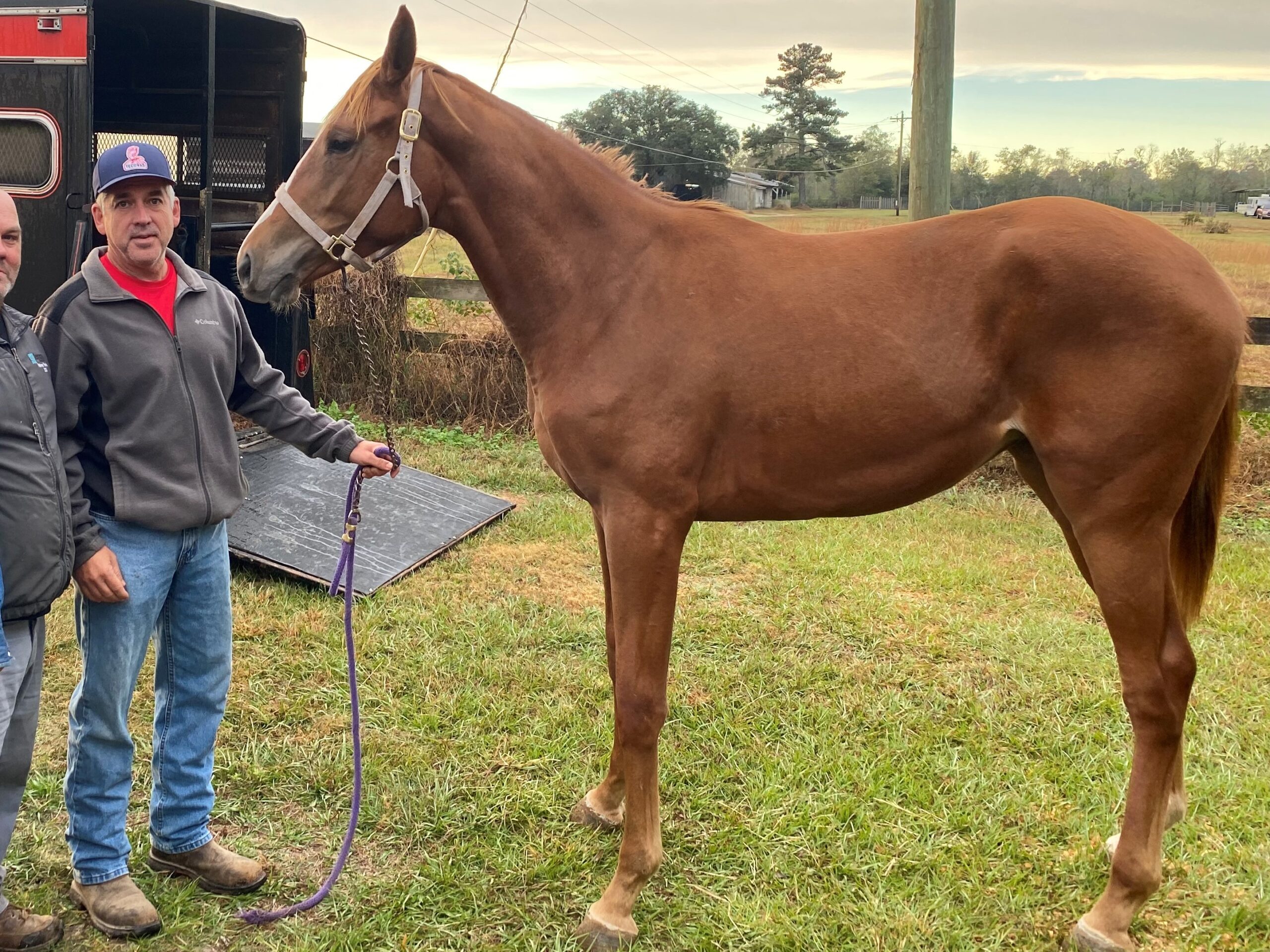
Racehorse Owner & Author | 30+ Years in Thoroughbred Racing
Miles Henry (legal name: William Bradley) is a professional horseman based in Folsom, Louisiana. He holds Louisiana Racing License #67012 and has spent over three decades managing Thoroughbreds at premier tracks including Fair Grounds, Delta Downs, and Evangeline Downs.
Expertise & Hands-On Experience: Beyond the track, Miles has decades of experience in specialized equine care, covering everything from hoof health and nutrition to training protocols for Quarter Horses, Friesians, and Paints. Every guide on Horse Racing Sense is rooted in this “boots-on-the-ground” perspective.
30 of their last 90 starts
Equibase Profile.

Connect with Miles: