
Last updated: August 1, 2026
The horse racing 4-Point Filter taught me to ignore the obvious. The fastest horse and the horse most ready to win are rarely the same animal on the same day. After thirty years at Fair Grounds, Oaklawn, and Churchill Downs, I’ve learned that four checks — not speed figures — reveal when a barn is truly aiming at a race.
The 4-Point Filter is a four-question screen for narrowing a field before you look at odds: did the horse race within the last 14-45 days, did it finish 1st-3rd last time out, is the trainer winning at 15% or higher over the last 60-90 days, and is the horse at the same class level or dropping. A horse that passes all four is a legitimate contender worth evaluating for value. This guide covers each filter in depth, plus the read-between-the-lines signals — workout patterns, jockey changes, class-drop intent — that separate a mechanical pass from a real understanding of what the barn is telling you.
Table of Contents
Skip Speed Figures
Speed figures are trailing indicators. A Beyer tells you what the horse did — past tense, under conditions that may never repeat. The public bets the number. I want to know what is happening in the barn right now.
At Fair Grounds, I watched a trainer drop a stakes-placed horse into allowance company off a 102 Beyer. Went off at 3-5. Finished fifth. His legs weren’t right since that effort. The crowd was betting a memory. I was already on the next race.
My log shows the only time a speed figure matters is when you can explain why it was earned and whether those conditions exist today. Strip that context and it’s noise. The four filters below are leading indicators — signals that point forward.
Gambling disclaimer: I am a racehorse owner and experienced bettor, not a CPA, attorney, or licensed financial advisor. The 4-Point Filter and information here is provided for general educational purposes only and reflects my personal experience — it is not financial, legal, or tax advice, and may not be accurate for your jurisdiction. Horse racing wagering involves significant financial risk — only wager money you can afford to lose. Gambling laws and tax regulations vary by state. If gambling becomes a problem, contact the National Council on Problem Gambling at 1-800-522-4700.
Filter 1 — The 30-Day Rule
Pass criteria: did this horse race within the last 14-45 days? Horses in that window are tightest. Physiology, not theory — the stress-recovery cycle has run once already, cardiovascular system primed, muscles tested at race pace, legs already absorbing race concussion without breaking down.
Over three decades, I’ve watched horses returning off layoffs of 60-plus days win at sharply lower rates in their first start back — unless the work tab tells a different story.
The exceptions show a deliberate prep pattern: 5 furlongs out 21 days, 4 furlongs out 14 days, sharp 3-furlong move 7 days out. That spacing is a trainer tightening a horse like a drum. One lazy 5-furlong move 18 days ago? Maintenance start. Cross it off.
Miles’s Take: At Oaklawn in February, cold weather pushes trainers onto the main track when they’d rather use the training track. A horse showing one published work may have had three more that never hit the clockers. If you have a backside contact or follow the morning clocker accounts, those hidden moves tell the real fitness story. The Form shows you maybe half of what happened at 5:30 a.m.
In my own books, the muscle tone clock resets after 90 days. Budget at least two starts for that horse to find its competitive legs again. Betting against long layoff returners at short odds is one of the steadiest profits in the game. If you find yourself drawn to a horse with a big layoff and one slow work, ask what the trainer is telling you with that prep. Usually the answer is: not much.
Filter 2 — The Top-3 Finish
Pass criteria: did this horse finish 1st, 2nd, or 3rd last time out? Most horses run on a three-race arc. Race 1 back: shaking rust, trainer watching for soreness, modest effort. Race 2: tighter, more confident, bettors discount it because of the dull return. Race 3: the peak. Backside people call it “knocking on the door.”
At Churchill Downs in the spring meet, I’ve seen this arc play out in allowance company more times than I can count. Third in Race 1, second by a shrinking margin in Race 2, wins going away in Race 3. The public has written the horse off after two losses. The connections have been waiting for exactly this spot. That gap between crowd perception and trainer intent is where you find value.
In my own books, the most honest fitness signal within a top-3 finish is improving late pace fractions — not final times. Last quarter in :26.2, then :25.4, then :25.0 across three starts. That engine is building. Trainers signal the horse is still improving by keeping the work tab active. A horse on the back end of its cycle shows one slow, short move before the next start. The trainer knows it’s coasting. You should too.
Miles’s Take: The worst bet in racing: a peaked horse at 6-5. Won last out by four lengths — technically passes this filter — but the trainer is pointing toward a stakes spot two months away, this allowance is maintenance, and the horse left its best effort on the track three weeks ago. Single slow work since the win. A raw pass on Filter 2 isn’t the same as a horse still improving. Cross it off regardless of price.

Filter 3 — The Trainer Win %
Pass criteria: is the trainer winning at 15% or higher over the last 60-90 days? An active, performing barn gets horses ready to run. At most U.S. tracks, the median trainer wins roughly 10% of starts, so 15%+ is a genuine separator — it tells you the barn is doing something right right now, not off a hot streak from a year ago.
The raw number is the pass/fail line, but trainers and jockeys signal intent through action, not press releases, and reading those signals tells you how much to trust a borderline number. Where they ship. Who they call. How tight they prep. Whether they pick a soft spot or a tough one. Every one of those decisions costs money or reputation. None of them happen casually.
The Power Couple Return
When a strong trainer-jockey combo reunites after a separation, pay attention. That rider went to someone else for one start. Now they’re back. Trainers call their best riders for their best spots — that return is a declaration of intent. My log shows these reunions hit at a meaningful premium above base rate when the duo has an established win record together. It is one of the most undervalued signals in the past performances because most bettors are watching the horse, not the humans around it.
Targeted Shipping vs. Pattern Shipping
Trainers signal the difference between targeted shipping and routine movement through frequency. A barn that rarely ships, suddenly vanning a horse to Fair Grounds for one specific race — that trainer found a soft spot. They’re paying transport costs, managing travel stress, disrupting the horse’s routine. That does not happen without conviction. A trainer who moves horses between circuits every two weeks? That’s pattern. Disregard it as a signal.
Jockey Changes: Read Both Directions
A jockey upgrade — apprentice or second-tier rider to a top-five circuit name — almost always means the trainer is trying to win today. Downgrade means the opposite. My log shows upgrades in maiden special weight and first-level allowance races produce the sharpest impact. If you see a horse that is physically ready getting a top rider for the first time, that combination can produce a first-career win that catches the whole field off-guard.
Miles’s Take: At Oaklawn, watch for a young trainer who has been using bug boys suddenly book a veteran with 2,000-plus career wins. That agent does not put their rider on a horse they don’t believe in — it hurts the jock’s stats. Both parties are betting their professional reputation on that horse. That is a power signal buried in the program that 90 percent of the public ignores entirely — and it’s a good tiebreaker when a trainer is sitting right around the 15% line.
Filter 4 — The Class Check
Pass criteria: is this horse running at the same class level or dropping — not a steep rise? Class is the most misread signal in handicapping. Most bettors see a drop and assume improvement. That is backwards. The question is why the horse is moving on the ladder. For the full structure of horse racing class levels from maiden races to graded stakes, that breakdown gives the foundation for everything below.
A relief drop looks like this: Horse competed just above its natural level — third or fourth, beaten two lengths or fewer. Trainer drops it one notch to give it a winnable spot. Active work tab. Same or better jockey. That drop is a reward. It is being aimed.
A distress drop looks like this: Horse getting beaten six, eight, ten lengths at the current level. Trainer drops dramatically in class. Sparse works. Downgraded rider. The public sees “drop in class” and piles on. I see a horse that can’t run and a trainer clearing stall space.
When you are looking at a class drop, the first question is not how far it dropped. It is what the work tab and jockey tell you about intent. Those two signals separate the relief drop from the distress drop faster than any other read.
Miles’s Take: Claiming races have a layer no other conditions carry: the trainer is making a claim risk calculation on every entry. Enter a horse at $16,000, someone can take it for $16,000. A trainer willing to risk losing the horse at that price is telling you one of two things — the horse is worth less than $16k to them right now, or they are confident the spot is sharp enough that nobody around them sees it. Both are useful data. Neither is neutral.
The Filter in Action: 6 Horses, 1 Bet
The filter is useless unless you apply it fast and mechanically. Here is a $16,000 claiming race, one mile on dirt, Fair Grounds. Six horses. One bet.
| Horse | Filter 1: Fitness | Filter 2: Form Cycle | Filter 3: Trainer Win % | Filter 4: Class | Verdict |
|---|---|---|---|---|---|
| 1 | 28 days. 2 works incl. bullet 5 days out — PASS | 3rd, beaten 1.5L at $20k, 2nd start of cycle — PASS | 24% last 90 days, plus top jockey returning — PASS | Relief drop from $20k — PASS | BET — 4 of 4. 5-2 or better |
| 2 | 62 days, 1 slow work — FAIL (over the 45-day window) | Won by 4L last out — passes on paper, but see note below | 17% last 90 days — PASS | Same level — PASS | PASS (skip) — fails Filter 1, and the win looks peaked |
| 3 | 14 days, zero works — PASS (barely) | Beaten 9L last out — FAIL | 8% last 90 days — FAIL | Same level — PASS | PASS (skip) — 2 of 4 |
| 4 | 90-day layoff, 5 works incl. 2 bullets, shipping in — FAIL on days, but deliberate prep pattern | First start back — no recent finish to grade | 19% last 90 days, high-percentage first-time-back barn — PASS | Same level — PASS | WATCH — play only at 8-1 or higher |
| 5 | Average — neutral | Neutral | ~10% — FAIL | None — neutral | PASS (skip) |
| 6 | Average — neutral | Neutral | ~11% — FAIL | None — neutral | PASS (skip) |
Horse 1 is the play — 4 of 4, with a class-drop reward and a jockey signal on top — but only if it opens at 5-2 or better. At 7-5 or shorter, the crowd has priced away the edge. Horse 4 is the interesting watch case: it fails the raw 30-Day Rule at 90 days off, but the deliberate five-work prep pattern with two bullets is exactly the kind of exception discussed in Filter 1 — worth a small piece at a big price, not a leading play. Four checks tell you which horse is readiest. They do not make it a lock.
Bet only where the price compensates the risk. To structure the actual wager — win, place, exacta, or multi-race — our full guide to betting on horse racing walks through every bet type and when each applies.
When Even I Pass
Discipline beats action every time. Four situations where I fold the sheet regardless of what the filter shows:
Public favorite at 3-2 or lower. When the filter picks the same horse the crowd picks, there is no overlay. I need the crowd to be at least partially wrong. Consensus is not an edge.
Two horses clear all four checks equally. That is not a reason to bet both. It is a reason to bet neither. When two pointed horses collide, a price horse steals it. Pass.
First-time starter in maiden company. You can read every intent signal correctly and still be blind to the one that matters most: how this horse handles a gate, a field, and race stress for the first time. Until it has one race in its body, the fitness picture is incomplete. No bet.
Track bias that kills the readiest horse’s running style. At Fair Grounds on days when the rail is dead, a horse that needs to rally off the pace will not fire regardless of fitness or intent. Bias overrides preparation. Wait for a card where the footing favors the style of horse you have found.
Miles’s Take: Over a full 50-day meet, I bet confidently on 25 to 30 races. The rest are passes. Track bias can kill the best-prepared horse. On days when the rail is dead at Fair Grounds, a horse that needs to rally off the pace will not fire, regardless of fitness or intent. Knowing the right card and footing is part of the final filter.
The four filters — 30-day fitness, form cycle, trainer win percentage, class placement — do not produce certainty. They provide a systematic way to find horses being aimed at a specific race by the people who know them best. When trainer actions align with what the filter reveals, you are not guessing. You are reading the same signals they used to make their own decision — just from the outside of the fence.
The filter shines brightest when readiness meets overlooked price — crowd-discarded horses sitting at value because two losses clouded the public’s read of an improving form cycle. That combination is where the real edge lives.
Miles’s Take: The filter isn’t complicated. It’s disciplined. Most bettors know these signals. Few wait for all four to align — and fewer still demand the right price.
Key Takeaways: The 4-Point Filter
- Four questions, in order: raced within 14-45 days, finished 1st-3rd last time out, trainer winning 15%+ over 60-90 days, same class or dropping
- 4 of 4 is a legitimate contender — not a lock. The filter identifies contenders; the odds determine whether they’re worth betting
- A raw pass isn’t the whole story — a “won last out” horse that’s clearly peaked, or a trainer sitting right at 15% with a strong jockey signal on top, both need the deeper read the filter’s supporting signals provide
- Class drops split into two kinds — a relief drop is a reward, a distress drop is a red flag, and the work tab and jockey tell you which one you’re looking at
- Passing a race is a valid outcome — public favorites, ties between two contenders, first-time starters, and dead-rail days are all reasons to fold the sheet regardless of what the filter shows
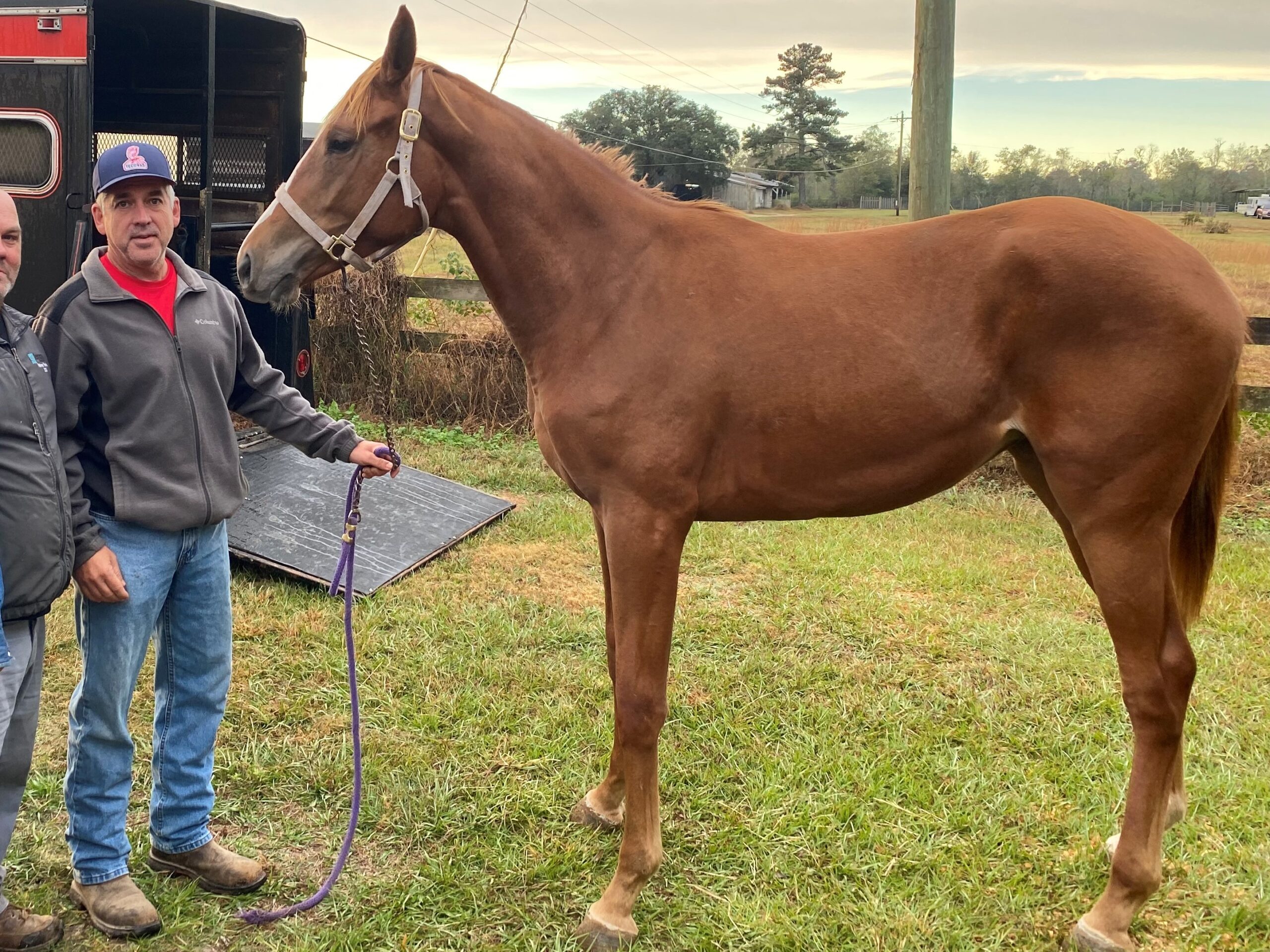
About Miles Henry
Racehorse Owner & Author | 30+ Years in Thoroughbred Racing
Miles Henry (legal name: William Bradley) is a professional horseman based in Folsom, Louisiana. He holds Louisiana Racing License #67012 and has spent over three decades managing Thoroughbreds at premier tracks including Fair Grounds, Delta Downs, and Evangeline Downs.
Expertise & Hands-On Experience: Beyond the track, Miles has decades of experience in specialized equine care, covering everything from hoof health and nutrition to training protocols for Quarter Horses, Friesians, and Paints. Every guide on Horse Racing Sense is rooted in this “boots-on-the-ground” perspective.
30 of their last 90 starts
Equibase Profile.

Connect with Miles: