
Last updated: September 18, 2026
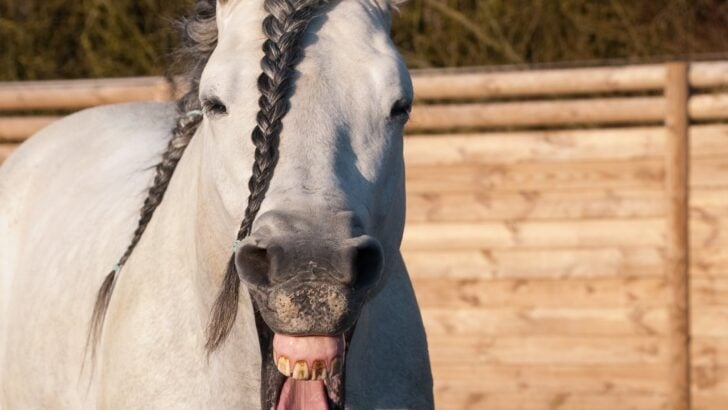
When a horse lets out a noise you haven’t heard before, it’s easy to wonder whether he’s calling for something, feeling uneasy, or trying to tell you something is wrong. Most horse sounds are normal communication, but you need the situation and the rest of the horse’s body language to understand what they mean.
The horse sounds owners hear most often are a neigh or whinny, nicker, snort, squeal, blow, groan, and sigh. These sounds can mean different things depending on the situation, but your horse’s body language and behavior usually tell you more than the sound alone.
I’ve heard every one of these around barns, pastures, and racetrack settings. Below, I’ll explain what each sound commonly means, what to watch for alongside it, and when a change in your horse’s normal noises is worth a closer look.
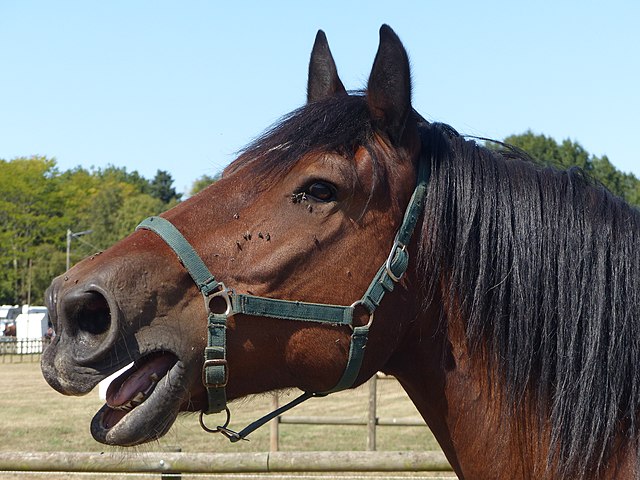
Table of Contents
Horse Sounds at a Glance
| Sound | What It Sounds Like | Common Reasons You May Hear It | When to Look Closer |
|---|---|---|---|
| Neigh / Whinny | Loud, carrying call | Calling to another horse, greeting, separation, excitement, or anticipation | If it is new, persistent, or paired with obvious distress |
| Nicker | Soft, low, closed-mouth rumble | A close-range greeting, often around feed, a familiar person, another horse, or a mare and foal | Usually not a concern on its own |
| Snort | Forceful exhale through the nostrils | Noticing something, investigating, or settling after alertness | If paired with coughing, nasal discharge, difficult breathing, or poor exercise tolerance |
| Squeal | Sharp, high-pitched sound | Sorting out space, food, introductions, play, breeding behavior, or herd hierarchy | If paired with pinned ears, striking, biting, kicking, or obvious distress |
| Blow / Soft Exhale | Soft release of air through the nose | Often heard when a horse settles after being alert or finishes a little effort | Usually not a concern unless other signs are present |
| Groan | Low grunt or rumble | Effort, stretching, getting up, grooming, or sometimes discomfort | If it is new, repeated, occurs at rest, or comes with other changes |
| Sigh / Long Exhale | Long, slow release of air | Often heard when a horse relaxes or comes down after a tense moment | Usually not a concern unless other signs are present |
Horse Sounds in Words
Unlike animal sounds such as “moo” or “woof,” horse sounds are usually described by their names rather than a single written sound because the same noise can vary from horse to horse.
- Neigh or whinny: A loud, rising-and-falling call that carries across the barn or pasture.
- Nicker: A quiet, low, fluttering rumble, usually made with the mouth mostly closed.
- Snort: A forceful puff of air through the nostrils.
- Squeal: A sharp, high-pitched sound, often around another horse.
- Blow or exhale: A softer release of air through the nose.
- Groan: A low grunt or rumble, sometimes heard with effort or stretching.
- Sigh: A long, slow exhale as a horse relaxes.
People describe the same noise differently, so don’t get hung up on finding the perfect word. The setting and your horse’s body language will tell you more than the label.
Listen to Common Horse Sounds
Reading about a sound only goes so far. Watch this video to hear real examples of neighs, snorts, and squeals before reading the section-by-section breakdown below.
This guide covers normal horse communication. A sudden change in sound or behavior – especially new or repeated groaning, distress calls, or a horse that seems off – is worth a call to your vet rather than waiting to see if it passes.
Horse Sounds Explained
Neighing and Whinnying: The Call for Attention
A neigh – often called a whinny – is the loud, carrying call most people recognize right away. Horses use it to locate a herdmate, call after a horse that has left, greet a person or horse, or show excitement. The important part isn’t whether you call it a neigh or a whinny; it’s the situation, the horse’s body language, and whether the calling is normal for that horse. A horse can change the pitch, length, and intensity of a call depending on the situation – that’s why a whinny when you walk toward the feed room can sound very different from one from a horse that’s been separated from its buddy. Research on equine vocal communication shows that horses’ calls vary with social and stressful situations.
In my experience, the biggest mistake new owners make is assuming every loud whinny means a horse is upset. Some horses simply announce themselves every time they see another horse leave the barn or hear feed buckets coming.
Nickering: A Close-Contact Greeting
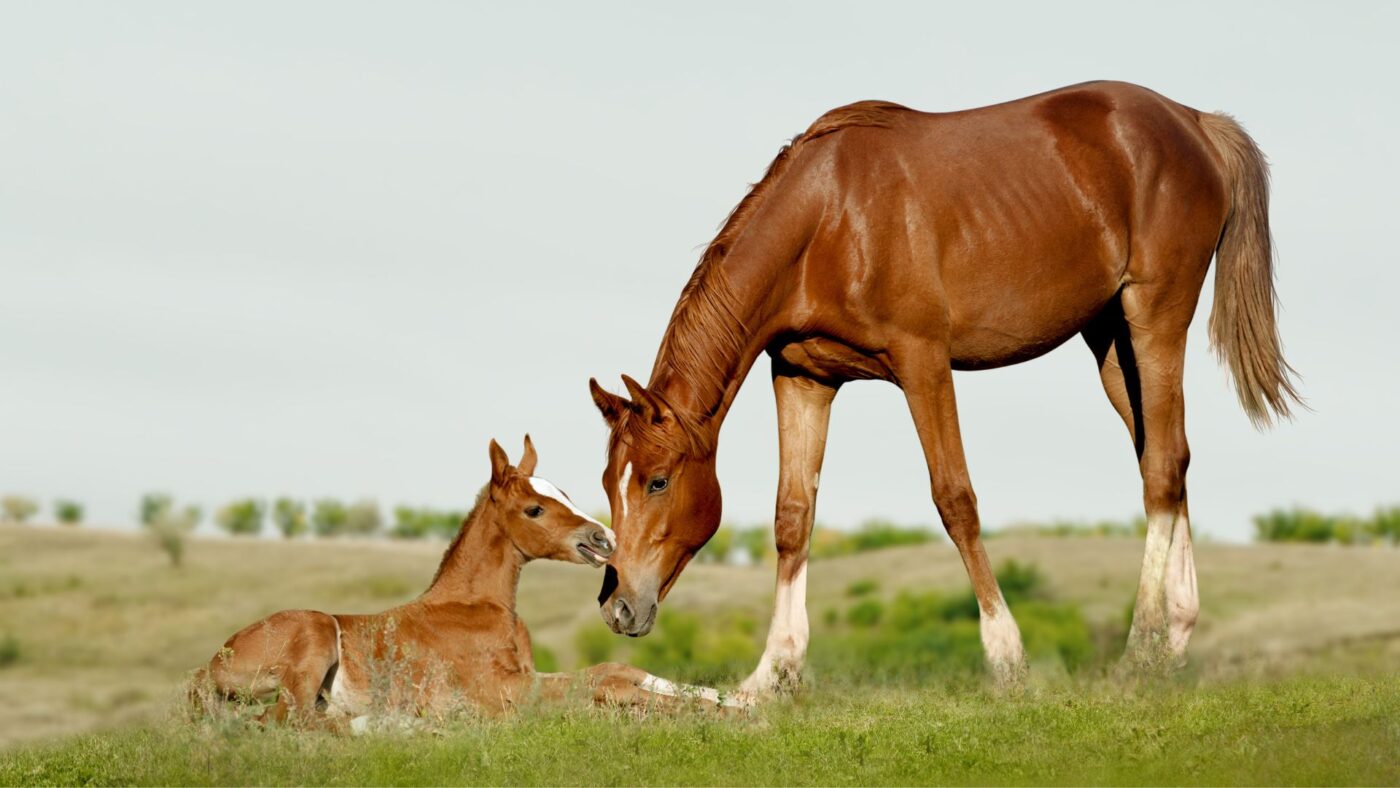
A nicker is quieter and lower than a neigh—a soft, closed-mouth rumble you’ll often hear at feeding time or from a mare greeting her foal. It’s generally a close-range sound, often used between horses that know each other or when a horse greets a familiar person. If your horse nickers when he sees you walk in with a feed bucket, you’re probably hearing one of the friendlier sounds he makes.
Snorting: Alert or Settling
A snort is a forceful exhale through the nostrils. You’ll often hear one when a horse notices something, investigates a new object, or shifts from tense to more settled. Don’t try to translate a snort by itself – look at the whole horse: forward ears, a high head, and a tight body suggest alert interest, while a softer eye, lowered neck, and relaxed posture suggest the horse is settling.
One important distinction: an occasional snort is different from coughing, labored breathing, thick nasal discharge, or a horse that sounds noisy every time he works. Those signs aren’t something to explain away as normal horse communication – they’re worth a call to your vet.
I’ve seen plenty of horses snort when they walk into a new environment, especially a show grounds or unfamiliar track. It doesn’t automatically mean they’re scared – sometimes they’re just taking in information.

Squealing: Sorting Things Out
A squeal is high-pitched and sharp. You’ll commonly hear it when horses sort out space, food, introductions, play, breeding behavior, or herd hierarchy. It can come with a threat – especially when pinned ears, striking, kicking, or biting follow – but a squeal by itself doesn’t tell you exactly why the horse made it.
Blowing: Often a Settling Sign
What many riders call a “blow” is a soft exhale through the nostrils, often heard when a horse settles after being alert or finishes a bit of effort. It can be a reassuring sign when the rest of the horse looks relaxed, but it’s not a standalone guarantee that he’s calm.
Groaning: Effort or a Change Worth Noting
A groan is a low, rumbling sound from the throat or chest. Some horses groan during heavy work, grooming, or a good stretch, which is normal. A new pattern – groaning under saddle that wasn’t there before, or groaning at rest – is worth paying closer attention to.
Miles’ Take: I pay closer attention when a horse starts making a sound that’s new for him. An occasional groan during a stretch, when getting up, or during hard effort may be nothing unusual. But if a horse begins groaning under saddle, at feeding time, when lying down, or at rest – and especially if he’s also girthy, off his feed, short-striding, or acting unlike himself – I don’t write it off. I note when it happens and speak with my veterinarian.
Sighing: Often Heard While Relaxing
A long exhale or “sigh” is commonly heard when a horse relaxes, settles into a scratch, or comes down after a tense moment. Read it with the rest of his body language rather than treating it as a fixed sign of contentment.
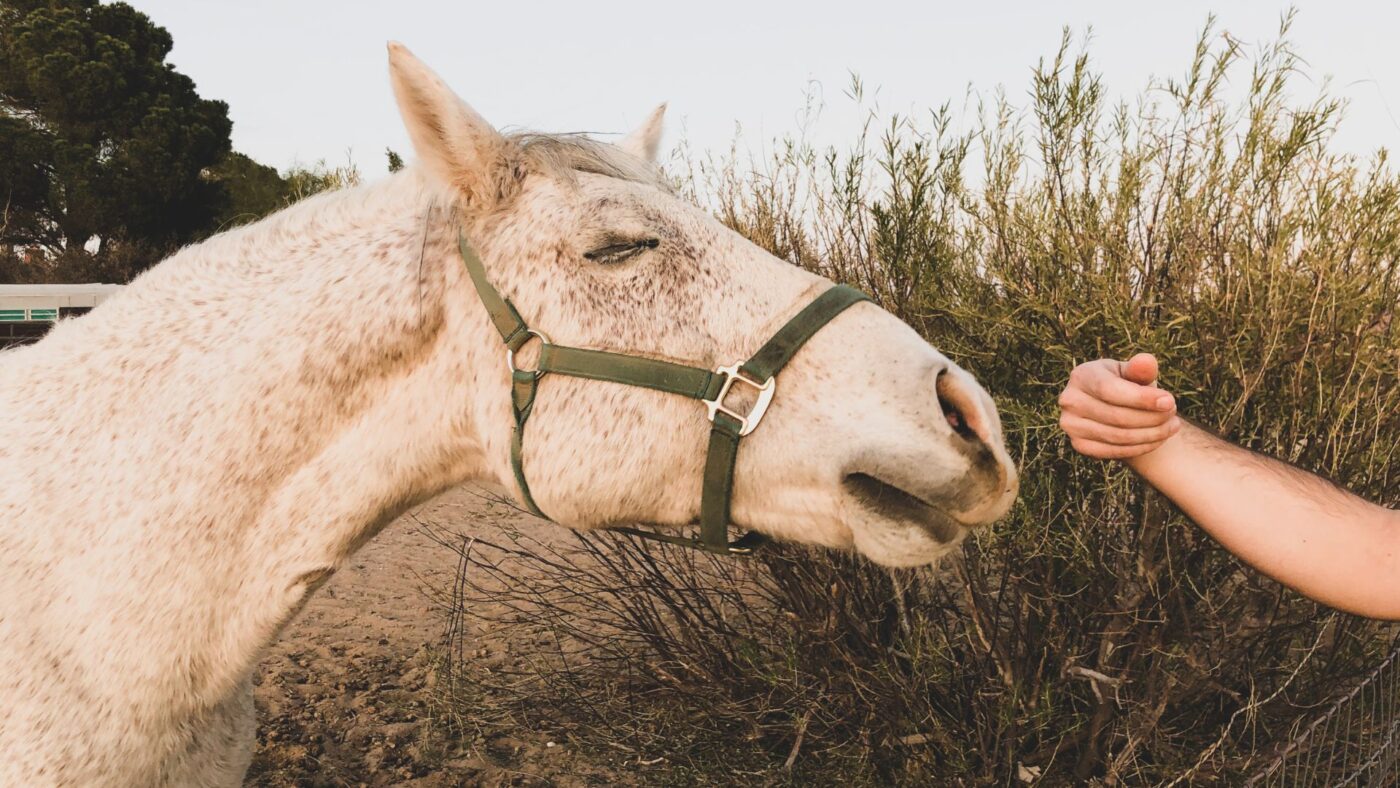
How to Respond to Horse Sounds
- Pause and look at the whole horse: Check ears, eye, head carriage, muscle tension, gait, and whether he’s focused on another horse, feed, a new object, or something in the environment.
- Think about what just changed: Herd separation, feeding time, turnout, travel, a new horse, insects, work, and unfamiliar sights can all change how vocal a horse is.
- Learn that horse’s normal pattern: Some horses are naturally chatty, while others rarely make a sound. A new pattern often matters more than the noise’s name.
- Write down repeatable changes: If a sound occurs during riding, turnout, feeding, lying down, or after work, note when it happens and what else you see.
- Call your veterinarian for concerning changes: Seek professional advice for new or persistent groaning, signs of pain, difficult breathing, coughing, nasal discharge, reduced appetite, colic signs, or a horse that simply seems off.
FAQ
What are horse sounds called?
Horse sounds are called vocalizations. The common names owners use include neigh or whinny, nicker, snort, squeal, blow, groan, and sigh.
Why do horses snort?
Horses often snort when they notice something, investigate a new sight or smell, or begin to relax after being alert. The sound alone doesn’t tell you whether a horse is calm or worried, so check his ears, neck, eyes, posture, and surroundings. If snorting comes with coughing, hard breathing, nasal discharge, or poor exercise tolerance, contact your veterinarian.
What’s the difference between a neigh and a nicker?
A neigh (or whinny) is loud and carries a distance – used to locate another horse or grab attention. A nicker is soft, low, and close-range, most often heard as a greeting at feeding time or between a mare and foal.
Can horse sounds mean pain or illness?
A sound alone rarely diagnoses pain or illness. What matters more is a new change combined with other signs: reduced appetite, colic signs, lameness, coughing, nasal discharge, a marked behavior change, or obvious discomfort. Repeated groaning or a distressed-sounding horse is a good reason to call your veterinarian and explain what you’re seeing.
Do all horses make the same sounds for the same reasons?
Not exactly. Every horse has its own vocal habits and volume. Learning your own horse’s normal patterns makes it much easier to notice when something’s actually different.
Horse sounds aren’t random noise—they’re part of how horses communicate. Combine what you hear with ear position, posture, and body language, and you’ll have a much clearer idea of what your horse may be feeling or responding to in that moment.
About Miles Henry
Racehorse Owner & Author | 30+ Years in Thoroughbred Racing
Miles Henry (legal name: William Bradley) is a professional horseman based in Folsom, Louisiana. He holds Louisiana Racing License #67012 and has spent over three decades managing Thoroughbreds at premier tracks including Fair Grounds, Delta Downs, and Evangeline Downs.
Expertise & Hands-On Experience: Beyond the track, Miles has decades of experience in specialized equine care, covering everything from hoof health and nutrition to training protocols for Quarter Horses, Friesians, and Paints. Every guide on Horse Racing Sense is rooted in this “boots-on-the-ground” perspective.
30 of their last 90 starts
Equibase Profile.

Connect with Miles: