
Last updated: August 18, 2026
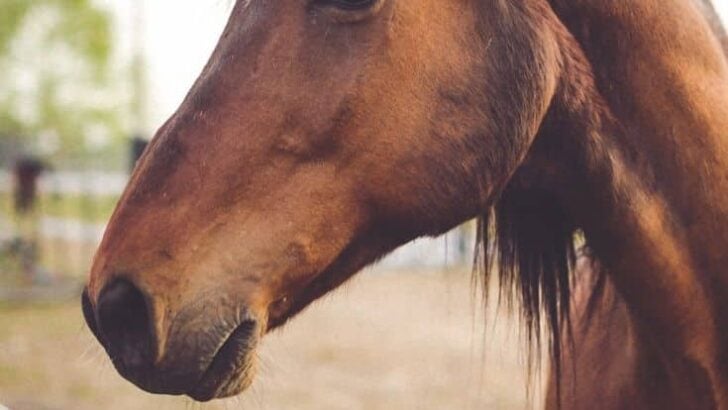
After decades of owning and working around horses, mostly Thoroughbreds and Quarter Horses, I’ve learned to watch their ears before stepping into a stall, bringing a feed bucket, tacking up, or asking a young horse for more. They are often the quickest visible clue to what a horse is noticing, but they are never the whole story.
Quick guide: Ears forward usually mean a horse is focused ahead. Ears rotated backward often mean he is listening behind him. One ear forward and one back shows divided attention. Ears that move constantly show active monitoring of the environment. Loosely held ears often appear during rest or relaxation. Ears pressed tightly against the head are a stronger warning signal and should always be read in context.
This guide covers the common horse ear positions you will see every day: forward ears, ears turned back, one ear forward and one back, constantly moving ears, relaxed ears, and the important difference between backward ears and truly pinned ears.
How to Read Horse Ears Correctly
Start with a simple rule: ears tell you where a horse’s attention is going; the rest of his body helps explain how he feels about what he is noticing. A horse with forward ears, a loose neck, and a quiet eye may be interested in something ahead. The same forward ears with a raised head, tight body, and quick feet may mean he is uncertain, alert, or preparing to react.
Before drawing a conclusion, look at these five things:
- Eyes: A soft eye and normal blinking usually tell a different story than a hard stare or a wide eye with visible white.
- Muzzle and nostrils: A loose muzzle differs from a tight mouth, clamped jaw, or heavily flared nostrils.
- Neck and body: Notice whether the horse is loose and balanced or stiff, elevated, and ready to move away.
- Tail and feet: Tail swishing, stomping, striking, moving the hindquarters toward you, or quick steps can change how the ear position should be interpreted.
- Context: Feed time, turnout, flies, a new environment, grooming, saddling, work, and another horse entering the horse’s space all matter.
Horses can move each ear independently, which allows them to track sounds and activity from different directions. Research on equine sensory perception supports what many horsemen observe in daily handling: ear movement is an important part of how horses gather information about their surroundings and communicate attention. Read the research on equine sensory abilities.
Horse Ear Positions at a Glance
| Ear position | What it often indicates | What to check |
|---|---|---|
| Both ears forward | Interest, alertness, or focus ahead | Is the horse relaxed and curious, or tense and ready to react? |
| Ears turned back but not flat | Listening to a rider, handler, or activity behind him | Look for a soft neck and body; this is often normal while riding. |
| One ear forward, one back | Attention divided between two directions | Common during work or when the horse is monitoring you and the environment. |
| Ears rotating or flicking | Actively tracking sound and activity | Common in a stimulating place; assess the full body if the movement never settles. |
| Ears loose or gently to the side | Rest, relaxation, or drowsiness | Confirm normal appetite, movement, and responsiveness if the horse seems unusually dull. |
| Ears tightly pinned flat | A stronger warning that may reflect irritation, fear, defensive behavior, or discomfort | Give room and read the entire situation before responding. |
Ears Forward: Interest or High Alert?
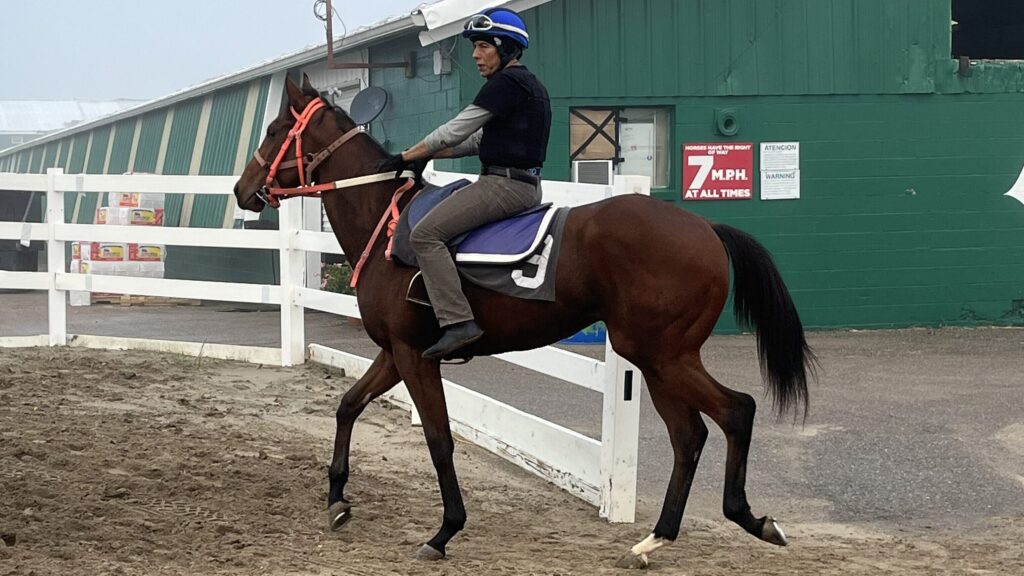
When both ears point forward, the horse is generally focused on something in front of him. It may be a horse coming down the shedrow, a person at the gate, a deer on the trail, a new jump, or the sound of a tractor. At the track, I often see young horses prick their ears when they hear activity ahead or step into a new part of the facility. That does not automatically mean trouble; it tells me they are taking in information.
The important distinction is relaxed interest versus rising concern. A horse that keeps a loose body, normal breathing, and a soft eye is often curious. A horse that braces through the neck, raises his head, tightens his back, or becomes quick on his feet may be uncertain and more likely to react.
When I see ears forward on a young horse, I do not automatically ask for more work. I first decide whether he is engaged and ready to learn or simply overloaded by what he sees and hears. That small pause can prevent a misunderstanding from becoming a bigger problem.
Ears Turned Back: Often Normal Listening
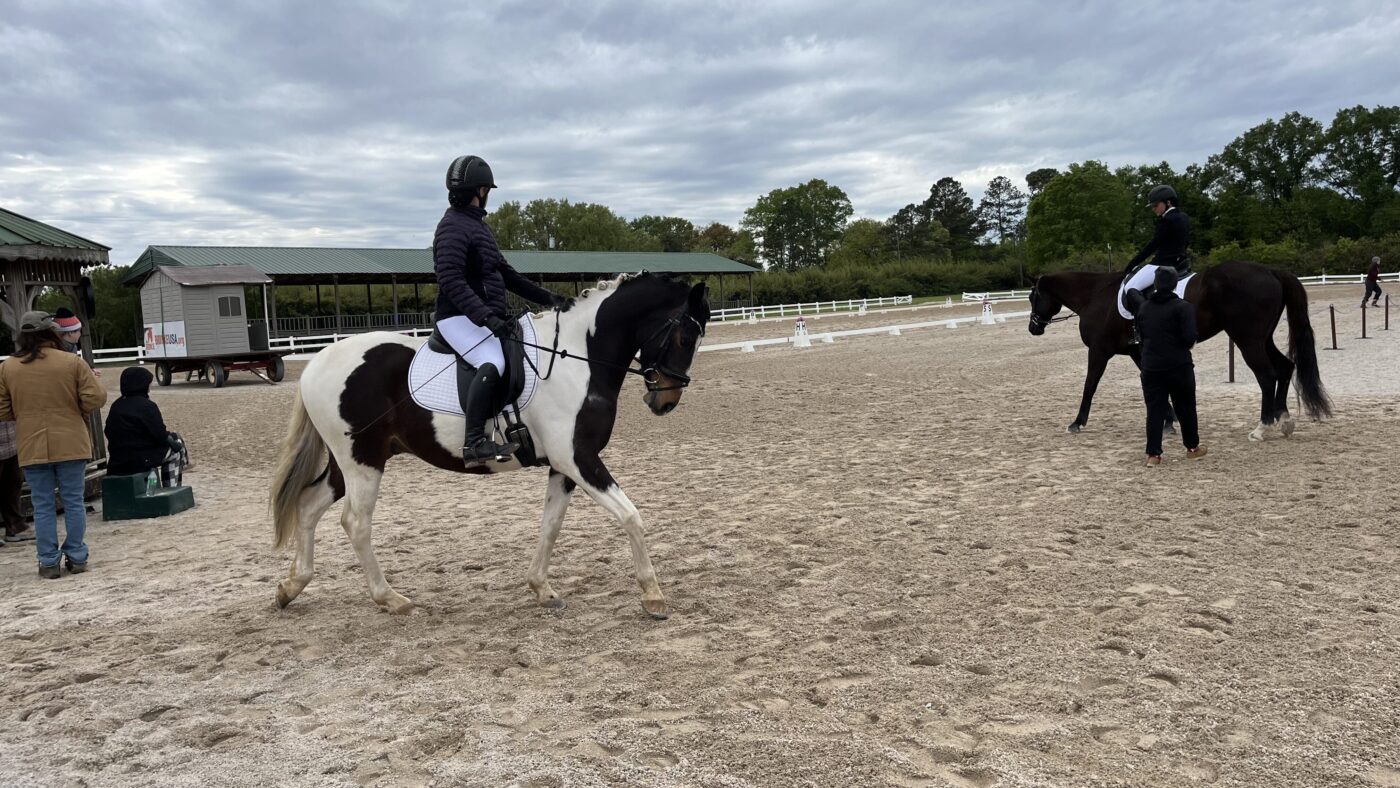
Ears angled backward are not automatically a warning. A horse may turn one or both ears toward a rider’s voice, a handler walking behind him, a horse in the next stall, or activity in the barn aisle. Under saddle, it is common for a horse to bring an ear back toward the rider while keeping attention on what is ahead.
What matters is whether the ears are simply rotated back or pressed hard against the head. A horse with ears comfortably turned back, a soft jaw, and a relaxed body may be listening. A horse with ears flattened tightly back, a tight eye, tail swishing, or hindquarters aimed toward another horse is giving a much stronger signal.
Do not confuse backward ears with pinned ears. Backward ears often show attention behind the horse. Pinned ears are pressed tightly against the head and deserve more caution. For the causes of pinned ears, pain warning signs, and safe ways to respond, read Why Do Horses Pin Their Ears?
One Ear Forward and One Back: Split Attention
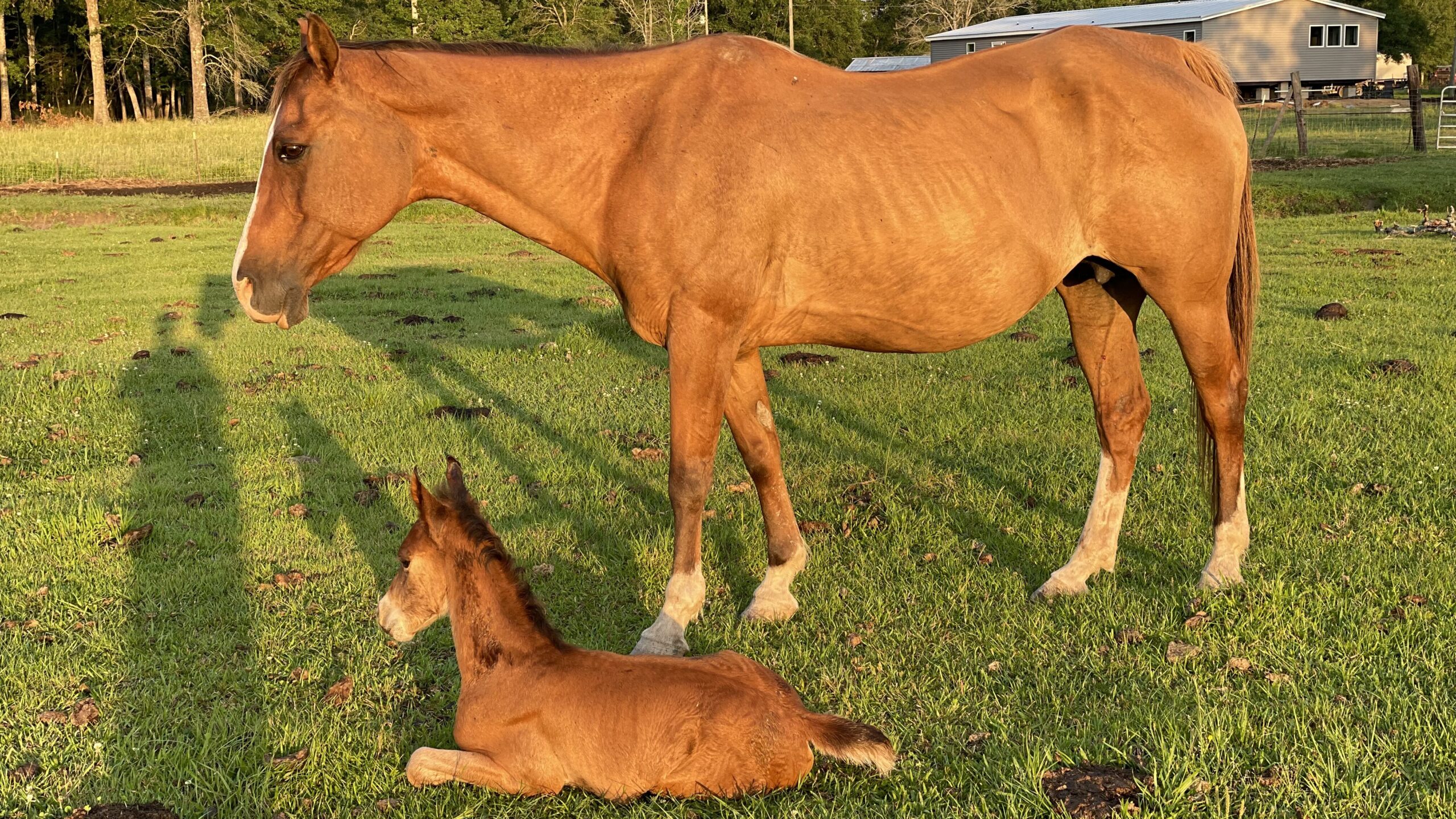
One forward ear and one ear angled back is a common, useful position. The horse is taking in more than one direction at once. You may see it when riding a trail, leading a horse through a busy barn, or standing near a mare and foal. One ear may remain on you while the other tracks what is happening ahead.
I often see this in work when a horse is aware of the rider without losing focus on where he is going. It is not proof that a horse is happy, trained, or calm by itself, but it is usually ordinary attention-sharing rather than an alarm signal.
If the ear nearest you stays tightly pinned while the horse becomes tense, resistant, or reactive, do not assume he is merely listening. Recheck your tack, your aids, the work you are asking for, and whether discomfort may be involved.
Swiveling or Constantly Moving Ears
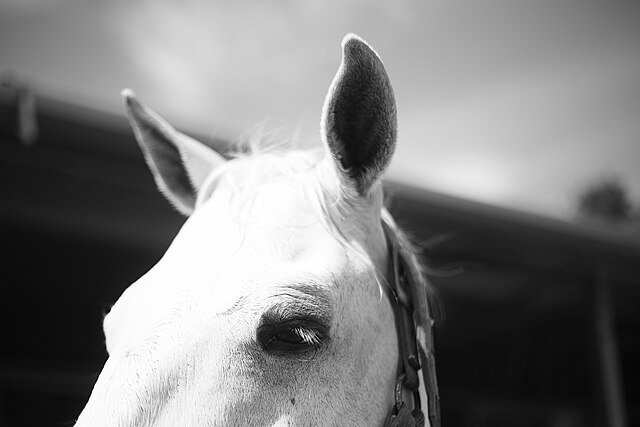
A horse whose ears rotate from side to side is sorting through sounds and movement. In a new place, near traffic, at a show, or while shipping into a different track, that is usually expected. Horses are built to monitor what is happening around them, and a lot of ear movement may simply mean there is plenty to process.
I pay closer attention when the ears never settle in a familiar, quiet setting and the horse also seems tight, jumpy, sweaty, hard to lead, or reluctant to stand. Then I look at the environment, routine, turnout, workload, and possible discomfort rather than labeling the horse “nervous.”
There is no single “good” amount of ear movement. The useful comparison is with that horse’s normal behavior in that setting. A horse who is always alert at a busy racetrack may behave very differently when relaxed in his home stall.
Relaxed or Drooping Ears
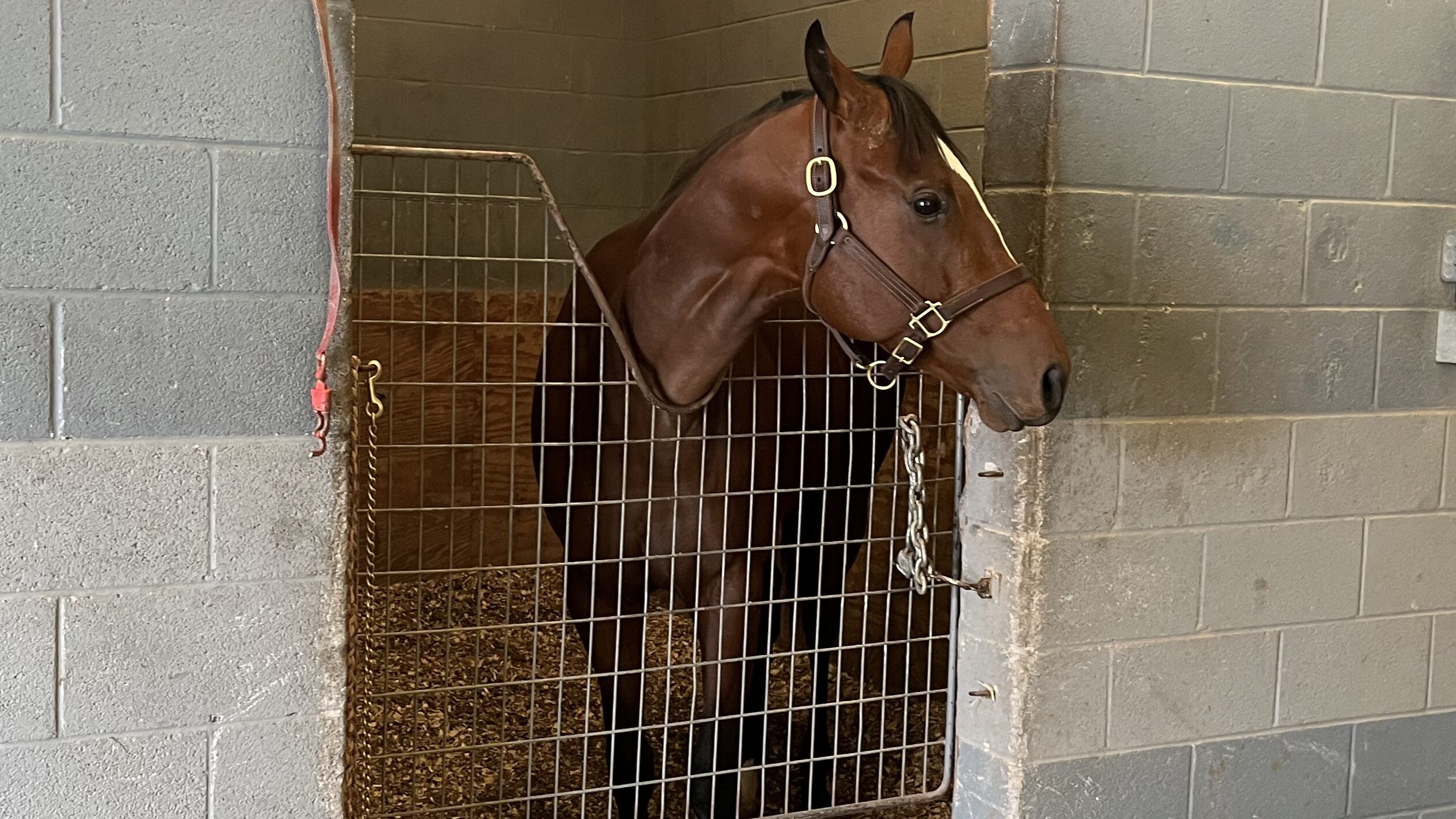
Ears that sit loosely to the side or droop slightly often appear when a horse is resting, dozing, standing in the sun, or relaxing after work. You will usually see other relaxed signs with them: a lowered head, a soft eye, a resting hind leg, normal breathing, and no concern about ordinary barn activity.
Do not assume drooping ears always mean contentment. If a normally bright horse seems dull, does not respond as usual at feed time, has a poor appetite, moves differently, or stays unusually quiet, the ears are one more reason to take a closer look. A change from that horse’s normal behavior is more important than one position in isolation.
What to Watch During Everyday Handling
Ear reading becomes useful when it changes how you handle a real situation. I watch ears most closely in tight spaces, around feed, during grooming and tacking, when introducing horses, and when a horse’s behavior changes suddenly.
At Feeding Time
A horse may shift an ear toward a bucket, another horse, or your footsteps in the aisle. That is normal attention. If he flattens his ears, threatens, swings his hindquarters, or rushes the stall door, slow down and work safely. Give him room and look at the management setup: spacing, stall routine, feed value, and whether another horse is crowding him.
During Grooming and Tacking
One ear turned toward you is often a horse tracking what you are doing. A new change—especially ears pinned during grooming, when the girth comes up, or when you touch one spot—deserves attention. Do not try to train away a signal before you have considered tack fit, soreness, skin irritation, teeth, feet, and other possible sources of discomfort.
While Riding
Backward ears under saddle are often normal. Many horses bring one ear toward the rider while moving forward. What concerns me is a repeated change: ears pinned tight during the same transition, when bending one direction, at canter, at the mounting block, or when a particular aid is applied. Make a note of the pattern. Then investigate the horse, tack, footing, workload, and riding situation before calling it attitude.
In Turnout
Horses use their ears constantly with one another. A brief ear pin while one horse claims a hay pile or asks for more room can be routine social communication. Monitor the group closely if it becomes chasing, cornering, repeated biting, kicking, or one horse being unable to access water, forage, or shelter safely.
When Ear Position May Signal Discomfort
Ear position is not a diagnosis. Still, a sudden or persistent change can be useful information—particularly when it appears with reluctance to move, a change in appetite, sensitivity to touch, head-tossing, tail swishing, altered gait, or resistance during work.
If your horse’s ear behavior changes around saddling, mounting, girthing, grooming, picking up feet, or a particular movement, keep the pattern in mind and contact your veterinarian when appropriate. A qualified saddle fitter, farrier, dentist, or trainer may also be part of the answer, depending on what you observe. The goal is not to diagnose from an ear position; it is to avoid ignoring a change that could matter.
Take a sudden change seriously. If a horse who is normally easy to handle becomes persistently tense, defensive, dull, or painful-looking, do not write it off as a bad attitude. Keep yourself safe, document when it happens, and have the horse evaluated as the situation warrants.
Common Mistakes When Reading Horse Ears
- Calling every backward ear aggressive: A horse can listen behind him without being angry.
- Calling every pinned ear a training problem: Pain, fear, confusion, crowding, and resource guarding can produce the same warning posture.
- Ignoring the rest of the body: A tight face, tail, movement, and stance often give more useful context than the ears alone.
- Comparing every horse to a generic chart: Learn what is ordinary for your horse, then pay attention to meaningful changes.
- Correcting the warning instead of investigating it: A horse that stops showing a warning has not necessarily stopped feeling the reason behind it.
A Simple Way to Learn Your Horse’s Signals
The best way to get better at reading ears is to watch your horse during ordinary routines, not only when something has gone wrong. Spend a few minutes observing him in turnout, while eating, being groomed, led out, tacked up, and worked. Notice what his ears do before he becomes excited, uncertain, irritated, or relaxed.
Video can help. A short clip of a saddling routine, a ride, or a turnout interaction can reveal patterns that are easy to miss while you are handling the horse. If you are concerned, notes on when the behavior occurs, what happened immediately before it, and what other changes you saw will be more useful to your veterinarian or trainer than “he has been grumpy lately.”
Horse Ear Position FAQs
What does it mean when a horse puts both ears forward?
Both ears forward usually mean a horse is focused on something ahead. Check the rest of the body to tell relaxed curiosity from higher alert: a loose neck and soft eye differ from a raised head, tight body, and quick feet.
Is it normal for a horse to put his ears back while riding?
Often, yes. A horse may turn one or both ears back to listen to the rider or activity behind him. The concern is when the ears are pressed tightly flat against the head or appear with tension, resistance, or a repeated pattern during work.
Why does my horse have one ear forward and one back?
One ear forward and one back usually means the horse is monitoring more than one direction. It is common when a horse is listening to a rider or handler while keeping watch on what is ahead.
Why do horses move their ears constantly?
Horses move their ears to track sounds and activity. Frequent movement is common in a new or busy place. If the ears never settle in a familiar setting and the horse also seems tense or uncomfortable, consider the environment, routine, and possible health concerns.
Do drooping ears mean a horse is relaxed?
They often can, especially with a lowered head, soft eye, resting hind leg, and normal behavior. But persistent drooping combined with dullness, poor appetite, or other changes should not be dismissed; compare the horse with his normal behavior and contact a veterinarian if you are concerned.
The Bottom Line
Horse ears are one of the fastest ways to see where a horse’s attention is going, but they make the most sense when you read them with the whole horse. Learn your horse’s normal patterns, notice meaningful changes, and treat tightly pinned ears as information worth respecting—not a reason to argue with the horse.
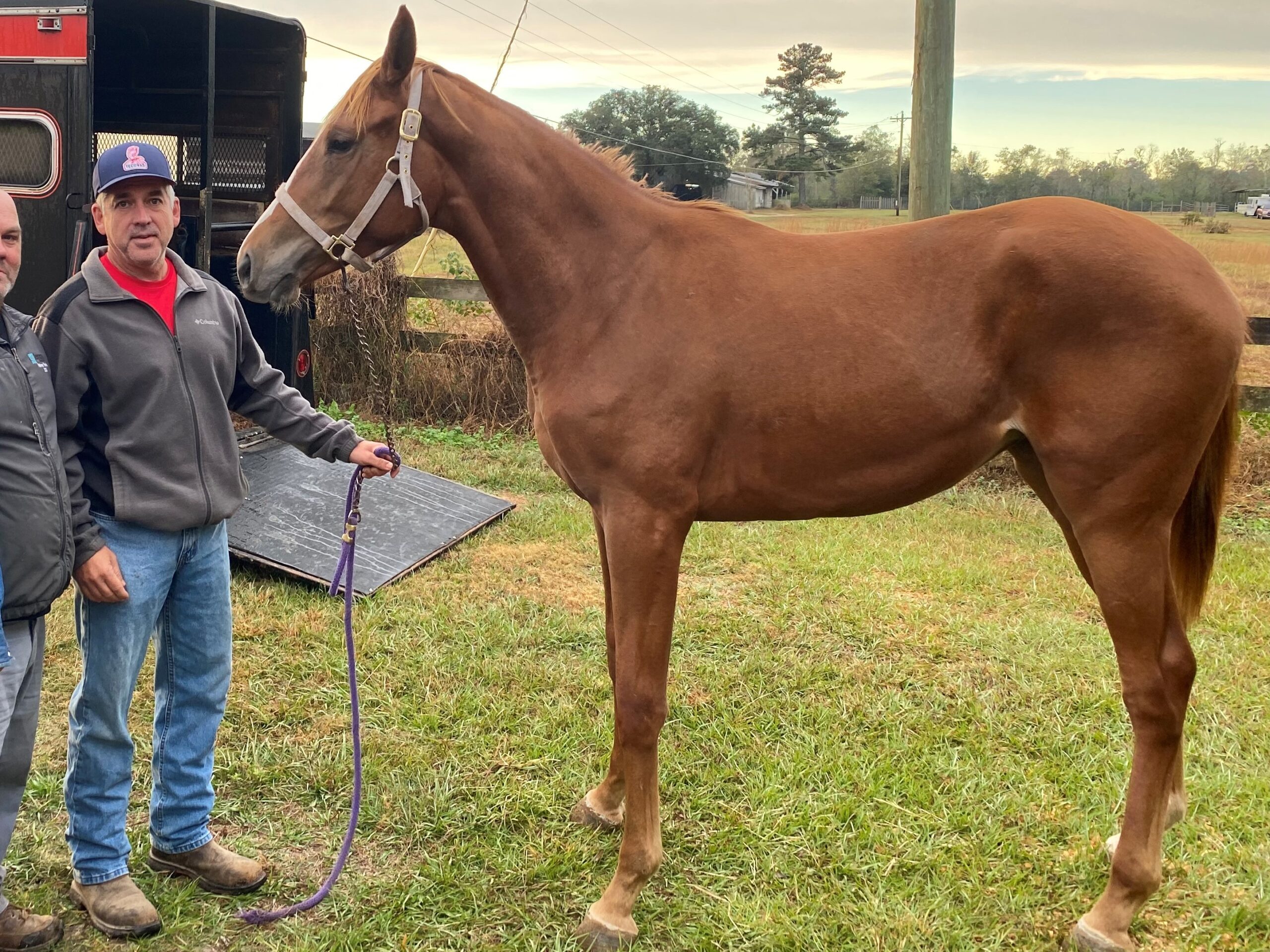
About Miles Henry
Racehorse Owner & Author | 30+ Years in Thoroughbred Racing
Miles Henry (legal name: William Bradley) is a professional horseman based in Folsom, Louisiana. He holds Louisiana Racing License #67012 and has spent over three decades managing Thoroughbreds at premier tracks including Fair Grounds, Delta Downs, and Evangeline Downs.
Expertise & Hands-On Experience: Beyond the track, Miles has decades of experience in specialized equine care, covering everything from hoof health and nutrition to training protocols for Quarter Horses, Friesians, and Paints. Every guide on Horse Racing Sense is rooted in this “boots-on-the-ground” perspective.
30 of their last 90 starts
Equibase Profile.

Connect with Miles: