Last updated: September 24, 2026
Any links on this page that lead to products on Amazon are affiliate links and I earn a commission if you make a purchase. Thanks in advance – I really appreciate it!
Horse body language gives you clues when something has your horse’s attention, makes it uncomfortable, or simply feels different from its normal routine. The useful part is not memorizing one meaning for pinned ears or a swishing tail. It is learning to look at the whole horse, the situation, and the changes you see from one day to the next.
Quick answer: Horse body language makes the most sense when you read several signals together. Ears, eyes, muzzle, tail, posture, movement, and behavior around feed or work can all offer clues. One signal rarely tells you exactly what is wrong, but a new pattern can tell you it is time to check the horse more closely or call the right professional.
This guide explains what common body-language signals may mean, how I separate normal reactions from changes worth investigating, what to watch during grooming and riding, and when behavior may point to a health or soundness concern.
Table of Contents
Start With the Whole Horse
Horse body language is how horses communicate through posture, movement, facial expressions, and behavior. A horse usually gives you clues when something has its attention, makes it uncomfortable, or simply feels different from its normal routine. Before you decide what a signal means, look at the whole picture.
What was the horse doing? What changed just before the behavior started? Does it happen every day or only during grooming, saddling, feeding, turnout, or work? Are you seeing changes in appetite, manure, movement, attitude, or performance too? The most useful comparison is not another horse. It is that horse on a normal day.
The easiest mistake is treating horse body language like a dictionary: ears back means angry, tail swishing means pain, licking means relaxed. Horses do not work that way. A tail can swish because of flies, a rider’s leg, excitement, frustration, tack, or discomfort. Ears can point back because the horse is listening behind it, concentrating on the rider, warning another horse, or reacting to something it does not like.
Horseman’s Take: In the barn, I pay more attention to a horse acting a little different than to a horse simply acting like itself. A normally bright horse that suddenly stands dull, resents being groomed, or does not walk out freely has my attention even if it is not obviously lame. Small changes are a reason to look closer, not a reason to jump straight to a diagnosis.
What the Face, Ears, Tail, and Posture Can Tell You
Body language can help you notice a change early, but it cannot tell you exactly which medical problem a horse has. Use these signals as a starting point, then consider the setting and the rest of the horse.
| What you notice | What it may mean | What to check first |
|---|---|---|
| Forward ears that move and swivel | Interest, attention, or normal awareness of the surroundings | Look at the rest of the horse. A relaxed horse may simply be listening; a tense horse may be worried about something ahead. |
| Ears repeatedly pinned during grooming or tacking | Irritation, defensiveness, anticipation, discomfort, or dislike of the handling | Brush pressure, girth area, back sensitivity, tack fit, handling routine, and whether the response is new. See my guide to reading horse ears for more context. |
| Tight eye, tense muzzle, or a worried look | Alertness, anxiety, discomfort, pain, or anticipation | Recent changes, posture, appetite, movement, temperature, and whether the expression is unusual for that horse. |
| Tail swishing at rest | Flies and skin irritation are common causes | Insects, skin irritation, weather, and the horse’s environment. |
| Repeated tail swishing in work | Rider aids, frustration, tack, training pressure, heat, or discomfort | Saddle fit, rider balance, workload, footing, heat, and changes in the horse’s way of going. |
| Head tossing during work | Flies, discomfort, resistance, dental or bridle issues, rider contact, training changes, or frustration | Bridle and bit fit, teeth, ears and poll, saddle fit, rider hands, insects, and any recent change in training or behavior. |
| Repeated pawing | Anticipation, frustration, a learned habit, or discomfort | What is happening around feed, water, turnout, or work. If pawing comes with looking at the flank, rolling, sweating, reduced appetite, or other colic signs, call your veterinarian promptly. |
| Repeated weight shifting, pointing, or reluctance to bear weight | Possible foot, leg, or other physical discomfort | Heat, swelling, digital pulse, gait, and whether the horse will bear weight normally. Call your veterinarian promptly if it is persistent, sudden, or severe. |
| Flared nostrils while standing quietly | Excitement, fear, heat, pain, or respiratory effort | Breathing effort, temperature, gum color, environment, and other illness signs. |
Researchers use tools such as the Horse Grimace Scale to evaluate several facial features together when assessing pain. That is the right lesson for everyday horse owners too: do not hang a diagnosis on one eye, one ear, or one swish of the tail. Watch for a repeated pattern and a change from the horse’s usual behavior.
Read Body Language in Context
The same behavior can mean different things in different situations. That is why it helps to connect a signal with what happened before it and what changes when you adjust the horse’s environment, handling, tack, or workload.
During Grooming and Tacking
A horse may pin its ears because it dislikes a stiff brush, is guarding feed, is tired of a busy aisle, or is uncomfortable when you touch one area. If it consistently reacts over the back, withers, girth, or hindquarters, do not write it off as bad behavior. Check your routine, equipment, and handling, then involve your veterinarian, farrier, saddle fitter, or trainer as the pattern suggests.
Under Saddle or in Work
Tail swishing, ears back, head tossing, reluctance to move forward, resistance in transitions, or a change in way of going can all be worth investigating when they are repeated or new. Start with the simple things: flies, heat, footing, rider balance, saddle fit, workload, and whether the horse had enough time to warm up. If the behavior continues or comes with unevenness, soreness, or a clear performance change, stop treating it as a training issue until you have ruled out a physical one.
At Rest, in the Stall, or in the Pasture
A quiet horse may be resting. What matters is whether it is quieter than normal or comes with other changes. A horse that is off feed, repeatedly paws, looks at its flank, sweats without work, isolates itself, shifts weight, stands oddly, or appears to have labored breathing needs closer attention. Some of those signs can be urgent, so do not wait for a body-language pattern to become dramatic before asking for veterinary advice.

What I Watch for in Racehorses
Racehorses can be naturally sharper and more reactive than a quiet trail horse, especially on busy mornings and race days. A horse that walks with its head up, looks around, and carries plenty of energy is not necessarily stressed. What concerns me is a change from that horse’s normal pattern: a horse that will not leave the stall, resents being saddled, quits pulling the rider along, walks short, or comes back from a gallop unlike itself.
Some horses are always bright and sweaty before a race, while others stay quiet until they are uncomfortable or overwhelmed. I do not use one ear position or a tail swish to label a horse. I compare today’s horse with the horse I know, check the basics, and adjust the plan when the pattern says something is not right. My guide to stress in racehorses goes deeper into the demands of training and racing.
When Body Language May Signal a Problem
Behavior changes do not automatically mean pain or illness, but they are often the first reason to check the horse more carefully. A useful rule is this: the more sudden, persistent, or combined the changes are, the more seriously you should take them.
- New resistance during work: A horse that suddenly resists saddling, moving forward, transitions, turning, or taking a lead may need its tack, workload, feet, and soundness checked.
- Changes around feed or water: Reduced appetite, unusual fussiness at the feeder, not drinking normally, or standing apart from the group deserves attention.
- Changes in stance or movement: Repeated shifting, pointing a foot, a shorter step, reluctance to turn, or refusing to bear weight is not something to train through.
- Changes in breathing or demeanor: Labored breathing at rest, unusual sweating, marked dullness, or a horse that seems clearly unlike itself can be a reason to call your veterinarian.
Call your veterinarian promptly if you see:
- Repeated rolling, pawing, looking at the flank, sweating without exertion, or other possible colic signs
- Labored breathing, flared nostrils at rest, blue, gray, or very pale gums, or a horse that appears distressed
- Sudden or marked lameness, refusal to bear weight, repeated shifting of weight, or an abnormal stance
- A horse that is dull, off feed, feverish, or clearly unlike itself
- Persistent pain-like behavior during grooming, saddling, or work without an obvious harmless explanation
A Simple Daily Check-In
You do not need to turn morning chores into a clinical exam. A quick, consistent look at the same few things helps you learn what is normal and recognize a meaningful change faster.
- Watch before you walk up. Notice where the horse is standing, whether it is eating or resting normally, and how it responds to the environment.
- Look at the face and ears. Compare the eye, muzzle, ear movement, and general expression with what is normal for that individual.
- Watch it walk. Look for a short step, reluctance to turn, unevenness, stiffness that does not improve, or a change in posture.
- Check the ordinary things. Appetite, water, manure, feet, legs, heat, swelling, and how the horse reacts to routine handling often tell you more than one dramatic gesture.
Horseman’s Take: My best daily check is simple: I look at a horse before I start doing anything to it. I want to see how it stands, whether it notices me, how it walks out, and whether it acts like itself. That habit has caught plenty of small problems early, but it has also kept me from overreacting to one pinned ear or one tail swish.
Horse Body Language FAQ
What do pinned ears mean in horses?
Pinned ears can mean irritation, defensiveness, discomfort, intense concentration, or a reaction to another horse or person. Look at the situation and the rest of the horse’s body language instead of assuming one meaning every time.
Does tail swishing always mean a horse is in pain?
No. Horses swish their tails at flies and skin irritation, and they may also swish during excitement or work. Repeated tail swishing under saddle is worth investigating, especially when it appears with other changes such as pinned ears, resistance, altered movement, or sensitivity during tacking.
Why does my horse toss its head while riding?
Head tossing can be caused by flies, rider contact, bit or bridle fit, dental or ear issues, frustration, discomfort, or a change in training. A new or repeated pattern is worth checking rather than dismissing as bad behavior.
How can I tell if my horse is stressed or uncomfortable?
Look for a change from the horse’s usual baseline and read several signals together. A tight eye or muzzle, unusual sweating, altered appetite, repeated pawing, a tense posture, changes in movement, or resistance to handling can all be reasons to look closer.
Can horse body language tell me what is medically wrong?
Body language can tell you that something may be different or uncomfortable, but it cannot diagnose the cause. Use it to decide when to check tack, workload, feet, feed, and management—and when to call your veterinarian or another qualified professional.
Reading horse body language is not about becoming a mind reader or diagnosing a horse from one expression. It is about knowing what is normal for your horse, noticing a meaningful change, and taking the next sensible step. Sometimes that means brushing off flies, changing a routine, checking tack, or giving the horse an easier day. Other times, it means calling your veterinarian before a small change becomes a bigger problem.
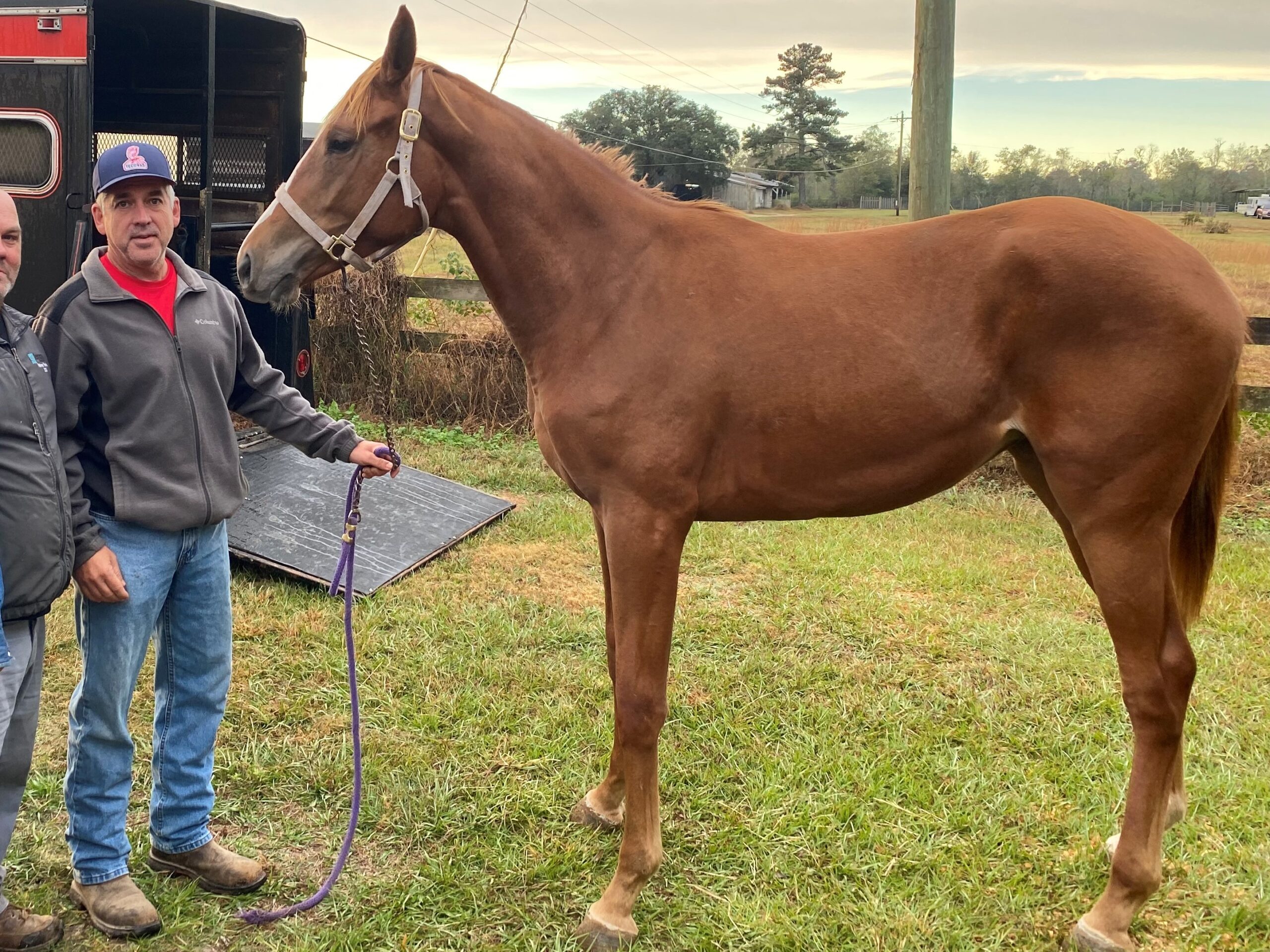
About Miles Henry
Racehorse Owner & Author | 30+ Years in Thoroughbred Racing
Miles Henry (legal name: William Bradley) is a professional horseman based in Folsom, Louisiana. He holds Louisiana Racing License #67012 and has spent over three decades managing Thoroughbreds at premier tracks including Fair Grounds, Delta Downs, and Evangeline Downs.
Expertise & Hands-On Experience: Beyond the track, Miles has decades of experience in specialized equine care, covering everything from hoof health and nutrition to training protocols for Quarter Horses, Friesians, and Paints. Every guide on Horse Racing Sense is rooted in this “boots-on-the-ground” perspective.
30 of their last 90 starts
Equibase Profile.

Connect with Miles: