
Last updated: October 10, 2026
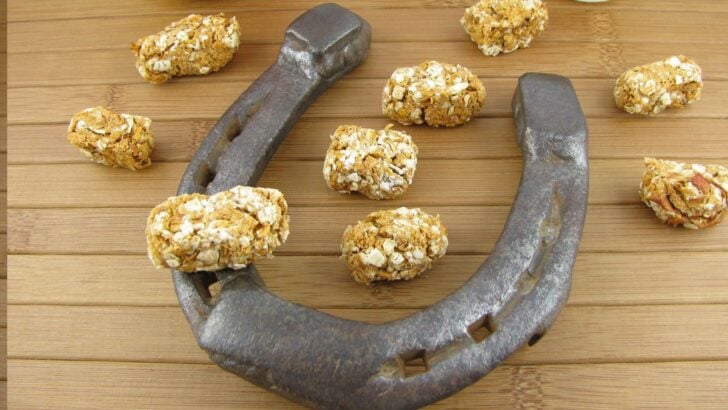
Homemade horse treats are easy to make with a few basic ingredients, and you control how much sugar goes into every batch. Oats, carrots, and apples work well as a base, but the recipe still matters if your horse has metabolic issues.
Here are five recipes, from simple carrot and oat bites to apple cinnamon flax treats, plus tips on baking, storage, and the kitchen ingredients to keep out of the bucket.
Table of Contents
Why Make Your Own Horse Treats
The main reason is control. When you bake them yourself, you know exactly what’s in them, how much sweetener goes in, and whether anything in the recipe doesn’t belong near your horse.
It’s cheap, too, since oats, carrots, and apples are usually in the kitchen already. Just don’t assume homemade means healthier. A batch heavy on molasses or honey can carry as much sugar as a bagged treat, so the recipe still matters.
Safe Ingredients and What to Skip
Here’s what I usually reach for:
- Oats: The base for most recipes, and most horses like them. Plain oats are a solid part of a horse’s diet anyway.
- Carrots and apples: Shredded or finely chopped, they add natural sweetness and moisture.
- Molasses or honey: A little holds the treats together and makes them tasty. Go easy, because it’s pure sugar.
- Ground flaxseed: Adds fat and fiber, and it binds a dough without any added sweetener.
- Peppermint: Crushed candies add flavor, but they’re sugar, so they’re an optional extra.
- Unsweetened applesauce: Works as a binder when you want to skip the molasses.
Just as important is what stays out of the bowl. A few common kitchen foods are on the list of human foods horses shouldn’t eat:
- Chocolate, coffee, and caffeinated products: Keep them out of horse treats. Chocolate contains theobromine, while coffee and other caffeinated products contain caffeine. Both can matter for competition drug testing, and the rules vary by organization. In one Ohio State study, horses fed chocolate candy later tested positive, so it’s not worth taking the chance with a competing horse.
- Onions and garlic: They can damage red blood cells and lead to anemia.
- Tomato plants and green or sprouted potatoes: The green parts of tomato plants and green, rotting, or sprouted potatoes contain toxic alkaloids. A ripe tomato or potato won’t poison a horse, but I keep both out of treats to be safe.
- Avocado: It contains persin, which is toxic to horses.
If a recipe calls for something you’re not sure about, leave it out. It’s not worth the risk.

Homemade Horse Treat Recipes
Here’s a quick look at the four sweeter recipes before the details. The flax recipe that follows has no added sweetener.
| Recipe | Oven | Bake time | Sweetener |
|---|---|---|---|
| Horse Cookies | 325°F | About 30 minutes | Honey |
| Apple and Peppermint Pleasers | 350°F | About 20 minutes | Molasses and crushed peppermint |
| Oatmeal Treat Bars | 400°F | About 40 minutes | Molasses |
| Carrot and Oat Delights | 350°F | About 15 minutes | Molasses |
1. Horse Cookies
Honey for sweetness, oats for bulk, and nothing fancy. The dough should hold together when you squeeze it, so add a bit more flour or water until it does.
Ingredients
- 1 apple, finely chopped
- 1 carrot, grated
- 2 cups oats
- 1/2 cup honey
- 1 tablespoon vegetable or coconut oil
- 1/2 to 3/4 cup flour
- 1 tablespoon water (optional)
Directions
- Preheat the oven to 325°F.
- Mix the dry ingredients (oats and flour) in a bowl, then add the wet ones (apple, carrot, honey, oil, and water if needed). Oats, honey, and carrot size all vary, so adjust the flour or water until the dough holds together.
- Roll the dough into balls and set them on a greased baking sheet.
- Bake about 30 minutes, until they’re set and lightly browned.
- Let them cool completely, then store them as described below.
2. Apple and Peppermint Pleasers
Somebody at the barn always has peppermints to hand out after a training session. This recipe bakes the flavor into a treat instead of handing out straight candy.
Ingredients
- 1 cup diced apples
- 1 cup oats
- 1/2 cup flour
- 1/4 cup molasses
- 2 tablespoons crushed peppermint candies (optional)
Directions
- Preheat the oven to 350°F (175°C) and line a baking sheet with parchment paper.
- Combine the apples, oats, flour, and molasses in a large bowl.
- Stir in the crushed peppermint if you’re using it.
- Roll the mixture into small balls and place them on the baking sheet.
- Bake about 20 minutes, until the treats are firm and golden.
The peppermint is optional. It adds flavor, not nutrition, and it’s sugar. Check the candy label first, and skip anything with chocolate or caffeine.
3. Oatmeal Treat Bars
These bake in a pan and get cut into squares, so they’re the easiest to make in bulk. With a full cup of molasses, they’re also the sweetest recipe here. I’d keep them for horses with no sugar concerns, and ask your vet if you’re not sure they fit your horse’s diet.
Ingredients
- 1 apple, shredded
- 1 carrot, shredded
- 1 cup molasses
- 2 1/2 cups oats
- 2 tablespoons oil
Directions
- Preheat the oven to 400°F.
- Combine the apple, carrot, molasses, oats, and oil in a large bowl. Mix well so the molasses coats all the oats.
- Press the mixture into a 9×13 baking dish and pat it flat and even.
- Bake about 40 minutes, until the top is crisp and the edges are browned. A thinner layer bakes faster, so check it early.
- Let it cool completely, then cut it into bite-sized pieces.
4. Carrot and Oat Delights
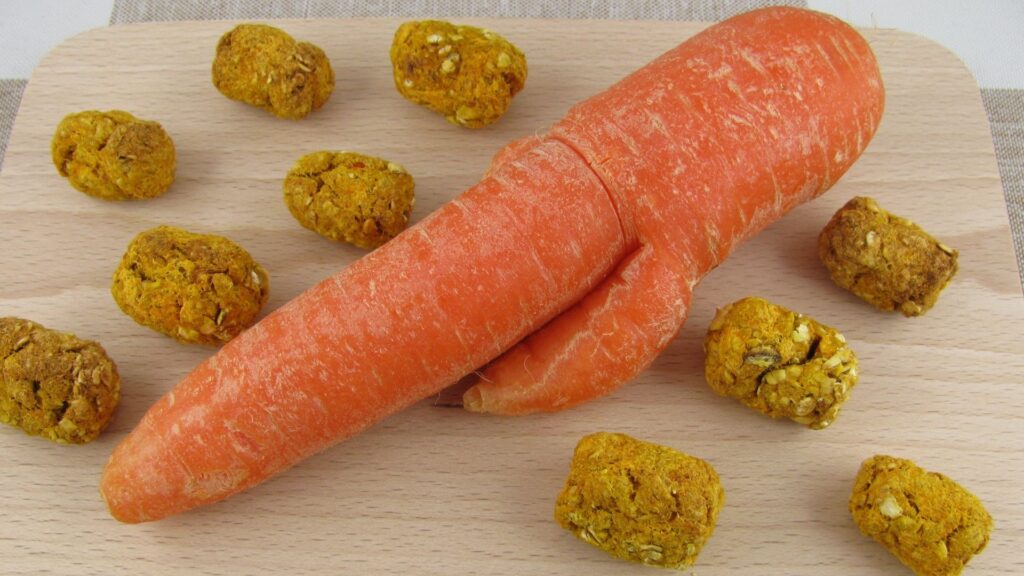
This is the one I’d start with. It’s the quickest to bake, and when my daughter and grandchildren made a batch, the horses sniffed them, nibbled once, and then cleaned up the whole pan.
Ingredients
- 2 cups oats
- 1 cup shredded carrots
- 1/2 cup flour
- 1/4 cup molasses
- 1/2 cup water
Directions
- Preheat the oven to 350°F (175°C) and line a baking sheet with parchment paper.
- Mix the oats, carrots, flour, and molasses in a large bowl.
- Add the water a little at a time until the mixture holds together.
- Scoop tablespoon-sized portions onto the baking sheet and flatten them slightly.
- Bake about 15 minutes, until the edges are golden brown and the tops are set.
- Let them cool completely before you store them.
A Lower-Sugar Option
Horses that are overweight, insulin resistant, or prone to laminitis often need a different treat plan, and what works depends on the individual horse and its whole diet. This apple cinnamon flax recipe is widely published, including by SmartPak, and the quantities below match those versions.
It has no added honey or molasses, so I call it lower-sugar, not sugar-free. The applesauce still contains naturally occurring sugar, and I can’t guarantee the NSC content of a batch made with different ingredients. No added sweetener doesn’t make it safe for every metabolic horse, so check with your vet first.
5. Apple Cinnamon Flax Treats
This makes a big batch, so plan to freeze what you won’t use right away.
Ingredients
- 1 pound ground flaxseed
- 1/2 cup unsweetened applesauce
- 2 tablespoons cinnamon
- 2 cups hot water
Directions
- Preheat the oven to 350°F and line a cookie sheet with parchment paper. Skip the cooking spray.
- Put the flaxseed and cinnamon in a mixing bowl and stir them together. Add the applesauce and the hot water.
- Mix with a rubber spatula, then your hands, until the dough is smooth. It’ll be thick and a little sticky.
- Spread the dough across the cookie sheet. The thinner you spread it, the crunchier the treats will be.
- Cut it into small squares before baking. They’re hard to cut cleanly once they’re baked.
- Bake 60 minutes for a chewy treat, or up to 75 minutes for a crunchier one.
- Let them cool completely before you break them apart and store them.
Feeding, Storage, and New Treats
How Much to Feed
Your horse’s regular diet should cover its nutrition, with forage as the foundation. Treats are extras, not a replacement for balanced feed, and a balanced equine diet has no room for them to crowd it out.
Keep portions small, and match them to the treat. A couple of tablespoon-sized cookies is a very different serving from a big oatmeal bar. If your horse has insulin resistance, a history of laminitis, or another condition that affects its diet, ask your vet which treats, if any, fit.
Storage and Shelf Life
Homemade treats have no preservatives, and the recipes differ in how moist they are. Let each batch cool completely, then refrigerate it promptly in a sealed container. About a week is a conservative rule of thumb. Freeze extras and thaw a few at a time, and throw out anything that shows mold or smells off.
Introducing a New Treat
Start with a small piece, and watch for changes in manure, appetite, or behavior over the next day or so. If anything looks off, stop feeding it.

Store-Bought Options
If baking isn’t your thing, a good commercial treat is a fine alternative. Choose one made for horses, read the ingredient list, and check the sugar if your horse has metabolic concerns. If you want ideas, here are the treats horses tend to like best.
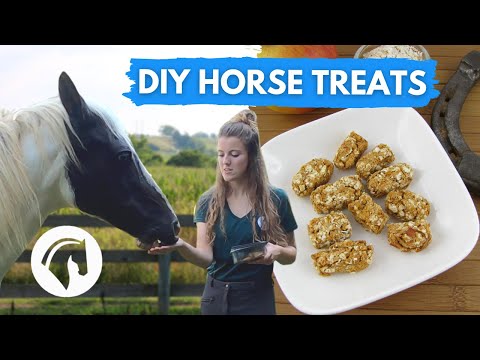
If you’d like to watch a batch come together, this short video shows how to make horse treats:
FAQs
How many homemade treats can I give my horse?
Keep portions small and match them to the size of the treat. A couple of tablespoon-sized cookies is a very different serving from a large oatmeal bar. If your horse has a condition that affects its diet, ask your vet which treats fit.
Can you make horse treats without molasses?
Yes. The Horse Cookies use honey instead, and the Apple Cinnamon Flax Treats use unsweetened applesauce with no added sweetener. Texture will change if you swap or skip it, so adjust the liquid until the dough holds together.
How long do homemade horse treats last?
Let them cool completely, then refrigerate in a sealed container. About a week is a conservative rule of thumb. You can freeze extras and thaw a few at a time. Throw out any treat with mold or an off smell.
What should you avoid in homemade horse treats?
Leave out chocolate, coffee and other caffeinated products, onions, garlic, avocado, tomato plants, and green or sprouted potatoes. Chocolate and caffeine can also matter for drug testing in competition horses. If you’re unsure about an ingredient, skip it.
Are homemade horse treats healthier than store-bought?
Not automatically. You control the ingredients, which is a real advantage, but a recipe heavy in molasses or honey can be just as sugary as a bagged treat. Pick the recipe that fits your horse.
Can horses eat Quaker Oats?
Plain Quaker rolled oats are fine for horses in small amounts. Avoid flavored or instant packets with added sugar. Oats made for horses usually still include the hull, which is removed from oats made for people, and there are plenty of benefits to feeding horse oats.
Final Thoughts
If you’re trying homemade horse treats for the first time, start with the Carrot and Oat Delights, and go with the Apple and Peppermint ones if your horse is a mint fanatic. Whichever recipe you pick, choose the one that fits your horse and keep the portions small.
About Miles Henry
Racehorse Owner & Author | 30+ Years in Thoroughbred Racing
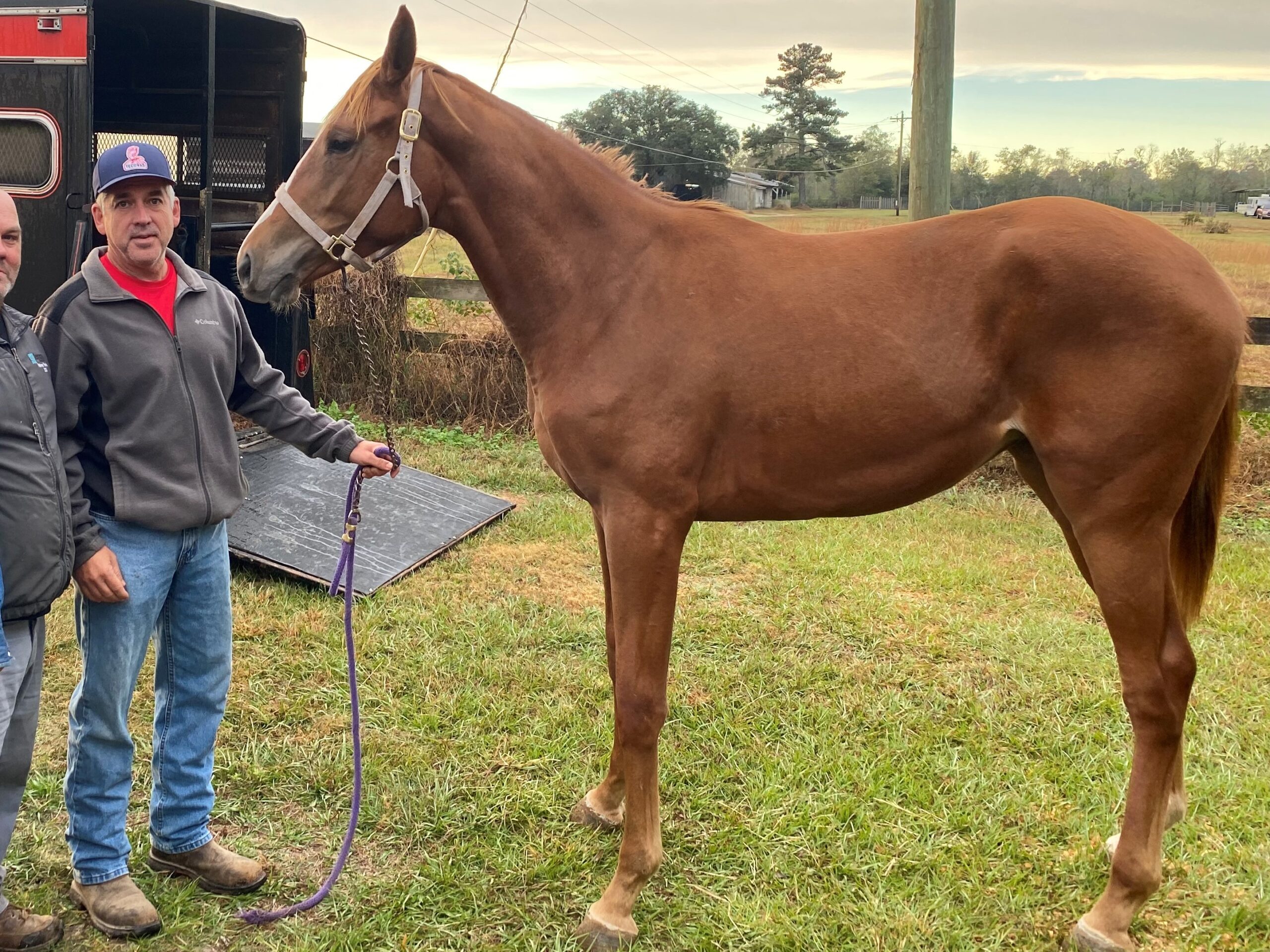
Miles Henry (legal name: William Bradley) is a professional horseman based in Folsom, Louisiana. He holds Louisiana Racing License #67012 and has spent over three decades managing Thoroughbreds at premier tracks including Fair Grounds, Delta Downs, and Evangeline Downs.
Expertise & Hands-On Experience: Beyond the track, Miles has decades of experience in specialized equine care, covering everything from hoof health and nutrition to training protocols for Quarter Horses, Friesians, and Paints. Every guide on Horse Racing Sense is rooted in this “boots-on-the-ground” perspective.
30 of their last 90 starts
Equibase Profile.

Connect with Miles: