
Last updated: August 27, 2026
Any links on this page that lead to products on Amazon are affiliate links and I earn a commission if you make a purchase. Thanks in advance – I really appreciate it!
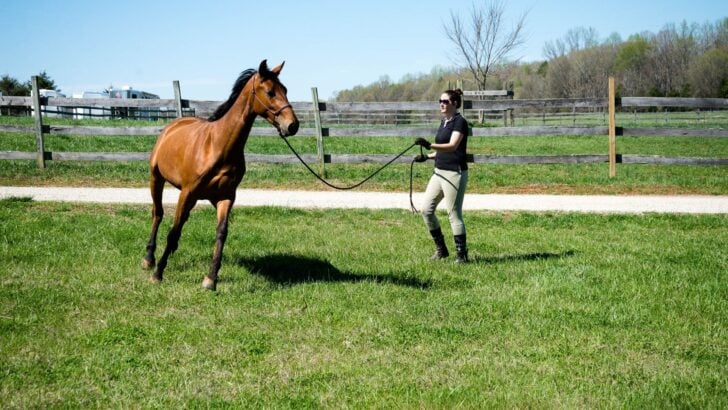
Most horses benefit from a gradual 10- to 20-minute warm-up before training: start with relaxed walking, add easy trot and, when the ride calls for it, a controlled canter, then use large circles and direction changes to check that the horse is moving freely. Stiff, older, unfit, recently rested, or cold-weather horses usually need more walking time. With our racehorses, warm-up starts before the rider is even up—each horse goes on the walking wheel before saddling, then walks and jogs about 5/8 mile before conditioning or galloping begins. That is a more structured routine for serious training, not a template for a quiet trail ride.
The mistake I see most often is treating warm-up as something to get through quickly. It isn’t. Those first few minutes are when you actually find out how the horse is moving that day, and whether it’s ready for what you’re about to ask of it.
Table of Contents
How Long Should You Warm Up a Horse?
How long the walking phase runs depends on the horse and the day, more than any fixed number does. A young, unfit, stiff, senior, recently rested, or cold-weather horse often benefits from a longer walk before anything faster. A fit horse doing light, familiar work may be ready sooner. I’m not just watching the clock – I’m paying attention to whether the stride feels even, whether the horse is loosening through its back and neck, and whether it’s responding promptly rather than a beat behind. That tells you more than minutes on a watch do.
Utah State University Extension similarly recommends 10 to 20 minutes of active forward walking before more demanding work when bringing a horse into condition, noting that walking helps prepare joints, muscles, tendons, and circulation for exercise. That’s specifically about the walking phase, not a claim that every ride needs a full 20-minute warm-up regardless of intensity – a short, easy pleasure ride calls for less than a horse about to gallop or jump.
Horse Warm-Up Exercises
- Start with a purposeful walk. Give most horses 5 to 10 minutes of relaxed walking on large, easy lines. Change direction periodically and notice whether the stride feels even and free. Older, stiff, or unfit horses may need longer here.
- Build gait and responsiveness gradually. Add an easy trot in both directions. If the horse is comfortable and the planned work calls for it, add a controlled canter before asking for anything more demanding. The goal is gradual progression, not reaching a specific gait on a timer – galloping isn’t a necessary or appropriate warm-up step for most riders and most rides.
- Use movements that fit the ride ahead. Large circles, gentle bending, changes of direction, and transitions help a horse become supple and attentive. Save tight turns, collection, jumping, or speed work until the horse feels loose and forward in both directions – a large, easy figure eight is fine here; a tight one is not a warm-up exercise for a stiff or green horse.
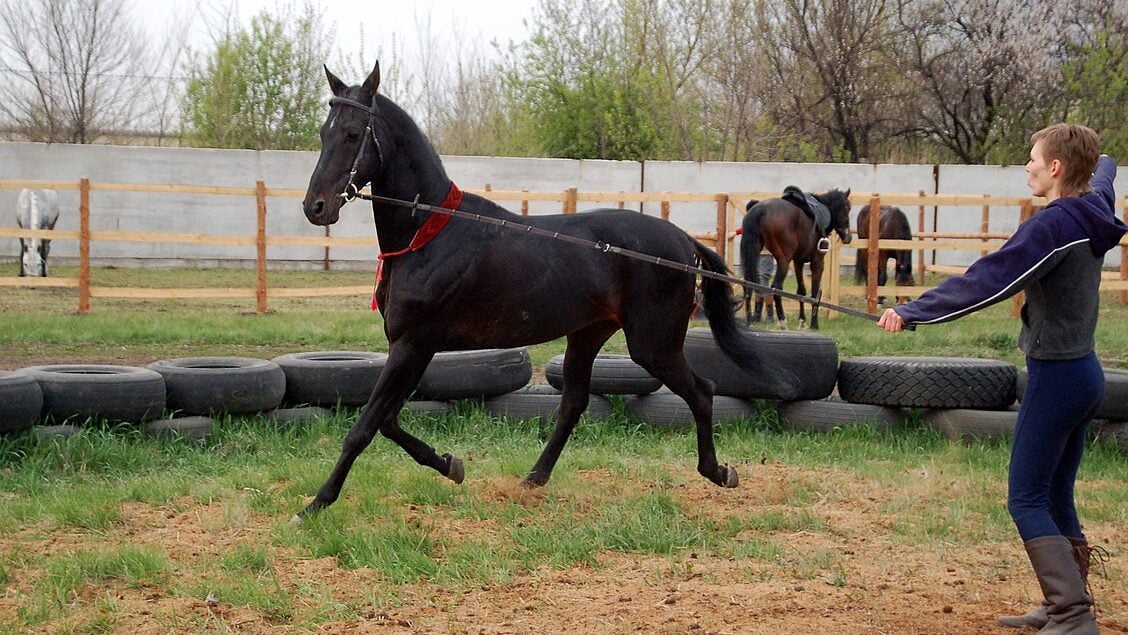
Warm up right before you actually intend to work the horse – don’t warm up, put the horse back in the stall, and ride later. A walker or a few minutes of quiet lunging can help settle an eager horse or let you watch how it’s moving before you get on, but neither is a requirement. Keep it easy, use good footing, and don’t turn the warm-up itself into a tiring session before the real ride has even started.
How I Warm Up Our Racehorses
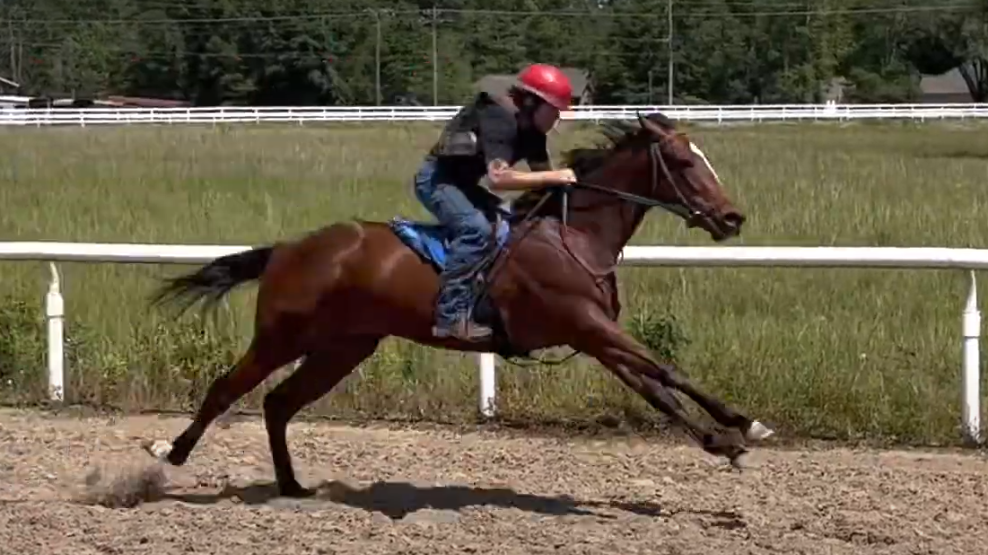
A Horseman’s Take: For our racehorses, warm-up starts before the rider is even up – each horse goes on the walking wheel before saddling. Once the exercise rider mounts, they walk and jog the horse for about 5/8 of a mile before any real conditioning or galloping begins. That’s our baseline for a fit horse about to do serious work, not a template for every horse or every ride – a trail horse doesn’t need this much structure, and a horse returning from a layoff needs a more conservative, gradually built program overall, not simply a longer warm-up. An experienced exercise rider learns to feel that difference early – a horse that’s still tight or distracted at the half-mile mark isn’t ready for speed just because the clock says it should be, and one that’s forward and settled quickly doesn’t need to be held to a fixed distance either. Weather matters too: a colder morning usually means more time at the walk before asking for the jog.
The point isn’t that every horse should follow this specific routine – it’s that warm-up time should scale with the intensity of what comes after it. A horse about to gallop needs a longer, more deliberate warm-up than one heading out for a quiet walk on the trail.
Match the Warm-Up to the Work
The warm-up should resemble the work ahead, just at an easier pace and with less collection, speed, or effort. A horse headed out for a quiet trail ride may only need a long, forward walk and a few minutes of easy trot. A horse preparing for jumping, tight turns, fast work, or hard conditioning needs more time to become loose, attentive, and responsive before being asked for anything demanding.
This isn’t just a rule of thumb – a 2024 scoping review of equine warm-up research found that warm-up strategies genuinely differ by discipline: dressage horses are typically warmed up longer than show jumpers, and a lower-intensity warm-up produced the same physiological benefits as a higher-intensity one.
In other words, more is not automatically better. The available research supports matching the warm-up to the work ahead, although the review also notes that firm, discipline-specific guidelines are still limited.
Signs Your Horse Is Ready – or Needs More Time
A horse that’s ready for the work ahead should move freely, respond to your cues without a delay, and feel forward rather than sluggish or tense. That’s a better indicator than a fixed number of minutes or a specific gait reached.
On the other side, watch for signs the horse needs to slow down, extend the warm-up, or stop working altogether: an uneven or shortened stride, repeated stumbling, reluctance to move forward, marked resistance, loss of coordination, excessive sweating for the conditions, or breathing that stays hard despite easing the work. A tense or distracted horse may simply need more quiet walking and straightforward work. A horse that appears painful, becomes uneven, or doesn’t settle with easier exercise shouldn’t be “warmed through” the problem – if you suspect something’s actually wrong, it’s worth reviewing the general signs of lameness in horses rather than assuming it’s just a warm-up issue.
Cool-down matters too – walk the horse until heart rate, breathing, and body temperature head back toward normal. If recovery seems unusually slow for that horse, that workload, and that weather – or if you notice coughing, labored breathing, unusual distress, or abnormal behavior- that’s worth a call to your vet rather than something to chalk up to needing a longer warm-up next time.
Warming Up in Cold Weather
Cold weather often calls for a longer, more patient warm-up, but riding may not be the right choice when footing, wind, precipitation, visibility, or temperature make the outing genuinely unsafe. When conditions are safe to ride in, give the horse more time at a relaxed walk and be especially reluctant to rush into demanding work before it feels loose and forward. A quarter sheet can help keep a clipped horse comfortable while walking and warming up in genuinely cold or windy conditions. For the broader picture on cold-weather riding, see my guide to horseback riding in winter.
Below is a short video demonstrating gentle pre-ride topline massage. It can be a useful part of grooming and tacking up for some horses, but it does not replace a gradual walk, trot, and—when appropriate—canter warm-up.

If your horse reacts as though its back is painful, unusually sensitive, or consistently difficult to saddle, stop treating it as a simple warm-up issue and have the horse, saddle fit, and training program evaluated.
Horse Warmup FAQs
How long should you warm up a horse before riding?
About 10 to 20 minutes for most horses, starting with 5 to 10 minutes of relaxed walking before adding trot and, if appropriate, canter. Older, stiff, unfit, or cold-weather horses often need more time; the horse’s own readiness matters more than a fixed number.
What warm-up exercises are appropriate for most horses?
A relaxed walk, easy trot, large circles, gentle bending, and direction changes cover most riders’ needs. Save tight turns, collection, jumping, and speed work for after the horse feels loose and responsive in both directions.
Should older horses get a longer warm-up?
Generally, yes. Older, stiffer horses typically benefit from more time at the walk before moving into faster gaits or demanding work, though the right amount still depends on the individual horse’s fitness and soundness.
What is the best warm-up exercise for a horse?
The best warm-up exercises are simple movements that gradually increase range of motion and responsiveness: relaxed walking, easy trotting, large circles, gentle bending, and transitions. The goal isn’t to tire the horse but to prepare its muscles, joints, and mind for the work ahead.
About Miles Henry
Racehorse Owner & Author | 30+ Years in Thoroughbred Racing
Miles Henry (legal name: William Bradley) is a professional horseman based in Folsom, Louisiana. He holds Louisiana Racing License #67012 and has spent over three decades managing Thoroughbreds at premier tracks including Fair Grounds, Delta Downs, and Evangeline Downs.
Expertise & Hands-On Experience: Beyond the track, Miles has decades of experience in specialized equine care, covering everything from hoof health and nutrition to training protocols for Quarter Horses, Friesians, and Paints. Every guide on Horse Racing Sense is rooted in this “boots-on-the-ground” perspective.
30 of their last 90 starts
Equibase Profile.

Connect with Miles: