
Last updated: September 4, 2026
Any links on this page that lead to products on Amazon are affiliate links and I earn a commission if you make a purchase. Thanks in advance – I really appreciate it!
You may have heard someone say your horse “looks wormy” – but you wormed him just last month. So how do you know whether those signs actually point to worms, or whether something else is going on?
Weight loss, diarrhea, a rough coat, poor energy, and tail rubbing can all be signs of parasites, but none of them proves your horse needs a dewormer. Some horses with a real parasite problem show few obvious signs, while others look “wormy” for reasons that have nothing to do with worms at all. That’s why I don’t use symptoms alone to decide when to worm a horse.
Here are the horse worm symptoms I actually watch for, what different parasites tend to cause, and when I’d stop guessing and get the veterinarian involved.
9 Signs That Make Me Look Closer for Parasites
None of these signs alone confirms worms – most have other possible causes too – but they’re worth a closer look, especially in combination:
- Weight loss or poor body condition
- Diarrhea
- Tail rubbing and hair loss around the tail base
- Reduced appetite
- Lack of energy, sluggish behavior
- Recurring colic
- Dull, dry, or unhealthy-looking coat
- Poor growth in young horses
- Coughing in young horses (roundworm larvae migrating through the lungs)
A single sign doesn’t tell me much by itself. I’m more interested when several problems show up together, when a young horse isn’t growing as expected, or when the problem continues despite adequate feed and routine care.

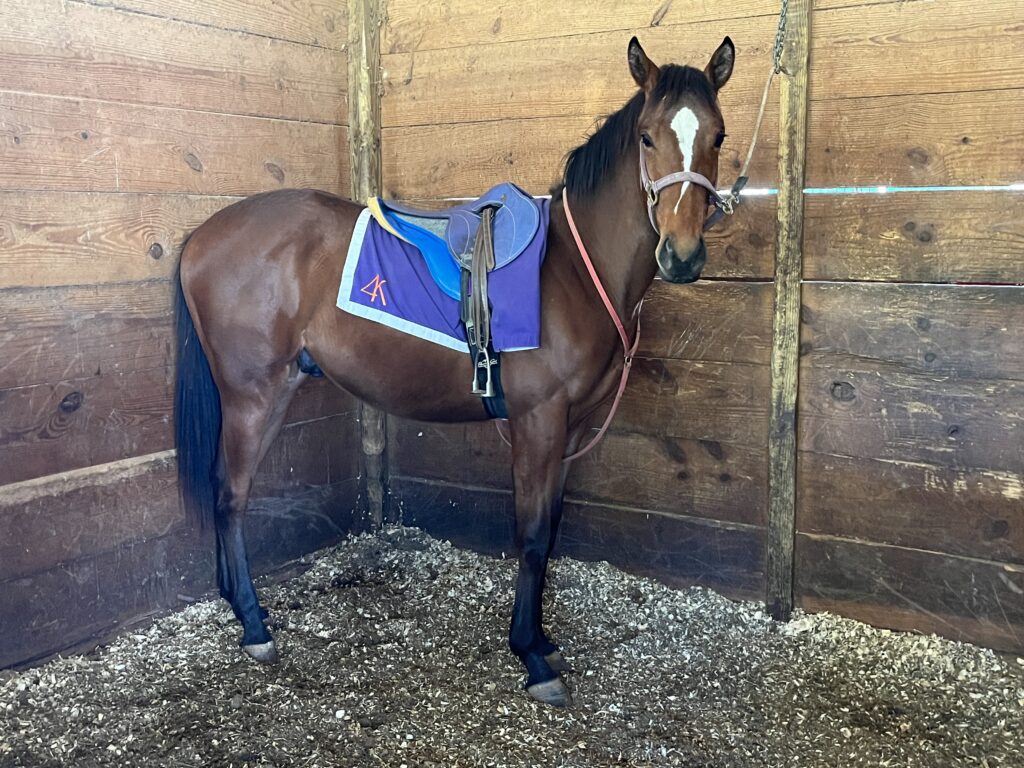
The horse in these photos was a young racing prospect I bought for the track – a Thoroughbred, badly underconditioned when he arrived. I suspected parasites were part of the problem, but I didn’t assume worms were the whole answer. He needed better nutrition, a consistent feeding program, parasite management, and time before he was fit enough to go into real training. The photo on the right was taken about four months later.
The improvement came from putting the whole horse back together – not from one tube of dewormer. That’s the same gut-check I use whether it’s a racing prospect or one of my kids’ rodeo Quarter Horses: don’t reach for the paste tube as the whole answer before you’ve looked at the rest of the horse.
What Different Parasites Can Cause
The type of worm and the severity of the infestation both affect which signs show up. Here’s what each common type is associated with:
| Worm Type | What to Watch For |
|---|---|
| Large strongyles | Weakness, weight loss, colic, and diarrhea as they migrate and feed on blood. Less common today than in the past, but still capable of serious damage. |
| Small strongyles (cyathostomins) | Most infections cause few obvious signs. In the uncommon but serious disease caused by large numbers of larvae emerging from the intestinal wall, horses may develop diarrhea, weight loss, dehydration, or colic. Encysted larvae don’t produce eggs and aren’t detected by a routine fecal egg count. |
| Large roundworms (ascarids) | Mainly a parasite of foals, weanlings, and yearlings. Coughing or nasal discharge can occur while larvae migrate through the lungs, though that’s not common – the bigger concern is intestinal impaction and colic in heavily infected young horses. |
| Pinworms | Intense tail rubbing and hair loss at the tail base. Diagnosed by examining the area or a tape test rather than a standard fecal count, since eggs are laid around the anus, not shed in manure. |
| Tapeworms | Often no obvious signs. Associated with ileocecal irritation and some types of colic, including impaction. Routine fecal egg counts can miss them, so ask your vet about appropriate testing or seasonal treatment in your area. |
| Stomach bots | Mouth irritation during migration, and stomach lining irritation once attached. Generally considered a mild pathogen – not usually what should drive your treatment decisions. |

How a Veterinarian Checks for Horse Parasites
The right test depends on the parasite you suspect. A fecal egg count gives useful information about strongyle egg shedding and helps build a control program, but it isn’t a complete parasite test – it doesn’t diagnose every parasite-related illness, and the AAEP’s own parasite control guidelines specifically say it shouldn’t be used to diagnose disease, since egg counts don’t correlate with the parasite life stages that actually cause illness.
Pinworms are usually found with a tape test around the tail area rather than a fecal sample. Routine fecal egg counts can miss tapeworm infections, and they don’t detect encysted small-strongyle larvae at all. A horse with colic, persistent diarrhea, or noticeable weight loss may need a broader veterinary workup, not just a stool sample.
The Part Many Horse Owners Miss: Symptoms Don’t Tell You When to Deworm
If a horse is losing weight, I don’t automatically blame worms. I look at what he’s actually eating, his teeth, his workload, his manure, his attitude, and what else has changed recently. Parasites are one possibility – not the diagnosis.
A healthy-looking horse can still be carrying parasites and shedding parasite eggs, and a horse showing real symptoms may have a problem that a routine fecal count won’t catch at all – encysted small strongyle larvae don’t produce eggs, tapeworm eggs are notoriously hard for a standard count to pick up, and pinworms aren’t diagnosed by manure testing in the first place. That’s why the best approach isn’t waiting for symptoms, and it isn’t dosing every horse on the same calendar either.
Work with your veterinarian on a parasite-control plan that uses fecal egg counts to monitor strongyle shedding, fecal egg count reduction testing to check whether a dewormer is still effective in your herd or barn, and parasite-specific testing when the horse’s age, season, signs, or history call for it.
Don’t use symptoms alone to decide whether your horse needs another dose of dewormer. A horse can carry parasites and look normal, while weight loss, diarrhea, tail rubbing, or colic can have causes that have nothing to do with worms. If your horse is sick, losing weight, or colicking, involve your veterinarian rather than treating by guesswork.
When I’d Call the Vet
Call your vet rather than reaching for another dose of paste if you see any of these:
- Colic, especially recurring episodes
- A sudden change in manure – especially blood, black/tarry manure, or persistent diarrhea
- Significant weight loss despite adequate feed
- A young horse with a cough or poor growth
- Symptoms that don’t improve after a recent deworming
That last point is where many owners lose time. If you’ve already dewormed him and he’s still losing weight or having diarrhea, don’t just reach for another tube. That’s when I want to know what parasite you’re actually dealing with, whether the product was effective, and whether worms are even the problem.
This short video is useful if you want to see how the major parasite groups differ – use it alongside, not instead of, your own veterinarian’s advice.

Horse Worm Symptoms: FAQs
How do I know if my horse needs worming again after a recent treatment?
Don’t automatically give another dose just because the horse still looks off. Review what product was used, when it was given, the horse’s age, pasture exposure, and the signs you’re seeing. A vet may recommend a fecal egg count reduction test to see whether the treatment effectively reduced strongyle egg shedding, or a different test if pinworms, tapeworms, or another condition is suspected. If the horse is losing weight, has persistent diarrhea, or is colicking, call your vet.
What signs can worms cause in horses?
The signs can be vague: weight loss, poor growth, loose manure, a dull coat, lower energy, coughing in young horses, or tail rubbing with pinworms. Some horses show no obvious signs at all, which is why pasture management, manure removal, and a targeted parasite-control program matter more than waiting until a horse looks poor.
Can a horse have worms without showing symptoms?
Yes. Many horses with internal parasites appear completely normal, particularly when parasite numbers are low or the horse is otherwise healthy. That’s why parasite control should be based on a veterinary-guided program, not on whether a horse appears to have worms. A normal appearance also doesn’t mean every parasite or life stage can be ruled out with a routine fecal egg count.
Signs are useful red flags, but they’re not a diagnosis, and you won’t eliminate worms entirely no matter how closely you watch. If you’re trying to figure out when to deworm, which test to use, and how I’d build a parasite-control program from scratch, see my complete guide to internal parasites in horses, including fecal egg counts, treatment checks, and pasture management.
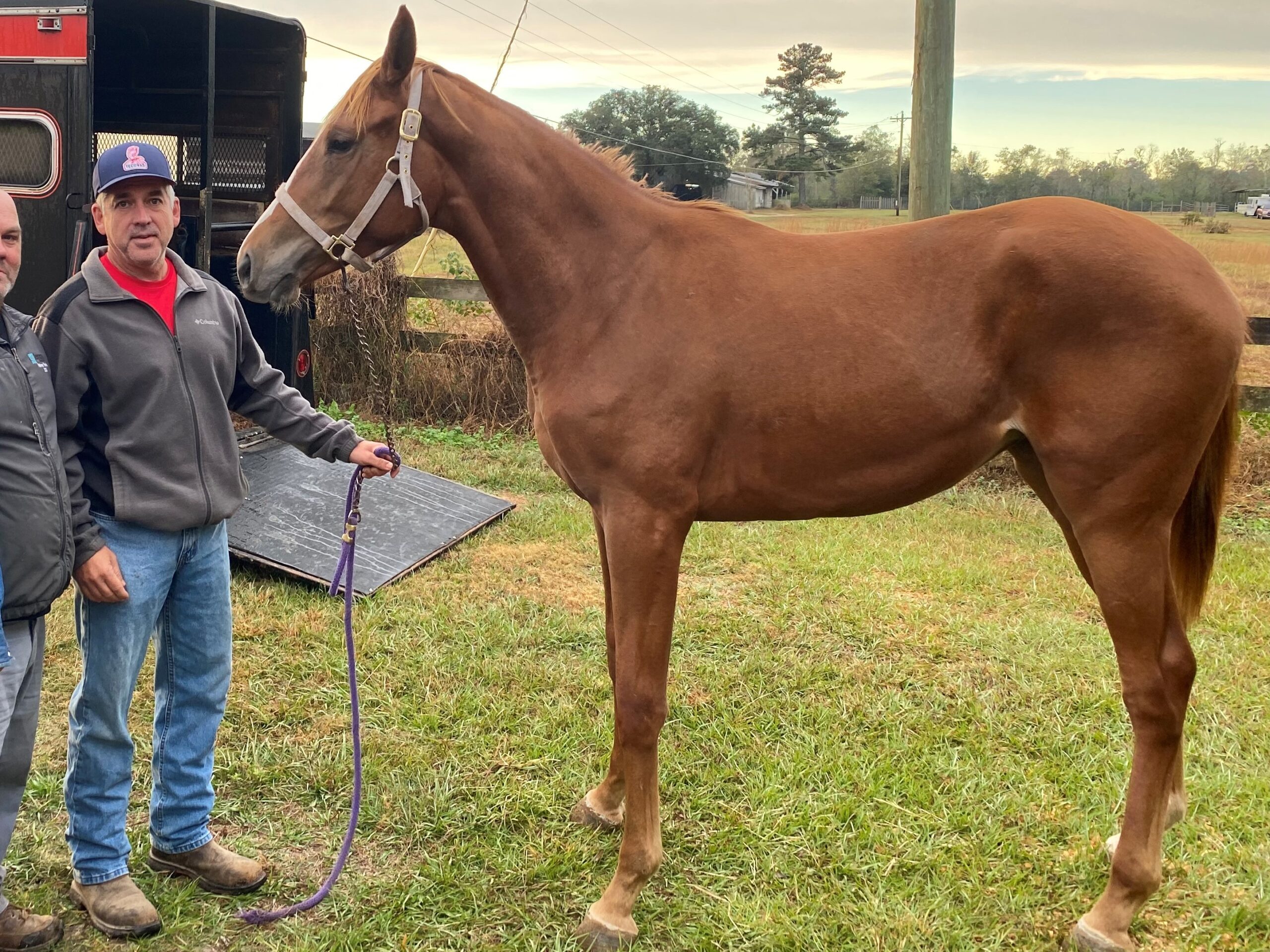
About Miles Henry
Racehorse Owner & Author | 30+ Years in Thoroughbred Racing
Miles Henry (legal name: William Bradley) is a professional horseman based in Folsom, Louisiana. He holds Louisiana Racing License #67012 and has spent over three decades managing Thoroughbreds at premier tracks including Fair Grounds, Delta Downs, and Evangeline Downs.
Expertise & Hands-On Experience: Beyond the track, Miles has decades of experience in specialized equine care, covering everything from hoof health and nutrition to training protocols for Quarter Horses, Friesians, and Paints. Every guide on Horse Racing Sense is rooted in this “boots-on-the-ground” perspective.
30 of their last 90 starts
Equibase Profile.

Connect with Miles: