

Last updated: October 16, 2026
Maybe you just bought a horse three states away, you’re sending one to a sale or a new trainer, or you’re moving the whole barn. You call around for quotes, and the numbers are all over the place. One hauler wants a flat fee, another quotes by the mile, and a third won’t give you a price until he knows his route. Knowing what each quote includes keeps you from overpaying, and from hiring the cheapest rig on the road.
Below, I’ll show you how to compare rates, estimate your trip, and spot the charges that can change the final bill.
Table of Contents
Horse Transport Cost Per Mile
Many commercial shippers quote by the loaded mile, meaning the miles your horse is actually on the trailer, but not all of them. In its January 2026 guide, Farmhouse Tack puts U.S. ground transport at about $1.25 to $3.75 per loaded mile, depending on the type of service. Treat these as planning estimates, not fixed industry rates, since actual quotes depend on the route, availability, stall arrangement, and the hauler:
| Type of service | Typical rate |
|---|---|
| Shared commercial load, stall-and-a-half | About $1.50 per mile |
| Shared commercial load, box stall | About $2.00 per mile |
| Multi-horse group haul | About $2.15 per mile per horse, plus fees |
| Independent professional hauler | About $1.75 to $2.75 per mile |
| Trainer hauling | About $2.00 per loaded mile, often with minimums |
| Dedicated single-horse trip | About $3.00 to $3.75 per mile or more, plus fees |
Distance changes the per-mile rate, too. Shipping marketplace uShip reports averages of about $2.55 per mile for trips under 100 miles and about $1.10 per mile for trips under 1,000 miles, though it doesn’t say when those averages were figured. Short hauls cost more per mile because the shipper still has to hook up, load, and drive to you, no matter how far your horse is going.
Before you compare quotes, ask how the mileage is billed. Is the rate per horse or for the whole rig? Does it cover only the miles your horse is aboard, or are there minimums, return miles, and pickup fees?
Horse Shipping Cost Calculator
No calculator can replace a real quote, but you can work out a rough budget before you start calling shippers. Enter your billable miles, quoted rate, and expected fees:
A planning estimate only, not a quote. The starting numbers are an example, not recommended charges. Enter your shipper’s rate, billable miles, and fees, and if the quote includes return miles or a minimum charge, account for those before comparing totals.
The math behind it is simple: billable miles times the quoted rate, plus the pickup fee, plus layover nights times the nightly charge, plus anything else on the quote. Farmhouse Tack lists pickup or hook-up fees at about $60 to $150, overnight layovers at about $150 to $300 a night, and wait time at about $50 an hour.
Here's what the $1.25 to $3.75 range works out to in mileage charges alone over common distances:
| Distance | Mileage charge at $1.25 to $3.75 a mile |
|---|---|
| 200 miles | $250 to $750 |
| 500 miles | $625 to $1,875 |
| 1,000 miles | $1,250 to $3,750 |
| 2,000 miles | $2,500 to $7,500 |
For a hypothetical example, say you're shipping one horse 600 miles in a box stall on a shared load at $2.00 a mile. That's $1,200 for the miles, plus a $100 pickup fee and one $200 layover night, for about $1,500. Book a dedicated trip at $3.50 a mile instead, and the mileage alone comes to $2,100. With the same fees, the total is about $2,400.
What Affects Horse Hauling Rates
- Shared vs. dedicated. Riding along on a shipper's scheduled route usually costs less than booking a dedicated trip just for your horse.
- Stall size. A box stall gives your horse room to lower his head and move, and it costs more than a straight stall or a stall-and-a-half.
- Route and timing. Popular corridors between big horse areas are cheaper, especially if you're flexible on dates. Rush jobs and off-route pickups cost extra.
- Group moves. Shippers usually discount loads headed to the same place, which is common when horses move between tracks after a meet or go to and from a sale.
- Your horse's needs. Difficult loaders, stallions, mares with foals, and horses needing special care can add fees.
International Horse Shipping Rates
International shipping is a different animal, and it can run into five figures. James Cargo Services publishes a broad estimate of $8,000 to $30,000 or more per horse for air transport, depending on the distance and route, the airline and aircraft, whether your horse has a shared or private stall, veterinary care and quarantine, insurance, and customs and brokerage fees. That's a planning range, not a quote for any particular route or an all-in price.
Before you compare quotes, ask the agent to break out airfare, health testing, paperwork, any required quarantine, ground transport at both ends, and other charges, and confirm how much stall space your horse will have. The process is covered step by step in the cost to fly a horse overseas.

Hauling Your Own Horse vs. Hiring a Shipper
If you already own a truck and trailer, hauling your own horse can be cheaper, especially for short trips you make often. Your costs are fuel, wear on the truck and trailer, tires, and insurance, plus your own time. The trade-off is that you're responsible for driving safely, keeping the rig maintained, and handling any trouble on the road. If you're shopping for a rig, check how a bumper pull horse trailer compares with a gooseneck before you buy.
How to Choose a Horse Transport Company
Before you book, check the hauler's credentials, insurance, and equipment. Ask:
- Are you licensed and insured? Interstate commercial haulers should have a USDOT number, which you can look up on the FMCSA SAFER system. Ask what their insurance covers if your horse is injured or dies in transit, what the limits and exclusions are, and get it in writing.
- What paperwork do you need? A good shipper will ask for health papers and won't haul your horse alongside a sick one.
- How often do you stop, and do horses get hay and water?
- What kind of rig do you use, and will my horse get a box stall or a straight stall?
- Who will be driving, and can I get updates on the road?
Have your paperwork ready, too. According to US Equestrian, interstate travel generally requires a negative Coggins test, though how recent it has to be varies. Most states also require a certificate of veterinary inspection issued within 30 days of travel. Your vet or the destination state's animal health office can confirm what you'll need.
Equipment matters as much as price. A friend of mine once paid to have a horse hauled from Louisiana Downs to Evangeline for a race, about a three-hour drive, and the trailer came off the truck's hitch going over a bump. The horse wasn't hurt, but that should never happen with a properly hooked-up rig, and it's why I look hard at a hauler's truck and trailer before I trust him with a horse.
What a Long Trip Means for Your Horse and Your Bill
On a long haul, layovers aren't just another fee to question. A Horse Report on transport stress with contributions from UC Davis researcher Dr. Carolyn Stull recommends limiting road travel to 12 hours a day, followed by at least 8 hours stabled off the trailer, and offering water every 3 to 6 hours. It notes that weight loss on the road, from less eating and drinking, sweating, and manure and urine, can range from 0.45 to 0.55 percent of body weight per hour, about 5 to 6 pounds for a mature Thoroughbred. Ask the shipper where your horse will stay overnight, who cares for him, and whether that's included in the quote.
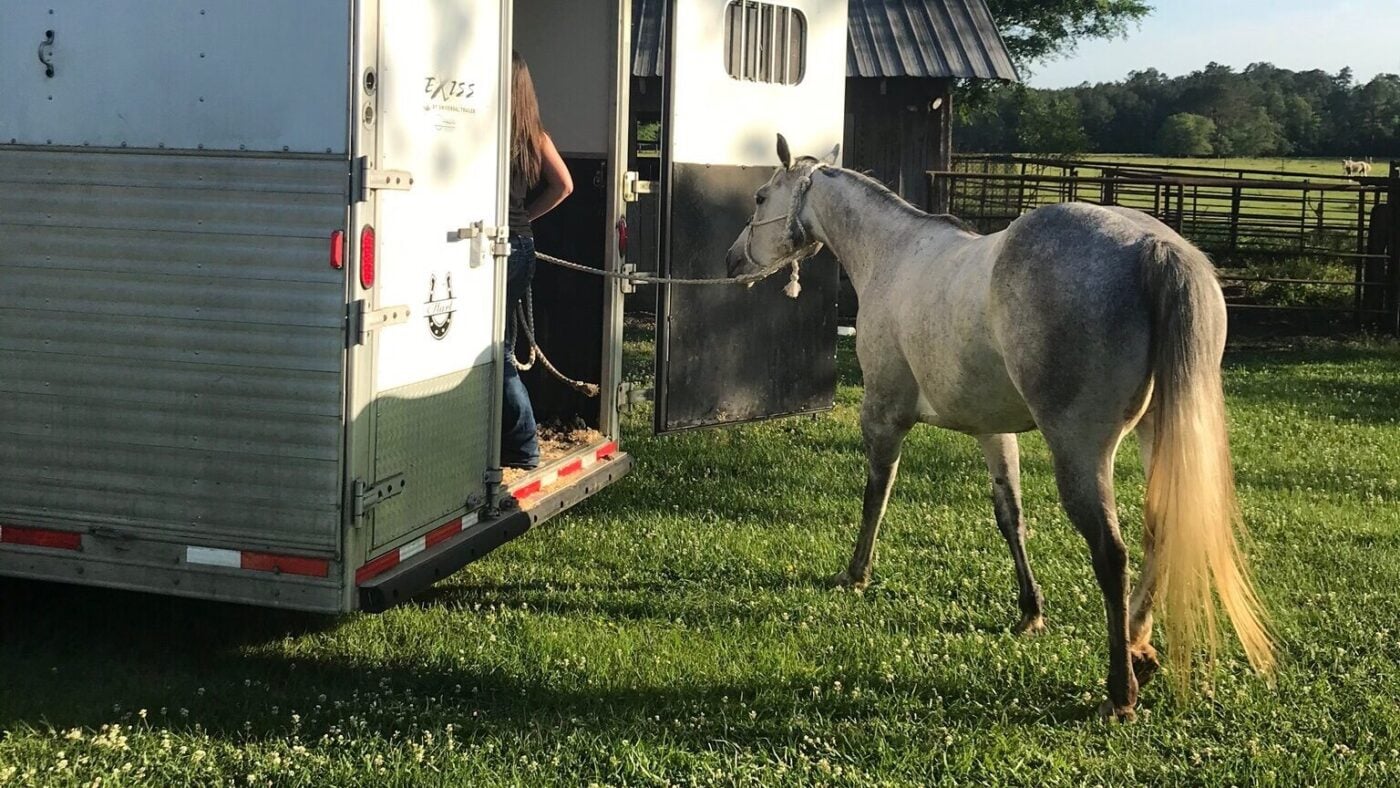
Long trips also raise the risk of shipping fever, especially when a horse travels with his head tied up for hours, since that keeps him from clearing his airways. Room to lower his head, good ventilation, and regular water all help, and they're worth asking about before you book.
Weather matters too. In Louisiana, I always consider the temperature when I plan a haul, since the inside of a metal trailer gets hot fast, and I'd rather leave at sunrise or late in the afternoon. Preparing a horse for a long haul starts weeks before the trip, with conditioning, trailer practice, paperwork, and a plan for water and rest stops.
Whatever you book, get an itemized quote in writing, so you know exactly what the rate covers before your horse steps on the trailer.
About Miles Henry
Racehorse Owner & Author | 30+ Years in Thoroughbred Racing
Miles Henry (legal name: William Bradley) is a professional horseman based in Folsom, Louisiana. He holds Louisiana Racing License #67012 and has spent over three decades managing Thoroughbreds at premier tracks including Fair Grounds, Delta Downs, and Evangeline Downs.
Expertise & Hands-On Experience: Beyond the track, Miles has decades of experience in specialized equine care, covering everything from hoof health and nutrition to training protocols for Quarter Horses, Friesians, and Paints. Every guide on Horse Racing Sense is rooted in this “boots-on-the-ground” perspective.
30 of their last 90 starts
Equibase Profile.

Connect with Miles: