

Last updated: October 16, 2026
Any links on this page that lead to products on Amazon are affiliate links and I earn a commission if you make a purchase. Thanks in advance – I really appreciate it!
Maybe you’re buying your first pair of irons, your knees ache after lessons, or you’ve heard US Equestrian is cracking down on certain stirrups and you’re wondering if yours are still legal. The tack shop wall runs from plain steel irons to flexible joints and magnetic footbeds, and they all promise something different. The right pair depends on how you ride and the boots you ride in.
Below, I’ll compare the main types, explain what the USEF rule means for your irons, give my picks for different jobs, and show you how to size and set your stirrups.
Table of Contents
Best English Stirrups
I haven’t ridden in every one of these irons. My picks are based on each design, its specs, and the competition rules, plus what I’ve learned about grip and fit around my own horses.
| Pick | Why consider it | Main limitation |
|---|---|---|
| Sprenger Bow Balance | Wide, stable footbed for dressage | Expensive, and the joint won’t suit everyone |
| Equinez Flex | Lower-cost option for trying jointed irons | Less solid feel than a one-piece iron |
| Acavallo Arena Alupro | Wide tread and an opening outside safety arm | Release mechanism needs checking and maintenance |
| Aluminum Cage Stirrups | Toe cage intended to limit how far your foot slides forward | Check boot clearance; the cage doesn’t replace proper fit |
| Lift Sports Peacock | Traditional breakaway iron for kids | Not legal at USEF shows from December 1, 2026 |
| Ophena S Pro | Magnet helps keep your foot on the tread | Pricey, and not USEF-compliant for most classes |
Dressage pick: Sprenger Bow Balance
Dressage riders sit deep on a long leg, so they need a steady platform under the foot. The Sprenger Bow Balance has an extra-wide tread with two hardnesses of rubber, a curved shape that hangs ready to pick up, and Sprenger’s four-way joint that absorbs shock and helps your foot release in a fall, according to Sprenger. They’re marked left and right, so make sure they go on the correct side. The trade-off is price, and the jointed feel won’t suit every dressage rider. If you’d rather have a firm platform under your foot, compare it with a rigid wide-tread iron before you spend the extra money.

Budget flexible stirrups: Equinez Flex
These jointed stainless irons have removable rubber pads and a traditional shape that doesn’t look out of place in the hunter ring. For jumpers, the flex can soften landings, and for riders with stiff ankles or knees, it’s an affordable way to find out whether a flexible iron helps before you spend more. If you want a rock-solid feel underfoot, a one-piece iron is the better choice.

Safety stirrups: Acavallo Arena Alupro
The Acavallo Arena Alupro pairs a lightweight aluminum frame with an outside arm designed to open under pressure and help your foot come free. Unlike a bent-leg iron, it has an actual release mechanism. The wide, grippy tread is another reason to consider it, but check the fit with your riding boots and follow Acavallo’s fitting and maintenance instructions. No release design guarantees your foot will come free in every fall.

Trail and endurance option: Aluminum Cage Stirrups
For trail and endurance riding, these aluminum cage stirrups are an option to consider if you want a guard in front of your toes. The cage is meant to limit how far your foot can slide forward, but it doesn’t replace proper fit. Check them with the riding boots you’ll wear, making sure your boot isn’t crowded and you can withdraw your foot easily. Don’t assume the cage makes an otherwise unsuitable boot safe for riding.

Traditional stirrups for kids: Lift Sports Peacock
Peacock irons are still common in lesson barns, and the outside rubber band is designed to come away under pressure and open a gap for the foot. These are stainless steel in 4 1/2 and 4 3/4 inch sizes. But the open hook is exactly what the USEF rule targets, so if your child shows, or might start, skip the Peacock and look at a compliant closed design like the Freejump Soft Up Classic. Talk with your child’s trainer before you buy.

Magnetic option: Ophena S Pro
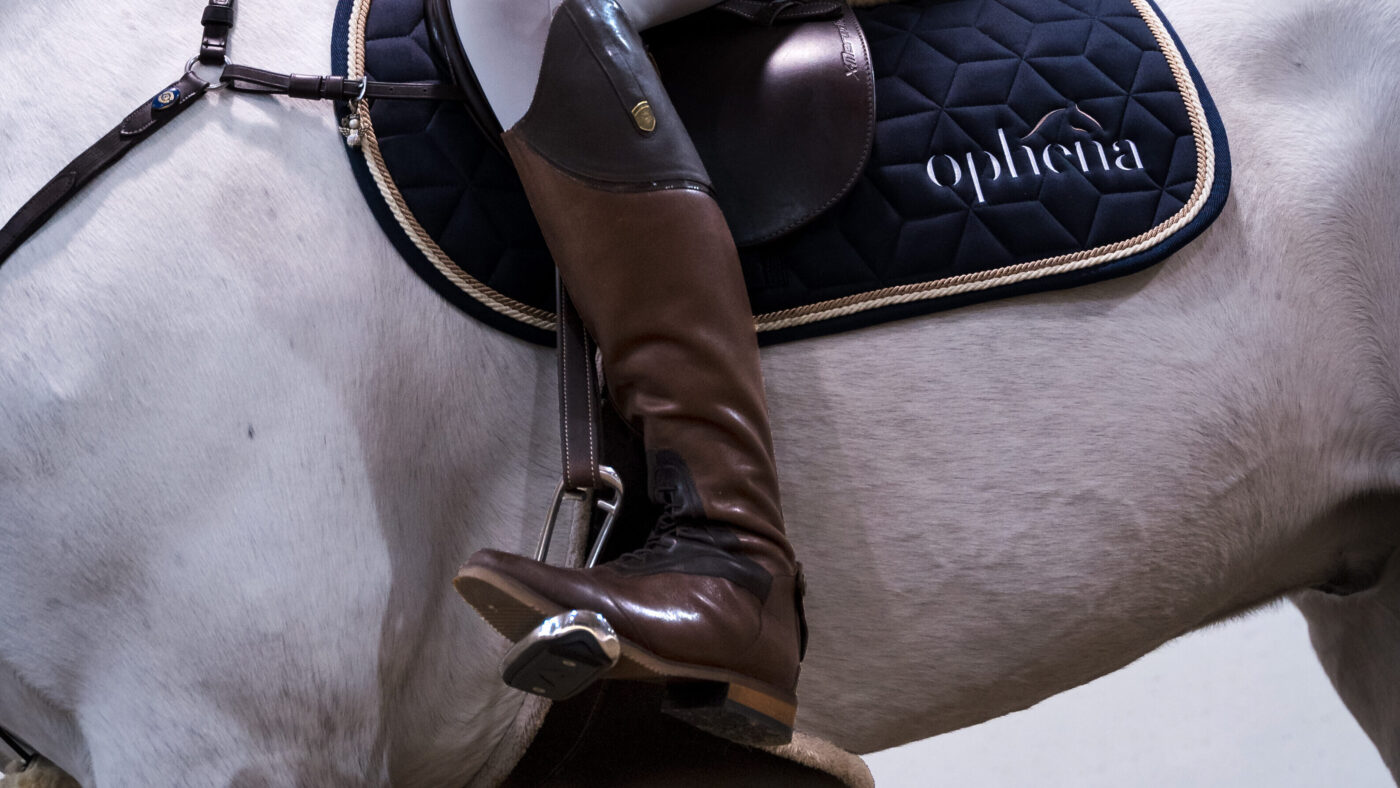
The Ophena S Pro uses a magnetic footbed and compatible insoles. Ophena says the magnet helps keep your foot on the tread, so you’re less likely to lose a stirrup over a fence or when a horse spooks, and the open design is meant to let your foot release in a fall. The catch is the price and the rules: USEF lists it as non-compliant, with the exceptions covered in the rule section above. That makes it a pleasure-riding and FEI jumping stirrup, not one for USEF national classes.
Types of English Stirrups
| Type | What makes it different | Good for |
|---|---|---|
| Fillis | Classic steel iron, weighted at the bottom so it hangs straight | All-around riding, equitation, showing |
| Jointed or flexible | Hinged or rubber-cushioned sides that give with your foot | Riders with sore knees or ankles |
| Offset and angled | Eye or tread set at an angle to the leather | Leg position, dressage, easier pickup |
| Composite | Lightweight polymer, often in colors | Jumpers and riders who want less weight |
| Safety | Breakaway band, bent leg, or release branch | Kids, beginners, cross-country |
| Magnetic | Magnet in the footbed holds a steel insole in your boot | Jumpers and pleasure riders |
| Racing irons | Small, light aluminum, ridden very short | Galloping and racing |
Fillis irons
The Fillis is the traditional English iron, and it’s the one you’ll see in plenty of lesson barns. English stirrups are still called irons because they were once forged from iron, a story I cover in the history of the stirrup. It’s weighted at the bottom, so it hangs straight and is easier to pick up if you lose it. A good stainless Fillis is hard to wear out, but it’s heavier and stiffer than newer designs.
Jointed and flexible irons
Jointed irons keep the Fillis shape but add hinges or rubber-cushioned joints in the sides, so the iron gives a little as your foot moves. The flex can take some of the jar out of posting and landing, which is why riders with stiff ankles or knees often try them. The trade-off is that they can feel less solid underfoot, and the joints add moving parts that need checking.
Offset and angled irons
Offset irons have the eye or the tread set at an angle so the leather and iron sit more naturally against your leg. An offset eye also keeps the leather from twisting. Some irons turn the eye 90 degrees, so the stirrup hangs facing forward and is easier to pick up. The MDC Intelligent Stirrup takes this further and, according to The Chronicle of the Horse, lets you set it in any of three positions: traditional, 45 degrees, or 90 degrees.
Composite irons
Composite irons are made of polymer, sometimes reinforced with aluminum or steel. They’re lightweight and come in many colors, but compare the tread material and pattern rather than choosing by appearance. Cushioning varies by model. Some riders find a light iron harder to pick up once they’ve lost it, since it doesn’t hang as steadily.
Safety stirrups
Safety stirrups are designed to help your foot come free in a fall. The classic Peacock iron has a steel branch on the inside and a heavy rubber band on the outside that’s designed to come away under pressure. Bent-leg irons curve the outside branch forward to give your foot more room to slide out. Newer release designs use a hinged or flexible outside branch that opens under pressure.
Peacock irons have long been the standard for kids, but they’re not as strong as a solid iron, so check the weight rating before an adult rides in them. No safety design guarantees your foot will come free in every fall. Boot fit, the condition of the stirrup, and correct installation still matter.
Magnetic stirrups
Magnetic stirrups, like the Ophena S Pro, have a magnet in the footbed and a steel insole that goes in your boot. The magnet is designed to help keep your foot positioned on the tread, and the open outside branch is meant to let your foot release in a fall. They’re expensive, and they aren’t legal everywhere you show, which I’ll cover next.
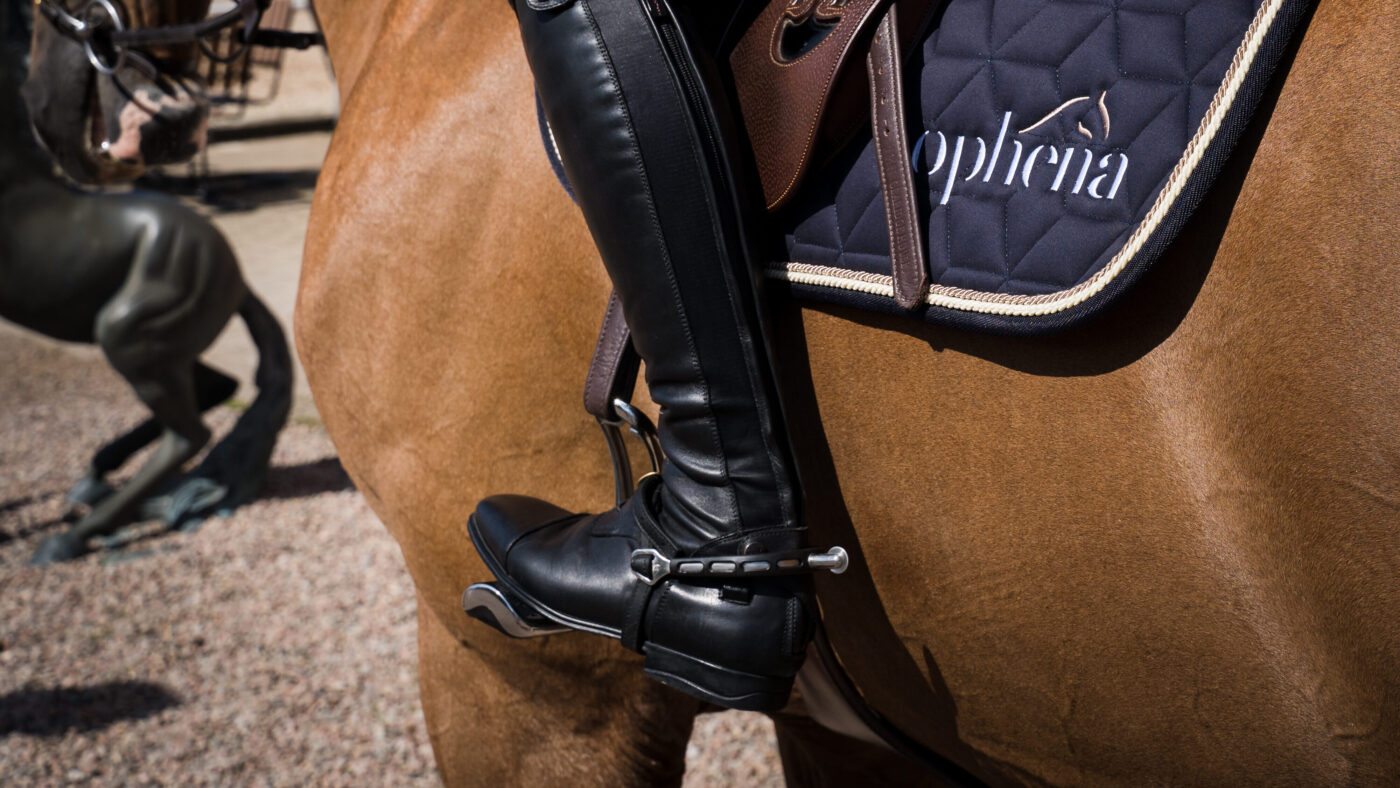
Racing irons
The New USEF Safety Stirrup Rule
US Equestrian’s rule GR801.6 bans any equipment attached to a saddle with a rigid, upward-pointing projection that could catch a rider’s clothing or body, and that includes stirrups. It isn’t a ban on every open stirrup. According to the USEF stirrup resource page, the rule took effect December 1, 2025. During the 2026 competition year, officials are giving only verbal warnings, and enforcement starts December 1, 2026.
USEF judges the outside branch with the release mechanism inactive. Its guidelines allow closed branches, a gap of no more than 1.5 centimeters aligned with the outside of the stirrup, or an open branch that sits inside the stirrup’s plane. Because the geometry matters, go by USEF’s illustrated guide and model list rather than a stirrup’s name. Here’s what it means for the stirrups in this article:
- Traditional Peacock irons are the main design the rule targets, because the open steel hook can catch clothing.
- Ophena S Pro magnetic stirrups are listed as non-compliant for USEF competition, though they’re allowed in FEI Jumping, Para Dressage, and Endurance classes, and for para riders with a dispensation.
- Closed safety designs, such as the Freejump Soft Up Classic, the redesigned LeMieux VectorFlex, and Tech Stirrups Venice, are on USEF’s list of compliant models.
- Standard Fillis, jointed, bent-leg, and composite irons usually have closed branches, but the rule is about the design, so check any iron with a release or an unusual branch.
USEF’s list covers GR801.6 only. Stricter breed or discipline rules still apply, and being listed isn’t an endorsement of the stirrup. If you or your kids show at USEF-rated competitions, or at local shows that follow USEF rules, check the current list right before you buy, since USEF adds models as it reviews them.
How to Size and Fit English Stirrups
Width comes first. A stirrup that’s too narrow can pinch or trap your foot, and one that’s too wide lets your foot slide through. Horse Illustrated recommends a stirrup tread about 1/2 to 3/4 inch wider than your boot at its widest point, which leaves a little room on each side. Treat that as a starting point, not a guarantee, since boot shape, tread, and stirrup design all play a part.
Then set the length. For flatwork, Horse Illustrated’s guide to stirrup length suggests letting your leg hang and adjusting the leathers so the bottom of the iron hits just below your ankle bone. For small jumps, the iron should hit mid-ankle bone, and for bigger fences, the top of the ankle bone. Counting holes doesn’t work well, since the spacing varies between leathers.
A few more details make a difference:
- Put left and right irons on the correct sides. Offset, bent-leg, and many jointed irons are marked L and R. Follow the maker’s markings and instructions, since designs don’t all mount the same way.
- Wear a boot with a heel. A smooth sole and a defined heel help your foot release, and Horse Illustrated warns against riding in sneakers. Matching the boot to the job matters, and paddock boots are the usual choice for English riders.
- Check the safety catch. The leathers hang from the stirrup bar on your English saddle, and the University of Kentucky’s equine safety guide suggests riding with the bar down. Check the bars and any stirrup release according to the saddle and stirrup makers’ instructions. If you’re not sure how a catch should work, have your trainer or saddler look at it.
- Match the tread to your sole. A rubber pad grips well, but a deep-lugged rubber sole can stick to it, so a smoother boot sole works better with a grippy tread.

Can Different Stirrups Help With Knee Pain?
Some riders find a jointed iron, a wider tread, or an angled iron more comfortable, but changing stirrups isn’t a guaranteed fix. Before you buy another pair, have your trainer check your stirrup length and position. If the pain keeps coming back, talk with a doctor or physical therapist rather than assuming your irons are the cause.
About Miles Henry
Racehorse Owner & Author | 30+ Years in Thoroughbred Racing
Miles Henry (legal name: William Bradley) is a professional horseman based in Folsom, Louisiana. He holds Louisiana Racing License #67012 and has spent over three decades managing Thoroughbreds at premier tracks including Fair Grounds, Delta Downs, and Evangeline Downs.
Expertise & Hands-On Experience: Beyond the track, Miles has decades of experience in specialized equine care, covering everything from hoof health and nutrition to training protocols for Quarter Horses, Friesians, and Paints. Every guide on Horse Racing Sense is rooted in this “boots-on-the-ground” perspective.
30 of their last 90 starts
Equibase Profile.

Connect with Miles: