
Last updated: August 7, 2026
Any links on this page that lead to products on Amazon are affiliate links and I earn a commission if you make a purchase. Thanks in advance – I really appreciate it!
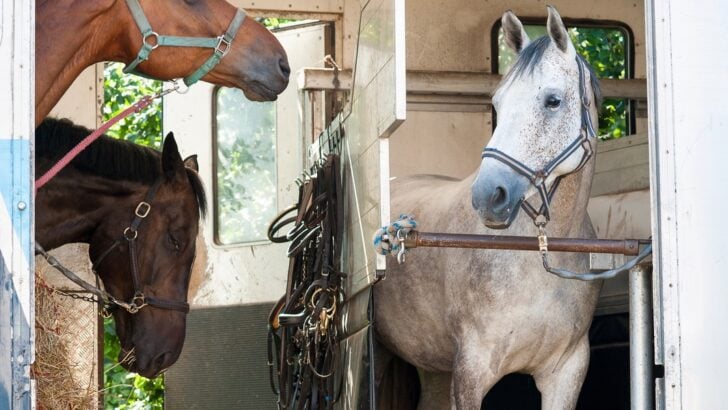
Racehorses run tall, and a trailer that works fine for a 15-hand pleasure horse can be too short for a rangy 17-hand Thoroughbred. Height is not the only measurement that matters, but it is often the first one I check when hauling a taller horse or making sure a trailer will fit into a barn or storage space.
Horse trailer dimensions vary by type, but most standard trailers have an interior height of 7 to 7’6″, with interior and exterior widths commonly falling in the 6- to 7-foot range. Overall length varies widely by trailer type, horse capacity, and configuration. For taller horses, usable interior headroom matters more than a general size label; for barns and storage, measure the trailer’s true exterior height, including roof vents or air-conditioning units.
I pay close attention to trailer height for two real reasons. First, some of my horses are tall enough that headroom genuinely matters – especially if they travel with their heads up. Second, I regularly back my trailer into the barn aisleway, and if I were shopping for a new trailer today, confirming it would fit through that opening would be one of the first things I would verify.
Table of Contents
Understanding the Measurements
Before comparing horse trailer dimensions, it helps to separate the measurements that affect your horse from the ones that affect where you can park, store, and maneuver the trailer.
| Measurement | What It Means | Why It Matters |
|---|---|---|
| Interior Height | Floor to the usable ceiling height inside the horse compartment | Determines available headroom and whether a horse can travel comfortably |
| Exterior Height | Ground to the trailer’s highest fixed point, including roof vents, air-conditioning units, or other roof equipment | Determines whether the trailer clears barn doors, storage openings, canopies, and low obstacles |
| Overall Length | Front-most point of the trailer – including the gooseneck, if equipped – to the rear bumper | Determines storage space, turning room, and maneuverability |
| Stall Length | Front-to-back space available for the horse inside the stall area | Affects fit, comfort, and the horse’s ability to stand naturally |
| Exterior Width | Widest point across the outside of the trailer, excluding tow-vehicle mirrors | Matters for gates, barn aisles, road travel, and storage |
| Interior Width / Stall Width | Usable side-to-side standing room in an individual horse’s stall inside the trailer | Affects comfort, balance, and whether the horse has adequate room for its build |
Horse Trailer Height by Type
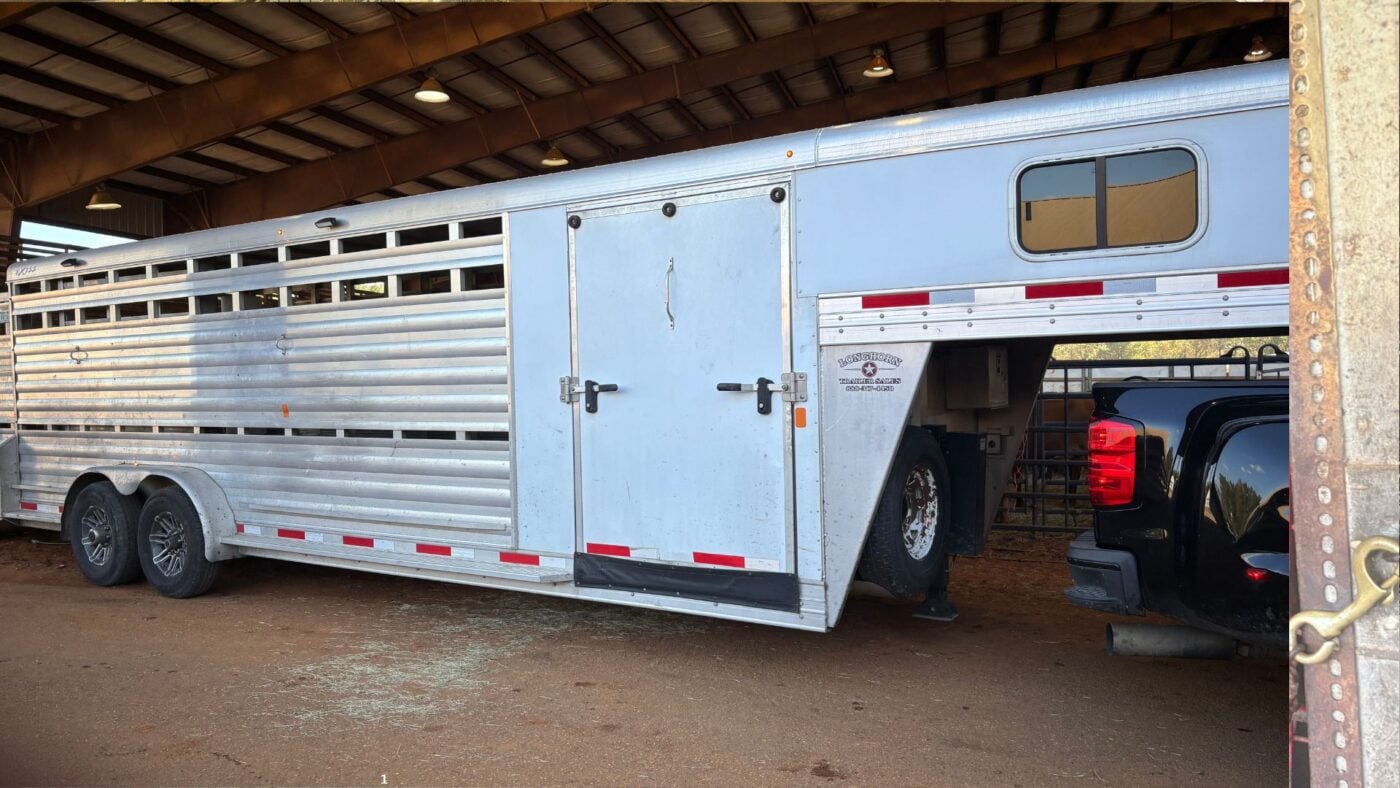
Exact height varies by manufacturer and model, so treat these as planning ranges rather than a promise for any specific trailer – always confirm the actual interior height on the trailer you’re considering, and remember an A/C unit or roof vents can add another 10-12 inches to the trailer’s overall exterior height, which matters for storage and barn clearance even though it doesn’t change the interior headroom your horse actually gets.
| Trailer Type | Typical Interior Height |
|---|---|
| Standard Bumper Pull (2-Horse) | 7′-7’6″ |
| Standard Gooseneck (3-4 Horse) | 7′-7’6″ |
| Gooseneck With Living Quarters | 7’6″-7’8″ |
| Tall/Warmblood Models | 7’8″-8’+ |
Custom-built trailers can be ordered taller than standard if you regularly haul very tall horses, but check trailer height regulations in your state before assuming any height is automatically road-legal – height limits do exist, and they vary.
Matching Trailer Height to Your Horse
As a rough guide, a 7′ trailer generally suits horses up to about 15.2-16 hands, a 7’6″ trailer generally works for horses up to around 16.3-17 hands, and horses over 17 hands typically need a 7’8″ trailer or taller. Treat these as starting points, not guarantees.
Miles’s Take: Hand height alone doesn’t tell the whole story. Two horses at the same height can carry their heads very differently in a trailer – some travel relaxed with a lowered head, others want to travel with their head up the whole way. If your horse is a head-up traveler, especially a tall one, I’d size up rather than assume the “standard” height for that hand measurement is enough. Watch how your actual horse travels before you commit to a trailer height.
For an additional sizing rule of thumb, the University of Maryland Extension recommends allowing at least 10 inches between a horse’s normal resting head height and the trailer ceiling, along with adequate side-to-side room.
Length and Width
Height gets the most attention for horse comfort, but length and width matter for capacity and towing. A standard two-horse bumper pull commonly runs 12-16 feet overall; three- and four-horse goosenecks run considerably longer, often 20-28 feet once you include the gooseneck portion, with living-quarters models running longer still. Interior width for a straight-load stall is commonly 6′-6’8″, with slant-load configurations varying by angle and horse count. As with height, these are planning ranges – confirm the actual dimensions on any specific trailer, especially if you’re matching it to a specific storage space or tow vehicle. See my horse trailer weight guide for how size and weight relate.
Measuring for Barn and Storage Clearance
Measure the trailer while it’s hitched to your tow vehicle – the truck and hitch combination can add height you wouldn’t see measuring the trailer alone. Make sure you’re on level ground when measuring; uneven ground throws off the result. Measure from the tallest point of the roof, including any A/C unit or roof vents, down to where the tires meet the ground.
Then confirm your storage or barn aisleway opening height against that number – I’d want at least 12-18 inches of clearance between the top of the trailer and the top of the doorway, not a tight squeeze. This is exactly the check I do before backing into my own barn aisleway, and it’s the kind of thing that’s easy to overlook when you’re shopping and focused on the trailer’s interior instead of where it actually has to fit.
While you’ve got the tape measure out, check the interior dimensions too, not just the exterior. Outside measurements matter for storage; inside measurements are what actually matter for your horse. Confirm the trailer is as tall as advertised and has enough room for your specific horses to travel safely and comfortably.
FAQs
What are standard horse trailer dimensions?
Standard horse trailer dimensions vary by type. Most have 7 to 7½ feet of interior height, while overall length commonly runs about 12-16 feet for a two-horse bumper pull and 20-28 feet or more for larger goosenecks. Always confirm the actual dimensions of the trailer you are considering.
How tall is a horse trailer?
Most standard horse trailers have 7 to 7½ feet of interior height. Tall-horse and Warmblood models may offer 7½ to 8 feet or more. For barn or storage clearance, measure exterior height from the ground to the highest fixed point, including roof vents and air-conditioning units.
What height trailer does my horse need?
Choose a trailer based on usable headroom and how your individual horse carries its head while traveling – not hand height alone. A tall horse or one that travels with its head up may need 7½ feet or more of interior height.
How much clearance do I need for a barn or storage opening?
Measure the trailer on level ground at its highest point, including roof equipment. For my own barn aisleway, I prefer 12-18 inches of extra space rather than backing under a tight opening; the appropriate margin also depends on the approach, slope, door hardware, and your ability to back accurately.
How long is a standard horse trailer?
A standard two-horse bumper-pull trailer commonly runs about 12-16 feet overall. Larger gooseneck trailers are often 20-28 feet or longer once the gooseneck is included, and living-quarters models can be substantially longer.
Measure Before You Assume
A trailer’s advertised height tells you where to start, not where to stop checking. Measure your actual horse, your actual trailer, and your actual storage space before you assume any of them fit – it’s a five-minute check that prevents a genuinely frustrating surprise on moving day.
Get the height right, and the rest of hauling a tall horse gets a lot less stressful.
About Miles Henry
Racehorse Owner & Author | 30+ Years in Thoroughbred Racing
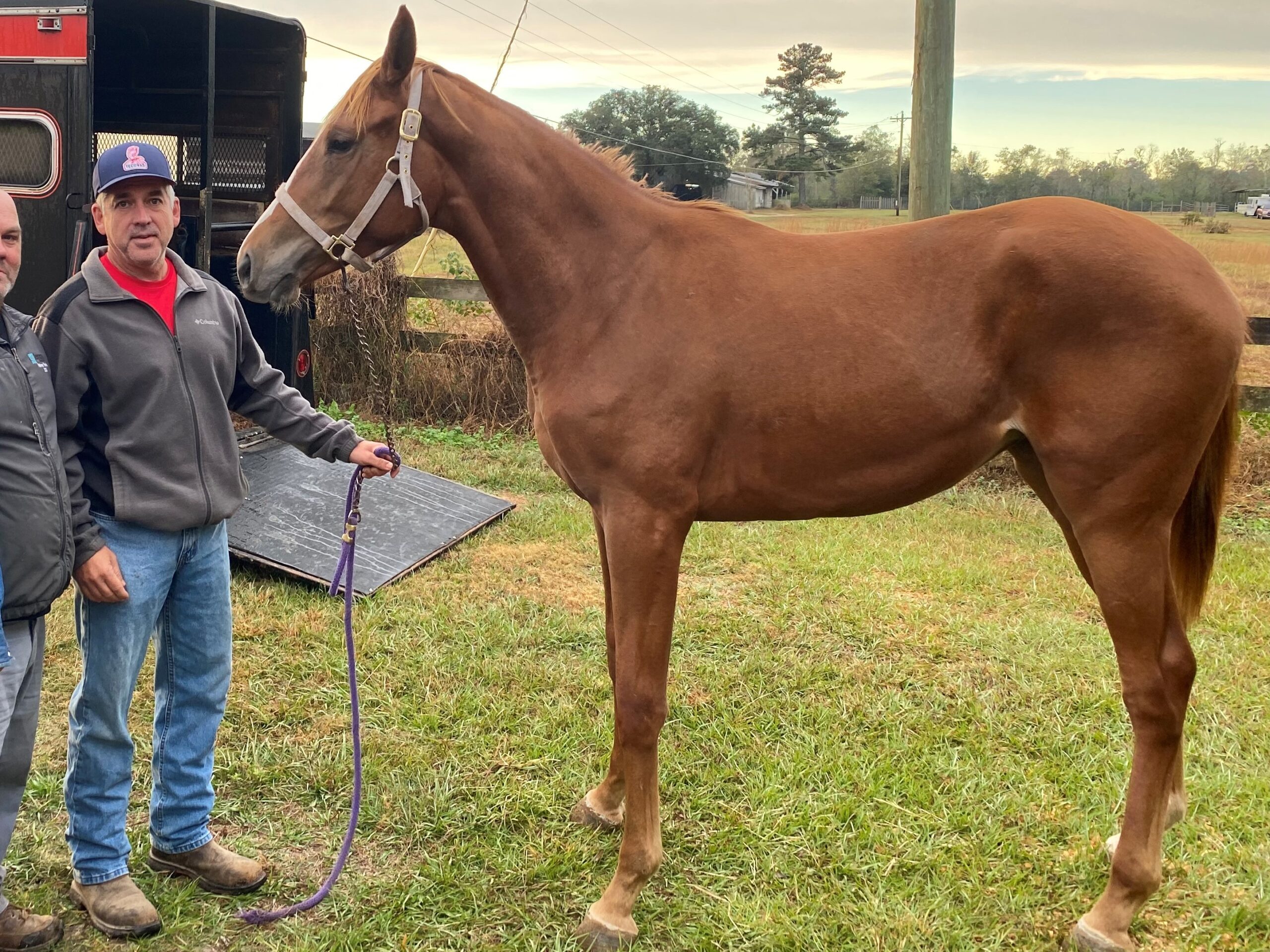
Miles Henry (legal name: William Bradley) is a professional horseman based in Folsom, Louisiana. He holds Louisiana Racing License #67012 and has spent over three decades managing Thoroughbreds at premier tracks including Fair Grounds, Delta Downs, and Evangeline Downs.
Expertise & Hands-On Experience: Beyond the track, Miles has decades of experience in specialized equine care, covering everything from hoof health and nutrition to training protocols for Quarter Horses, Friesians, and Paints. Every guide on Horse Racing Sense is rooted in this “boots-on-the-ground” perspective.
30 of their last 90 starts
Equibase Profile.

Connect with Miles: