
Last updated: September 25, 2026
The first lesson I learned buying Thoroughbred yearlings was that the horse everyone ignores can sometimes be the horse everyone wishes they had bought. But finding that horse takes more than spotting a cheap price tag.
How do you buy Thoroughbred yearlings at auction? Start with the catalog, not the sale barn. Shortlist horses with pedigrees worth investigating, inspect them with an experienced trainer, review available veterinary information, and set your hard limit before the horse enters the ring. The goal isn’t to buy the cheapest yearling. It’s to find one priced below what its pedigree, physical, and risk profile may justify.
I buy on a budget, so I am not trying to find a perfect horse. I am trying to find a horse with enough upside to justify the risk, the training bills, and the chance that I may still be wrong. That starts with understanding where budget buyers can realistically find opportunity.
Who this guide is for: First-time owners, small partnerships, and budget-conscious buyers shopping mainly in the $2,500-$10,000 range at regional or mixed Thoroughbred sales. Who this guide isn’t for: Commercial pinhookers, six-figure investors, or buyers targeting elite select sales. The basic ideas still apply, but the market and risk are different.
Table of Contents
Where to Find Budget Thoroughbred Yearlings
Most of my best buys have come from regional and state-bred sales. There are usually fewer buyers chasing every horse, and the catalogs often include horses bred for the circuit where I expect to run them. I still study major-sale catalogs because they show me what commercial buyers reward, but I don’t need to shop where the biggest checks are written to find a runner.
Once, I bought five yearlings from a private lot for $5,000 total. They were thin, had rain rot, and had no sale-ring presentation behind them. One was Astrology’s Protege. He earned more than $100,000 for me before I lost him in a claiming race, then went on to earn more than $200,000 overall.
What that taught me: Cheap and value aren’t the same thing. I’m not looking for a horse nobody else wants just because he is inexpensive. I want to understand why the market discounted him, then decide whether that risk is one I can live with.
A late birthday, plain presentation, or a minor cosmetic issue that doesn’t appear to affect movement can make a buyer look twice. Poor movement, weak feet, a serious structural concern, or a problem nobody can explain are different. At the budget end, I want a reason for the price—not a mystery.
Actual foaling date matters, too. Thoroughbreds share an official January 1 birthday for racing purposes, but a May-born yearling at a September sale can be months less mature than a January-born horse standing beside him. That does not make a late-born yearling a bargain automatically. I still want him to be proportionate, balanced, and developing well for his age.
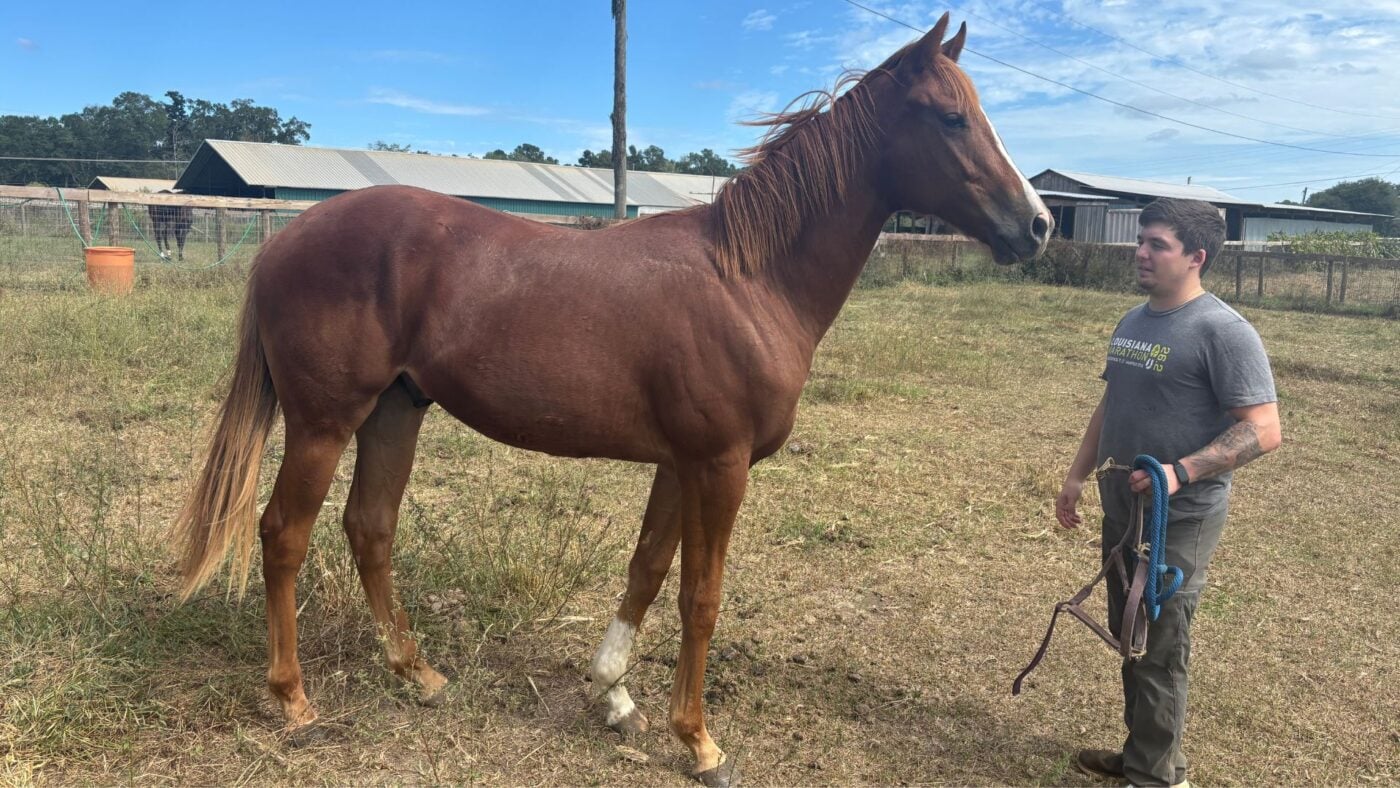
I bought a May-born filly at the Louisiana Thoroughbred sale for $2,500 partly because she looked backward beside older, more mature yearlings. By the time she entered training, that maturity gap was much less noticeable. It doesn’t happen with every late-born horse, but it reinforced my habit of judging the individual instead of letting the foaling date make the decision for me.
Start With the Catalog
I start with the catalog because I don’t want to spend sale day looking at horses that don’t fit what I’m trying to buy. A catalog can’t tell me whether a horse is sound, athletic, or mentally right for the track. It can tell me which horses are worth getting out of the barn to inspect.
I use TrueNicks, Equibase, and the sale catalog as screening tools. A favorable nick rating or sire statistic may give me a reason to look closer. It doesn’t prove a horse is undervalued, and it doesn’t make a physical or veterinary concern disappear.
When I study the pedigree and female family, I want to know whether the immediate dam line has produced runners, whether siblings or close relatives have shown ability, and whether the sire’s horses fit the kind of racing available to me. An unraced dam doesn’t automatically scare me away if the family has consistently produced runners. It just means I need to look harder at the whole picture.
My catalog system is simple:
- Green: I want to inspect this horse.
- Yellow: The pedigree interests me, but the physical needs to be especially good.
- Red X: I don’t need to spend more time unless something changes my mind.
By sale day, I want a list of 15 to 20 horses, not 80. A short list keeps me from getting tired, distracted, or talked into bidding on a horse I never planned to buy.
Get there early if you can: I like to arrive two or three days before a regional sale. The barns are quieter, handlers usually have more time, and I can see a horse more than once without a crowd pushing behind me. A formal showing matters, but a quiet look at a yearling can tell you plenty too.
What to Look for When Inspecting a Yearling
At $2,500-$5,000, I’m not shopping for perfection. I’m looking for a horse whose good points outweigh the risks I can see and the risks I can reasonably investigate.
I pay attention to overall balance, topline, hind end, hoof quality, and how the horse uses himself walking and trotting. A horse that looks weak through the back or doesn’t use his hind end well makes me slow down. Those things don’t let me predict a horse’s future, but they are enough to bring in my trainer and veterinarian before I consider bidding.
A mild turnout or another cosmetic issue may be manageable in some horses, but I don’t judge it from one angle alone. I want to see the whole limb, hoof balance, movement, whether the horse interferes, and what qualified people think. I’ve had similar horses work out twice and not work out once. That’s exactly why I don’t make a blanket rule from one good result.
When I watch a horse move, I want to see him travel freely and comfortably. I watch whether the stride stays even over several passes and whether he looks sore, restricted, or unhappy using himself. A horse tossing his head or resisting a handler may just be stressed by the sale environment, but it can also be a reason to look closer. The sale barn is where I decide which questions need answers before I bid.

| What I see | Why it concerns me |
|---|---|
| Repeated uneven or uncomfortable movement | I can’t buy around pain or ignore a horse that doesn’t look comfortable moving. |
| Poor feet combined with weak limb structure | One issue may be manageable. Several issues together can increase the management risk quickly. |
| A weak topline, poor balance, or a horse that doesn’t use himself well | These are not diagnoses, but they are enough to make me question whether the horse fits what I want to buy. |
| No clear explanation for why the horse is cheap | Cheap is not automatically value. Sometimes the market has seen something I have not. |
| My trainer and veterinarian are both uncomfortable | That is usually more uncertainty than I want to own, especially on a budget. |
Use Your Trainer and Veterinarian
I make the final buying decision, but I don’t make it alone. I bring the pedigree research, value assessment, and a clear idea of what I can afford. My trainer brings an eye for movement, handling, and the problems that can become expensive once a horse enters a training program.
I build the pedigree shortlist first, inspect those horses myself, then ask my trainer to look at the ones I still like. I want to know what they see, whether it appears to affect movement, and whether the concern is serious enough to involve a veterinarian before I bid.
Sometimes my trainer and I see risk differently. A minor cosmetic issue on a cheap horse may be a calculated chance I’m willing to take once I understand it. But I don’t brush aside concerns about pain, repeated uneven movement, poor feet, or serious structural problems because a horse is inexpensive. Those are the issues that can turn a bargain into an expensive mistake.

Should You Review the Veterinary Repository?
Yes, when one is available. At larger sales, a repository may include radiographs, endoscopic videos, and other veterinary records for review by a buyer’s veterinarian. Keeneland’s repository, for example, is designed for licensed veterinarians acting on behalf of buyer-clients. Review Keeneland’s repository information to see how that process works.
At regional sales, the system may be less formal. I still ask what records or images are available and whether an independent veterinarian can review them. At the lower end of the market, you may not have repository access or the budget for a full pre-purchase exam on every horse. That doesn’t make a visual inspection equal to a veterinary exam. It means you need to decide where you are willing to accept risk.
If a horse is serious enough for me to bid on, I decide before the auction which findings would make me pass. That keeps me from rationalizing a concern after the bidding starts.
Before you bid: A sale-barn inspection, trainer opinion, pedigree review, and even a pre-purchase examination cannot guarantee future soundness or racing ability. They help you identify and understand risk before you decide whether the horse is worth owning at that price.
Set Your Number Before the Ring
Before any horse enters the ring, I decide the most I will pay. That number includes the pedigree, physical and veterinary risk, shipping, training costs, and the amount I can afford to lose if the horse never makes it to the races. If bidding goes past that number, I stop.
The number I set before the auction is usually more rational than the number emotion tempts me to reach in the ring. I have walked away from horses I liked because the price got too high. They don’t feel like missed opportunities once I remember that the cost of owning a racehorse starts the next morning, not when the auctioneer says sold.
At regional sales, I usually let bidding develop before I show my hand. If the horse stays under my number, I may step in. If it starts above my limit, I already have my answer. The exact bidding style matters less than refusing to let two other people decide what a horse is worth to you.
A mistake I see new owners make: Auction emotion can turn a $4,000 horse into a $7,000 horse in less than a minute. Competition doesn’t change the horse. Set your limit in the barn, when your thinking is clear, and respect it when the room gets loud.
My “Passed Horses” note: Every time I don’t buy a horse I liked, I write down why I passed and follow what happens next. Most of the time, passing saves me money. Sometimes a horse I passed turns out well, and that teaches me something too. Over time, that list has helped me see whether I’m being too cautious, taking the wrong risks, or getting better at recognizing what I don’t know.
| Expense | Typical planning range | What to know |
|---|---|---|
| Purchase price | $2,500–$10,000 | The hammer price gets attention, but it is only the starting point. |
| Buyer premium or commission | Varies by sale | Read the sale company’s current terms before you bid. |
| Transport | $300–$1,500 | Cost depends on distance, route, timing, and the shipper. |
| Veterinary review or exam | Varies widely | Ask about repository access and independent exam costs before sale day. |
| Monthly training or day rate | About $2,000–$3,000 per month | This is my Louisiana and regional planning range. Major tracks and specialized programs can run higher. |
| Farrier | $60–$150 every 4–6 weeks | Young horses with hoof or limb-management needs may cost more. |
| Routine health care | Varies by program | Budget for vaccines, required testing, veterinarian-directed parasite control, dental care, and ordinary health needs. |
| Insurance | Depends on value and policy | Compare the premium, deductible, exclusions, and insured value before deciding whether coverage fits your situation. |
| Planning total before a first start | Often tens of thousands of dollars beyond the hammer price | Training time, location, veterinary needs, breaks, and how the horse develops create a wide range. Build your own line-item budget before bidding. |
The Horses That Shaped How I Buy

Theory is useful, but the horses teach you faster. These are a few that shaped the way I look for value and manage risk.
The $100,000 horse I claimed for $5,000. Corked sold for $100,000 at the OBS March 2-Year-Olds in Training Sale. I later claimed him for $5,000. That did not teach me that expensive horses are bad buys or that claims always work. It reminded me that a sale price and a horse’s later value can be very different things.
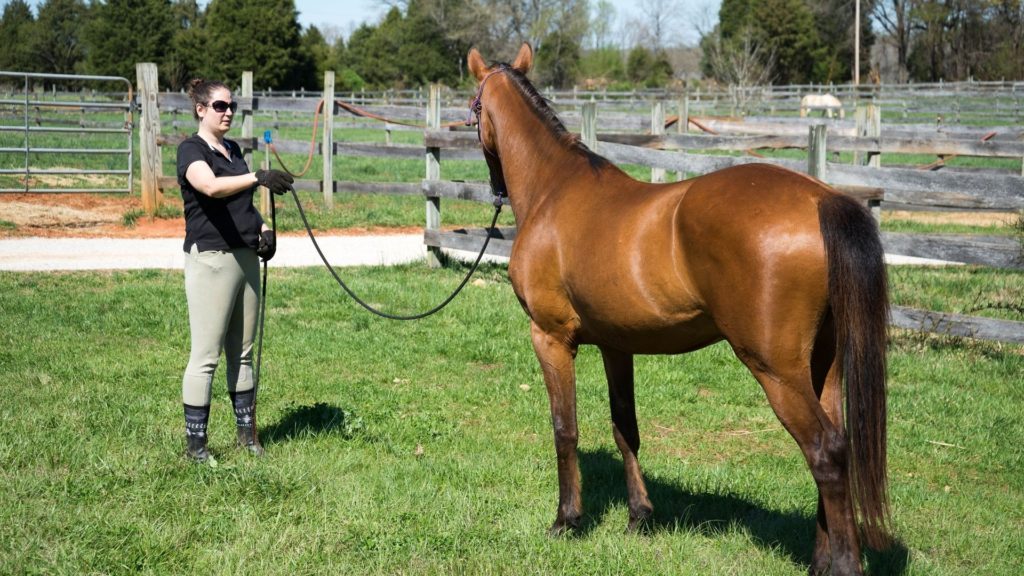
The $2,500 filly with the turned-out foot. She was May-born, small beside the January colts, and had a front foot that turned out. My trainer wanted to pass. I had owned two similar horses before: one won about $80,000, and one never trained. I knew I was taking a real chance, but at $2,500 it was a risk I could live with. She later earned more than $100,000. Her foot never created a functional problem, but that result does not make every turned-out foot a good bet. It taught me to ask whether an issue is affecting the horse, not just whether it looks bad in the barn.
The Goldencents colt still in training. I bought him for $3,500 at a Fasig-Tipton mixed sale. My trainer thought he was slightly base-narrow in front and could have an interference risk. I liked the pedigree, understood the concern, and accepted that he might need careful hoof management. He is still in training and moving well, but I will update this section only when there is a meaningful result to report.
What these horses taught me: Sometimes the discount is justified. Sometimes it isn’t. My job isn’t to prove the market wrong on every horse. It’s to recognize when the risk makes sense for me and when it doesn’t.

Give the Yearling a Fair Start After the Sale
Buying the horse is only the start. Arrange safe transport, follow your veterinarian’s advice on isolation and health monitoring, get the horse’s feet and baseline health checked after he settles in, and give him turnout and quiet handling before there is pressure to move forward.
I don’t rush a yearling because the calendar says he has turned two. Young horses develop on different timelines. My preference is to let a youngster settle, learn manners, and become physically and mentally ready before more demanding work begins. For a realistic breakdown of the expenses that start after the sale, see my guide to the cost of owning a racehorse.
Frequently Asked Questions
Is it realistic to make money buying $2,500-$5,000 yearlings?
It can happen, but I would not buy a yearling expecting a profit. A horse that greatly outperforms its purchase price can help cover several misses, but that takes patience, capital, good management, and luck. Plan for the full cost of ownership, not just the hammer price.
What matters more: pedigree, conformation, or veterinary information?
They work together. Pedigree helps me decide which horses deserve a closer look. Conformation, movement, hoof quality, and available veterinary information help me decide whether the horse is a risk I am willing to take at that price. A strong pedigree does not make a significant physical or medical concern disappear.
Should a budget buyer review the veterinary repository?
Yes, when a repository is available. Ask what information exists, have an independent veterinarian review it when possible, and decide before the auction what findings would make you pass. A visual inspection can be useful, but it is not the same as a veterinary examination.
How do I set a maximum bid on a yearling?
Set it before the horse enters the ring. Start with what you believe the horse is worth to you, then account for physical and veterinary risk, shipping, training costs, and the amount you can afford to lose if the horse never races. If bidding goes beyond that number, walk away.
Is a late-born yearling automatically a disadvantage?
No. A late-born yearling may simply look less mature beside an older horse at the same sale. Some catch up well and some do not, so I look at the individual horse’s proportions, development, movement, and pedigree rather than the foaling date alone.
Keep Reading
Tools I Use for Pedigree Research
About Miles Henry
Racehorse Owner & Author | 30+ Years in Thoroughbred Racing
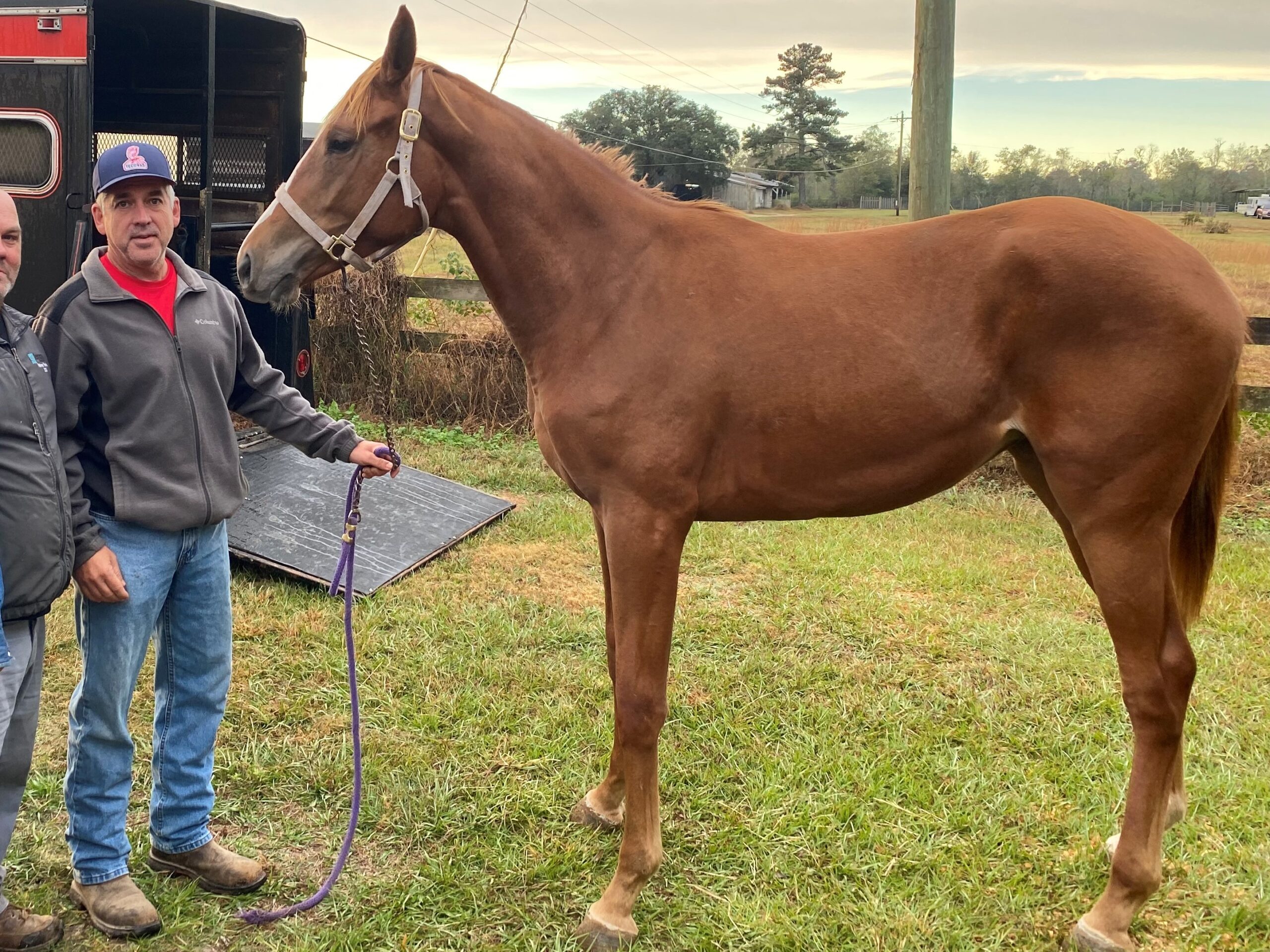
Miles Henry (legal name: William Bradley) is a professional horseman based in Folsom, Louisiana. He holds Louisiana Racing License #67012 and has spent over three decades managing Thoroughbreds at premier tracks including Fair Grounds, Delta Downs, and Evangeline Downs.
Expertise & Hands-On Experience: Beyond the track, Miles has decades of experience in specialized equine care, covering everything from hoof health and nutrition to training protocols for Quarter Horses, Friesians, and Paints. Every guide on Horse Racing Sense is rooted in this “boots-on-the-ground” perspective.
30 of their last 90 starts
Equibase Profile.

Connect with Miles: