
Last updated: September 13, 2026
The 2027 Road to the Kentucky Derby is off and running, and it’s already crowded at the front. Four different colts have won four different races in the last two months, and we’re still just getting started.
No 2-year-old has separated himself yet. The Good Life and Salahudin are carrying the most momentum right now – both unbeaten, The Good Life off his Grade 1 Hopeful win and Salahudin as the first colt to actually bank Kentucky Derby points – but Booked and Twinkle Town are right there too. None of them has answered the two-turn question that actually decides who’s still standing in May.
That’s the whole story right now: plenty of speed, not much proof yet. Here’s how the group’s shaping up, and what I’m watching from here.
Table of Contents
How Saratoga’s Juvenile Stakes Shaped the Early Derby Picture
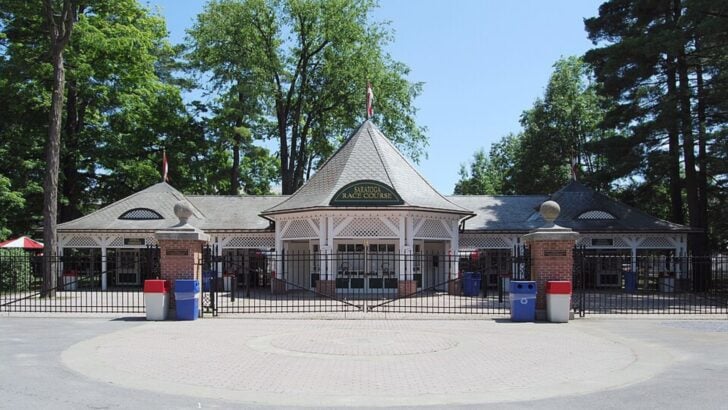
Saratoga runs three marquee stakes for 2-year-olds every summer – the Sanford, the Saratoga Special, and the Hopeful – and only four horses in the race’s long history have ever swept all three, most recently City Zip in 2000. No horse swept the three races in 2026; Booked, Twinkle Town, and The Good Life each won one leg.
| Race | Date | Winner | Beyer | Notes |
|---|---|---|---|---|
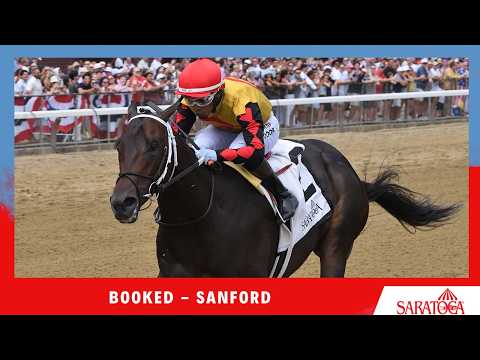
| Sanford Stakes (G3) | July 4 | Booked | 85 | Won wire to wire by six lengths |
| Saratoga Special (G2) | Aug. 1 | Twinkle Town | 88 | Won wire to wire by six lengths; Booked ran second |
| Hopeful Stakes (G1) | Sept. 6 | The Good Life | Not yet available | Won wire to wire by four lengths as the 5-2 favorite; Mystrix ran second, Booked third, Twinkle Town didn’t start |
What the Hopeful Result Means for the 2027 Derby Trail
The Grade 1 Spendthrift Farm Hopeful Stakes closed out Saratoga’s juvenile trio on Sept. 6, and it didn’t go the way most people watching the Booked-Twinkle Town rivalry expected. Twinkle Town wasn’t entered in the Hopeful, so the anticipated rematch with Booked didn’t happen. Booked broke a step slow, worked his way into a ground-saving third, and could not threaten The Good Life in the stretch.
The winner was The Good Life, a Life Is Good colt trained by Brad Cox for WinStar Farm, First Go Racing, and CHC, Inc. Sent off as the 5-2 favorite off a single maiden win, he broke on top from the rail, set honest fractions of 22.71 and 45.40, and drew off under Manny Franco to win by four lengths in 1:24.08 for seven furlongs – remaining perfect through two career starts. Danny Gargan’s Mystrix ran second, with Booked getting up for third.
My early read on The Good Life: he didn’t inherit a collapsing pace. From the rail, Manny Franco let him use his natural speed, but the colt was still traveling comfortably through that 22.71 opening quarter and 45.40 half before finding more in the lane. At this stage, he’s shown he can break, make the lead, settle into a rhythm, and finish strongly over seven furlongs. The next question is the important one: can he rate, handle two turns, and carry that finish around a second bend? Brad Cox’s decision between the Breeders’ Futurity and the Champagne should tell us which question he wants answered next.
Franco’s read afterward is worth noting for anyone tracking this horse toward next spring: “He’s got stamina. In the gallop out, he kept going forward. He’ll go further than that.” Cox mentioned the Grade 1 Breeders’ Futurity at Keeneland (a two-turn mile and a sixteenth) or the one-turn Champagne at Belmont, both on Oct. 3, as his likely next targets – the same “does he really want two turns” question every young sprinter-turned-Derby-hopeful eventually has to answer.

Miles’s Take: The Hopeful was a good reminder of how quickly the early Derby conversation changes. Everyone – myself included – was set up to watch a Booked-Twinkle Town rematch. Twinkle Town wasn’t in the gate, Booked ran third, and The Good Life walked off with the biggest Saratoga juvenile race of the summer. Twinkle Town not starting doesn’t, by itself, tell us why he missed the race – but it’s a good reminder of how fast the early storyline can turn over.
The Iroquois Opens the Points Era
While Booked, Twinkle Town, and The Good Life were building their story at Saratoga, an entirely separate group of 2-year-olds was doing the same at Churchill Downs. On Sept. 12, the Grade 3 Iroquois Stakes kicked off the official 2027 Road to the Kentucky Derby points series – the first race all year where a result actually counts toward qualifying for next May’s field, rather than just building a case.
The winner was Salahudin, a Bob Baffert-trained son of Uncle Mo who spotted the field several lengths at the start, swept four wide around the turn, and ground out a half-length win over He Is No Lie in 1:36.54 for the mile. It was his third career start and third win. Regular rider Florent Geroux was sidelined after a fall two days earlier, so Jose Ortiz picked up the mount instead. “He broke a little slow again today but got into a comfortable rhythm,” Ortiz said afterward. “He’s a big horse and takes a little time to get going into his best stride. But once he did, he kept finding more to get to the front.” Caribbean Life closed from last under Flavien Prat to grab third, and Baffert called the colt’s progression “perfect” through three starts.
None of Booked, Twinkle Town, or The Good Life were entered in the Iroquois. The field came almost entirely out of Churchill Downs, Ellis Park, and Kentucky Downs – a completely separate pool of horses from the one that’s been developing at Saratoga all summer. That’s worth remembering before ranking the two groups against each other this early: they haven’t faced off, and won’t necessarily meet again before next spring’s prep races force the issue.

| Horse | Points | Iroquois Finish |
|---|---|---|
| Salahudin | 10 | 1st, by a half-length |
| He Is No Lie | 5 | 2nd |
| Caribbean Life | 3 | 3rd, closed from last |
| Real Goodbar | 2 | 4th |
| Real Gone | 1 | 5th |
The points trail keeps moving fast from here. Oct. 3 brings three Grade 1 preps on the same day – the Breeders’ Futurity at Keeneland, the Champagne at Belmont Park, and the American Pharoah at Santa Anita – the next three races on the official Road to the Kentucky Derby schedule. Brad Cox has already named the Breeders’ Futurity and the Champagne as the two most likely next stops for The Good Life. Whether any of the Saratoga trio show up in Kentucky, New York, or California that day will say a lot about how their connections see them fitting into the bigger picture.
Booked and Twinkle Town: A Rivalry Taking Shape
Booked has done the early running. He debuted second at Churchill Downs on April 28, broke his maiden at Saratoga on June 7, and NYRA reported that he broke sharply and wired the Sanford field on July 4 in 1:11.24 for a career-best 85 Beyer. The thing I pay attention to with a young horse like Booked isn’t just the margin – it’s whether he did it easily or had to be pushed to get there.
A six-length wire-to-wire win suggests Booked had plenty of early speed and was never seriously pressured late – though the question is whether that same speed holds up when the races stretch out and the opposition gets deeper. Trainer Steve Asmussen, who also developed Booked’s sire Yaupon into a two-time Saratoga graded winner, put it simply afterward: “He’s bigger than Yaupon was at this same stage. I think we’ve seen progression in his three races.”
Twinkle Town flipped the script in the Saratoga Special on Aug. 1 – and the way he did it matters more than the final margin. According to NYRA’s race coverage, McPeek had actually planned to test whether Twinkle Town could rate off the pace, but both Booked and Flight Command had trouble at the start, and Ortiz wasn’t going to give up the advantage. “I broke better than [Booked] and was much faster than [Flight Command], so I just let him do his thing,” Ortiz said.
Twinkle Town went straight to the front, shrugged off pressure from a rushed-up Booked, and drew off to win by 6, wire to wire, in 1:16.44 for an 88 Beyer – three points sharper than Booked’s Sanford number. That’s not nothing. A jump like that from one start to the next tells you the horse is still figuring out how good he is, which is exactly the kind of horse you want to keep watching. McPeek himself raised the question every Derby-minded connection eventually has to answer: “I think he is definitely a two-turn horse, but we’re going to have to retool him a little bit at the end of the year or later in the year into next year.”
What I found interesting: Watch the two replays back to back and the early fractions are worth noting. Twinkle Town went 21.82 and 45.26 in the Saratoga Special, compared with Booked’s 21.96 and 45.64 in the Sanford, while carrying his speed an extra half-furlong. That doesn’t make the races directly comparable – different days, surfaces, fields, and race shapes matter – but it helps explain why Twinkle Town’s Special was more than a routine wire-to-wire win.
Asmussen didn’t make excuses, and he confirmed the fractions were legitimate without anyone asking him to: “He didn’t break great, they went 21-and-4, what do you think he went? He’s a solid horse, but a good horse won. That horse ran great. Times aren’t yielding what he just did today.” Booked broke somewhat slowly, chased the whole way, and simply couldn’t get to a horse that never let him in.

There’s a real storyline behind Twinkle Town’s connections, too. He’s owned by 4G Racing and the Gasaway family – the same connections behind 2024 Kentucky Derby winner Mystik Dan – with Ken McPeek involved in developing both horses. McPeek has been through this stage before: he trained 2024 Kentucky Derby winner Mystik Dan, 2020 Preakness winner Swiss Skydiver, and 2002 Belmont Stakes winner Sarava. That experience doesn’t make Twinkle Town a Derby horse, but it means his connections understand the decisions that come with managing a talented 2-year-old through the winter.
I own a Goldencents colt myself – the same sire as Mystik Dan – so I’ve got my own small window into the kind of physical and mental traits that family can produce. That doesn’t tell us what Twinkle Town will become, but it’s one reason I pay attention when McPeek and these connections have a young colt moving forward.
Horses Who Could Still Improve
How’s Al Today ran a competitive third in the Saratoga Special after rallying from well back in his debut win – that running style, closing ground rather than needing the lead, is often the profile that actually improves with more distance, since he’s already shown he doesn’t need to be on top to win.
Flight Command is the harder one to read. He went off as the beaten favorite, and it didn’t work out – he stumbled at the start and never got comfortable. “He broke poorly and after that he never got comfortable,” jockey Flavien Prat said. “After the start, it was a scramble.” That’s a rough trip more than a bad performance, and worth remembering before writing him off. He’s also a first-crop son of Flightline, so he’ll draw attention regardless – but I’d give more weight to his next clean trip than to his sire line at this stage. I’d want to see him break cleanly once before drawing any real conclusion either way.
Rasasi and Uncle Kef both filled out the Special’s field without threatening the top two. Neither made a strong case that day, but both are still early in their development – I’d want to see a real step forward from either before moving them near the top of this group.
How Horsemen Evaluate an Early Derby Prospect
The final time and the margin are what shows up in the chart. What actually matters more, this early, is harder to put in a box:
- Professionalism: Did the horse relax and rate, or fight the rider the whole way? A colt who’s already professional at 2 tends to handle the grind of a full 3-year-old campaign better than one who’s just faster than everybody else right now.
- How he wins, not just that he wins: A wire-to-wire win with speed in reserve tells you something different than a horse who had to be niggled along to hold on. To my eye, Twinkle Town’s Saratoga Special looked more like a colt using his natural speed comfortably than one being pushed hard to hang on.
- Whether the trip explains the result: A bad start or traffic trouble can bury a genuinely good performance in the chart. That’s exactly why I’m not writing off Flight Command off one bad break.
- Pedigree and physical maturity: Does the horse’s body and breeding suggest he’ll get two turns and a mile and a quarter, or does he look like a pure sprinter who peaked early? That question doesn’t get answered in August – it gets answered in the winter.
Why 2-Year-Old Form Is a Guide, Not a Guarantee
Every year, a Saratoga standout gets treated like a settled Derby favorite in August, and most years the actual Derby field looks nothing like anyone predicted from summer form alone. The number that actually captures this: since the Breeders’ Cup Juvenile began in 1984, only two winners have gone on to win the following year’s Kentucky Derby – Street Sense (2006-07) and Nyquist (2015-16) – out of more than 40 runnings. That doesn’t mean juvenile success doesn’t matter. It means development matters more than a single August or November snapshot.
I learned this lesson firsthand last year watching Ted Noffey, a colt who looked like exactly the kind of early Derby pick worth building a season around – he won the Hopeful by 8 1/2 lengths, then added the Breeders’ Futurity and the Breeders’ Cup Juvenile to finish a perfect 4-for-4 and take home the Eclipse Award as champion 2-year-old male. He was the clear Derby favorite in the winter Future Wagers. Then in January, bone bruising ended his Triple Crown campaign before it ever started. He never made it to the starting gate in Louisville at all. That’s not really a story about picking the wrong horse – by every measure anyone had at the time, he was the right one. It’s a reminder that a lot can happen between August and May that has nothing to do with talent.
Miles’s Take: I like watching this stretch of the calendar as much as anyone, but I’ve learned not to fall in love with a 2-year-old off one or two sprints. A colt who wins going 6 furlongs in August still has to prove he wants two turns and 10 furlongs on the first Saturday in May. Some do it easily. A lot of talented sprinters simply aren’t built for that stretch out, and you don’t find out which is which until winter and spring prep season actually tests it. You’re not trying to find the finished horse in August. You’re trying to recognize the one with the tools to keep getting better.
From here, the calendar moves fast: the Oct. 3 triple of Grade 1s, then the Breeders’ Cup Juvenile on Oct. 30 at Keeneland, then the winter and early spring Road to the Kentucky Derby points races that actually determine the 20-horse Derby field the following May. Booked, Twinkle Town, The Good Life, Salahudin, and the rest of this group still have a long way to go before the Derby field takes shape – but the next starts, especially at a mile and beyond, will tell us far more than summer sprint form alone. We’ll keep tracking them as the picture develops.
FAQs: 2027 Kentucky Derby Prospects
Who won the 2026 Sanford Stakes?
Booked won the Grade 3 Sanford Stakes at Saratoga by six lengths on July 4, 2026, running 6 furlongs in 1:11.24 for an 85 Beyer Speed Figure, trained by Steve Asmussen.
Who won the 2026 Saratoga Special?
Twinkle Town won the Grade 2 Saratoga Special wire to wire on Aug. 1, 2026, defeating Sanford winner Booked, who ran second. Twinkle Town earned an 88 Beyer Speed Figure for trainer Ken McPeek.
Who won the 2026 Hopeful Stakes?
The Good Life, trained by Brad Cox, won the Grade 1 Spendthrift Farm Hopeful Stakes at Saratoga on Sept. 6, 2026. The Life Is Good colt set the pace from the rail under Manny Franco and drew off to win by four lengths in 1:24.08 for seven furlongs. Mystrix finished second and Booked was third; Twinkle Town was not entered.
Has any horse ever swept all three Saratoga juvenile stakes?
Four horses have swept Saratoga’s Sanford, Saratoga Special, and Hopeful in the same season, most recently City Zip in 2000. No horse swept the series in 2026: Booked won the Sanford, Twinkle Town won the Saratoga Special, and The Good Life won the Hopeful.
Who won the 2026 Iroquois Stakes?
Salahudin, a Bob Baffert-trained son of Uncle Mo, won the Grade 3 Iroquois Stakes at Churchill Downs on Sept. 12, 2026, rallying from off the pace to beat He Is No Lie by a half-length in 1:36.54 for the mile. The win kept Salahudin perfect through three career starts and earned him the first 10 points of the 2027 Road to the Kentucky Derby points series.
How does the Road to the Kentucky Derby points system work?
Starting with the Iroquois Stakes each September, a series of graded prep races award points to the top five finishers on a sliding scale, beginning at 10-5-3-2-1 and increasing in the final prep races closer to the Derby. The 20 horses with the most accumulated points by the end of the last spring prep qualify for the 20-horse Kentucky Derby field the following May.
What should horsemen look for in a Saratoga 2-year-old Derby prospect?
Professionalism under pressure, how a horse wins rather than just that he wins, whether a poor trip explains a bad result, and physical and pedigree signs that suggest he’ll handle two turns and a mile and a quarter next spring.
Does winning at Saratoga as a 2-year-old predict Kentucky Derby success?
Not reliably. Since the Breeders’ Cup Juvenile began in 1984, only two winners – Street Sense and Nyquist – have gone on to win the following year’s Kentucky Derby, out of more than 40 runnings. Summer 2-year-old form is a starting point, not a guarantee.
The Derby picture will change a dozen times before the first Saturday in May – it’s already changed twice: once between the Special and the Hopeful, and again when Salahudin won the Iroquois while the entire Saratoga group sat it out. That’s what makes watching these 2-year-olds worth the trouble: you’re not trying to find the finished horse in August or September, you’re trying to recognize the one with the tools to still be improving next spring.
About Miles Henry
Racehorse Owner & Author | 30+ Years in Thoroughbred Racing
Miles Henry (legal name: William Bradley) is a professional horseman based in Folsom, Louisiana. He holds Louisiana Racing License #67012 and has spent over three decades managing Thoroughbreds at premier tracks including Fair Grounds, Delta Downs, and Evangeline Downs.
Expertise & Hands-On Experience: Beyond the track, Miles has decades of experience in specialized equine care, covering everything from hoof health and nutrition to training protocols for Quarter Horses, Friesians, and Paints. Every guide on Horse Racing Sense is rooted in this “boots-on-the-ground” perspective.
30 of their last 90 starts
Equibase Profile.

Connect with Miles: