Last updated: May 25, 2026
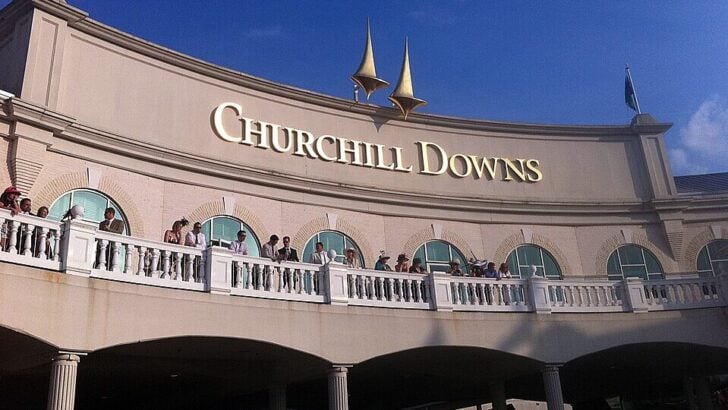
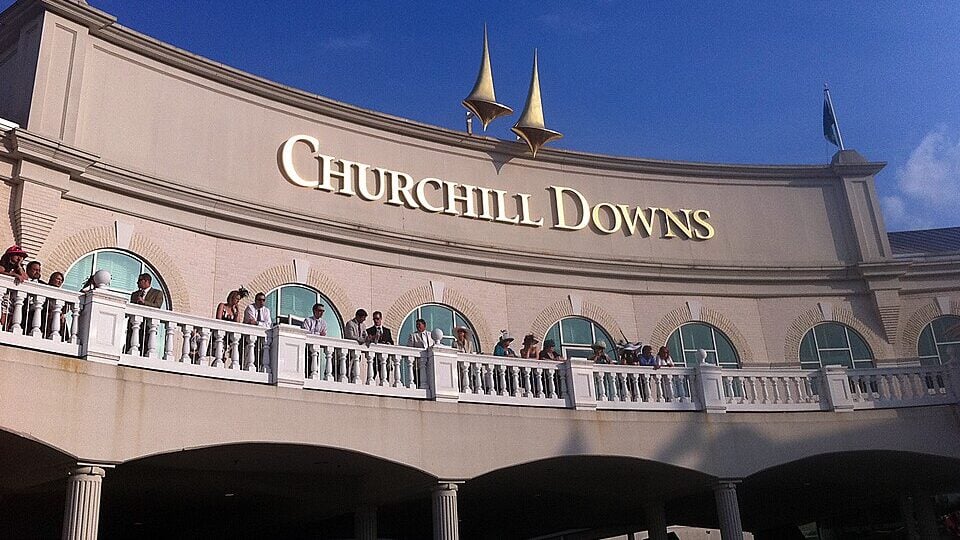
The Kentucky Derby is the single most famous horse race on Earth — a 1¼-mile showdown for three-year-old Thoroughbreds held the first Saturday in May at Churchill Downs in Louisville, Kentucky. It has run every year since 1875. Roughly 150,000 people attend in person, millions more watch on television, and the two minutes of racing produce more genuine drama than most sports generate in a season.
This Kentucky Derby guide covers the race’s full history, the traditions that make it iconic, what first-time attendees need to know, and how to handicap and bet the race based on 30 years of firsthand experience.
Kentucky Derby at a glance:
- When: First Saturday in May every year
- Where: Churchill Downs, Louisville, Kentucky
- Distance: 1¼ miles (10 furlongs)
- Purse: $5,000,000 — winner receives $3.1 million
- Nickname: “The Run for the Roses”
- Record time: 1:59.40 — Secretariat (1973)
- Average attendance: 150,000+
The Kentucky Derby is the first leg of the Triple Crown series. A horse must also win the Preakness Stakes and Belmont Stakes in the same season to claim the Triple Crown — only 13 horses have ever done it.
I’ve spent more than 30 years in Thoroughbred racing from two very different angles. As a Louisiana-licensed owner (License #67012), I’ve campaigned horses like Mickey’s Mularkey, Corked, and Astrology’s Protege, and lived through the sport’s highs and lows more times than I can count. My horses hit the board roughly 30 percent of the time — enough to teach me what truly separates a contender from the also-rans. I’ve also been to the Derby as a fan, arriving before 7:30 AM to stake out a spot in the infield, navigating the betting lines, and staying through the post-race flood of humanity. This guide blends both perspectives.
A personal note on bloodlines: I recently purchased a big chestnut yearling with a flaxen mane and tail, sired by Goldencents — the dual Breeders’ Cup Dirt Mile champion and father of Mystik Dan, the 2024 Kentucky Derby winner. His grandsire is Into Mischief, the breed-shaping stallion who produced Sovereignty, the 2025 Kentucky Derby winner. In other words, this colt carries two consecutive years of Derby-winning bloodlines, and I’m living that journey from the ground up. That’s what keeps people in this sport.
About this guide: Written by Miles Henry, Louisiana-licensed racehorse owner with 30 years of experience at Fair Grounds, Evangeline Downs, and Delta Downs. Derby attendance and infield experience are firsthand. Historical records sourced from Kentucky Derby Museum and Churchill Downs official records. All statistics verified against official results.
Table of Contents
A History Built Over 150 Years
In 1875, Meriwether Lewis Clark Jr. — grandson of explorer William Clark — traveled to Europe and returned inspired by England’s Epsom Derby. He founded the Louisville Jockey Club and built Churchill Downs, drawing roughly 10,000 spectators to watch Aristides win the inaugural Derby at 1½ miles. The distance was shortened to the current 1¼ miles in 1896, creating the stamina test we know today. The Derby has run every year since — through two world wars, the Great Depression, and everything else the 20th and 21st centuries have produced.
The Derby is now the first jewel in the Triple Crown. Only 13 horses in history have swept the Derby, Preakness, and Belmont — most recently Justify in 2018. The race draws the best three-year-olds in the world to a single starting gate, with 20 horses and 20 different stories converging on the first Saturday in May.
Key Moments That Shaped the Race
1875 — The First Running. Fifteen horses competed over 1½ miles. Aristides won, ridden by Oliver Lewis, one of 13 Black jockeys in that inaugural field. The event established the Derby’s tradition of elegance and spectacle from day one.
1896 — Distance Changed to 1¼ Miles. This modification created the modern test for three-year-old Thoroughbreds, balancing speed with stamina and emphasizing the importance of breeding and pedigree in producing champions.
1919 — Sir Barton Becomes the First Triple Crown Winner. Though the term wasn’t coined until 1930, Sir Barton swept the Derby, Preakness, and Belmont — setting a benchmark that only a dozen horses have matched since.
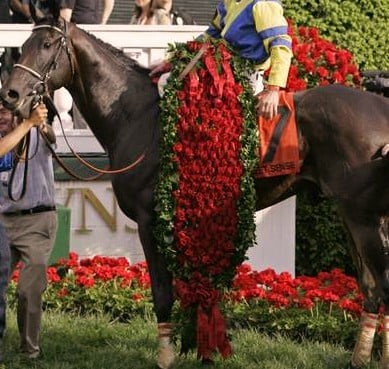
1932 — The Rose Garland Tradition Codified. The winner’s blanket of 554 red roses became official, with one rose representing each running of the race. The garland takes over eight hours to hand-sew and remains the Derby’s most recognizable symbol.
1973 — Secretariat’s Eternal Record. Secretariat shattered the Derby record with a time of 1:59.40 — still unbroken after more than 50 years. He went on to win the Triple Crown, with his 31-length Belmont victory widely considered one of the greatest athletic performances ever recorded.
2015 — American Pharoah Ends 37-Year Drought. After nearly four decades without a Triple Crown winner, American Pharoah swept all three races under trainer Bob Baffert, reigniting the country’s passion for horse racing.
2024 — Mystik Dan’s Photo Finish. Goldencents’ son won by a nose over Sierra Leone in one of the closest finishes in Derby history. As the owner of a yearling by the same stallion, watching that photo finish was particularly memorable — it confirmed the strength of this bloodline in real time.
2025 — Sovereignty’s Muddy Triumph. Into Mischief’s son rallied from eighth place to win on a sloppy track at 9-1 odds, earning $5.8 million. He went on to win the Belmont Stakes, making his grandsire a Derby-producing line two consecutive years. My colt descends from the same lineage.
Derby Records and Milestones
| Category | Record Holder | Details |
|---|---|---|
| Fastest Time | Secretariat | 1:59.40 (1973) — still stands after 50+ years |
| Most Jockey Wins | Eddie Arcaro, Bill Hartack | 5 wins each |
| Most Trainer Wins | Ben Jones | 6 wins (1938–1952) |
| Longest Shot Winner | Donerail | 91–1 odds (1913) |
| Largest Field | 23 horses | 1974 — Cannonade won |
| Highest Purse | $5,000,000 | 2023–present; winner receives $3.1 million |
| Biggest Attendance | 170,513 | 2015 — American Pharoah’s Triple Crown year |
The Traditions That Make the Derby Iconic
No sporting event blends Southern charm, pageantry, and raw athleticism quite like the Kentucky Derby. These traditions have evolved over 150 years into an experience unlike anything else in American sports.
The Mint Julep
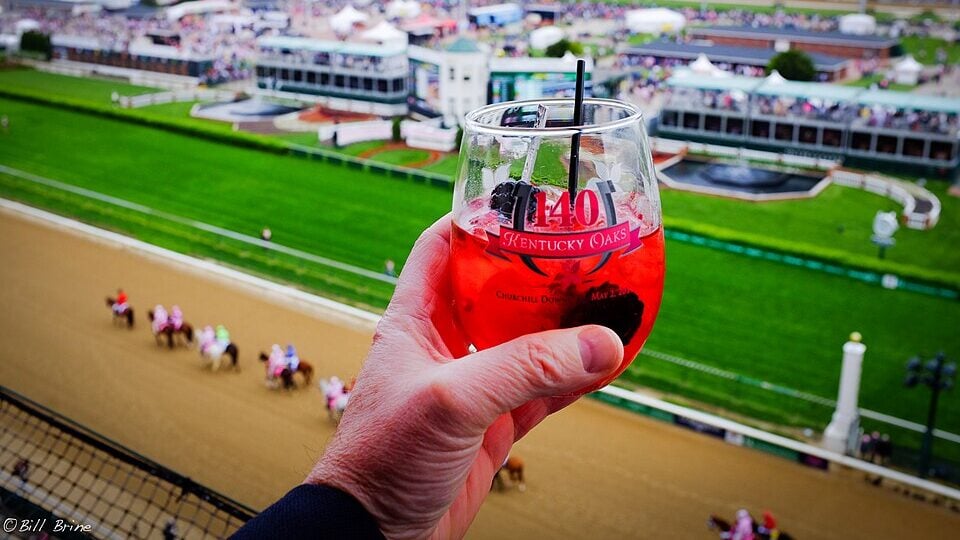
Churchill Downs serves over 120,000 mint juleps during Derby weekend. The classic recipe includes bourbon, fresh mint, sugar syrup, and crushed ice — traditionally served in a collectible silver or pewter cup. The official julep recipe was standardized in 1938, and special commemorative cups are released each year, with some vintage cups now worth thousands to collectors. (Churchill Downs: Mint Julep Facts)
From experience in the infield: At $17 for a julep inside Churchill Downs, one is worth having for the tradition. Bring your own drinks in a clear container for everything else — the savings add up fast over a full day. You’ll be there from 8 AM to well past 7 PM.
The Garland of Roses
The winner receives a blanket of 554 hand-sewn red roses — one for each running of the race. A team of florists works through the night before the Derby, carefully stitching each rose to a green satin backing. The garland weighs approximately 40 pounds and includes a crown of roses at the top. This tradition inspired the Derby’s nickname, “The Run for the Roses,” and the song played as horses parade to the post. (Smithsonian: History of the Garland of Roses)
“My Old Kentucky Home”
As the horses parade onto the track, the University of Louisville Marching Band performs Stephen Foster’s “My Old Kentucky Home.” The crowd of 150,000 sings along, many visibly emotional. The lyrics were updated in 2016, but the power of this moment is unchanged — it’s the point when everything becomes real. The pageantry gives way to competition and you realize you’re about to witness history. (Kentucky Derby Museum)
Derby Hats and Fashion
Since the first Derby in 1875, elaborate hats have been part of the dress code, particularly for women attending. From oversized fascinators adorned with flowers to classic wide-brimmed sun hats, Derby fashion is a spectacle unto itself. The tradition intensifies on Kentucky Oaks Day (the Friday before the Derby), when attendees wear pink to support breast cancer awareness. In the infield, the dress code is far more relaxed — shorts and a t-shirt are perfectly appropriate.
The Bugler’s Call to the Post
A trumpeter in a scarlet coat performs “Call to the Post,” signaling riders to mount their horses. This 19th-century military tradition adds gravity to the moment and sends a wave of anticipation through the crowd. The current bugler, Steve Buttleman, has performed the call since 2011.
Attending the Derby — What You Need to Know
This section of the Kentucky Derby guide covers everything you need before attending — tickets, bag policy, arrival strategy, and the schedule. With over 150,000 attendees, success requires planning and understanding what each area of the track offers. (Official Churchill Downs website)
Ticket Options and Pricing
Tickets go on sale in November through Ticketmaster and Churchill Downs’ official website. Here’s what to expect by area:
| Area | Price Range | Experience | Race Visibility |
|---|---|---|---|
| Infield | $80–$130 | Festival atmosphere — live music, food, games; can get muddy | Big screens only |
| General Admission | $175–$300 | Balanced crowd energy, standing room near the rail | Ground-level perspective |
| Reserved Grandstand | $700–$2,500 | Assigned seats with good race views | Elevated sightlines |
| Premium Suites | $7,000–$50,000+ | All-inclusive dining, open bar, celebrity access | Best views in the house |
Infield vs. grandstand — two different events: For your first Derby, the infield delivers an extraordinary atmosphere even though you’ll only see the race on screens. If watching the horses thunder past live matters to you, General Admission or reserved seating is the right call. Both experiences are valid — just completely different events happening simultaneously at the same venue. Know which one you’re going for before you buy your ticket.
What to Bring and Bag Policy
Churchill Downs enforces strict security. Allowed: clear bags up to 12″ x 12″ x 6″, small clutches (4.5″ x 6.5″), food and non-alcoholic drinks in clear containers. Prohibited: coolers, backpacks, large purses, outside alcohol, lawn chairs in most areas. Essential items: sunscreen, cash for betting, portable phone charger, rain poncho, and a folding chair if allowed in your section. Always check the official bag policy before you go — it updates annually.
Parking and Arrival
Park at a private residence near Wagner’s Restaurant for $20–$30 — many homeowners along Central Avenue offer front yard parking. This beats on-site parking ($80–$200) because you avoid the post-race gridlock entirely. Arrive before gates open at 8:00 AM. Early arrival is not optional if you want a good spot — by noon the infield is packed and prime positions are long gone.
Derby Day Schedule
Gates open at 8:00 AM. First undercard race: 10:30 AM. Crowds peak around noon. Horses enter the paddock for saddling at approximately 5:46 PM. Post parade begins around 6:23 PM. “My Old Kentucky Home” is performed around 6:27 PM. Kentucky Derby post time: approximately 6:57 PM. Trophy presentation follows immediately. For the most current schedule, check the official Derby Day schedule on the Churchill Downs website.
Weather Preparation
May weather in Louisville averages 70–80°F but varies wildly. The Derby has been run in temperatures from the 40s to the 90s, through rain, mud, and even snow flurries. Dress in layers, bring sun protection, and pack a rain poncho regardless of the forecast. You’ll be there all day and Louisville weather changes quickly.
Watching from Home
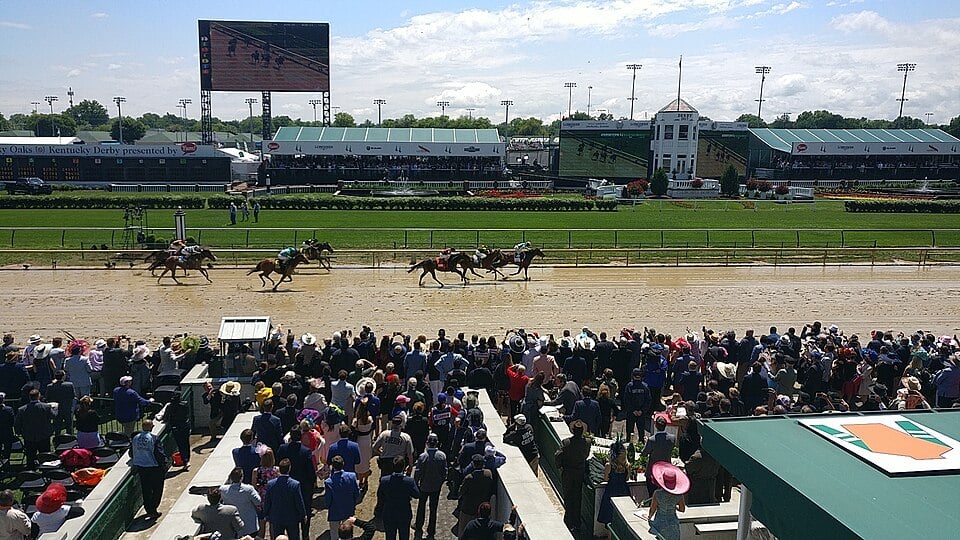
The Derby broadcasts nationally on NBC and streams on Peacock, with coverage beginning around 2:30 PM ET. Consider gathering friends, wearing the hats at home, mixing juleps, and creating a betting pool. The Derby works well on television because the pageantry and the race itself both carry real visual energy.
Lessons From the Infield — What I Learned Firsthand

Having experienced the Kentucky Derby infield firsthand, I gathered several crucial lessons for first-timers. This section covers the most important ones — for the full infield guide, see our detailed breakdown: Kentucky Derby infield tips for first-timers.
What the infield actually feels like: Before I went, I expected something like Mardi Gras — rowdy, chaotic, borderline dangerous. What I found was surprisingly different. The Derby crowd is relaxed and friendly. People drink, some overindulge, but mostly they find a spot and enjoy themselves. I didn’t witness a single fight or confrontation. What I didn’t expect was how knowledgeable everyone was — I had multiple genuine conversations about trainers, bloodlines, and track conditions. The shared passion for racing creates a community out of 80,000 strangers. That part was more special than I anticipated.
Betting — Skip the Lines, Use Your Phone
For the first couple of races, the betting windows are manageable. By mid-afternoon they become impossible. I joined a queue 15 minutes before post time for one race and still missed placing my bet. The solution is simple: download a betting app — TwinSpires, FanDuel Racing, or TVG — and wager from your phone. I was able to bet every race without leaving my spot, and walked away over $300 ahead by the end of the day. Have the app downloaded and funded before you arrive.
Viewing the Race — Position Matters
I had an excellent spot by the fence at the far turn for the undercard races — close enough to feel the horses go past. As the Derby approached, the crowd pressed toward the fences. By post time I was twenty deep and couldn’t see the track — only the big screens. The infield is about the experience and atmosphere, not race viewing. If watching the actual Derby matters to you, premium seating is the only real option. The crowd dispersed immediately after the race, making it easy to move again — but by then the race was over.
The Exit Is Chaos — Plan Accordingly
Leaving took over 45 minutes. The tunnel exit had people pushing through a compressed crowd, and approaching rain made it worse. Either plan to leave before the Derby ends (missing the race to beat the crowd — not recommended), or accept that you’ll be there at least 90 minutes after the trophy presentation before you’re back at your car. Build that into your plans. Don’t schedule a dinner reservation for 8:00 PM.
Legendary Horses, Trainers, and Jockeys

The Immortal Horses
Secretariat (1973) — The standard against which all others are measured. His 1:59.40 Derby time remains untouchable, and his 31-length Belmont victory is the most dominant performance in racing history. His influence extends through modern breeding — nearly every top stallion traces back to him.
Citation (1948) — The first horse to earn $1 million in career earnings, Citation won the Derby by 3½ lengths and captured the Triple Crown. Trained by Ben Jones and ridden by Eddie Arcaro, he had the best combined two and three-year-old seasons of any horse in the sport’s history.
American Pharoah (2015) — After a 37-year drought, American Pharoah delivered the Triple Crown under trainer Bob Baffert and jockey Victor Espinoza, reigniting national interest in horse racing with a front-running display that made everything look easy.
Justify (2018) — Won the Triple Crown while undefeated, without having raced as a two-year-old — defying the “Apollo Curse” that had held since 1882. Ridden by Mike Smith at age 52, making him the oldest jockey to win the Triple Crown. Another Bob Baffert masterpiece.
Hall of Fame Trainers
Bob Baffert — 6 Derby wins (Silver Charm, Real Quiet, War Emblem, American Pharoah, Justify, Medina Spirit*). The white-haired dominant force of modern racing has trained two Triple Crown winners and spent two decades at the top of the sport, though his career has been marked by recent medication controversies. Note: Medina Spirit’s 2021 Derby win was disqualified in February 2022 by the Kentucky Horse Racing Commission following a positive test for betamethasone. The result was officially stripped and purse money redistributed to runner-up Mandaloun. (KHRC Ruling, February 2022)
D. Wayne Lukas — 4 Derby wins. “The Coach” revolutionized training methods and proved meticulous preparation could overcome any obstacle. His Derby winners include Thunder Gulch and Charismatic.
Ben Jones — 6 Derby wins and the all-time winningest Derby trainer, guiding Citation, Whirlaway, and four others to victory between 1938 and 1952. His understanding of pace and fitness set standards still followed today.
Jockey Legends
Eddie Arcaro — 5 Derby wins, the only jockey in US racing history to win the Triple Crown twice (Whirlaway in 1941 and Citation in 1948). His ability to rate pace and time his moves was unmatched across his era. (National Museum of Racing)
Bill Hartack — 5 Derby wins, including Northern Dancer in 1964. Despite a reputation for being difficult, his tactical brilliance made him one of the most successful Derby jockeys in the race’s history.
Victor Espinoza — 3 Derby wins including American Pharoah (2015) for the Triple Crown. His patient, confident style suits the Derby’s 20-horse chaos particularly well.
How to Handicap the Kentucky Derby
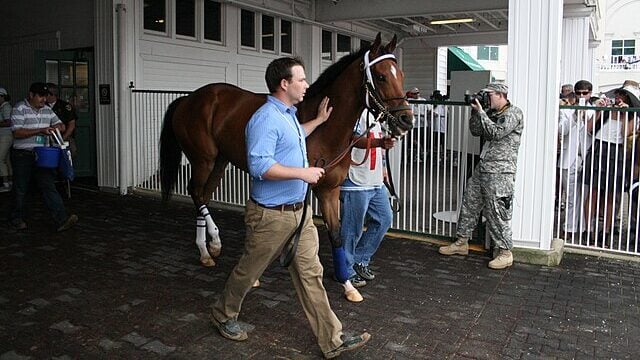
No Kentucky Derby guide is complete without handicapping. The race’s unique challenges — 20-horse field, long distance for three-year-olds in May, massive crowd noise, and horses that have never run this far — make it both frustrating and fascinating to analyze. Here’s what 30 years of ownership and hands-on betting experience have produced. For the dedicated strategy breakdown, see the Kentucky Derby strategy guide on post positions and pace. Past performances and official charts are available at Equibase.
The Points System — Road to the Kentucky Derby
Since 2013, horses qualify through prep races where they earn points. The top 20 point-earners get into the gate. Key prep races include the Florida Derby, Arkansas Derby, Blue Grass Stakes, Santa Anita Derby, Louisiana Derby, and Wood Memorial — each awarding 100 points to the winner. Horses coming off wins in these races deserve serious respect. Horses who accumulated points through multiple second and third place finishes may lack the talent to win on Derby day even if they qualified.
Post Position Data
| Post Range | Win % | In-the-Money % |
|---|---|---|
| Posts 1–5 (Inside) | 11.2% | 27.8% |
| Posts 6–10 (Middle Inside) | 14.3% | 31.2% |
| Posts 11–15 (Middle Outside) | 12.1% | 29.4% |
| Posts 16–20 (Outside) | 8.7% | 22.1% |
On outside posts: The sweet spot historically is posts 6–10. Outside posts (16–20) face extra ground or traffic disadvantages — very few horses overcome a post of 16 or higher to win, though Sovereignty proved it’s possible from post 16 in 2025. A talented horse with the right running style can overcome a wide draw, but it requires more things to go right.
Running Style
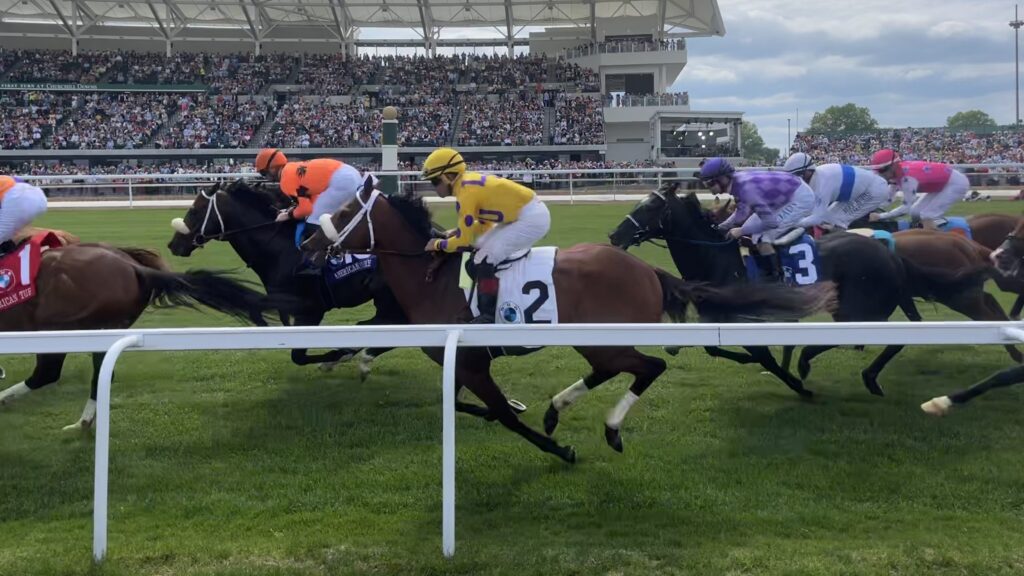
The Derby’s chaotic early pace typically sets up for closers. Speed horses often battle early, tire entering the stretch, and fade. Patient closers sitting mid-pack can unleash one sustained run. Recent winners demonstrate the pattern: Sovereignty (2025) rallied from 8th, Mystik Dan (2024) came from mid-pack, Mage (2023) rallied from far back, Rich Strike (2022) closed at 80-1. The exception is horses with tactical speed that can sit just off the pace in a stalker position — these can be deadly if the pace sets up right and they’ve drawn a reasonable post.
Pedigree
A three-year-old running 1¼ miles in May is being asked a question it hasn’t answered before. Pedigree provides clues about stamina. Sires with proven Derby success include Into Mischief (Sovereignty 2025), Tapit (multiple contenders), Goldencents (Mystik Dan 2024), and War Front. My yearling descends from Into Mischief through Goldencents — combining speed and stamina, which is the profile that produces Derby winners.
Betting Strategy
The Derby attracts significant public money that inflates odds on well-known horses while creating value on others. Straight win bets should be reserved for horses you genuinely believe will win — given the 20-horse field, even talented horses lose more often than they win. Better approaches: exactas keying your top contender over several others; trifectas boxing 4–5 horses or keying one to win with multiple options for place and show; superfectas for the bold, with payouts frequently exceeding $10,000. Set a betting budget before you arrive and treat it as entertainment, not investment.
How I approach the Derby after 30 years in the sport: I narrow the race to 3–4 horses that fit the pace scenario, have a running style suited to a contested early pace (usually closers or stalkers), and drew reasonable posts. From there I look for the best price among them rather than trying to pick the most likely winner. The Derby is a race where value matters more than precision — the field is too large and the variables too numerous for confidence. The year I walked out $300 ahead, I had four horses in a trifecta box and two of them ran 1-2. I wasn’t smarter than anyone else. I just had a reasonable framework and some luck in the right race.
Kentucky Derby Guide — Frequently Asked Questions
When is the Kentucky Derby held?
The first Saturday in May, every year since 1875. Post time is approximately 6:57 PM ET, with NBC coverage beginning around 2:30 PM.
How long is the Kentucky Derby?
1¼ miles (10 furlongs), taking approximately 2 minutes under race conditions. Secretariat’s record is 1:59.40 (1973); most Derbies finish between 2:01 and 2:04.
How much does the Kentucky Derby winner get?
The purse is $5 million. The winner receives 62% ($3.1 million), second place gets 20% ($1 million), third gets 10% ($500,000), fourth gets 5% ($250,000), and fifth gets 3% ($150,000).
Why is it called the Run for the Roses?
The winner receives a blanket of 554 hand-sewn red roses — one for each running of the race. The tradition began in 1896 and became official in 1932, giving the Derby its most recognizable nickname.
Can any 3-year-old Thoroughbred enter the Kentucky Derby?
Not exactly. Horses must qualify through the Road to the Kentucky Derby points system, with the top 20 point-earners gaining entry. Points are awarded in designated prep races throughout the winter and spring. A limited number of also-eligibles exist if a qualified horse scratches.
Has a filly ever won the Kentucky Derby?
Yes, three times: Regret (1915), Genuine Risk (1980), and Winning Colors (1988). Fillies receive a 3-pound weight allowance (117 pounds vs. 120 for colts). No filly has won the Triple Crown.
What happens to the Kentucky Derby if it rains?
The Derby runs regardless of weather. Sloppy or muddy tracks change race dynamics significantly — some horses excel in the slop while others hate it. Sovereignty’s 2025 victory came on a sloppy track. Always bring a rain poncho — Louisville weather in May is unpredictable and you’ll be outside all day.
What is the Triple Crown?
Winning the Kentucky Derby, Preakness Stakes, and Belmont Stakes in the same year. Only 13 horses have accomplished this feat, most recently Justify in 2018. The 37-year drought between Affirmed (1978) and American Pharoah (2015) convinced many it would never happen again.
How many horses run in the Kentucky Derby?
Up to 20, based on qualifying points. The largest field was 23 horses in 1974 (Cannonade won), before field size limits were implemented. The current cap of 20 was set to improve safety and give all starters a reasonable chance.
What is the dress code at the Kentucky Derby?
No strict universal dress code exists. In the infield, shorts and a t-shirt are perfectly acceptable. Grandstand and premium areas lean toward business casual and formal, with elaborate hats a strong tradition for women. Derby fashion is part of the spectacle in the premium sections.
Can I bet on the Kentucky Derby if I am not at Churchill Downs?
Yes. Legal betting is available through online platforms like TwinSpires, FanDuel Racing, and TVG in most states. Many racetracks and off-track betting facilities also accept Derby wagers. Download the app and fund it before Derby Day — do not try to sign up on the day of the race.
What is the difference between the Kentucky Derby and Kentucky Oaks?
The Kentucky Oaks runs the Friday before the Derby and is exclusively for 3-year-old fillies, also at 1¼ miles with a $1.5 million purse. Both races are prestigious — the Oaks is sometimes called the Derby for fillies. Derby weekend effectively begins with the Oaks on Friday.
Why do some horses skip the Kentucky Derby?
Trainers may feel their horse is not ready for 1¼ miles in early May, want to avoid the chaos of a 20-horse field, or prefer targeting other races like the Preakness or Belmont. Some connections feel the Derby does not suit their horse’s running style or development timeline. Skipping the Derby is often a strategic decision, not a failure.
Should I arrive early to the Kentucky Derby?
Absolutely. Gates open at 8 AM. Arriving at or before gate opening allows you to secure a prime infield spot and avoid lines. By noon, the infield is packed and good positions are gone. I arrived at 7:20 AM, had breakfast at Wagner’s across from the gate, and walked in when gates opened — that early arrival was the single best decision of the day.
How do I handle the post-race exit from Churchill Downs?
Be patient and plan for it. Leaving took over 45 minutes after the Derby in my experience. The crowd converges on limited exits very quickly. Either accept that you will be there well over an hour after the race ends, or leave before the Derby finishes — though missing the race to beat the crowd is rarely the right choice. Do not schedule anything within 90 minutes of post time.
Key Takeaways: Kentucky Derby Guide
- First Saturday in May at Churchill Downs — 1¼ miles, $5 million purse, 150,000+ in attendance every year since 1875
- Secretariat’s 1:59.40 record (1973) has never been broken — the fastest Derby in 150 years of running
- Arrive before 8 AM if attending the infield — good spots are gone by noon; bring food, water, a rain poncho, and a phone with a betting app installed
- Infield and grandstand are two different experiences — the infield is a festival where racing is the occasion; the grandstand is for watching horses race
- Posts 6–10 have the strongest historical win rate — outside posts (16–20) face a structural disadvantage in a 20-horse field
- Closers and stalkers have dominated recent Derbies — the 20-horse field typically produces a contested early pace that benefits horses who settle mid-pack
- Download a betting app before you go — betting windows become unmanageable by mid-afternoon; mobile wagering is the only reliable way to bet every race
For readers wanting more detail beyond this Kentucky Derby guide, the complete strategy breakdown on post positions, pace, and betting angles is at the Kentucky Derby strategy guide. For everything about the Triple Crown and how the Derby fits into the series, see the Triple Crown races guide.
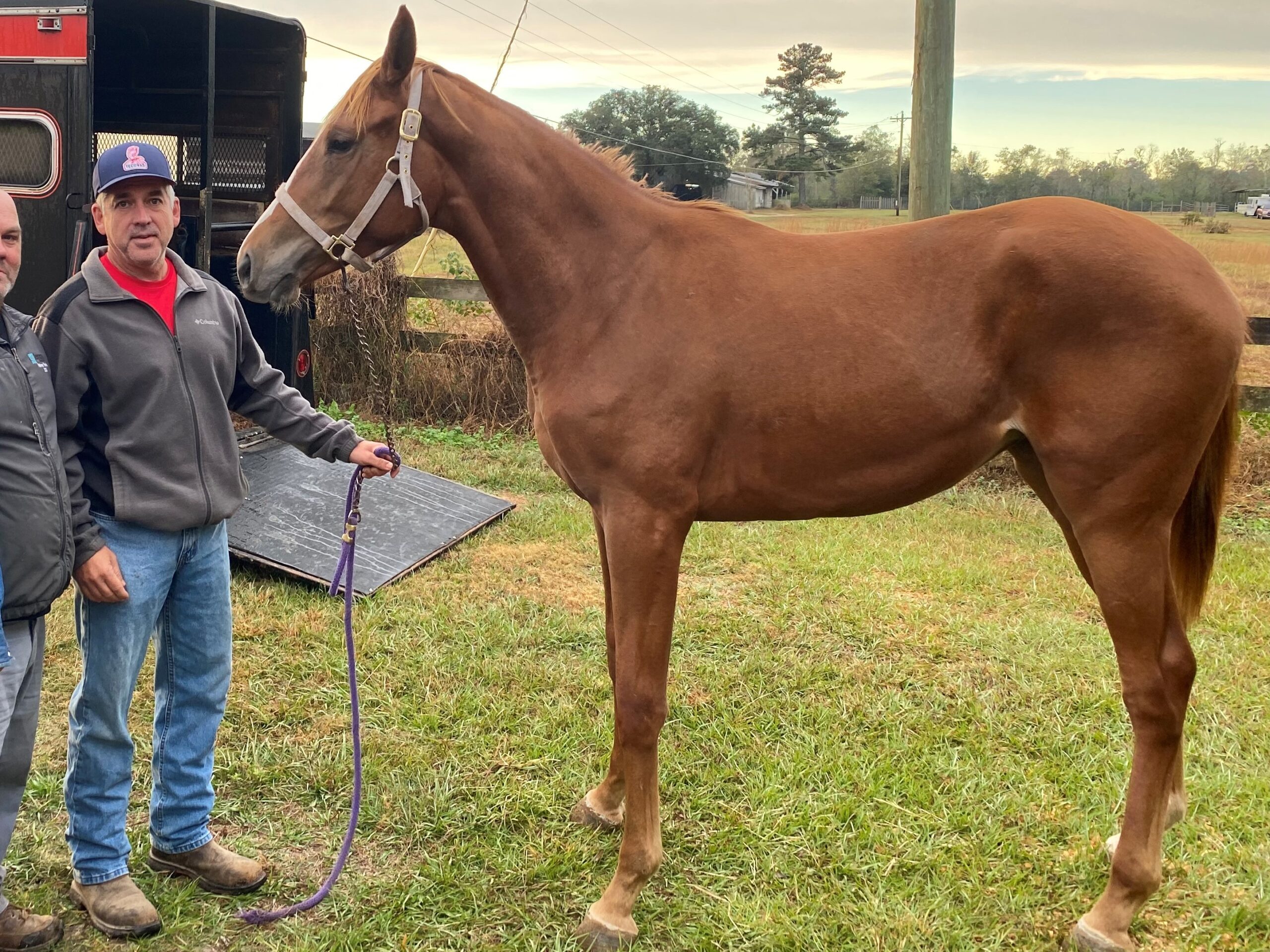
About Miles Henry
Racehorse Owner & Author | 30+ Years in Thoroughbred Racing
Miles Henry (legal name: William Bradley) is a professional horseman based in Folsom, Louisiana. He holds Louisiana Racing License #67012 and has spent over three decades managing Thoroughbreds at premier tracks including Fair Grounds, Delta Downs, and Evangeline Downs.
Expertise & Hands-On Experience: Beyond the track, Miles has decades of experience in specialized equine care, covering everything from hoof health and nutrition to training protocols for Quarter Horses, Friesians, and Paints. Every guide on Horse Racing Sense is rooted in this “boots-on-the-ground” perspective.
30 of their last 90 starts
Equibase Profile.

Connect with Miles: