
Last updated: July 1, 2026
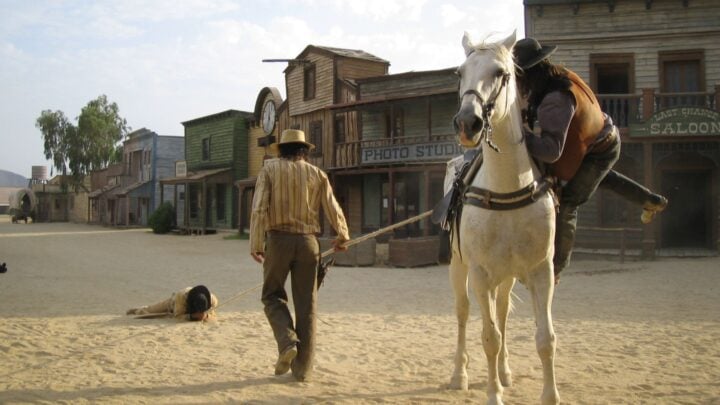
Cowboys in the old west rode whatever the land, the rancher, or the region provided. On a Texas cattle ranch that meant compact, fast, cattle-smart working stock. In the Pacific Northwest it might mean an Appaloosa bred by the Nez Perce. On the open plains, a caught and started Mustang was as practical as anything money could buy. The horse matched the work and the territory — not a breed standard.
A note on “wild west horse breeds”: This is a modern label, not a historical category. No formal breed classification system existed on the 19th-century frontier — cowboys selected horses on working ability, not registry papers. The types listed here are those most consistently documented in historical accounts of frontier horse use.
What horses did cowboys ride in the Wild West? Key types — none of them registered breeds in the modern sense:
- Working ranch stock (Quarter Horse type) — fast, compact, cattle-smart; not a registered breed until the AQHA formed in 1940
- Mustang — wild-caught, tough, and already adapted to western terrain
- Morgan — strong and versatile; the Union Army’s preferred cavalry horse
- Appaloosa — Nez Perce war horse; known for endurance and spotted coat
- Arabian — used for endurance and stamina on long drives
- American Saddlebred — smooth gaited; popular with plantation owners and cavalry officers
- Missouri Fox Trotter — prized for its smooth, ground-covering gait over rough country
Table of Contents
Wild West Horse Breeds at a Glance
| Breed | Primary Role | Key Trait | Region / Context |
|---|---|---|---|
| Working ranch stock (Quarter Horse type) | Ranch work, cattle cutting, sprinting | Explosive speed, cattle instinct | Widespread across the West — formalized as the AQHA breed in 1940 |
| Mustang | General riding, endurance | Hardiness, terrain adaptation | Great Plains, Southwest |
| Morgan | Cavalry, farm work, driving | Strength, versatility, stamina | Northeast origin, cavalry use West |
| Appaloosa | War horse, hunting, endurance | Spotted coat, endurance, intelligence | Pacific Northwest (Nez Perce) |
| Arabian | Long drives, endurance riding | Stamina, heat tolerance | Texas, Southwest cattle drives |
| American Saddlebred | Plantation riding, cavalry officers | Smooth gaits, refined bearing | Border states, Civil War cavalry |
| Missouri Fox Trotter | Trail and patrol riding | Smooth fox trot gait, sure-footed | Ozarks, rough terrain |
| Thoroughbred / Appendix | Speed, ranch work crossbred | Speed, athleticism | Appendix cross (TB x QH) still dominant today |
The Working Ranch Horse — What Became the Quarter Horse
When people say cowboys rode Quarter Horses, they’re technically describing something that didn’t exist yet as a registered breed. The American Quarter Horse Association wasn’t formed until 1940, and the breed as we know it today — with registry papers, breed standards, and pedigree requirements — didn’t consolidate until the postwar era. My grandfather kept Quarter Horses well into that period when most of them still weren’t registered. What cowboys in the old west actually rode was the working ranch horse type that those bloodlines eventually formalized: compact, fast, cattle-smart, and shaped by whoever the local stallion happened to be rather than any official registry.
The anchor of that type was Steel Dust, foaled in Kentucky in 1843 and brought to Texas, where his speed and athletic ability made him a frontier legend. His offspring — called “steel dust horses” — became the most sought-after ranch stock in the Southwest. They were hardier than most imported breeds, quick to learn, and capable of covering long distances without breaking down, which mattered on cattle drives that ran hundreds of miles. Steel Dust is widely considered one of the foundation sires of what later became the Quarter Horse, but in his own time he was simply the best working horse in Texas.
Horseman’s Perspective: The cattle instinct in this type of horse is the trait that gets underappreciated. Speed you can find in other breeds. But a horse that anticipates where a cow is going before the rider asks — that’s rarer, and that’s what made steel dust-type stock indispensable on a working ranch. It’s the same quality that makes modern Quarter Horses dominant in cutting competitions today, even though the cowboys who first valued it had no breed name for it.
The working ranch horse type that cowboys rode gradually gave way to a formal breed as registries took hold in the 20th century. The AQHA was established in 1940, and the breed grew significantly in the postwar decades as more owners registered their stock. Today, Quarter Horses race at short distances — a quarter mile, which is where the breed name eventually came from — and according to the AQHA, they are the most numerically registered breed in the United States. The Appendix Quarter Horse, a Thoroughbred cross, remains widely used in performance disciplines and carries those same frontier bloodlines forward.
The Mustang — The Horse the West Built
Mustangs weren’t a breed in the conventional sense. Historical accounts generally describe them as feral descendants of Spanish horses introduced in the 1500s, though later populations also incorporated escaped ranch stock — making their ancestry more regionally varied than a single origin story suggests. By the time cowboys were working the Great Plains, Mustangs were everywhere, and many rode them simply because they were available and free to catch.
What they lacked in refinement they made up in toughness. Already adapted to the harsh terrain, temperature swings, and sparse forage of the western landscape, Mustangs held up under conditions that broke down horses bred in easier environments. A well-started Mustang was as reliable as any ranch horse, and significantly cheaper to acquire. Native American tribes across the plains were among the most skilled Mustang horse people, developing horsemanship traditions built around catching, training, and riding feral stock.
Morgan — The All-Purpose Frontier Horse
The Morgan is one of the oldest American breeds, and its reputation as a do-everything horse made it valuable on the frontier. Morgans are compact and strong — able to pull a plow, carry a rider, and drive a buggy — which made them practical on homestead farms where a single horse had to handle multiple jobs.
During the Civil War, Morgans became the preferred cavalry horse of the Union Army, particularly in Vermont regiments. That military exposure moved Morgans westward as soldiers settled the frontier after the war. The breed’s endurance and willingness under pressure — traits that showed up in battle — translated naturally to ranch and trail work.
Appaloosa — The Nez Perce War Horse
The Appaloosa’s spotted coat makes it the most visually distinctive of the western breeds, but its value to the Nez Perce people of the Pacific Northwest had nothing to do with appearance. The Nez Perce maintained one of the most well-documented selective horse-breeding programs among Native American peoples, and they developed the Appaloosa specifically for the demands of hunting, war, and long travel over rough mountainous terrain.
Appaloosas were bred for endurance and toughness over beauty, and those traits carried over when cowboys adopted them. They were sure-footed in rough country and had the stamina to keep working when more refined horses tired. After the Nez Perce War of 1877, the breed was nearly lost — U.S. Army records and later historical accounts indicate most of the Nez Perce horse herds were confiscated or destroyed. The Appaloosa Horse Club, formed in 1938, worked to preserve and rebuild the breed from surviving stock, though reconstructing a consistent type from scattered survivors took decades.
Arabian — Endurance on the Long Drive
Arabians were less common on the frontier than Quarter Horses or Mustangs, but they filled a specific role where endurance mattered more than burst speed — particularly on long cattle drives through the Southwest where Texas ranchers were pushing herds hundreds of miles to railheads in Kansas.
The Arabian’s ability to cover ground efficiently, tolerate heat, and maintain condition on limited feed made them valuable on drives that lasted weeks. Their influence also shows up in crossbreeding — many western ranch horses carried Arabian blood specifically for the stamina it added to faster, shorter-coupled breeds.
A personal observation on Arabians and cutting: There’s an Arabian cutting horse training center not far from me in Louisiana. Watching those horses work is a good reminder that the intelligence and responsiveness that made Arabians useful on long cattle drives isn’t limited to endurance — though Quarter Horse lines remain dominant in cutting competition overall.
Other Breeds Cowboys Rode
Beyond the five primary breeds, several others showed up regularly in the old west depending on the region and the rider’s background.
| Breed | Why Cowboys Used Them | Notable Trait |
|---|---|---|
| American Saddlebred | Plantation owners, cavalry officers, and border state riders brought them west. The smooth gaits made long riding days less punishing. | Five gaited; high-stepping, refined bearing |
| Missouri Fox Trotter | Developed in the Ozarks specifically for rough terrain. The fox trot gait is smooth for the rider and easy on the horse over long distances. | Diagonal fox trot gait; sure-footed in rough country |
| American Paint Horse | Most Paint Horses carry Quarter Horse breeding and share the same cattle instinct and build. The coloring is a byproduct, not the reason they worked well. | Quarter Horse traits with pinto coloring |
| Thoroughbred | Used on larger ranches and by riders who prioritized speed. Thoroughbred crosses with Quarter Horses — called Appendix Quarter Horses — became particularly useful for combining speed with cattle sense. | Speed and athletic scope; foundation of the Appendix cross |
Did Cowboys Ride Stallions, Geldings, or Mares?
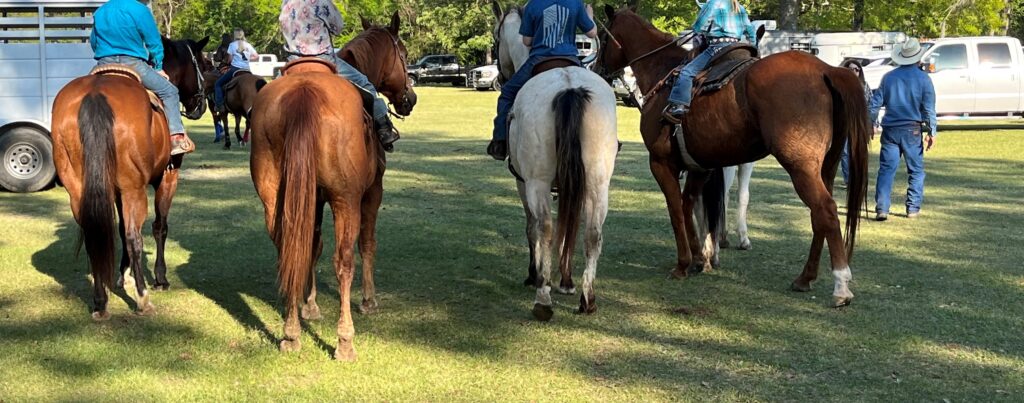
In the old west, cowboys often rode whatever was available. When they did have a choice, geldings were a common preference for working cowboys — though frontier practice varied considerably by region, ranch, and individual rider.
Geldings
Geldings are castrated males, and they were the preferred working horse of most cowboys for the same reason they’re still preferred on working ranches today: predictability. A gelding doesn’t have the hormonal swings of a stallion or the seasonal behavioral changes of a mare in heat. On an overnight trail drive where you’re managing a string of horses, that consistency matters.
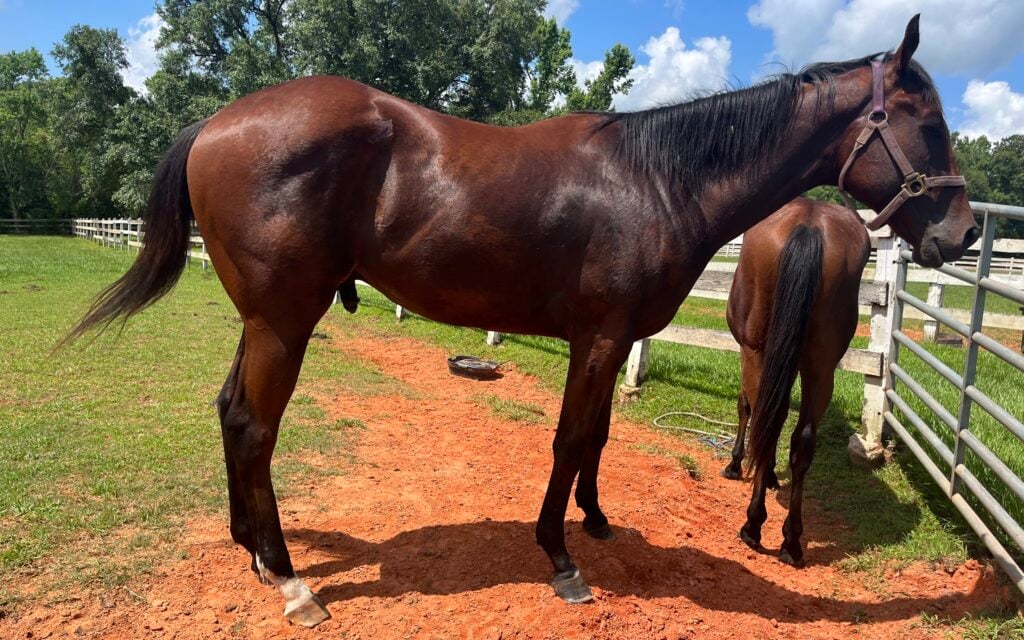
Gelding is typically done before one year old, though many owners wait slightly longer depending on the horse’s development. The earlier the procedure, the less the horse has developed stallion behaviors to begin with. I currently have two stallions I elected not to geld because they’re well-bred and level-headed — but for most working situations, gelding is the right call.
Stallions
Stallions were ridden in the old west, particularly by ranchers who planned to breed their horses. A proven working stallion was a valuable breeding asset, and ranchers weren’t going to geld a horse they intended to use for producing future stock. Stallions can be difficult to manage around other horses, especially mares — but a well-handled stallion with established boundaries becomes a loyal and capable mount. The challenges are real; they just require more consistent handling.
Mares
Cowboys regularly rode mares — while modern accounts sometimes suggest they were avoided, historical records show mares were common mounts across the frontier. Many cowboys preferred mares for their intelligence and responsiveness, and on ranches where horses were bred on-site, mares were essential stock. The practical challenge is managing a mare in heat in a mixed string — but cowboys dealt with that the same way ranchers do today.
How Were Horses Treated in the Old West?
Hollywood has romanticized the cowboy-horse relationship into something closer to partnership than reality. On large ranches, cowboys typically rode a string of horses rather than a single personal mount — rotating through them based on the day’s work. Some bond developed, certainly, but the horse was primarily a working tool, not a companion in the modern sense.
The practical calculus was straightforward: a healthy horse was a productive horse, and a dead horse left a cowboy on foot. Cowboys who wanted to keep working kept their horses fed, watered, and their hooves trimmed. Basic horse care wasn’t sentimentality — it was survival.
That said, historical evidence shows that horses often suffered in the old west when resources ran short. People struggling to feed themselves had less to give their animals, and horses were worked hard on long drives with little recovery time. The frontier was not a gentle environment for horses or people.
FAQs: Wild West Horse Breeds
What was the most common horse in the old west?
The short-coupled, fast, cattle-smart working ranch horse that cowboys relied on — the type later formalized as the American Quarter Horse — was the most common working stock in the old west. But the AQHA wasn’t established until 1940, and most of those horses weren’t registered. What cowboys rode was a practical working type shaped by regional bloodlines, terrain, and local stallions, not a standardized breed.
Did cowboys ride Thoroughbred horses?
Yes, particularly on larger ranches that prioritized speed. More commonly, cowboys rode Appendix Quarter Horses — a cross between a Thoroughbred and a Quarter Horse — which combined the Thoroughbred’s athletic scope with the Quarter Horse’s cattle sense and durability.
Did cowboys ride mares?
Yes. While modern accounts sometimes suggest mares were avoided, historical records show cowboys regularly rode them. Many preferred mares for their intelligence and responsiveness. The practical challenge on a trail drive was managing mares in heat in a mixed string, but cowboys handled that the same way working ranches do today.
What breed did Native Americans ride?
Native American tribes across the West rode Mustangs — feral descendants of Spanish horses brought to North America in the 1500s. The Nez Perce of the Pacific Northwest maintained one of the most well-documented selective horse-breeding programs among Native peoples, developing the Appaloosa specifically for war, hunting, and long mountain travel.
What is a Steel Dust horse?
Steel Dust was a Quarter Horse stallion foaled in Kentucky in 1843 and brought to Texas, where his athletic ability made him legendary. His offspring were called ‘steel dust horses’ and became the foundation of the modern American Quarter Horse. Most working Quarter Horse bloodlines can be traced back to Steel Dust lineage.
Were Mustangs good cowboy horses?
Yes, particularly for cowboys who couldn’t afford or couldn’t access purpose-bred ranch horses. Mustangs were free to catch on the open range and already adapted to western terrain and conditions. A well-started Mustang was as reliable as any ranch horse and significantly more durable than horses bred in easier environments.
Key Takeaways: Wild West Horse Breeds
- Cowboys didn’t ride registered Quarter Horses — the AQHA wasn’t formed until 1940. They rode the working ranch horse type that those bloodlines later formalized: compact, fast, and cattle-smart stock shaped by regional breeding rather than any registry
- Steel Dust established the foundation — most modern Quarter Horse bloodlines trace back to his offspring from the 1840s Texas frontier
- Cowboys rode whatever was available — Mustangs, Morgans, Appaloosas, and Arabians all had roles depending on region and task
- Mustangs were practical, not romantic — they were free, already terrain-adapted, and tougher than purpose-bred horses in western conditions
- Most cowboys preferred geldings for their predictability on trail drives — but mares and stallions were both ridden regularly
- The Appaloosa’s story is darker than most know — the Nez Perce breeding program that produced them was nearly destroyed after the 1877 war
- The horse-cowboy bond was mostly practical — on big ranches, cowboys rotated through strings of horses based on the day’s work, not personal attachment
About Miles Henry
Racehorse Owner & Author | 30+ Years in Thoroughbred Racing
Miles Henry (legal name: William Bradley) is a professional horseman based in Folsom, Louisiana. He holds Louisiana Racing License #67012 and has spent over three decades managing Thoroughbreds at premier tracks including Fair Grounds, Delta Downs, and Evangeline Downs.
Expertise & Hands-On Experience: Beyond the track, Miles has decades of experience in specialized equine care, covering everything from hoof health and nutrition to training protocols for Quarter Horses, Friesians, and Paints. Every guide on Horse Racing Sense is rooted in this “boots-on-the-ground” perspective.
30 of their last 90 starts
Equibase Profile.

Connect with Miles: