

Last updated: November 9, 2026
Any links on this page that lead to products on Amazon are affiliate links and I earn a commission if you make a purchase. Thanks in advance – I really appreciate it!
One year our annual trail ride had an Old West theme, and riders showed up in wide-brim hats and chaps. My grandson took one look and asked whether real cowboys dressed like that. It’s a fair question. Movies have given us a pretty romantic picture of the Old West, but working cowboys dressed for the job.
Each piece had a job, and two questions come up a lot: did cowboys wear socks, and were leather dusters really part of the Old West wardrobe?
Table of Contents

What Did Cowboys Wear in the 1800s?
A working cowboy’s clothes had to stand up to long days in the saddle, dust from thousands of cattle, river crossings, and every kind of weather. Clothing varied with the region, the season, and the job, but here’s the basic outfit, drawn from the Nebraska Studies guide to cowboy clothing and equipment and the Oklahoma Historical Society.
| Item | Made of | Why he wore it |
|---|---|---|
| Hat | Felt or straw | Shade from the sun, cover from the rain |
| Bandana | Silk or cotton | Kept dust out of his nose and mouth, wiped sweat |
| Shirt | Cotton in summer, wool in winter | Long sleeves protected his arms |
| Vest | Often wool | Pockets and an extra layer of warmth |
| Pants | Canvas or wool, later denim | Durable for riding and work |
| Chaps | Leather | Protection from brush, thorns, and horns |
| Boots | Leather | Narrow toe for the stirrup, high heel to keep his foot from sliding through |
| Spurs | Metal | A riding aid for cueing his horse |
| Long underwear | Varied | One-piece long johns worn beneath clothing, summer and winter |
| Socks | Wool or cotton | Kept feet protected on long, wet days |
| Gloves | Leather | Protection from rope burns, blisters, hooves, horns, and branding irons |
Hats
A hat was a cowboy’s shade from the sun and his umbrella in the rain. Felt hats were made from wool or fur, and straw hats were worn in warm weather, according to Nebraska Studies. After John B. Stetson returned East in 1865, the first design from his Philadelphia factory was the “Boss of the Plains,” a wide-brimmed felt hat that became the model for the cowboy hat, according to HistoryNet. Wearers shaped their own dents and brims, and Stetson added styles from there.
Not every Westerner wore one, though. HistoryNet notes that the derby was the best-selling hat of the late 1800s, outselling even the Stetson. Today’s cowboy hat styles grew out of those early wide-brimmed hats.
Bandanas

A bandana was one of the handiest things a cowboy carried. According to the Oklahoma Historical Society, bandanas were silk or cotton, and silk was preferred because it was cool in summer and warm in winter. Pulled up over his nose and mouth, a bandana blocked dust, especially for the riders working drag at the back of the herd. Cowboys also used them to filter larger debris from creek and river water the cattle had stirred up.
Shirts and Long Underwear
Cowboy shirts were long-sleeved, cotton for summer and wool for winter. A cowboy on a cattle drive usually carried an extra shirt, since dust, sweat, and river crossings didn’t leave the one he was wearing in good shape. The Oklahoma Historical Society also notes that many cowboys avoided red shirts out of superstition.
Under it all, cowboys wore long underwear, called “long handles,” summer and winter. Some kept them on for modesty when crossing deep rivers. The snap-front Western shirt came later, and there’s a reason cowboys wear snap shirts today.
Why Did Cowboys Wear Vests?
Pockets. Shirts and pants often didn’t have pockets, so cowboys wore vests with pockets for extra storage, according to Nebraska Studies. The Oklahoma Historical Society notes that a vest gave a cowboy a place to stuff his tobacco pouch. A vest also added a layer of warmth on cold mornings without the bulk of a coat getting in the way of his arms.
Pants
Cowboy pants were often canvas or wool and usually brown, black, or tan, according to Nebraska Studies. Denim work pants were around, too. The 1873 milestone was the patent Levi Strauss and Jacob Davis received for work trousers reinforced with metal rivets, according to History, and those riveted waist overalls became the first blue jeans. Over time, denim became a popular choice, and plenty of working cowboys still wear jeans today.

Chaps
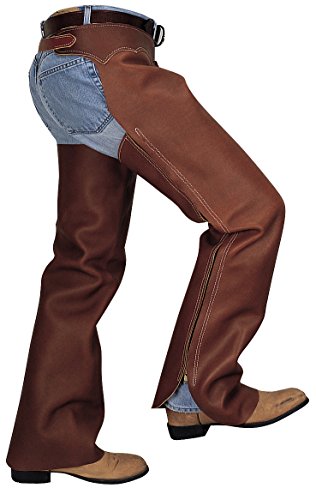
Chaps were leather leggings worn over pants to protect a cowboy’s legs from rocks, branches, horns, and mesquite thorns. The early style was the “shotgun” chap, straight and narrow like the barrel of a shotgun, and it even guarded against rattlesnakes, according to the Oklahoma Historical Society. Some had pockets, and most had fringe along the sides. Protection is still the main reason cowboys wear chaps today, and Weaver makes a leather work chap in the shotgun style.
Boots, Spurs, and Cuffs
Cowboy boots were built for riding. The narrow toe helped the boot slide into the stirrup, and the high heel kept the foot from slipping too far through it.

Cowboys used spurs as a riding aid to back up their cues to a horse. Some were plain, and some were silver-inlaid or shaped like snake heads or “gal legs,” and later spurs added jinglebobs. Not everyone wore them, since spurs could catch in the stirrup, and some cowboys preferred a quirt, according to the Oklahoma Historical Society. Working cowboys still use spurs on cowboy boots today.
Leather cuffs over the wrists protected against rope burns and kept shirt sleeves from fraying, and many were highly decorated.
Did Cowboys Wear Socks?
Yes. Cowboys wore socks, usually wool or cotton, and often carried extras in their bedrolls, according to the Oklahoma Historical Society. Civil War veterans had learned that their feet would suffer without socks or in wet ones. Today, the right socks for cowboy boots still make a big difference.
Did Cowboys Wear Leather Dusters?
Some cowboys wore dusters, but the trail duster of the Old West wasn’t necessarily the long leather coat you see in Western movies. Full-length canvas or linen dusters were pretty common outer garments for protecting folks from trail dust, Arizona’s official historian Marshall Trimble wrote in True West. People wore them over their good clothes on trips into town, and oilcloth or waxed cotton versions kept the wearer dry in the rain.
So what about leather dusters? Long leather coats are tied to the Western look today, but the trail dusters Trimble describes were canvas or linen, and the Nebraska Studies guide describes the duster or slicker as a lightweight coat for wind, rain, and dust storms. A canvas duster is closer in material to those trail dusters than a modern leather coat.

I haven’t worn the Weaver chaps or the Scully duster myself, though an old friend of mine has worn both. They’re here as examples of the styles described above, not as exact historical reproductions.
This video, How Did People Really Dress in the Wild West, takes on the same question.

About Miles Henry
Racehorse Owner & Author | 30+ Years in Thoroughbred Racing
Miles Henry (legal name: William Bradley) is a professional horseman based in Folsom, Louisiana. He holds Louisiana Racing License #67012 and has spent over three decades managing Thoroughbreds at premier tracks including Fair Grounds, Delta Downs, and Evangeline Downs.
Expertise & Hands-On Experience: Beyond the track, Miles has decades of experience in specialized equine care, covering everything from hoof health and nutrition to training protocols for Quarter Horses, Friesians, and Paints. Every guide on Horse Racing Sense is rooted in this “boots-on-the-ground” perspective.
30 of their last 90 starts
Equibase Profile.

Connect with Miles: