
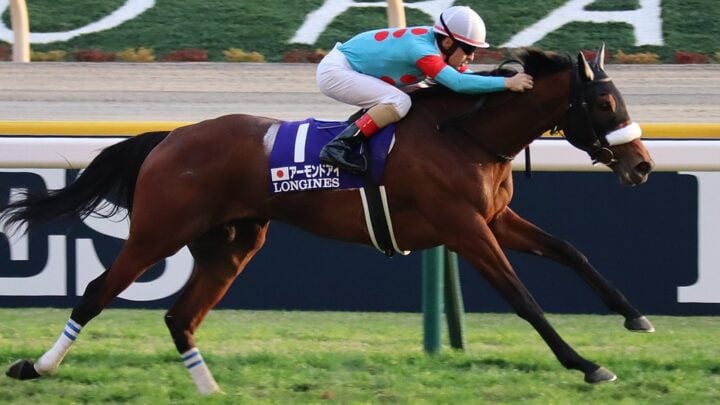
Last updated: May 1, 2026
Which Racehorse Has Won the Most Money?
World Record Holder
Romantic Warrior (HK)
Total Verified Earnings
~$31.8 Million
As of January 2026, Romantic Warrior is the highest-earning racehorse in history. His dominance in the Hong Kong Cup and global G1 circuit has pushed his career total past all previous records.
*Earnings totals are based on publicly reported prize money converted to USD at contemporary exchange rates.
My son asked me which racehorse has won the most money, figuring it had to be Secretariat. I understood why, Secretariat’s legendary status makes him seem like he should top every list. But racing has changed dramatically since the 1970s, and horses competing today face opportunities Big Red never saw.

Table of Contents
The World’s Highest-Earning Racehorses (2026)
Global racing’s earnings list is dominated by horses from Hong Kong, Japan, and Australia—places where purses have grown exponentially over the past two decades. Here are the current top 15 based on official earnings:
| Rank | Horse | Country / Base | Earnings | Notable Achievement |
|---|---|---|---|---|
| 1 | Romantic Warrior | Hong Kong | $31.8M+ | 4x HK Cup, Cox Plate Champion |
| 2 | Golden Sixty | Hong Kong | $21.4M+ | Retired; 26 wins, 10 G1s |
| 3 | Gentildonna | Japan | $19.6M+ | JPN Fillies’ Triple Crown |
| 4 | Forever Young | Japan | $19.4M+ | ’25 Saudi Cup & BC Classic |
| 5 | Orfevre | Japan | $19.2M+ | Influential Sire, Multi G1 |
| 6 | Ushba Tesoro | Japan | $19.1M+ | 2023 Dubai World Cup Winner |
| 7 | Winx | Australia | $19.0M+ | 33 Consecutive Wins, 25 G1s |
| 8 | Equinox | Japan | $17.7M+ | Undefeated Japanese Champion |
| 9 | Arrogate | USA | $17.4M+ | Dubai World Cup & Pegasus Winner |
| 10 | Almond Eye | Japan | $17.3M+ | JPN Fillies’ Triple Crown |
| 11 | T M Opera O | Japan | $17.0M+ | First horse to earn $10M+ |
| 12 | Gun Runner | USA | $15.9M+ | 2017 BC Classic Winner |
| 13 | Thunder Snow | Ireland (UAE) | $16.1M+ | 2x Dubai World Cup Winner |
| 14 | Kitasan Black | Japan | $15.0M+ | Multiple G1 Winner (JPN) |
| 15 | California Chrome | USA | $14.7M+ | KY Derby & Preakness Winner |
Note: Rankings reflect totals as of January 2026. Earnings marked with (+) indicate rounded totals converted to USD at contemporary exchange rates.
Source data:
The Standard,
Idol Horse,
BloodHorse, and
Equibase.

Why Asian Horses Dominate Modern Rankings
When I started racing in Louisiana in the 1990s, North American horses led global earnings lists. That’s changed completely. Hong Kong, Japan, Dubai, and Saudi Arabia now offer purses that dwarf most American stakes races.
The Saudi Cup pays $20 million to the winner, the richest single race in the world. The Dubai World Cup, Japan Cup, and Hong Kong’s championship events all carry purses between $6-12 million. Compare that to the Kentucky Derby’s $3 million purse, and you understand why international horses earn more.
Romantic Warrior perfectly illustrates this. His four Hong Kong Cup victories alone earned him roughly $16 million, more than California Chrome made in his entire career. Forever Young’s 2025 campaign shows the same pattern. He won $15 million in just four races by targeting the Saudi Cup ($10 million), Breeders’ Cup Classic ($3.6 million), and other international events.
These opportunities simply didn’t exist when Secretariat and John Henry raced. They competed primarily in North America, where even the richest races paid far less than today’s Middle Eastern and Asian events.
North America’s Highest Earner: Arrogate
Arrogate remains North America’s all-time earnings leader at $17.4 million. This gray Kentucky-bred colt’s biggest single payday came in the inaugural 2017 Pegasus World Cup at Gulfstream Park, where he won $7 million. Later that year, he added $6 million by winning the Dubai World Cup.
Arrogate also captured the 2016 Breeders’ Cup Classic and was named World’s Best Racehorse that year. His career, though brief, coincided perfectly with racing’s new era of massive purses.
Tragically, Arrogate died on June 2, 2022, at just seven years old. But his earnings record for a North American-based horse still stands, ahead of Gun Runner ($15.9 million) and California Chrome ($14.7 million).
With purses continuing to rise and more American horses campaigning internationally, I expect Arrogate’s record to fall within a few years. Horses willing to travel to Saudi Arabia, Dubai, and Hong Kong can now earn in one race what used to take an entire career.
The True Money Champion: John Henry (Adjusted for Inflation)
Raw earnings tell one story. Adjusted for inflation, they tell another—and that’s where John Henry becomes the real champion.
This plain brown gelding retired in 1984 with career earnings of $6,591,860. Adjusted for inflation, that’s approximately $22 million in today’s dollars—more than most horses except the very top Asian earners.
John Henry wasn’t supposed to be great. He had mediocre breeding, imperfect conformation, and a difficult temperament early in his career. He even ran in cheap claiming races before someone recognized his talent. But once he hit his stride, John Henry became unstoppable—winning 39 races from 83 starts and earning Horse of the Year honors twice (1981 and 1984).
He competed successfully from age two through age nine, a longevity nearly impossible in modern racing. Modern horses rarely race beyond age five. John Henry was still winning graded stakes at nine.
I’ve always respected John Henry’s story because it proves that heart matters as much as breeding. He didn’t come from a famous sire line. He didn’t sell for millions at auction. He just showed up, worked hard, and kept winning.
Cheap Horses That Won Big: The Ultimate Underdogs
Some of racing’s best stories come from horses nobody wanted. Here are four that prove racing isn’t just about pedigree and purchase price:
Rich Strike: The 80-1 Kentucky Derby Miracle (2022)
Purchase price: $30,000 (claimed)
Biggest win: Kentucky Derby ($1.86 million)
Rich Strike shocked the world as the second-biggest longshot in Derby history. He only got into the field when another horse scratched the day before the race, then closed from far back to catch Epicenter and Zandon in the final strides.
Mine That Bird: Another Derby Longshot (2009)
Purchase price: $9,500
Career earnings: $2.2 million
At 50-1 odds, this small, unheralded horse from New Mexico proved that size doesn’t matter—determination does.
Arcangues: The Greatest Upset (1993)
Odds: 133-1
Race: Breeders’ Cup Classic
Still considered the greatest upset in racing history. Arcangues was dismissed as a hopeless longshot, then shocked the racing world.
Medina Spirit: From $1,000 to Millions (2021)
Purchase price: $1,000 (minimum bid)
Career earnings: $3+ million
Finished first in the 2021 Kentucky Derby (later disqualified) after being purchased for the absolute minimum at a 2019 auction.
These stories remind me why I fell in love with racing. You can have all the money in the world and still get beaten by a $30,000 claim or a $1,000 yearling. That’s what makes this sport beautiful and maddening in equal measure.
Success Beyond Money: The Greatest Racehorses
Earnings matter, but they don’t tell the whole story. Some of racing’s greatest champions competed when purses were a fraction of today’s amounts. Their legacies aren’t measured in dollars—they’re measured in performance and impact.
Secretariat: The Fastest Ever
Career earnings: $1,316,800 (~$7.7 million adjusted)
In 1973, Secretariat won the Triple Crown in a way no horse has matched since. His Belmont Stakes victory—winning by 31 lengths while setting a track record of 2:24 that still stands—remains one of the most dominant performances in sports history. His performances inspired millions of new racing fans and influenced decades of breeding.
Man O’ War: The Horse of the 20th Century
Career earnings: $249,465 (~$3.4 million adjusted)
Won 20 of 21 career starts, with his only loss coming under controversial circumstances. He set multiple track records and became so dominant that other horses’ owners often scratched rather than face him. His influence extended far beyond racing—he sired 64 stakes winners and appears in the pedigrees of countless modern champions, including Secretariat.
Seabiscuit: The People’s Champion
Career earnings: $437,730 (~$8.9 million adjusted)
This small, knobby-kneed horse with crooked legs became the most famous racehorse of the 1930s. His match race victory over Triple Crown winner War Admiral captivated Depression-era America and proved that grit and determination could overcome pedigree and privilege.
To compare all-time greats with modern superstars, we must adjust historical earnings for inflation. These five horses represent iconic U.S. racing legends from different eras with widely documented career totals.
This table uses the U.S. Consumer Price Index (CPI) to estimate what these earnings would be worth in 2026 dollars. These figures are estimates intended for historical comparison.
| Horse | Retired | Actual Earnings | 2026 Adjusted Value |
|---|---|---|---|
| Man O’ War | 1920 | $249,465 | ~$3.4 Million |
| Seabiscuit | 1940 | $437,730 | ~$8.9 Million |
| Secretariat | 1973 | $1,316,808 | ~$7.7 Million |
| John Henry | 1984 | $6,591,860 | ~$22.0 Million |
| Arrogate | 2018 | $17,422,600 | ~$21.0 Million |
*Inflation estimates based on U.S. CPI data from the Bureau of Labor Statistics (BLS) projected through January 2026. These values are intended for comparative context only.

Frequently Asked Questions
What race has the highest purse in horse racing?
The Saudi Cup offers the world’s richest purse at $20 million. The Dubai World Cup ($12 million) and Pegasus World Cup ($9 million) also rank among the richest races globally. These massive purses explain why horses like Forever Young and Romantic Warrior have been able to earn so much.
Who is considered the greatest racehorse of all time?
There is no horse more famous than Secretariat. A chestnut colt born in 1970, Secretariat is best known for winning the Triple Crown in 1973, becoming the first horse in 25 years to do so. He also set records in both the Kentucky Derby and the Belmont Stakes, and his time in the latter race is still the fastest ever recorded.
Do modern horses earn more because they’re better?
Not necessarily. Modern horses earn more primarily because purses have increased dramatically—especially in international racing. A good horse racing today has opportunities to earn in one race what champions from the 1970s earned in entire careers.
How do female horses compare to males in earnings?
Female horses (fillies and mares) have traditionally earned less than males because they face fewer lucrative racing opportunities and retire earlier for breeding. However, champions like Gentildonna ($19.6 million), Almond Eye ($17.3 million), and Winx ($19 million) prove that exceptional females can compete with, and beat, the top males. Gentildonna currently ranks as the third-highest-earning racehorse in history. Here is a YouTube video that shows all of Winx’s 33 wins. It’s impressive to watch her come off the pace to dominate the field over and over.
Final Thoughts
After 30 years in racing, I’ve learned that career earnings tell only part of any horse’s story. Romantic Warrior, Forever Young, and the other top earners deserve enormous credit—their achievements are remarkable. But when I watch replays of Secretariat’s Belmont or read about Man O’ War’s dominance, I’m reminded that greatness transcends any dollar amount.
The horses that earn the most often benefit from perfect timing—racing in an era of massive purses and having the physical ability to handle international travel. That takes nothing away from their talent, but it does mean we should be careful about comparing eras.
John Henry’s inflation-adjusted earnings prove that exceptional horses from earlier eras could compete financially if given today’s opportunities. And horses like Rich Strike remind us that on any given day, a $30,000 claim can shock the world.
My son and I still debate which horse we’d most want to see race if we could travel back in time. He picks Secretariat. I lean toward Man O’ War. But we both agree that watching Forever Young capture the 2025 Breeders’ Cup Classic at Del Mar was something we’ll never forget.
That’s racing. The money is impressive. The performances are unforgettable.
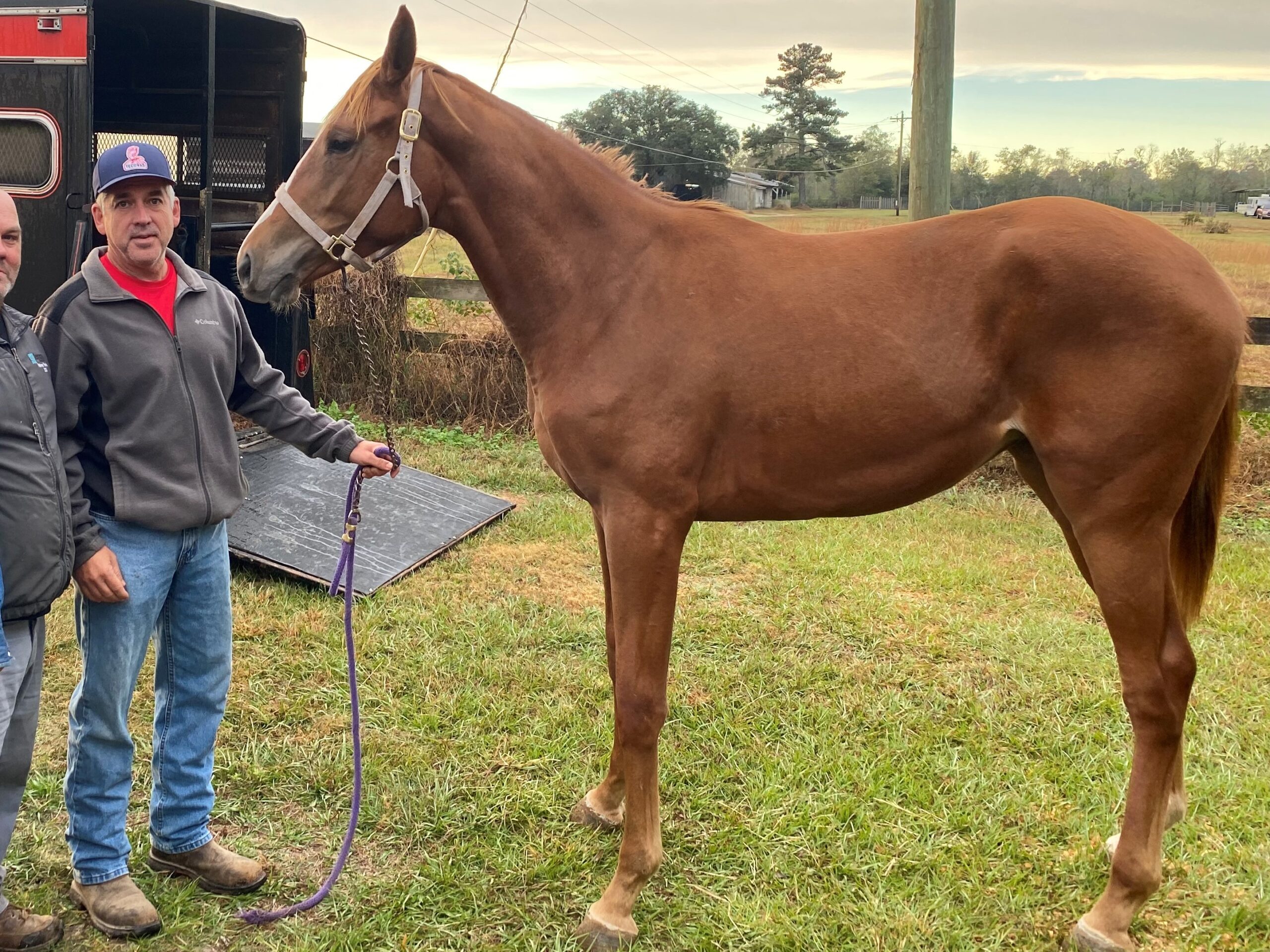
About Miles Henry
Racehorse Owner & Author | 30+ Years in Thoroughbred Racing
Miles Henry (legal name: William Bradley) is a professional horseman based in Folsom, Louisiana. He holds Louisiana Racing License #67012 and has spent over three decades managing Thoroughbreds at premier tracks including Fair Grounds, Delta Downs, and Evangeline Downs.
Expertise & Hands-On Experience: Beyond the track, Miles has decades of experience in specialized equine care, covering everything from hoof health and nutrition to training protocols for Quarter Horses, Friesians, and Paints. Every guide on Horse Racing Sense is rooted in this “boots-on-the-ground” perspective.
30 of their last 90 starts
Equibase Profile.

Connect with Miles: