

Last updated: November 11, 2026
Any links on this page that lead to products on Amazon are affiliate links and I earn a commission if you make a purchase. Thanks in advance – I really appreciate it!
Years ago, when my grandson was about 5, he asked me how I decide which saddle to use. I’ve got several Western saddles, so it was a fair question. My answer was simple: it depends on what you’re doing with your horse.
Here’s how the main types compare and what I’d consider before buying one.
Table of Contents
Types of Western Saddles at a Glance
| Saddle | Built for | Typical features |
|---|---|---|
| Ranch | All-day ranch work | Sturdy tree and heavier construction; often a slick seat, strong horn, and back cinch |
| Roping | Roping and dallying cattle | Reinforced tree, strong wrapped horn, grippy seat, forward-hung stirrups |
| Barrel racing | Speed and tight turns | Light build, deep seat, high cantle, tall horn |
| Cutting | Working a cow in the arena | Tall, thin horn, long flat seat, free-swinging fenders |
| Reining | Spins and sliding stops | Low horn and cantle, lighter build, close contact |
| Trail | Comfort on recreational rides | Padded seat, rings and strings for gear |
| All-around | A little of everything | Versatile design for several disciplines; roping capability varies by model |
| Western-style endurance | Long-distance competition | Lightweight, minimal skirt, often no horn |
| Show | Western show classes | Decorative tooling and silver trim; seat designed for the show class |
Ranch and Roping Saddles
Ranch saddles
A ranch saddle is built to work all day. It’s a versatile working saddle, usually big and heavy, with a sturdy tree, a slick seat that lets the rider move around easily during a long day, and a back cinch. Features vary by maker, but the idea is the same: a saddle that holds up to checking fences, moving cattle, and whatever else the day brings. Horse & Rider has a good rundown of ranch saddle features.

Roping saddles
Ranch and roping saddles are both working saddles, but a roping saddle is built specifically to withstand the strain of roping cattle. When a roper dallies, or wraps the rope around the horn, the horn and tree take the pull when the calf or steer hits the end of the rope. That’s why a roping saddle has a sturdy tree, a strong, wrapped horn, and reinforced rigging. Many also have a grippy seat and stirrups that hang farther forward so the rider can brace, according to NRS.
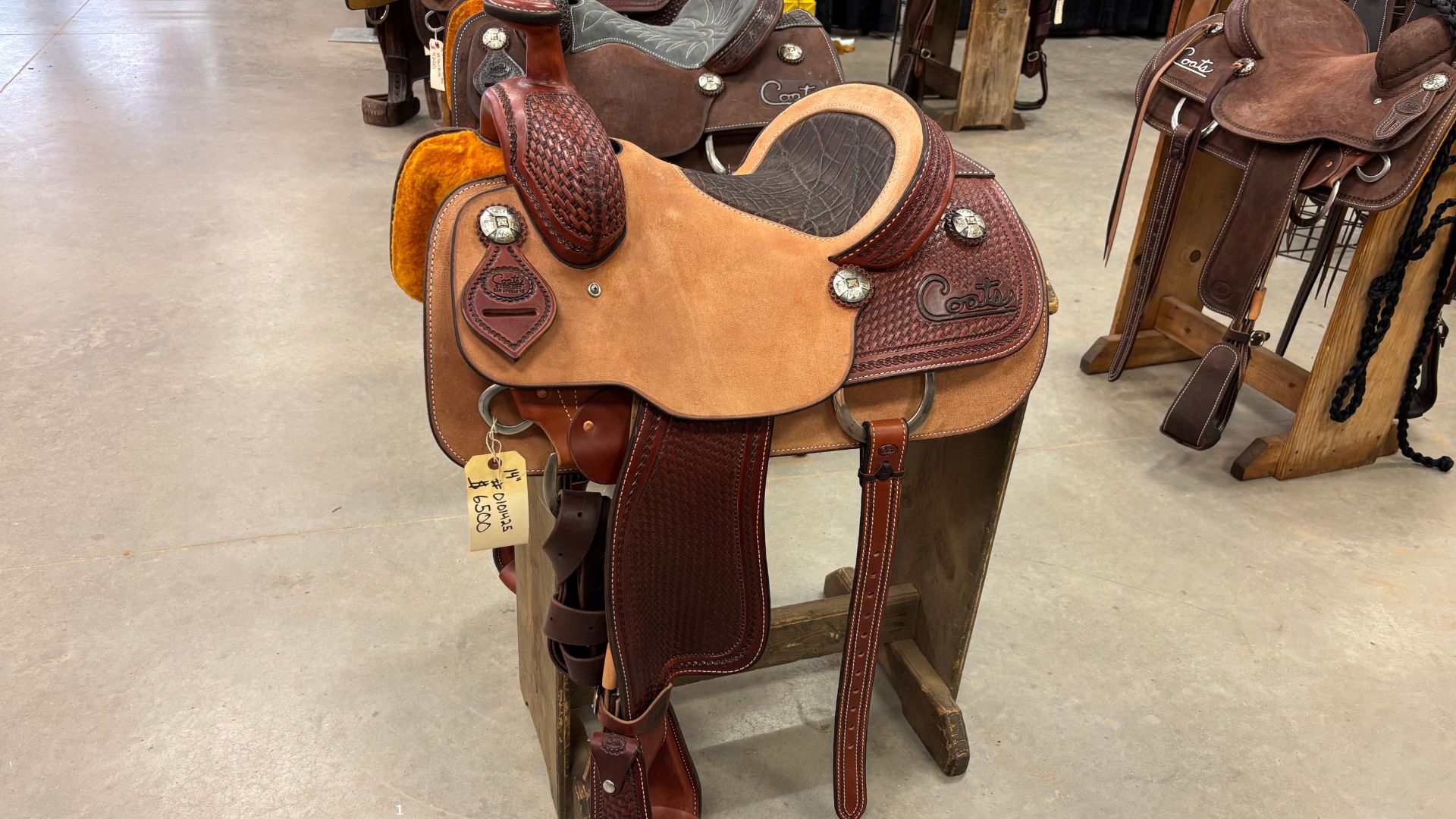
My kids and grandson all rope, and they use regular roping saddles. They don’t have a particular brand they insist on. We recently bought a Teskey’s roping saddle, the shop’s own brand, from Teskey’s Saddle Shop in Weatherford, just outside Fort Worth.
Barrel, Cutting, Reining, and Ranch Cutter Saddles
Barrel racing saddles
A barrel saddle keeps you in the seat through tight turns at speed. It’s small and light, with a deep seat, a high cantle, a tall, thin horn to grab in the turns, and often a roughout seat for grip, according to NRS. Many barrel saddles have shorter skirts to reduce bulk and give the horse more freedom of movement.

Cutting saddles
A cutting saddle is built to keep the rider balanced and out of the horse’s way while the horse works a cow. A long, flat seat, high, wide swells, a tall, thin horn, and free-swinging fenders let the rider move with the horse’s quick changes of direction, according to NRS.

Reining saddles
A reining saddle lets the rider sit balanced through spins, circles, and sliding stops. It usually has a low cantle and a low, small horn and is a little lighter than most. The fender and stirrup placement help the rider stay balanced and centered through those maneuvers, according to the Kentucky Horse Council.

Ranch cutter saddles
A ranch cutter is a versatile saddle for ranch work and working cattle in the arena. Horse & Rider describes ranch cutters as heavier and built to last, with a narrow seat for comfort. If you plan to rope off one, check the maker’s specifications first.
Trail, All-Around, and Endurance Saddles
Trail saddles
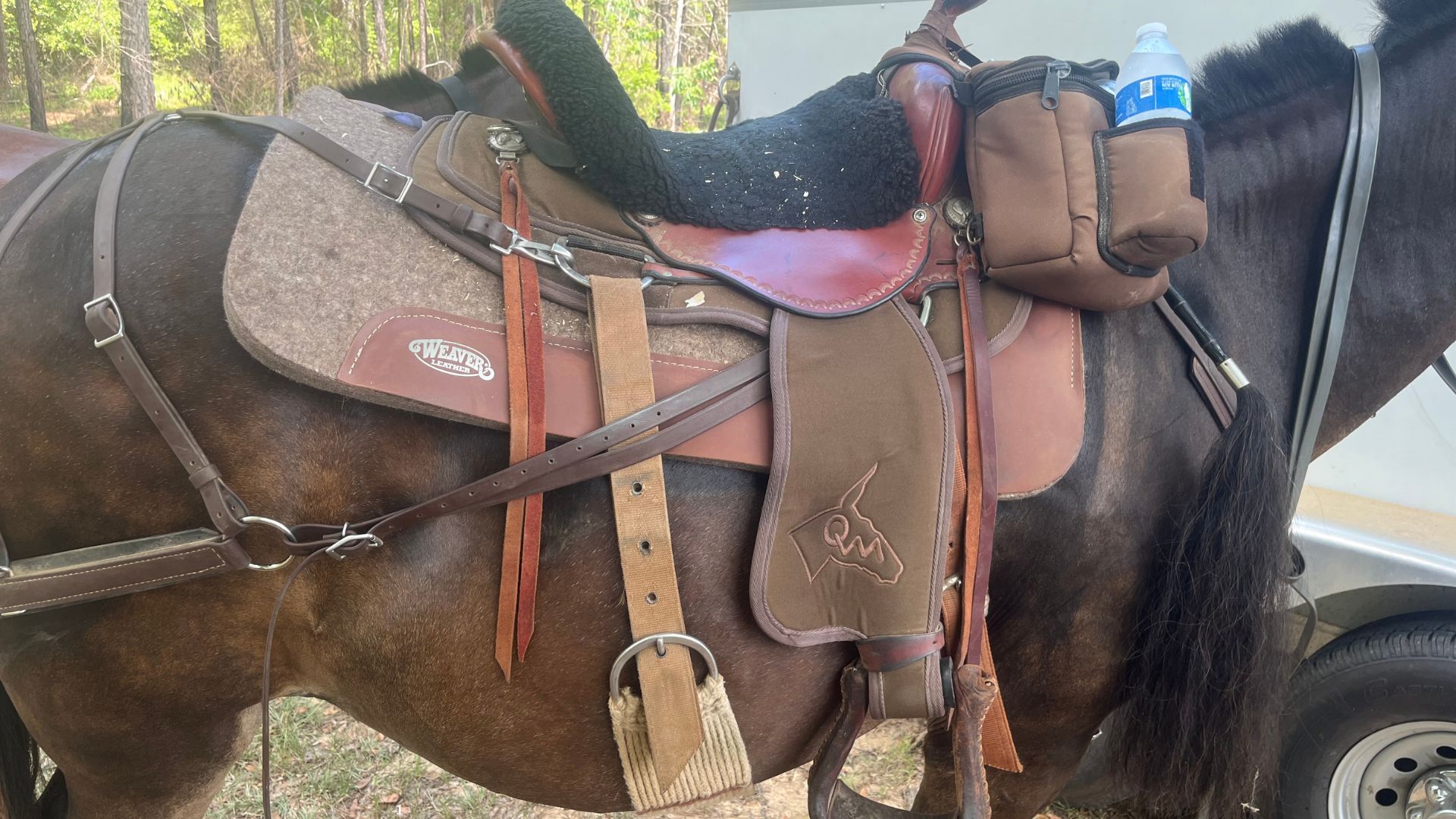
Trail saddles are built for recreational riding and are often sold as trail or pleasure saddles. They’re usually lighter than a ranch or roping saddle, with extra padding in the seat and rings or strings for carrying pommel and cantle bags. Here, I’m using “pleasure” to mean recreational riding rather than the Western pleasure show class.
All-around saddles
An all-around saddle is worth a look if you do several kinds of riding instead of specializing in one event. It combines features for versatility rather than being built around one job, and some models are made for light roping, according to Horse & Rider. Check the maker’s specifications before you rope off one, though. A roping-style horn doesn’t mean the saddle is built to take that kind of strain.
Western-style endurance saddles
Endurance saddles are made for long-distance competition. The Western-style versions are lightweight, with a minimal skirt, plenty of saddle strings for gear, and often no horn at all, according to Horse & Rider.
Western Show Saddles
A Western show saddle combines detailed tooling and silver trim with a seat designed for the show ring. The decoration is what stands out, but the seat matters, too: equitation saddles hold the rider more upright than pleasure saddles, according to the Kentucky Horse Council. Pick one for the classes you’ll ride, not just the looks.

How to Choose a Western Saddle
Start with the job, then make sure the saddle fits both you and your horse. Here’s what I’d weigh:
- How you’ll ride. Ranch work, roping, barrels, or weekend trail rides each call for a different saddle. If you trail ride, do a little ranch work, and don’t compete in a specialized event, a good all-around saddle may be the better choice.
- Fit for your horse. The tree, gullet, and bars have to suit your horse’s back. Watch for a saddle that rocks, sits too low on the withers, or creates uneven pressure, and if you’re unsure, have an experienced saddle fitter take a look.
- Fit for you. Seat size depends on your build, so don’t assume one size works for everyone. I go into seat sizes in what size Western saddle you need.
- Construction and weight. Leather quality, the tree, rigging, and weight should match how often and how hard you’ll use the saddle.
In my opinion, Billy Cook makes the best Western saddles, though they’re not cheap. If you can, try a saddle on your horse and ride in it before you commit, or make sure you can return it if it doesn’t fit.

Western vs. English Saddles
The big split in saddles overall is Western and English. Western saddles are generally larger and heavier, and most have a horn. English saddles are smaller and lighter, with no horn, and give the rider closer contact with the horse. You can see how the pieces of a Western saddle fit together in the parts of a Western saddle.
This video walks through the main types of Western saddles and what each is used for:

About Miles Henry
Racehorse Owner & Author | 30+ Years in Thoroughbred Racing
Miles Henry (legal name: William Bradley) is a professional horseman based in Folsom, Louisiana. He holds Louisiana Racing License #67012 and has spent over three decades managing Thoroughbreds at premier tracks including Fair Grounds, Delta Downs, and Evangeline Downs.
Expertise & Hands-On Experience: Beyond the track, Miles has decades of experience in specialized equine care, covering everything from hoof health and nutrition to training protocols for Quarter Horses, Friesians, and Paints. Every guide on Horse Racing Sense is rooted in this “boots-on-the-ground” perspective.
30 of their last 90 starts
Equibase Profile.

Connect with Miles: