

Last updated: August 12, 2026
At horse sales and online, “rare color” gets attached to plenty of ordinary palominos, buckskins, and gray horses. A horse can look unusual in the right light and still be a common color. The rare ones are different – they usually require specific genetic combinations or show up only in certain breeds and bloodlines.
Some rare horse colors and patterns include true white horses, brindle, pearl, silver dapple outside breeds where it is established, and few-spot leopard Appaloosas. Palomino and buckskin catch the eye, but they are not rare in the same sense.
Below, I’ll show you how to tell these colors apart, what the genetics mean, and when a color test is worth considering before you buy or breed.
Table of Contents
True White
A true-white horse is born with white hair and mostly pink skin underneath. That is different from a gray, which is born another color and gradually lightens with age while keeping dark skin beneath the coat, except where it already has white markings. This is one of the easiest places to get fooled at a sale: a gray can look nearly white from a distance, but dark skin around the eyes usually gives it away.
Most true-white horses carry a dominant-white variant on the KIT gene. It is not one simple look, though. Some variants produce an all-white horse, while others leave colored patches or create extensive white spotting. The Camarillo White is one well-known breed built around a specific dominant-white variant.
I also keep a closer eye on pink-skinned areas during hard summer sun. Pink skin can sunburn more easily, so it pays to watch the muzzle, face, and other exposed spots – and get your vet’s opinion if you see persistent redness, crusting, or other skin changes.

Brindle
Brindle produces a striped or marbled pattern on any base color, and it’s genuinely uncommon – unlike most coat colors, the genetics behind it still aren’t fully mapped. Some documented cases have been linked to chimerism, but not every brindle horse fits that explanation, which is part of why predicting or breeding for it isn’t really possible the way it is for a well-understood dilution. I go into the full genetics and history in my dedicated guide to brindle horses.
Pearl
Pearl is one of those colors a lot of owners have heard of, but few have actually seen in person. The reason it stays uncommon is simple: it’s a genuine recessive dilution, so a horse needs two pearl alleles – or one pearl allele plus one cream allele – before the color shows visibly. A horse with a single pearl copy and no cream shows no visible effect at all, but can still pass it on to a foal without you ever knowing it was there.
Two pearl alleles produce a pale, apricot-toned coat with a soft metallic sheen, ranging from light cream to a darker bronze. Pearl sits at the same genetic location as the cream gene, which is why the pearl-plus-cream combination produces its own distinct apricot dilution. It most often appears in American Quarter Horses, American Paint Horses, Peruvian Pasos, and Iberian breeds such as Lusitanos and Andalusians.
Silver Dapple
Silver dapple affects black pigment, not red pigment. On a black-based horse, it can lighten the mane and tail to flaxen or silvery gray and turn the body chocolate, brown, or dappled. On a chestnut, it may be carried without producing any obvious color change at all – which is worth knowing if you’re trying to rule it in or out on a red horse by eye alone.
It’s especially familiar in Rocky Mountain Horses and Icelandic Horses, where it’s been selectively bred into part of the breed’s identity, but it’s uncommon in many other breed populations. That’s why a silver horse can look genuinely unusual at one sale and fairly ordinary at another, depending on which breed is standing in front of you.

Breeding note: silver and eye health. The silver mutation is associated with a cluster of eye conditions called multiple congenital ocular anomalies, according to UC Davis’s coat color genetics research – generally more significant in horses carrying two silver alleles than one. This isn’t a reason to avoid the color – it’s a reason to test and discuss the specific horses with your vet before a planned mating, rather than guess from coat color alone.
Rare Horse Patterns and Color Combinations
A few specific pattern combinations are very uncommon, even within otherwise common color families. It helps to keep these three separate rather than lump them together, since they’re really different kinds of terms.
Medicine Hat: A descriptive name for a pinto pattern with a nearly all-white body and a colored patch confined to the ears and top of the head. The marking resembles a cap or hat, which is where the modern name comes from.
The longer you’re around horses, the more you realize a rare coat catches your eye for a few minutes – but the horse underneath is what matters for years.
Splash White: A family of white-pattern variants, not a single fixed pattern, with white markings that appear to splash upward from the belly and legs with smooth, solid edges rather than the roaned or jagged edges typical of other pinto patterns. Splash frequency varies significantly by breed – it’s genuinely uncommon in some populations and considerably more common in others, so treat “rare” here as breed-dependent rather than universal.
Few-Spot Leopard Appaloosa: A predominantly white Appaloosa with only a small number of dark spots. It’s commonly associated with two copies of the leopard-complex gene (LP/LP), but LP alone doesn’t fully explain it – a second gene called PATN1 acts as a pattern modifier and helps determine whether a horse ends up few-spot, near-few-spot, leopard, or another Appaloosa pattern entirely.
This is a color worth understanding before you breed for it, not just admire. Horses with two copies of LP have congenital stationary night blindness. UC Davis research also found an additive ERU-risk relationship by LP genotype – LP/LP greater than N/LP greater than N/N – and reported evidence that PATN1 may further help predict risk, though more work is needed to confirm the exact mechanism. A breeding decision here should weigh more than how the foal might look.
Colors That Look Rare but Usually Aren’t
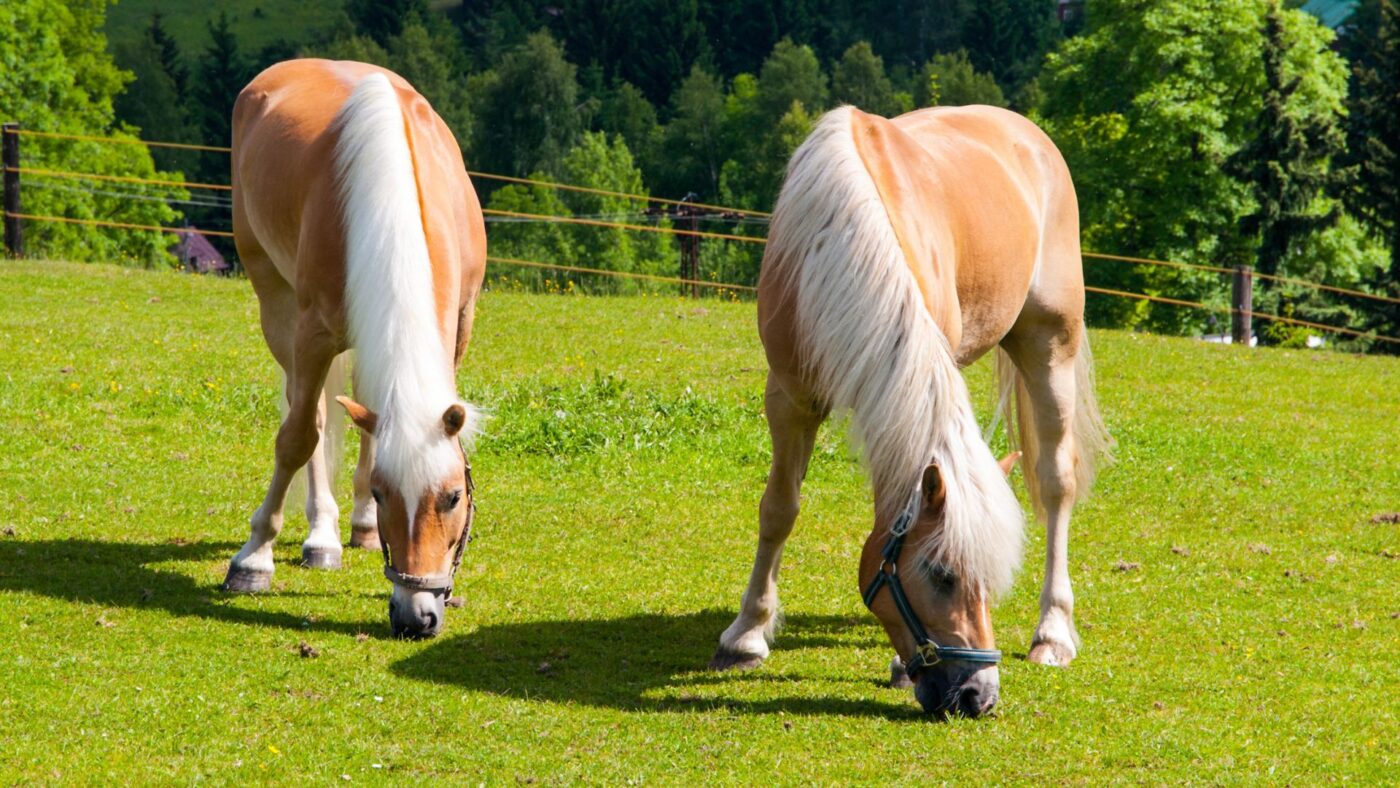
Palomino and buckskin are striking, but they aren’t rare – a single copy of the cream gene is enough to produce them, a much easier bar to clear than the two-allele colors above. Champagne and dun are similarly uncommon rather than genuinely rare. The double dilutes – cremello and perlino – do require a foal to inherit two cream alleles, which makes them less common, though that second allele doesn’t have to come from two separate “carrier” parents – a cremello, perlino, or smoky cream parent passes a cream allele to every foal it has. For the full genetics behind any of these, see my horse color genetics guide.
FAQs About Rare Horse Colors
Can a DNA test confirm a horse’s rare color?
Yes, DNA testing can confirm many known color and pattern variants, including pearl, silver, cream, LP, and PATN1. It’s especially useful when a horse’s appearance is ambiguous or when you’re making a breeding decision. But not every unusual-looking pattern has a single confirmatory test – brindle, for example, is still not fully explained genetically.
Does a rare coat color make a horse more valuable?
Color alone rarely makes a good horse valuable. In my experience, ability, soundness, temperament, and pedigree matter far more than having an unusual coat. A striking color can add interest and occasionally a premium, but it should never be the main reason you buy or breed a horse.
Can two ordinary-looking horses produce a rare-colored foal?
Yes, but it depends on the color. Pearl can hide in a horse carrying one pearl allele with no cream allele, so two ordinary-looking pearl carriers can produce a visibly pearl foal. Cream works differently: a single cream allele is always visible as palomino, buckskin, or smoky black. A cremello, perlino, or smoky cream foal must inherit a cream allele from each parent, so at least one parent will usually show visible cream dilution.
Are any rare horse colors connected to health issues?
Some are. Two copies of the leopard complex gene (LP/LP) cause congenital stationary night blindness and a higher risk of equine recurrent uveitis. The silver dapple mutation is linked to a cluster of eye conditions called multiple congenital ocular anomalies, more pronounced with two copies. True white horses have more sun-sensitive pink skin. None of these are reasons to avoid the colors – they’re reasons to test and talk to your vet before breeding.
What is the rarest horse color?
There’s no single reliable worldwide registry ranking every coat color across every breed, so a definitive answer isn’t really provable. True white and brindle are generally considered among the least common, since both involve either strict genetic requirements or genetics that still aren’t fully mapped.
Before paying a premium for color, look past the sales description. Check the horse in natural light, examine the skin and markings, review the pedigree, and use a color test when the genetics affect a breeding decision. A striking coat is worth enjoying, but it should never be the only thing you buy – or breed – for.
About Miles Henry
Racehorse Owner & Author | 30+ Years in Thoroughbred Racing
Miles Henry (legal name: William Bradley) is a professional horseman based in Folsom, Louisiana. He holds Louisiana Racing License #67012 and has spent over three decades managing Thoroughbreds at premier tracks including Fair Grounds, Delta Downs, and Evangeline Downs.
Expertise & Hands-On Experience: Beyond the track, Miles has decades of experience in specialized equine care, covering everything from hoof health and nutrition to training protocols for Quarter Horses, Friesians, and Paints. Every guide on Horse Racing Sense is rooted in this “boots-on-the-ground” perspective.
30 of their last 90 starts
Equibase Profile.

Connect with Miles: