
Last updated: October 14, 2026
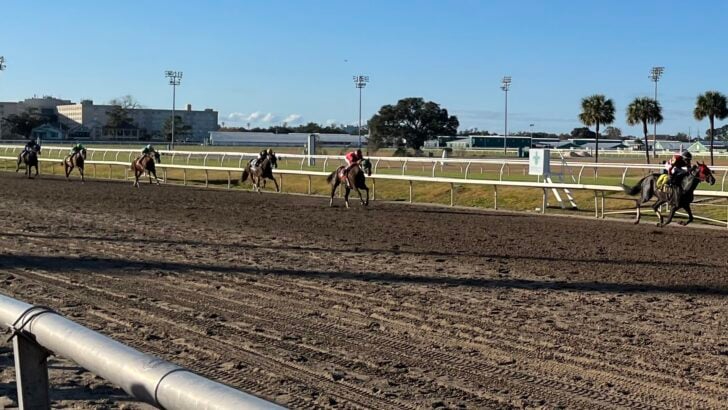
From the grandstand, it can look like horse racing jockeys just sit there for a minute and a half while the horse does the running. I’ve watched jockeys at Fair Grounds win races that had no business being won and lose races that were sitting right there for the taking. After enough of those, you stop blaming the horse.
Here’s what jockeys actually do on race day and off it, what the job takes physically, how dangerous it is, how they get paid, and what all of it means if you’re betting.
Table of Contents
What It Means to Be a Horse Racing Jockey
Not every horse rider is a jockey. Horse racing jockeys are licensed professionals who ride horses in races, while exercise riders work horses in the mornings and pleasure riders ride for recreation. The difference matters because a jockey’s job is judged by race-day results: getting a clean trip, managing the horse’s energy, and giving the trainer an honest read afterward.
Most jockeys work with an agent who books their mounts and maintains relationships with trainers. The agent is usually paid a percentage of the jockey’s earnings, though the exact arrangement varies. The best riders get the best mounts because trainers with good horses want them; trainers with fewer horses or fewer mounts often end up using riders who are available and willing to take the call.
Race-Day Duties: Paddock to Finish Line
A jockey’s race day starts well before the gate opens. Here’s how the job actually flows, from weighing out in the jockeys’ room to reporting back to the trainer after the finish.
Weighing Out, the Paddock, and Tack Inspection
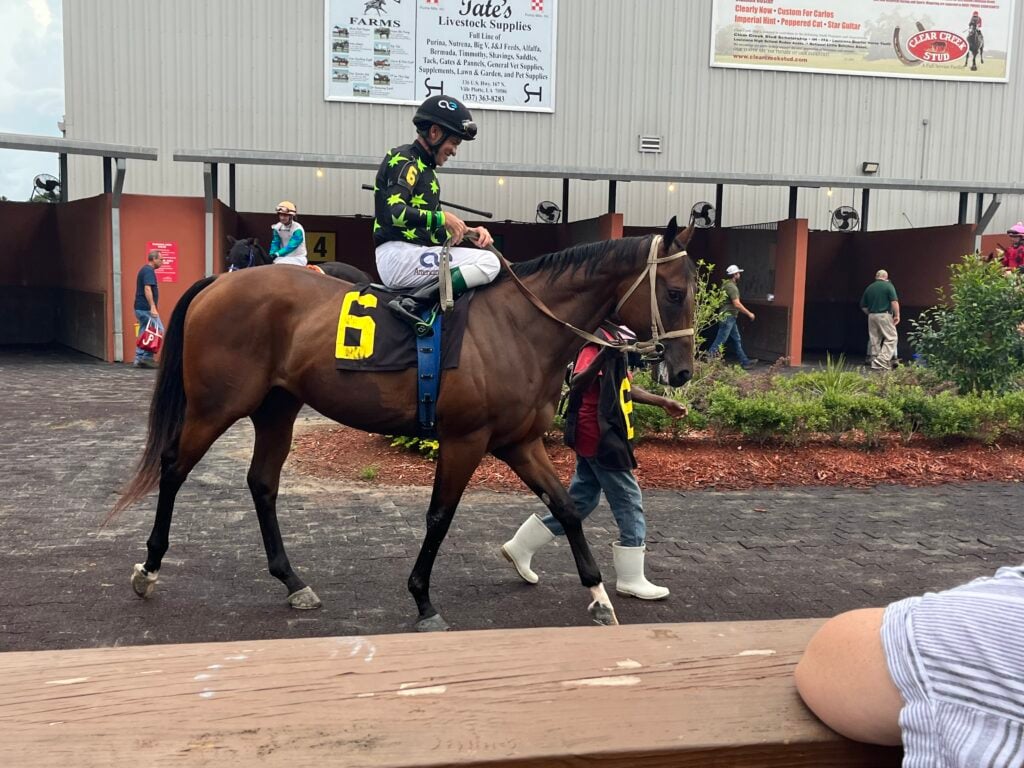
Before the race, the jockey weighs out on the scale in the jockeys’ room, with the saddle and equipment, in front of the clerk of scales. If the rider is lighter than the weight the horse was assigned, lead weights in a pad under the saddle make up the difference. In the paddock, they check the horse’s equipment themselves. A loose girth, a poorly seated bit, or a shifted saddle can turn a winning chance into a dangerous situation. It’s not a formality. It’s the last line of defense before horse and rider go onto the track at full speed.
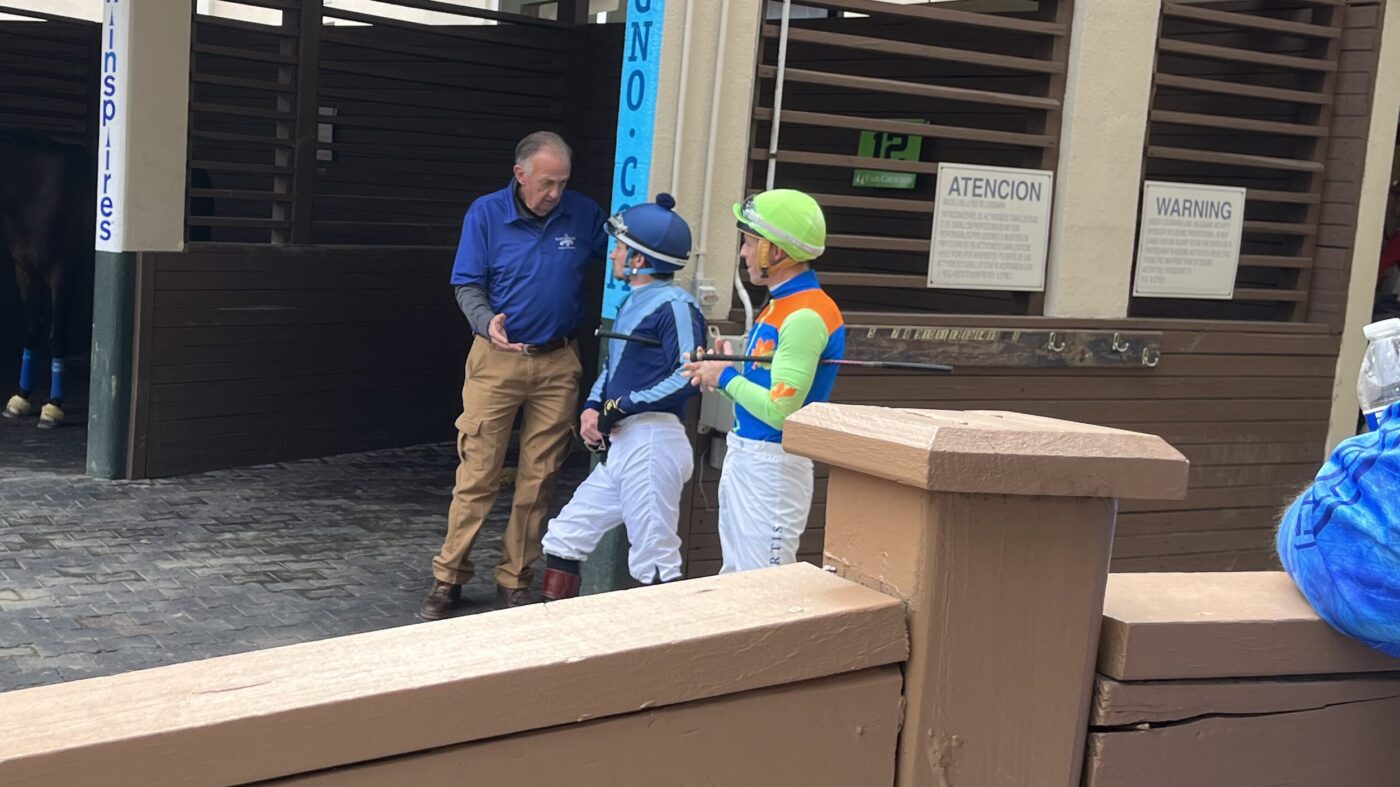
The paddock is also where the jockey gets final instructions. The trainer tells them where to try to position the horse, what to do if the pace goes fast or slow, and whether the horse needs to be rated early or sent. Owners are usually standing right there, too. It’s a short conversation, but an important one.
Post Parade and Warm-Up
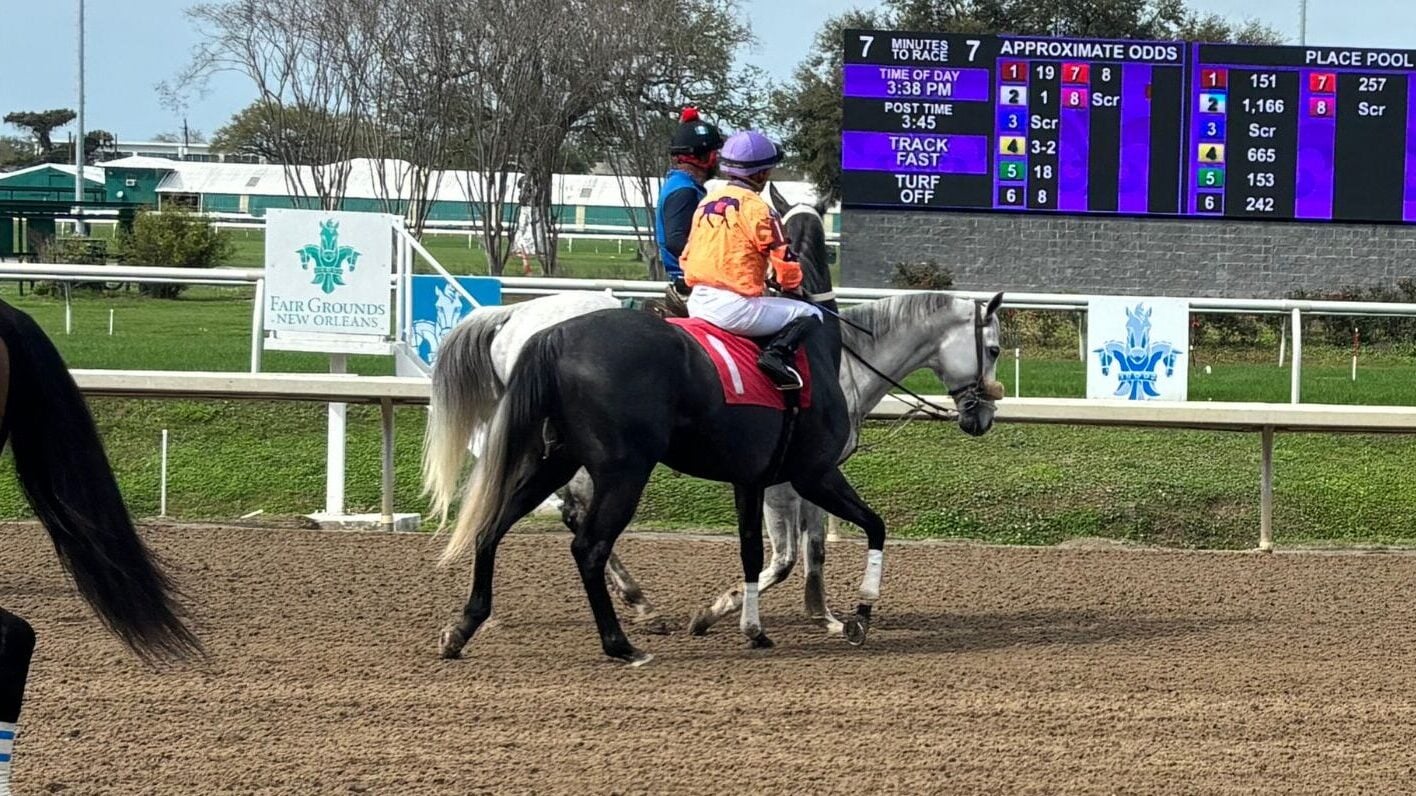
On the way to the gate, the jockey is already reading the horse: how relaxed it is, whether it’s pulling, how its stride feels. A horse that warms up tense is going to run differently than one that’s settled, and the jockey starts adjusting before the gates even open. A rider who’s been on the horse before may pick up on its habits sooner.
The Race
Once the gates open, the decisions come fast: breaking position, finding a spot going into the first turn, deciding whether to press or rate behind the pace. In a sprint, the whole race can be decided in the first two furlongs if a jockey gets caught in traffic or lets a front-runner steal too much ground. Routes give a jockey more time to adjust, but they also bring more decisions about pace, position, and when to ask for run. Ask too soon and the horse may empty out before the wire. Wait too long and the race may be gone before the jockey ever asks. How the jockey sits matters, too, and there’s a reason behind why jockeys crouch and stand in the irons.
After the Race
After pulling up, the jockey rides back, unsaddles, and weighs in to confirm they still carried the assigned weight. If a jockey comes back too light, the horse can be disqualified. The exact rule varies by state. Maryland’s, for example, disqualifies the horse if the jockey is more than 1 pound short. Then the jockey gives the trainer their read on the race: whether the horse was comfortable, whether it changed leads correctly, and whether it handled the distance. That conversation is more useful than it sounds, especially with a horse you’re still learning.
| Phase | Key responsibilities | Why it matters |
|---|---|---|
| Weighing out and paddock | Weigh out, check tack, get final strategy from the trainer | Equipment failure mid-race has real consequences, and the plan has to be set before the gate opens |
| Post parade | Read the horse’s energy and temperament | A jockey who doesn’t know how the horse feels that day makes worse decisions early |
| Break and early position | Secure position and find a running lane | Getting trapped in traffic early costs ground that’s hard to make up |
| Middle stages | Manage pace, rating or pressing based on the shape of the race | Burning a horse out early leaves nothing for the stretch, and rating too long gives front-runners too much ground |
| Stretch run | Ask for full effort at the right moment | Asking too soon or too late is one of the most common ways a winnable race gets lost |
| After the race | Weigh in and report to the trainer | Confirms the horse carried legal weight, and the feedback shapes decisions about distance, surface, and equipment |
Skills and Physical Demands
Riding races for a living takes more than being a good rider. The physical side alone knocks most people out before they ever get near a starting gate.
Physical Requirements
Many jockeys keep their body weight somewhere around 110 to 118 pounds, though the weight a horse actually carries depends on the race conditions and includes the saddle and equipment. They have to do it while keeping the balance, core strength, and grip strength to control a 1,200-pound horse running 35 miles an hour or more. That combination of very low body weight and very high physical output is what makes the job so demanding. A jockey who lets their fitness slip will feel it on a horse that tests them.
Mental Toughness
Fitness matters, but so does keeping your head when a race stops going to plan. A race is over in a minute or two, and in that time a jockey makes dozens of small decisions: when to move off the rail, when to ask for run, when to stay patient. There’s no time to think through options. The best riders read the situation before it fully develops, and they stay calm even when horses clip heels or the pace falls apart. The good ones also talk through the likely pace with the trainer beforehand, then adapt when the race doesn’t go to plan.
How Jockeys Communicate With Horses
Jockeys don’t steer a horse the way most beginners imagine. Most communication is physical. Hands regulate rein pressure, legs ask for more speed or keep a horse straight, and weight shifts help balance a horse through the turns or ask it to switch leads in the stretch. Voice gets used now and then, more often before the race or in the gate than during the running, but once the gates open, almost everything the horse feels comes through the rider’s body. That physical communication is a big part of how jockeys make horses go faster without just going to the whip.
How Dangerous Is It to Be a Jockey?
Very dangerous. Jockeys ride at 35 miles an hour or more in a tight pack, with a helmet and a safety vest as their main protection. In California, researchers counted 601 jockey falls and 325 injuries across 264,055 race rides from 2007 to 2012. That works out to about 2.3 falls and 1.2 injuries for every 1,000 rides. Those are figures from one state over those years, not a current national rate, but busy jockeys ride hundreds of races a year, so falls are an unavoidable risk of the job, not something that only happens to unlucky riders.
When a jockey does go down, the head, shoulders, and upper body usually take the worst of it. A study of British jockeys found that head injuries were the most common career-ending injuries, followed by fractures and spinal injuries. The worst falls change lives for good. The Permanently Disabled Jockeys Fund supports 60 former jockeys living with paralysis, brain injuries, and other catastrophic injuries from riding.
Making weight takes its own toll. Studies of jockeys have found heavy use of saunas, sweat suits, and food and fluid restriction, and one small study of 27 Irish jockeys found 54 percent were severely dehydrated on race days. The long-term wear shows up after they retire. In a study of 135 retired professional jockeys, the riders had about 7.5 times the odds of osteoarthritis of men in a comparison group from the general population, along with higher odds of osteoporosis, anxiety, and depression.
What Jockeys Do Outside of Race Day
Many riders are on the track in the morning working horses for trainers who want feedback on how a horse is moving, breathing, or changing leads. Young horses also need schooling: learning to stand in the gate, relax in company, and handle the chaos of a racetrack. Experienced jockeys are valuable here because they can feel problems early and explain them clearly to the barn.
Between race days, jockeys watch replays, talk to their agents, and stay in front of the trainers who control the mounts. Trainers remember which riders show up and give them useful feedback. A rider who’s talented but hard to work with will lose business, and a rider who communicates well, shows up on time, and gives useful feedback gets called back. Then there’s the weight, which is daily work, with meals, hydration, exercise, and recovery planned around riding.
How Much Do Jockeys Make Per Race?
Jockeys get paid per mount, and most of the money is in winning. Each state sets a default fee schedule that applies unless the owner and jockey agree to something else. In Louisiana, the winning jockey gets 10 percent of the winner’s share of the purse in all but the smallest races. That 10 percent is the jockey’s total fee for winning, not a mount fee plus a percentage of the purse. Here’s how the Louisiana schedule breaks down:
| Purse | Win | Second | Third | Unplaced |
|---|---|---|---|---|
| $499 and under | $27 | $19 | $17 | $16 |
| $500 to $699 | $30 to $36 | $20 to $22 | $17 | $16 |
| $700 to $9,999 | 10% | $25 to $90 | $22 to $80 | $20 to $75 |
| $10,000 to $14,999 | 10% | 5% | $85 | $80 |
| $15,000 to $24,999 | 10% | 5% | 5% | $85 |
| $25,000 to $49,999 | 10% | 5% | 5% | $90 |
| $50,000 to $99,999 | 10% | 5% | 5% | $105 |
| $100,000 and up | 10% | 5% | 5% | $130 |
Other states use similar schedules, though the dollar amounts vary, so check the rules where your horse is running.
As an example, a jockey who wins a race where the winner’s share is $20,000 earns about $2,000 before expenses, while the same jockey finishing fifth might earn less than $100. Out of that, the jockey typically pays an agent and a valet, and may cover other expenses depending on the arrangement, so the take-home is less than the fee. That’s why top riders chase live mounts, and why a jockey’s agent works so hard to get them on horses that can win.
How Trainers Match Jockeys to Specific Racehorses
Not every good jockey fits every horse. Some horses need a patient hand, some respond to a quieter rider, and some just click with one rider’s timing and style.
How Horse Racing Jockeys Affect Racing Results and Betting
Jockey selection is one of the most underused factors in handicapping. Most casual bettors look at a jockey’s overall win percentage. That’s a starting point, but it misses more useful context. None of these factors is a sure thing on its own. Here’s what I’d check:
| Factor | What to look for | Why it matters |
|---|---|---|
| Jockey-horse fit | The same rider and horse running back together | Familiarity helps when the horse has quirks or needs patient handling |
| Jockey change | A clear rider upgrade or downgrade from the last start | A rider change can signal intent, but it can also just mean the regular rider wasn’t available |
| Bug allowance | An apprentice rider getting a weight break, 5 to 10 pounds depending on the state | A real weight advantage, especially in longer races |
| Trainer-jockey win rate | The win percentage for this specific combination | A jockey who wins 18 percent overall but 28 percent with one trainer is a different bet in that barn’s horses |
| Pace fit | Whether the jockey’s style suits the horse’s running style | An aggressive front-end rider on a horse that needs rating is a mismatch that shows up in the stretch |
Apprentice allowances vary more than most bettors realize. Many states use a 10-, 7-, and 5-pound scale as the apprentice wins more races, while Louisiana and several other states use a flat 5-pound allowance. Either way, the allowance is one more reason to understand why racehorses carry different weights.
Jockeys can also be fined or suspended by the stewards for interference, careless riding, or other rule violations. Whether a jockey is to blame for a loss in the broader sense is a judgment owners and trainers make for themselves, but a rider who keeps making poor pace decisions or gets beat out of the gate on horses that need a good break will stop getting calls from that barn.
About Miles Henry
Racehorse Owner & Author | 30+ Years in Thoroughbred Racing
Miles Henry (legal name: William Bradley) is a professional horseman based in Folsom, Louisiana. He holds Louisiana Racing License #67012 and has spent over three decades managing Thoroughbreds at premier tracks including Fair Grounds, Delta Downs, and Evangeline Downs.
Expertise & Hands-On Experience: Beyond the track, Miles has decades of experience in specialized equine care, covering everything from hoof health and nutrition to training protocols for Quarter Horses, Friesians, and Paints. Every guide on Horse Racing Sense is rooted in this “boots-on-the-ground” perspective.
30 of their last 90 starts
Equibase Profile.

Connect with Miles: