

Last updated: August 1, 2026
Most losing bettors focus on picking winners. Profitable bettors focus on whether the odds justify the risk. The problem is that most bettors overbet favorites, ignore takeout, and increase wager size emotionally during losing streaks.
The core principle in one sentence: A profitable bet is not one where you pick the winner — it is one where the odds offered exceed the horse’s true winning probability by a meaningful margin. Everything else in this guide is in service of finding that edge and betting it correctly.
| Topic | Quick Reference |
|---|---|
| Best first strategy | Flat betting — Win bets only, 1–2% unit size, 50+ tracked races before changing anything |
| Value bet threshold | Your estimated win probability exceeds implied odds by 10%+ (implied probability = 1 ÷ decimal odds) |
| Standard unit size | 1–2% of total bankroll per race |
| Maximum single bet | Never exceed 5% of bankroll on any one race |
| When to use Kelly | After 200+ tracked bets with confirmed positive ROI — use half-Kelly or quarter-Kelly, not full |
| Avoid entirely | Martingale; exotic-heavy betting before 6 months of straight-bet experience |
| Track takeout | 15–20% on straight bets; 20–25% on exotics — you must have a real edge just to break even |
| Free tools | Bankroll Tracker + Dutching Calculator — both free downloads |
Long-term success in betting horse races comes from three things: identifying value, surviving losing streaks through disciplined bankroll management, and handicapping races accurately enough to estimate true win probability. This guide covers all three — from the simplest flat betting approach to Kelly Criterion position sizing — with real race examples throughout.
About this guide: Written by Miles Henry, licensed Louisiana racehorse owner (#67012) with 30 years at Fair Grounds, Evangeline Downs, Delta Downs, and Louisiana Downs. This guide reflects 30 years of betting and horse ownership — including what works, what looks like it works but doesn’t, and the bankroll mistakes that most bettors make before they develop discipline.

Table of Contents
Understanding Horse Racing Bets
Before applying any strategy, you need a clear understanding of the bet types available and what each one actually costs you in terms of probability and takeout. Horse racing offers simple straight bets and complex exotics — each with a different risk/reward profile. Starting with the simple bets builds the discipline and handicapping foundation that makes exotic betting viable later.
Straight Bets: The Foundation
Win means your horse must finish first — the highest payout for a single horse selection and the best starting point for beginners because it forces you to have a real opinion. Place pays if your horse finishes first or second — safer but with meaningfully lower payouts that make consistent profit difficult. Show pays for first, second, or third — the lowest payouts of the three, rarely worth the return on investment for a skilled handicapper.
Exotic Bets: Higher Risk, Higher Reward
Exotic bets involve multiple horses for bigger payouts but hit at significantly lower rates. Exotics account for roughly 60% of total betting handle at major tracks, but the takeout on exotic pools (20–25%) is meaningfully higher than straight bets (15–20%). The payouts can be exceptional — but they require the discipline not to chase them before your handicapping is solid enough to support them.
The main exotic bet types:
- Exacta: Pick the first two finishers in exact order. Box two horses (a $2 box costs $4) to cover both possible finishing orders
- Trifecta: Pick the first three in exact order. Key a strong horse on top to reduce the total cost
- Superfecta: Pick the first four in exact order — large payouts but very low hit rates even for experienced handicappers
- Daily Double / Pick 3/4/5/6: Pick winners of consecutive races — avoid these until you have at least six months of consistent straight-bet success
2025 Kentucky Derby Payout Examples
Sovereignty won the 2025 Kentucky Derby at approximately 8-1 odds. Here is what each bet type returned on a base wager:
| Bet Type | What You Need | 2025 Derby Payout (base wager) | Beginner Suitability |
|---|---|---|---|
| Win | Horse finishes 1st | $10 on Sovereignty = $90 | Start here — forces a real opinion |
| Place | 1st or 2nd | $10 on Sovereignty = $38 | Safety net but weak ROI |
| Show | 1st, 2nd, or 3rd | $10 on Sovereignty = $26 | Rarely profitable — avoid |
| Exacta | First two in exact order | $2 bet (18-8) = $48.32 | Next step after mastering Win bets |
| Trifecta | First three in exact order | $1 bet (18-8-21) = $231.12 | Advanced — wait 6+ months |
| Superfecta | First four in exact order | $1 bet (18-8-21-3) = $1,682.27 | Advanced — avoid until experience-proven |
Top Horse Racing Betting Strategies
Every strategy below is built around the same core principle: finding situations where the odds exceed the horse’s true win probability. The strategies differ in how they structure bets around that edge, not in whether they need one.
1. Flat Betting: The Steady Foundation
Flat betting means wagering the same amount on every bet regardless of confidence level. It is the simplest approach and the best one for bettors still developing their handicapping skills — it prevents the emotional decision-making that destroys bankrolls during losing streaks.
How it works: Set a fixed unit size (typically 1–2% of your total bankroll), bet one unit per race on your top pick, and track results over at least 50 bets before evaluating whether to adjust. Never increase or decrease bet size based on recent results. In the 2025 Kentucky Derby, a flat $10 Win bet on Sovereignty returned $90 — an $80 profit. Over 10 races with a 20% hit rate where both winners averaged 8-1, you’d wager $100 total and collect $180 for an $80 net profit.
Pros: Low variance, prevents chasing losses, easy to track. Cons: Does not adjust for higher-confidence spots, which means leaving edge on the table in situations where you have genuine certainty.
2. Value Betting: Betting Against the Public
Value betting is the foundation of profitable horse racing wagering. A value bet occurs when the odds offered exceed a horse’s true winning probability by a meaningful margin. You do not need winners to profit — you need winners at the right price. A horse with a 25% true chance of winning is a good bet at 4-1 (25% implied probability) but a bad bet at 3-2 (40% implied probability), even if it wins both times.
How to identify a value bet — three steps:
- Step 1: Estimate the horse’s true win probability using speed figures, class, pace analysis, and trainer stats — see our handicapping guide for the method
- Step 2: Convert the track odds to implied probability: implied probability = 1 ÷ (odds + 1). A horse at 4-1 has an implied probability of 20%; at 9-2, it is 18.2%
- Step 3: Bet when your estimated probability exceeds the implied probability by at least 10 percentage points — that gap is the value margin that beats the takeout over time
Real example: In the 2024 Preakness, Seize the Grey was at 9-1 (10% implied probability) with pace figures suggesting a 20–25% true win chance. He won, paying $20.80 on a $2 Win bet.
3. Dutching: Covering Multiple Contenders
Dutching spreads your total stake across two to four horses so that each returns approximately the same profit if it wins. It is useful in competitive races where handicapping identifies multiple legitimate contenders but no single standout. Download the free Dutching Calculator to run the math before placing any bets.
2025 Derby example: Dutching $100 across three contenders — Journalism at 7/2 ($53.61 stake), Sovereignty at 7/1 ($30.20 stake), Catching Freedom at 14/1 ($16.11 stake). When Sovereignty won at approximately 8-1, the $30.20 stake returned $241.60 — a $141.60 profit on the $100 total outlay. The formula for each horse’s stake is: Total Stake ÷ Sum of (1 ÷ Decimal Odds for each horse) × (1 ÷ This Horse’s Decimal Odds).
4. Arbitrage: Exploiting Odds Differences
Arbitrage exploits odds differences across wagering platforms for a guaranteed profit regardless of outcome. These opportunities are small and disappear quickly, but they compound meaningfully when combined with deposit bonuses and promotional odds boosts. When the combined implied probability of all bets is below 100%, arbitrage exists.
How it works: Compare odds for the same horse on multiple platforms using a comparison tool. Calculate proportional stakes so that each bet returns the same amount. If Horse A is at 3-1 on one platform (25% implied) and 4-1 on another (20% implied), the combined implied probability is 45% — well below 100%, meaning a guaranteed profit is available by betting proportionally on both. Bet $75 at 3-1 (return: $300) and $60 at 4-1 (return: $300). Total investment $135, guaranteed return $300, guaranteed profit $165.

Proven Systems: Simple vs. Advanced
Betting systems provide structured methods to size and manage wagers once you have identified an edge through handicapping. No system beats the takeout long-term without that underlying edge. A system applied to bad handicapping is just a more organized way to lose money.
Hedging: Protecting Profits on Live Tickets
Hedging places a secondary bet that locks in profit or reduces loss on an existing wager. It is most useful when you hold a multi-race exotic ticket that is live heading into the final leg — the decision becomes whether the guaranteed return from hedging is worth giving up the chance at the full payout.
Simple approach: Pair a Win bet with a Place or Show bet on the same horse. A $20 Win bet plus a $5 Place bet on the same horse means you collect the Place payout even if the horse finishes second, reducing a total loss to a smaller net loss. 2025 Derby example: $20 Win on Sovereignty (8-1) plus $5 Place on Journalism (7-2). If Sovereignty wins, the Win bet profits. If Journalism places, the $12.50 approximate place payout reduces the total loss significantly.
When to hedge: You backed a longshot and want downside protection. You are ahead in a multi-race bet and want to lock profit on the last leg. You are testing a new handicapping method with real money and want to limit exposure while learning. The trade-off is always the same: guaranteed protection costs potential upside.
System Comparison
| System | How It Works | Pros | Cons |
|---|---|---|---|
| Flat Betting | Same amount every bet regardless of confidence | Simple, low variance, prevents emotional decisions | Does not adjust for high-value spots |
| Value Betting | Bet when your estimated probability exceeds implied odds by 10%+ | The only approach that produces positive long-term ROI | Requires accurate probability estimation — difficult for beginners |
| Dutching | Proportional stakes across 2–4 horses for equal return | Higher hit rate in competitive fields | Lower per-race profit; requires strong multi-horse handicapping |
| Hedging | Counter-bet to lock profit or reduce loss on existing wager | Guarantees some return; reduces variance | Cuts maximum upside; should be situational, not habitual |
| Kelly Criterion | Mathematically optimal bet size based on edge percentage | Maximizes bankroll growth when edge estimates are accurate | Requires 200+ tracked bets to have reliable probability data; small errors cause overbetting |
| Martingale | Double bet size after each loss | Quick recovery in theory | Avoid entirely. Five consecutive losses turns a $10 bet into a $320 next bet. Common losing streaks wipe bankrolls fast. |
The Kelly Criterion: Mathematical Bet Sizing
The Kelly Criterion is a formula that calculates the mathematically optimal fraction of your bankroll to bet based on your estimated edge. It maximizes bankroll growth while managing risk — but it requires accurate probability estimates that only come from tracking hundreds of bets. Use it after proving your handicapping edge over at least 200 tracked bets.
The formula: Kelly % = (bp − q) ÷ b, where b = decimal odds minus 1 (net odds), p = your estimated win probability, q = 1 − p (estimated loss probability). 2024 Belmont example: Dornoch at 17-1 odds with an estimated 8% win probability. Kelly calculation: b = 17, p = 0.08, q = 0.92. Kelly % = (17 × 0.08 − 0.92) ÷ 17 = 0.026 — bet 2.6% of bankroll. On a $1,000 bankroll, that is $26. Dornoch won, returning $468 on the $26 stake — a $442 profit, growing the bankroll by 44.2%.
Use half-Kelly or quarter-Kelly in practice. Full Kelly requires perfectly accurate probability estimates — any error in your p value produces systematic overbetting. Professional bettors who use Kelly almost universally apply a half-Kelly or quarter-Kelly fraction as a buffer against estimation error. On the Dornoch example: half-Kelly means $13, quarter-Kelly means $6.50. Both are profitable if the horse wins; neither destroys the bankroll if the estimate was wrong.
Bankroll Management Essentials
Bankroll management is more important than any individual betting strategy. Without it, even accurate handicapping produces net losses because large individual bets create variance that wipes out profits during normal losing streaks. Even experienced handicappers experience 10–15 race losing streaks — it is not a reflection of skill, it is the math of a sport with 15–25% takeout and real uncertainty.
The Unit System
Your bankroll is money set aside solely for betting — funds you can afford to lose completely without affecting daily expenses. Start with $500–$1,000 and do not add more until you have established whether your handicapping produces any edge. One unit equals 1–2% of your total bankroll. For a $1,000 bankroll, one unit is $10–$20. Never exceed five units on any single race regardless of confidence.
| Bankroll | Unit Size (1%) | Unit Size (2%) | Max Single Bet (5%) | Notes |
|---|---|---|---|---|
| $500 | $5 | $10 | $25 | Conservative learning phase — gives 50+ bets to evaluate handicapping |
| $1,000 | $10 | $20 | $50 | Standard recreational level — enough runway to survive variance |
| $2,500 | $25 | $50 | $125 | Intermediate — recalculate unit size after 25%+ bankroll change |
| $5,000 | $50 | $100 | $250 | Advanced — only appropriate after 200+ tracked bets show positive ROI |

The Non-Negotiable Rules
These four rules apply regardless of your strategy, your confidence level, or how the last few bets went. They are not guidelines — they are the difference between a recoverable losing streak and a bankroll that does not survive long enough to apply the lessons learned from it.
Four bankroll rules that cannot be broken:
- Never bet more than 5% of bankroll on a single race — this is the absolute ceiling, not a target; most bets should be 1–2%
- Never chase losses — after three consecutive losing bets in a session, stop for the day; the next race does not care what happened in the last three
- Track every bet — date, track, race number, horse, bet type, odds, stake, result; without records you cannot identify what is working
- Recalculate unit size monthly — as your bankroll grows or shrinks, your unit size should adjust proportionally; a bankroll that has grown 25% warrants larger units; one that has declined 20% requires smaller ones
Year-Long Growth Scenario
Starting with a $1,000 bankroll and 2% unit size ($20), here is a realistic progression for a bettor who starts with flat betting and gradually develops their handicapping skills.
Months 1–3 (Learning Phase): Break even while learning the form and tracking results. Bankroll stays at $1,000. This is normal — no adjustment needed.
Months 4–6 (Improvement): Achieve 5% ROI across 100 bets ($2,000 wagered × 5% = $100 profit). Bankroll grows to $1,100, new unit size $22.
Months 7–9 (Integration): Pace analysis integration improves to 8% ROI across 120 bets ($2,640 wagered × 8% = $211 profit). Bankroll reaches $1,311, new unit size $26.
Months 10–12 (Consistency): Value betting fully integrated, 10% ROI across 130 bets ($3,380 wagered × 10% = $338 profit). Ending bankroll: $1,649.
Annual result: 65% bankroll growth with conservative 2% units and modest ROI progression. Track your progress using the free bankroll tracker spreadsheet.
Integrating Pace, Speed Figures, and Form
Handicapping — the skill of evaluating horses — is what creates the edge that betting strategies manage. The three primary handicapping tools are pace analysis, speed figures, and form analysis. Used together, they provide a more complete picture of a horse’s actual win probability than any one tool alone.
Pace Analysis: Predicting Race Dynamics
Pace analysis predicts how fast the early fractions will be run based on the running styles of the horses in the field — and therefore which running styles the pace scenario favors. It is one of the most powerful and most underused tools available to recreational bettors. For a complete guide, see our article on horse racing pace figures.
Three pace scenarios and how to bet them:
- Speed Duel (multiple pace horses): Two or more horses with strong early speed fight for the lead, burning energy before the stretch. Bet closers and stalkers that the public may undervalue because their recent finish positions look poor — they were victims of hot pace, not inability
- Lone Speed (one front-runner, no pressure): One horse has clear early speed advantage with no one to press it. Bet that horse if it is at 3-1 or better; avoid if the public has already bet it to 3-5
- Slow Pace (no confirmed early speed): The race will likely set up for stalkers 2–4 lengths off the lead who can pounce when the front remains slow; deep closers struggle in slow-pace scenarios because they lack the pace scenario to overcome the slow fractions
Speed Figures: Quantifying Performance
Speed figures convert race times into comparable numbers adjusted for track conditions, allowing direct comparison across different tracks and different days. Beyer Speed Figures (Daily Racing Form), Equibase Speed Figures (free), and Brisnet Speed Ratings are the most widely used. Do not mix figures from different systems — they are not directly comparable. For a complete explanation, see our guide to reading the racing form.
Three ways speed figures create betting value: horses improving race-over-race often offer value before the public recognizes the trajectory; horses with high past figures dropping in class may be underbet because recent finish positions look ordinary; and a single big figure warrants investigation — if it was produced with a perfect trip on a fast track, it may not repeat.
Form Analysis: Current Fitness and Condition
Form analysis evaluates a horse’s current readiness to run its best — recent race dates (14–45 days since last race is ideal), race-over-race position improvement, equipment changes, trainer win percentage, and workout recency. The form is a record of the past; it cannot tell you what has happened since the last published race. Watch replays of recent races to understand trips that produced misleadingly poor results, and watch the paddock on race day to assess physical condition that no form publication can capture.
The Integrated Process
Start with pace analysis to predict race dynamics. Use speed figures to confirm which horses have the underlying ability to run the figures the pace scenario requires. Verify with form analysis to ensure the horse is fit and ready today. Compare your probability estimates to the current tote board odds to identify whether value exists. Apply bankroll management to size the bet correctly if value is confirmed.
Common Mistakes to Avoid
Chasing Losses
Increasing bet size after a losing streak to “get even” is the single most reliable way to convert a manageable loss into a catastrophic one. The next race has no obligation to compensate for the last three. After three consecutive losing bets in a session, the disciplined response is to stop, review, and return with the same unit size — not a larger one.
Ignoring the Takeout
The track takes 15–20% from straight bet pools and 20–25% from exotic pools before any payout is calculated. This means you need a meaningful edge just to break even — not just to profit. A bettor with no handicapping edge who bets $100 per session will return roughly $80 on straight bets and $75 on exotics over time. Value betting is not optional if you want to profit; it is required to survive the takeout.
Overbetting Exotics
Exotics are exciting and occasionally produce spectacular payouts, but their combination of higher takeout and lower hit rates makes them bankroll-negative for beginners. Limit exotics to no more than 20–30% of your total bet volume until you have documented a positive ROI on straight bets. The exotic bet that wins at the wrong time — when your bankroll is small — does not offset months of losses in the pool.
Betting Every Race
Selective bettors make 2–3 bets per card on races with clear value opportunities. Betting every race on a card of 10 races means the quality of your handicapping per race inevitably declines — you are filling in gaps rather than identifying edges. Every race you pass because the value is not there is a bet you did not lose to the takeout. Passing is a skill, not a failure.
No Tracking
Without records, you cannot know whether your handicapping produces an edge. Bettors who do not track results consistently overestimate their win rate because memorable winners stand out more than forgettable losses. Log every bet with at minimum: date, track, race, horse, bet type, odds, stake, result. Review quarterly and adjust strategy based on what the data actually shows.
Tools and Resources
| Resource | Type | Cost | Best For |
|---|---|---|---|
| Equibase.com | Past performances, results | Free (basic) | All bettors — best starting point for past performances |
| Daily Racing Form | Past performances + Beyer figures | $1–$3 per card | Serious handicappers — the industry standard for speed figures |
| Brisnet | Speed and pace figures | ~$25/month | Pace-focused handicapping; E1/E2/LP pace figures |
| TwinSpires / FanDuel Racing / TVG | ADW wagering platform + form | Free with account | Online bettors — form built into wagering interface |
| TimeformUS | Speed and pace figures | ~$40/month | Advanced handicappers; aggressive pace integration |
| Bankroll Tracker (free) | Spreadsheet — bet logging and ROI tracking | Free | Every bettor — tracking is non-negotiable |
| Dutching Calculator (free) | Spreadsheet — proportional stake calculator | Free | Bettors using the Dutching strategy |
Frequently Asked Questions
What is the best horse racing betting strategy for beginners?
Start with flat betting on Win bets only. Set a unit size of 1–2% of your total bankroll ($10–$20 on a $1,000 bankroll), bet one unit per race on your top pick from handicapping, and track every bet for at least 50–100 races before evaluating your results. This builds discipline, prevents emotional bet sizing, and gives you enough data to know whether your handicapping is producing any real edge before moving to more complex strategies.
What is a value bet in horse racing?
A value bet occurs when the odds offered exceed the horse’s true winning probability by a meaningful margin. If you estimate a horse has a 25% chance of winning and the tote board shows 4-1 odds (implying 20%), the gap is value. Over time, finding and betting these situations is the only approach that overcomes the 15–25% track takeout and produces positive ROI. Picking winners at the wrong odds is still a losing proposition.
How much should I bet per race?
Bet 1–2% of your total bankroll per race as a standard unit. Never exceed 5% on any single race regardless of confidence level. For a $1,000 bankroll, that means $10–$20 standard bets and a $50 absolute maximum. This sizing gives you 50–100 bets before a catastrophic losing streak depletes your account — enough runway to identify whether your handicapping produces an edge.
Is the Kelly Criterion suitable for horse racing?
Yes, but use half-Kelly or quarter-Kelly rather than full Kelly. The formula requires accurate win probability estimates — small errors cause systematic overbetting that increases variance without improving expected return. Use Kelly only after tracking 200+ bets and confirming a consistent positive ROI. The Dornoch example illustrates it well: a 2.6% Kelly bet on a 17-1 horse with an 8% estimated win probability returned 44% bankroll growth on that single bet — but the estimate had to be reasonably accurate for that math to hold.
How does pace analysis help with betting strategy?
Pace analysis predicts which running styles the race setup favors before a single horse breaks from the gate. In a field with multiple speed horses competing for the lead, closers and stalkers become overlays because the public focuses on recent finish positions rather than the pace scenario that will unfold. In a race with one lone front-runner and no competition for the lead, that horse’s pace advantage is often undervalued. Identifying the pace scenario correctly before betting is one of the most reliable sources of value in everyday racing.
Can you actually make money betting on horse races?
Yes, but fewer than 5% of bettors show long-term profit due to the track takeout. Consistent winners share three characteristics: disciplined bankroll management that survives variance, a systematic approach to identifying value, and accurate handicapping developed over hundreds of tracked bets. Treating horse racing as entertainment with potential profit is realistic; treating it as a primary income source requires exceptional skill and substantial bankroll depth that most recreational bettors do not have.
What is Dutching in horse racing betting?
Dutching spreads your total stake across two to four horses with proportional bet sizes so that any of them winning returns approximately the same profit. It is useful in competitive races where your handicapping identifies multiple genuine contenders but no clear single selection. The free Dutching Calculator on this site calculates the exact stakes for each horse automatically — input the total stake and the decimal odds for each horse and it returns the proportional amounts.
Key Takeaways: Horse Racing Betting Strategies
- Value is the only thing that beats the takeout — a profitable bet is one where the odds exceed the horse’s true win probability; picking winners at the wrong price is still a losing system over time
- Start with flat betting, add complexity later — Win bets only, 1–2% unit size, 50+ tracked races before changing anything; discipline built early is worth more than any strategy
- The 1–2% bankroll rule is non-negotiable — never bet more than 5% on any single race; losing streaks of 10–15 bets are normal even for skilled handicappers and must not wipe the bankroll
- Pace analysis identifies overlays before they appear in the odds — the public bets finish positions; pace scenario handicapping finds horses whose recent results look poor because of setup, not ability
- Track everything and review quarterly — without records you cannot distinguish skill from variance; the betting log is your only honest feedback mechanism
- Martingale destroys bankrolls — avoid it entirely — five consecutive losses turns a $10 first bet into a $320 fifth bet; normal losing streaks in a takeout sport make this math catastrophic
- Selective betting beats volume betting — two or three well-handicapped races per card at full unit size produces better ROI than ten races at reduced attention; passing races with no clear value is a skill, not a failure
Gambling disclaimer: This guide is for educational purposes only. Horse racing wagering involves significant financial risk — only wager money you can afford to lose without affecting daily expenses. Track takeout of 15–25% means even skilled bettors require a genuine edge to profit over time. If gambling becomes a problem, contact the National Council on Problem Gambling at 1-800-GAMBLER (1-800-426-2537). Gambling laws and regulations vary by state.
About Miles Henry
Racehorse Owner & Author | 30+ Years in Thoroughbred Racing
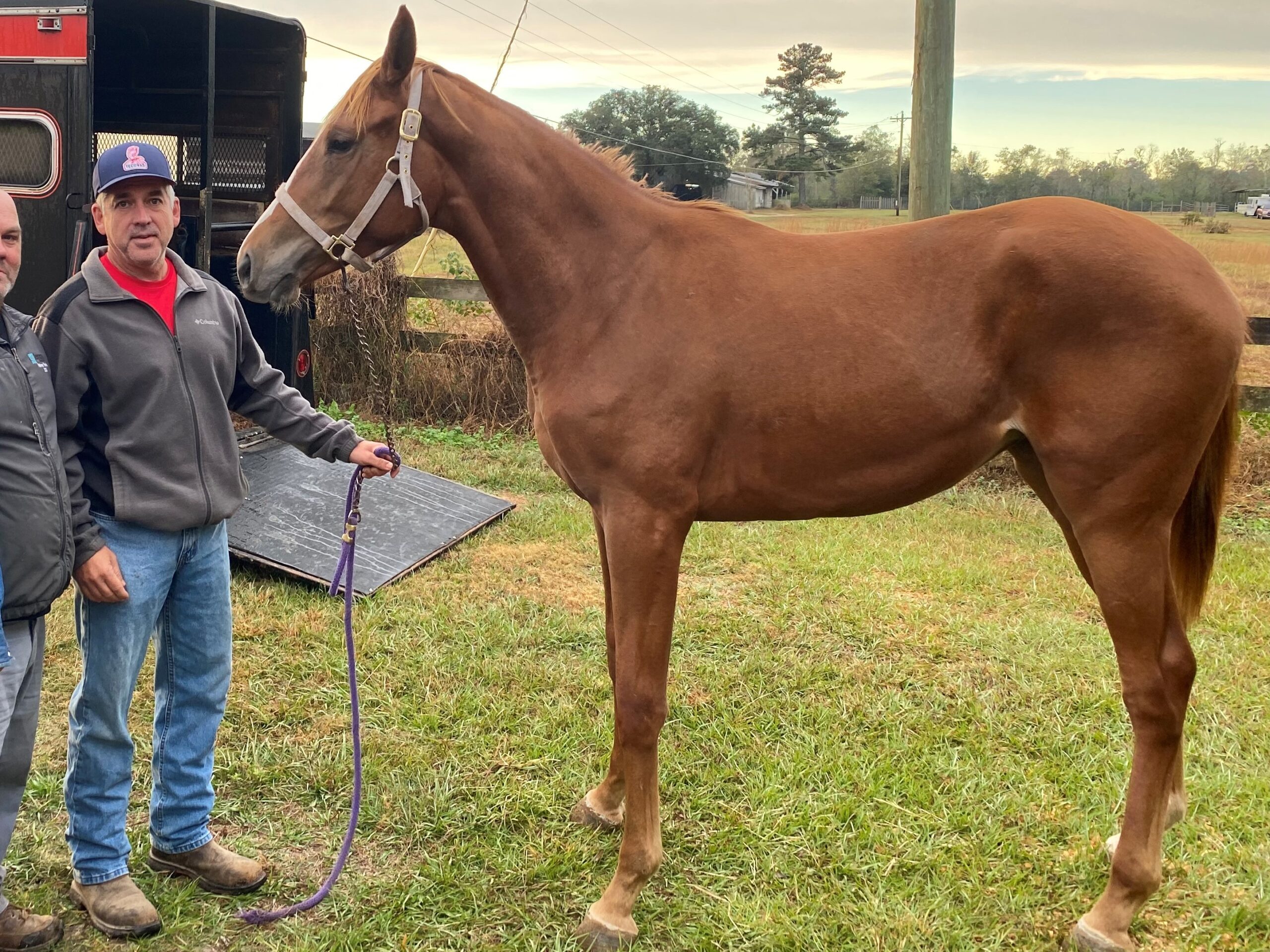
Miles Henry (legal name: William Bradley) is a professional horseman based in Folsom, Louisiana. He holds Louisiana Racing License #67012 and has spent over three decades managing Thoroughbreds at premier tracks including Fair Grounds, Delta Downs, and Evangeline Downs.
Expertise & Hands-On Experience: Beyond the track, Miles has decades of experience in specialized equine care, covering everything from hoof health and nutrition to training protocols for Quarter Horses, Friesians, and Paints. Every guide on Horse Racing Sense is rooted in this “boots-on-the-ground” perspective.
30 of their last 90 starts
Equibase Profile.

Connect with Miles: