
Last updated: September 21, 2026
Any links on this page that lead to products on Amazon are affiliate links and I earn a commission if you make a purchase. Thanks in advance – I really appreciate it!
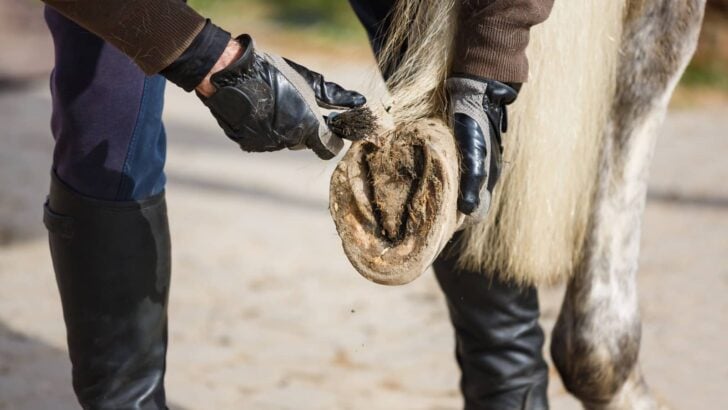
If you smell something rotten when cleaning your horse’s hoof, thrush is one of the first things I check for. Mild cases often improve with consistent cleaning, drier footing, regular farrier care, and a suitable topical treatment. But if the horse is sore, lame, has a deep crack through the frog, or the tissue is badly breaking down, it’s time to involve your farrier or veterinarian.
Thrush is a breakdown of the frog and its grooves that often develops when moisture and debris become trapped in the hoof.
In South Louisiana, wet footing and humidity make thrush a regular concern. Still, I’ve seen it in clean barns too, especially when a horse has a deep central sulcus or narrow heels that hide debris where you can’t easily see it. Below, I’ll cover what I look for, how I handle an uncomplicated case, when I quit treating it as routine thrush, and why it sometimes keeps coming back.
Table of Contents
What Causes Thrush in Horses
Thrush is a breakdown of the frog – the V-shaped, rubbery structure on the underside of the hoof – and the grooves around it. Anaerobic bacteria are believed to play an important role. Research has associated Fusobacterium necrophorum with equine hoof thrush, although thrush is best thought of as a condition shaped by both microbes and the hoof environment (Petrov et al., 2013).
One Dutch field study of 942 horses examined during routine trimming found thrush in 45% of that study group, making it the most commonly recorded hoof problem there. That’s not a universal rate for all horses, but it shows how regularly farriers encounter it. Horses standing on somewhat wet or wet stable floors had higher odds of thrush than horses on dry floors (Holzhauer et al., 2017).
- Wet or manure-soiled footing. Muddy paddocks, wet bedding, and manure-packed areas keep the frog damp and allow debris to stay trapped.
- Debris trapped in the sulci. Mud, manure, and small stones can pack into the grooves beside and through the frog, even when the rest of the foot looks clean.
- Hoof shape or delayed hoof care. Deep central sulci, narrow heels, overgrown frog tissue, and an overdue trim can make the foot harder to clean and keep dry.
- Management changes. Extended wet weather, less turnout, travel, or a change in footing can make a small problem easier to miss.
A Horseman’s Take: I don’t treat thrush as proof that someone has a dirty stall. I’ve seen it in well-kept barns, usually when a deep central sulcus or narrow heel gives debris a place to hide. The environment matters, but so does the individual foot. That’s why I pick out every hoof instead of assuming the clean-looking horse is fine.
Horse Thrush Symptoms: What to Look For
- Foul odor. A strong rotten smell from the frog or its grooves is often the first thing an owner notices.
- Dark discharge or packed material. Black, moist, or crumbly material may be present in the central or collateral sulci.
- Soft, ragged frog tissue. The frog can look deteriorated around the edges or feel softer than healthy, firm tissue.
- Sensitivity during cleaning. A horse may flinch, pull the foot away, or object when the affected area is handled.
- Deep clefts or a narrowed central sulcus. These can hold debris and make a mild case harder to clear.
Catching it when you first notice the smell or discharge usually keeps it from turning into a bigger hoof problem.
How to Treat Mild Thrush at Home
For a sound horse with mild, early thrush, focus on the conditions keeping it alive: moisture, trapped debris, and a foot that may need farrier attention. Here’s the order I follow:
- Start with the environment. Remove wet or soiled bedding, improve drainage where possible, and give the horse a clean, dry place to stand.
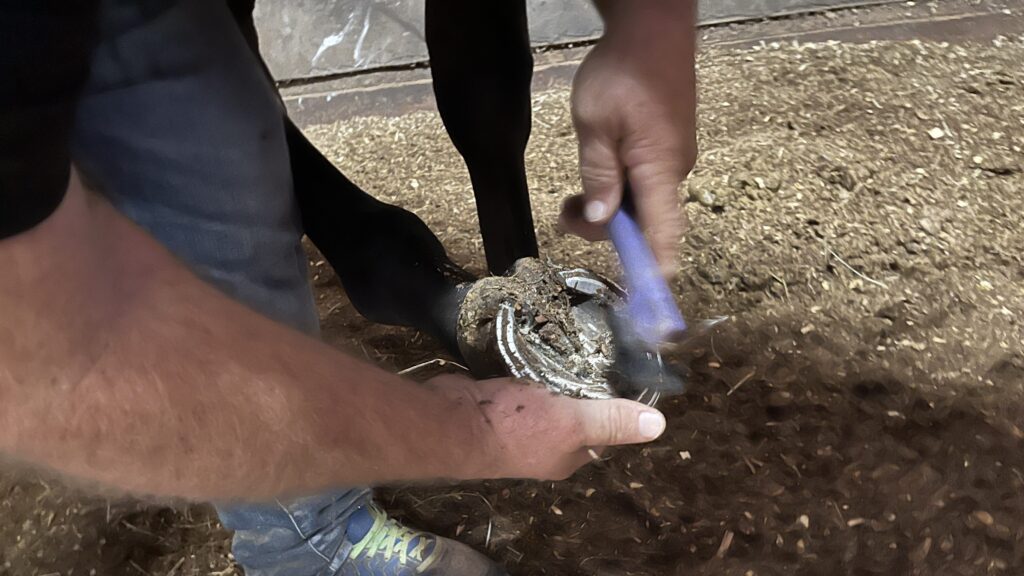
- Pick out the foot carefully every day. Clean the grooves beside and through the frog so you can see what’s there, but don’t dig aggressively into tender tissue.
- Have the hoof evaluated and trimmed when needed. An overgrown frog, deep clefts, narrow heels, or poor hoof balance can keep debris trapped. Let your farrier decide whether loose or diseased tissue needs removal.
- Use a suitable hoof product according to the label. I’ve used Thrush Buster and No Thrush for uncomplicated cases. If the odor or abnormal frog tissue persists, don’t just apply more product – look for the management or hoof issue keeping the problem going.
- Monitor the hoof and the horse. You want less odor and debris, healthier frog tissue, and a comfortable horse – not just a temporary change in smell.
This article can help you recognize a common hoof problem, but it can’t diagnose your horse from a distance. If the horse is painful, lame, or the hoof looks significantly abnormal, get your farrier or veterinarian involved early.

When to Call a Farrier or Veterinarian
When home care isn’t enough: Contact your veterinarian or farrier promptly if your horse is lame, painful during hoof cleaning, hot or swollen around the foot, has a deep, narrow central sulcus that remains packed, tender, bleeding, or difficult to clean, has substantial frog deterioration, or tissue that’s growing rather than breaking down. Those signs can indicate a deeper problem than routine thrush. Sudden severe lameness, noticeable hoof heat, or a strong digital pulse can also point to an equine hoof abscess, which is a different problem and needs its own assessment.
Why Does My Horse Keep Getting Thrush?
If you treat thrush and it keeps coming back, don’t just keep switching products. A bottle can help manage the symptoms, but it won’t fix a hoof that keeps creating the same problem – look for the reason the frog is returning to the same condition.
I start with the foot itself: is there a deep central sulcus, narrow heel, overgrown frog tissue, or another crevice that keeps packing with debris? Then I look at the environment – wet bedding, mud, turnout, drainage, and how often the feet are being picked. Finally, I ask whether farrier care is keeping the foot open, balanced, and manageable.
If the central sulcus stays deep and packed after cleaning, I don’t consider the problem solved just because the smell disappears. That’s when I want the farrier looking at the foot with me. If you’re new to hoof structure, this guide to horse hoof anatomy and routine care explains the frog, heels, sole, and other parts of the foot.
Thrush vs. Canker
I bring up canker here because owners sometimes assume every unusual-looking frog problem is thrush. Thrush and canker can both involve the frog, but they don’t look or behave the same way. Thrush usually causes foul odor, dark material, and tissue that softens and breaks down. Canker is a separate hoof disease that produces abnormal, proliferative tissue. It may look pale, soft, spongy, frond-like, or cauliflower-like, and it often bleeds easily when disturbed. Canker needs veterinary evaluation and treatment.
If you see unusual tissue growth, easy bleeding, marked pain, a lot of tissue change, or a foot that isn’t clearly improving with careful management, don’t assume it’s ordinary thrush. Have your veterinarian examine the horse.
Can You Ride a Horse With Mild Thrush?
A horse with mild thrush may be comfortable enough to work, but don’t decide from the smell or appearance of the frog alone. Watch how the horse moves and how it reacts when you clean the foot. If it’s lame, short-strided, or painful when the frog is handled, don’t ride or deliberately exercise it until you’ve spoken with your farrier or veterinarian.
Movement can help clear debris from the foot, but it’s never a reason to work through pain. If you’re unsure whether your horse is moving normally, review these early signs of lameness in horses.
A Horseman’s Take: I don’t decide whether a horse is ready to work based only on what the hoof looks like. Some horses tolerate minor hoof issues better than others. I watch how they stand, how they pick up their feet, and whether they move normally before I ask them to do more.
Preventing Thrush
- Pick out all four feet regularly. Check the frog and its grooves, not only the sole. A foul smell, packed material, tenderness, or a change in frog tissue is easier to deal with when you catch it early.
- Keep the horse’s standing area as dry and clean as practical. Remove wet or manure-soiled bedding promptly and improve drainage where you can.
- Stay current on farrier care. Regular trimming helps keep the foot balanced and makes it easier to inspect and clean the frog.
- Check feet after wet weather or routine changes. Mud, prolonged stall time, travel, and different turnout conditions can make small hoof problems easier to miss.
- Don’t treat a healthy frog aggressively. Save stronger products for an actual problem and use them according to the label. Repeated harsh treatment can irritate healthy tissue.
For a broader routine covering hoof picking, turnout checks, and farrier scheduling, see my daily, weekly, and monthly horse-care checklist.
Thrush Products I’ve Personally Used
Affiliate disclosure: This section contains affiliate links. If you buy through one of them, I may earn a commission at no additional cost to you. I include products I’ve personally used for uncomplicated cases.
These are treatments I’ve used personally for mild, straightforward thrush. Every horse and hoof is different, so for a severe, painful, or recurring problem, involve your veterinarian or farrier rather than relying on any product alone.
- Thrush Buster: A liquid treatment I’ve used for years because it can reach into the sulci. I use it according to the label and avoid treating healthy tissue more aggressively than necessary.
- No Thrush Powder: A dry powder I’ve used to help manage moisture in cracks and crevices, best used when the foot is clean and dry.
My practical difference between the two: I reach for a liquid when I need to get into a narrow sulcus, while I prefer a powder when the foot is clean and dry enough that I want the product to stay in a crack or crevice. Neither one replaces cleaning, dry footing, or farrier attention when the foot’s shape is keeping the problem going.

Horse Thrush FAQs
Why does my horse keep getting thrush?
It usually means the conditions behind the problem are still there. Check for trapped debris, a deep central sulcus, wet footing, poor drainage, overdue farrier care, or frog tissue that’s difficult to keep clean. If it returns despite consistent care, have your farrier assess the hoof.
Is thrush the same as an abscess?
No. Thrush affects the frog and its grooves, usually causing odor, dark discharge, and deteriorated tissue. An abscess is a deeper hoof problem that often causes sudden, more severe lameness. If your horse is markedly lame, has hoof heat, a strong digital pulse, or you aren’t sure what you’re seeing, call your farrier or veterinarian.
How long does it take thrush to clear up?
There isn’t one set timeline because it depends on how deep the affected tissue is, whether the horse stays in wet conditions, and whether the hoof keeps trapping debris. In a mild case, you should expect the odor, discharge, and tenderness to start improving with consistent cleaning and better footing. If the foot isn’t clearly improving, is getting more painful, or the frog continues to deteriorate, call your farrier or veterinarian instead of extending home treatment indefinitely.
Key Takeaways
- Check the frog, not just the sole. A rotten smell, dark discharge, soft tissue, or a deep sulcus can be early clues.
- Recurring thrush usually has an underlying cause. Look at hoof shape, farrier care, moisture, drainage, bedding, and trapped debris instead of only changing products.
- Early cases often improve with consistent cleaning, appropriate topical care, and better environmental management.
- Don’t work through pain. Lameness, tenderness, heat, swelling, or worsening tissue change means the horse needs professional attention.
At our stable in South Louisiana, I’ve learned that a bad smell is worth checking right away. Staying ahead of thrush usually comes down to catching it early and fixing the conditions that let it keep coming back.
About Miles Henry
Racehorse Owner & Author | 30+ Years in Thoroughbred Racing
Miles Henry (legal name: William Bradley) is a professional horseman based in Folsom, Louisiana. He holds Louisiana Racing License #67012 and has spent over three decades managing Thoroughbreds at premier tracks including Fair Grounds, Delta Downs, and Evangeline Downs.
Expertise & Hands-On Experience: Beyond the track, Miles has decades of experience in specialized equine care, covering everything from hoof health and nutrition to training protocols for Quarter Horses, Friesians, and Paints. Every guide on Horse Racing Sense is rooted in this “boots-on-the-ground” perspective.
30 of their last 90 starts
Equibase Profile.

Connect with Miles: