

Last updated: October 14, 2026
Any links on this page that lead to products on Amazon are affiliate links and I earn a commission if you make a purchase. Thanks in advance – I really appreciate it!
If you climb off your horse after a couple of hours on the trail with sore knees, a stiff back, or dry spots under your saddle, it’s worth checking your saddle fit and your riding position. And if you’re shopping, it’s hard to tell from a listing why one western saddle costs $400 and another costs $4,000, or whether all those five-star ratings mean anything.
Below, I’ll cover what makes a western saddle comfortable, how hard and padded seats compare, how to read saddle ratings, a few saddles worth considering, and how to get more comfort out of the saddle you already own.
Table of Contents
What Makes a Western Saddle Comfortable?
A western saddle has to be comfortable for two of you. If it doesn’t fit your horse, no amount of padding on your side will fix it, and a sore horse won’t give you a comfortable ride anyway.
Fit for Your Horse
The tree is the saddle’s frame, and its bars spread your weight across the horse’s back. You want the saddle to sit evenly without rocking, bridging, or putting pressure on the withers or spine. Terms like semi-Quarter Horse and full Quarter Horse bars can help narrow your options, but they aren’t universal sizing standards. Different makers build their trees differently, so check the actual fit on your horse instead of relying on the label, and get help from a qualified saddle fitter if you’re unsure. For more detail, see the parts of a western saddle.
Fit for You
Seat size matters as much as padding. Seat size is measured from the back of the fork, just behind the horn, to the cantle, but fork and cantle shape change how a seat feels, so two 15-inch saddles can fit differently. When you sit in it, EquiSearch suggests about 4 inches between your body and the swell and about 1 to 1.5 inches behind you to the cantle. Nothing should press into your thighs. Here’s how to figure out what size western saddle you need.
- Seat shape: The width of the seat where your thighs sit makes a big difference in how your hips and knees feel on a long ride. Too wide or too narrow can both cause pressure, so it comes down to your build and the saddle’s design.
- Cantle: A taller cantle gives many riders a feeling of support behind them. A low cantle leaves more room to move, which ropers and ranch riders often like.
- Stirrups: Wider treads spread the pressure on your feet and ankles. Stirrup leathers that are turned so the stirrups hang facing forward also take strain off your knees.
- Weight: A lighter saddle is easier to lift onto a tall horse, which matters if you saddle up every day.

Hard Seat vs. Padded Seat Western Saddles
A lot of riders asking about comfort are really asking about the seat. Here’s how the three main seat styles compare:
| Seat type | How it feels | Best for |
|---|---|---|
| Hard, smooth leather | Firm and slick, so you can shift your weight easily | Roping, ranch work, and riders who move around in the saddle |
| Roughout | More grip than smooth leather and hides scuffs well | Roping, cutting, and riders who want a secure seat |
| Padded or suede-covered | Softer, with more cushion and grip | Long trail rides, pleasure riding, and beginners |
A hard seat isn’t uncomfortable by default. Plenty of ranch riders spend all day in one, and a well-shaped hard seat that fits you can be more comfortable than a poorly shaped padded one. Smooth leather is also easier to clean and more water-resistant, while roughout gives you a more secure seat. If you spend hours at a walk on the trail, though, most riders find a padded or suede seat easier on the backside. There’s no substitute for sitting in a few before you decide.
Are Hard-Seat Western Saddles Comfortable?
They can be. A firm leather seat shaped to fit you may feel better over a long day than a thick, poorly shaped padded one, which is why many ranch riders and ropers stick with hard seats. A hard seat also lets you shift your weight quickly when you’re working cattle. But a hard seat that puts pressure in the wrong places will get uncomfortable fast. Pay attention to the seat’s shape and width, not just how much padding it has, and test it on a real ride if you can.
Comfortable Western Saddles Worth a Look
Star ratings can tell you whether buyers liked a saddle, but they can’t tell you whether it’ll fit your horse or you, so use them as a starting point, not a verdict. I picked these from makers with a track record in trail and pleasure saddles, covering different seat styles and price ranges, rather than simply choosing the highest-rated listings. Prices are approximate and change by retailer and options, so check the current listing before you buy.
| Saddle | Type | Seat | Typical price |
|---|---|---|---|
| Tucker Heritage High Plains Trail | Leather trail saddle | Gel-Cush shock-absorbing seat | About $3,900 |
| Circle Y Topeka Flex2 Trail | Leather trail saddle | Impact Foam seat | About $2,700 |
| HILASON Western Trail | Leather trail saddle with a flex tree | Smooth leather seat | About $750 |
| Schneiders Leather-Cordura Trail II | Leather and Cordura trail saddle | Padded smooth leather seat | About $550 to $780 |
How to Judge Western Saddle Ratings
Don’t judge a saddle by its star score alone. Read the lower-rated reviews first and look for patterns: the same fit complaint, broken stitching, a tree that doesn’t match the listing, or a saddle that pinched wide horses. Then check whether the happy reviewers ride the way you do. A saddle that works fine for short arena sessions may not be the one you want for all-day trail rides. Use ratings to narrow your list, then check the fit, construction, return policy, and warranty before you buy.
Tucker Heritage High Plains Trail Saddle
Best for long trail rides. Tucker has built its reputation around trail saddles designed for long hours in the saddle. The High Plains has Tucker’s patented Gel-Cush shock-absorbing seat, wider swells, a deep 5-inch cantle for back support, and felt-lined skirts. It’s built on a reinforced tree, and Tucker warranties the tree, but terms vary by model, so check the current warranty on the exact saddle you buy. It isn’t cheap. But if you ride for hours at a time, it’s the kind of saddle riders save up for. As with any saddle, make sure the tree fits your horse before you commit.
[amazon box=”B0FDBF8GWM”]
Circle Y Topeka Flex2 Trail Saddle
A premium trail option with a flexible tree. Circle Y’s Flex2 tree uses high- and low-density bars that are meant to spread the rider’s weight while letting the horse move more freely. The Topeka has a padded Impact Foam seat, a 4-inch cantle, wide 5-inch stirrups, and weighs about 29 pounds. It comes in regular, wide, and extra-wide trees. A flexible tree may suit some horses well, but it isn’t a fix for every fitting problem, so check it on your horse.
HILASON Western Trail Saddle
Best for a lower-priced leather saddle with a flexible tree. This HILASON trail saddle has hand-tooled leather with a chocolate-brown finish, a smooth leather seat, a 4.5-inch cantle, and a flex tree that HILASON says fits horses with roughly 6- to 8-inch gullets. It weighs about 26 pounds and comes in 15- to 18-inch seats, and the listing says it includes matching front and rear cinch straps.
The flex tree is the main reason to consider it. It’s meant to give the horse more freedom through the back than a traditional rigid tree, which can be useful for trail and pleasure riding. But flexible doesn’t mean one-size-fits-all. Check the saddle on your horse’s back before you commit to it, paying close attention to wither clearance, bridging, and pressure along the bars.
At around $750, it’s a reasonable option if you want an all-leather saddle and don’t want to spend premium trail saddle money. Inspect the stitching, hardware, and tree when it arrives, then ride in it at home before you take it on a long trip.
[amazon box=”B09XWN3YCY”]
Schneiders Leather-Cordura Western Trail Saddle II
Best for a lightweight, easy-care trail saddle. The Schneiders Leather-Cordura Trail Saddle II combines leather with Cordura synthetic panels, so it’s easier to clean and maintain than an all-leather saddle. At about 24.5 pounds, it’s easier to lift onto a tall horse, too.
It has a padded smooth leather seat, a 7-inch gullet, and a fiberglass tree backed by a five-year tree warranty. The leather-and-Cordura combination is a practical middle ground: you get some of the look and feel of leather without the price or upkeep of an all-leather saddle.
This is a good pick if you ride mostly at a walk and jog, want a lighter saddle, or don’t want to spend your weekends cleaning and conditioning tack. As with any saddle, fit comes first: check the bar angle, gullet clearance, and contact along the horse’s back before you head out on a long ride.
[amazon box=”B0D6GQ1LPB”]

Best Western Saddle for Beginner Riders
For a beginner, balance matters more than extra padding. Look for a saddle that fits the horse, fits you, and lets you sit naturally without feeling pushed forward or perched on the back of the seat. No saddle replaces good instruction, but these features help a new rider feel more secure:
- A moderate seat with some support: A seat that’s not too flat and a cantle that gives you a little support behind can help a new rider settle in.
- A padded or suede seat: A little grip and cushion help new riders feel secure at the walk and jog.
- A horn that suits your riding: A horn can steady you in a pinch, but try not to rely on it for balance, since that habit gets in the way of a good seat.
- A manageable weight: If you’ll be saddling your own horse, a lighter trail or synthetic saddle is easier to lift.
- The right fit: It’s hard to learn a good position in a saddle that doesn’t fit you or your horse.
Most beginners do better in a trail or pleasure saddle than a roping or barrel saddle. Sit in a few at a tack store, or ride in a friend’s saddle first, so you know what size and seat style you like before you spend real money.
Buying a Used Western Saddle
A good used saddle can save you a lot of money, and a well-kept leather saddle often rides better than a new one. Just check it carefully. Utah State University Extension recommends testing the tree: set a western saddle on its horn end and press down on the cantle, then lay it on its side and push hard on the side panel. Any give or cracking sound can mean a broken tree, and a broken tree can seriously hurt a horse. If you suspect a problem, don’t ride in the saddle until a qualified saddle repair shop has looked at it, since a few pressure tests can’t guarantee an older saddle is sound.
- Check the leather: It should be supple but firm, without cracks when you bend it.
- Check the stitching: It should be tight and even, with no loose or torn spots.
- Check the hardware: Look for stainless steel or brass fittings that are secured well.
- Get the measurements: Ask for the seat size, gullet width, tree type, and weight, plus clear photos if you’re buying online.
- Ask questions: Find out how old it is, how it was stored, and whether it’s been repaired. A seller who won’t answer is a red flag.
An old saddle isn’t necessarily a worn-out saddle. With regular oiling and conditioning a leather saddle, good leather can last for decades.
How Much Does a Comfortable Western Saddle Cost?
Western saddle prices cover a huge range, and comfort doesn’t always follow price. At the low end, synthetic saddles and inexpensive imported leather saddles often sell for a few hundred dollars, and synthetics average about half the price or less of a mid-quality leather saddle. In the middle, saddles like the Schneiders Leather-Cordura and HILASON flex-tree trail saddles run roughly $550 to $750. At the top end, comfort-focused trail saddles cost thousands. The Circle Y Topeka typically runs around $2,700 and the Tucker High Plains around $3,900, depending on the retailer and options. Name-brand leather saddles in between vary widely by maker, tooling, and tree.
A saddle that fits and lasts for 20 years is cheaper in the long run than two that don’t. If money’s tight, a good used name-brand saddle is often a better buy than a new budget one.
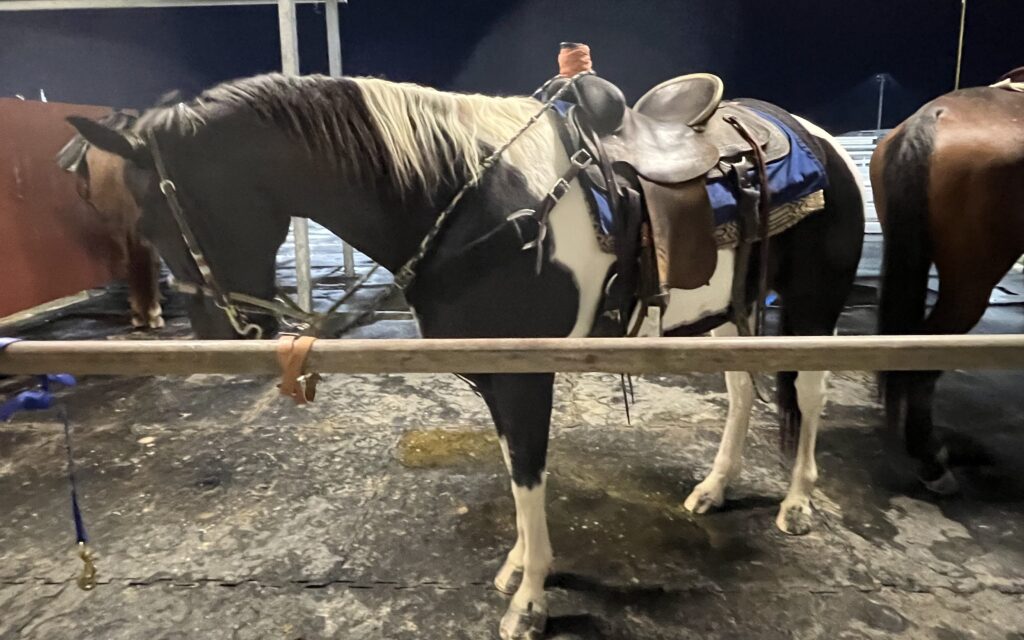
How to Make Your Western Saddle More Comfortable
If you’re otherwise happy with your saddle, a few small changes can make it a lot more comfortable:
- Add a gel seat cover: A gel or foam seat cover adds cushion to a hard seat without replacing the saddle.
- Turn your stirrups: A stirrup turner trains new or stiff stirrup leathers to hang facing forward, which takes strain off your knees and ankles.
- Use the right pad: A good pad protects your horse’s back, and a horse that moves freely is a smoother ride. Compare felt and fleece saddle pads, or see the best western saddle pads.
- Check your stirrup length: Stirrups that are too short or too long can leave you perching or reaching, which may contribute to sore knees and a stiff back on long rides.
- Recheck fit: Horses change shape with age, fitness, and weight, so a saddle that fit last year may not fit now.
[amazon box=”B002WVP7LM”]
[amazon box=”B007TB8JO2″]
However much you spend, ride in a saddle before you commit if you can. The most comfortable western saddle is the one that fits you and your horse, and the only way to know for sure is to put some miles on it.
About Miles Henry
Racehorse Owner & Author | 30+ Years in Thoroughbred Racing
Miles Henry (legal name: William Bradley) is a professional horseman based in Folsom, Louisiana. He holds Louisiana Racing License #67012 and has spent over three decades managing Thoroughbreds at premier tracks including Fair Grounds, Delta Downs, and Evangeline Downs.
Expertise & Hands-On Experience: Beyond the track, Miles has decades of experience in specialized equine care, covering everything from hoof health and nutrition to training protocols for Quarter Horses, Friesians, and Paints. Every guide on Horse Racing Sense is rooted in this “boots-on-the-ground” perspective.
30 of their last 90 starts
Equibase Profile.

Connect with Miles: