Last updated: August 8, 2026
Thirteen horses have won the American Triple Crown: Sir Barton was first in 1919, and Justify was the most recent in 2018. To make the list, a three-year-old Thoroughbred must win the Kentucky Derby, Preakness Stakes, and Belmont Stakes in one demanding five-week stretch – a test of class, recovery, soundness, pace, and luck that even exceptional horses rarely survive. Here is every winner, plus the racing details that make each sweep worth remembering.
All 13 Triple Crown Winners
| # | Horse | Year | Jockey | Trainer |
|---|---|---|---|---|
| 1 | Sir Barton | 1919 | Johnny Loftus | H. Guy Bedwell |
| 2 | Gallant Fox | 1930 | Earl Sande | Sunny Jim Fitzsimmons |
| 3 | Omaha | 1935 | Willie Saunders | Sunny Jim Fitzsimmons |
| 4 | War Admiral | 1937 | Charley Kurtsinger | George Conway |
| 5 | Whirlaway | 1941 | Eddie Arcaro | Ben Jones |
| 6 | Count Fleet | 1943 | Johnny Longden | Don Cameron |
| 7 | Assault | 1946 | Warren Mehrtens | Max Hirsch |
| 8 | Citation | 1948 | Eddie Arcaro | Ben Jones |
| 9 | Secretariat | 1973 | Ron Turcotte | Lucien Laurin |
| 10 | Seattle Slew | 1977 | Jean Cruguet | Billy Turner |
| 11 | Affirmed | 1978 | Steve Cauthen | Laz Barrera |
| 12 | American Pharoah | 2015 | Victor Espinoza | Bob Baffert |
| 13 | Justify | 2018 | Mike Smith | Bob Baffert |
1. Sir Barton (1919)
Career record: 31 starts – 13 wins, 6 places, 5 shows | Trainer: H. Guy Bedwell | Jockey: Johnny Loftus | Color: Chestnut

Sir Barton was not the horse most people expected to make history in 1919. He entered the Kentucky Derby as a pace-setter for his stablemate Billy Kelly, the champion two-year-old of 1918 and the race favorite. Sir Barton had never won a race before that day, but he changed the plan by going wire to wire and winning the Derby by five lengths. Billy Kelly finished second.
Four days later, Sir Barton won the Preakness Stakes, again leading from start to finish. He then captured the Withers Stakes before completing the sweep in the Belmont Stakes, where he set a new track record for the mile and three-eighths distance. The achievement would later become known as the Triple Crown, but the term was not coined until Gallant Fox’s sweep in 1930.
Miles’s Take: Sir Barton raced four times in 32 days, including the Kentucky Derby, Preakness Stakes, Withers Stakes, and Belmont Stakes. Modern Triple Crown contenders are given more time to recover between races; Sir Barton represents an era when durability, soundness, and toughness were just as important as raw talent.
2. Gallant Fox (1930)
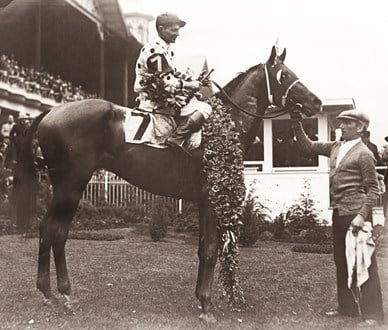
Career record: 17 starts – 11 wins, 3 places, 2 shows | Trainer: Sunny Jim Fitzsimmons | Jockey: Earl Sande | Color: Bay
Gallant Fox was the horse whose 1930 sweep gave the Triple Crown its name. When sportswriter Charles Hatton described it that way, the term stuck – and Sir Barton’s 1919 sweep was retroactively recognized as the first. Gallant Fox arrived at the Preakness already dominant, having opened his three-year-old season with a four-length win in the Wood Memorial. Trainer Sunny Jim Fitzsimmons brought jockey Earl Sande out of retirement to ride him, and the pairing carried Gallant Fox through one of the greatest spring campaigns in racing history.
His Triple Crown campaign ran in a different order than today’s sequence – he won the Preakness first, then the Kentucky Derby eight days later, then completed the sweep at the Belmont. His three victories spanned 29 days. Fitzsimmons would later guide Omaha to the Triple Crown five years after Gallant Fox.
Gallant Fox lost only once as a three-year-old – the 1930 Travers Stakes at Saratoga, where he went off at 1-2 on a sloppy track and was beaten by 100-1 longshot Jim Dandy. The upset became one of the races that helped build Saratoga’s “Graveyard of Champions” reputation, and Jim Dandy has his own stakes race there today.
Miles’s Take: A 1-2 favorite losing to a 100-1 shot shows why Saratoga earned its reputation as the “Graveyard of Champions.” A wet track can expose weaknesses, but so can one horse putting together the perfect race on the right day. Gallant Fox was beaten once as a three-year-old, and it happened when Jim Dandy delivered a career-best effort.
3. Omaha (1935)
Career record: 22 starts – 9 wins, 7 places, 2 shows | Trainer: Sunny Jim Fitzsimmons | Jockey: Willie Saunders | Color: Chestnut
Omaha remains the only son of a Triple Crown winner to win the Triple Crown himself. His sire was Gallant Fox, who had completed the sweep five years earlier, and both horses were trained for Belair Stud by Sunny Jim Fitzsimmons. That father-son Triple Crown connection has never been repeated in American racing.
His 1935 campaign was not a straight line from the Kentucky Derby to the Belmont. Omaha won the Derby in heavy rain and followed with a six-length Preakness victory, but then lost the Withers Stakes to Rosemont while favored. Two weeks later, he came back in the Belmont over a sloppy track and pulled clear of Firethorn to win by 1½ lengths, completing the Triple Crown.
Miles’s Take: Omaha’s story is a reminder that a Triple Crown run does not always look perfect from start to finish. He was beaten in the Withers between the Preakness and Belmont, then came back to handle the mile and a half and finish the job. For a horseman, that rebound says plenty: a colt can have an off day, lose a race, and still have the class, soundness, and constitution to come back when the biggest test arrives.
4. War Admiral (1937)
Career record: 26 starts – 21 wins, 3 places, 1 show | Trainer: George Conway | Jockey: Charley Kurtsinger | Color: Brown

War Admiral was the son of Man o’ War, but he made his own case for greatness in 1937. He won all eight starts as a three-year-old, becoming the first Triple Crown winner to complete his three-year-old season undefeated. The Preakness was no easy formality: Pompoon pushed him through a hard stretch run, and War Admiral prevailed by a head.
At the Belmont, War Admiral showed both speed and toughness. He broke Man o’ War’s 17-year-old track record for a mile and a half, winning in 2:28 3/5 despite injuring his right forefoot after stumbling at the start. He returned that fall to win the Washington Handicap and Pimlico Special, finishing the season 8-for-8 and earning Horse of the Year honors.
The Seabiscuit loss became the race everyone remembered, but it was only one afternoon in a remarkable career. War Admiral had already proven his class with an undefeated Triple Crown season and a Belmont performance that surpassed even his famous sire’s track record.
5. Whirlaway (1941)
Career record: 60 starts – 32 wins, 15 places, 9 shows | Trainer: Ben Jones | Jockey: Eddie Arcaro | Color: Chestnut

Whirlaway’s Kentucky Derby win in 1941 remains one of the great rallies in race history. He trailed by 14 lengths down the backstretch before beginning a long move around the field. Under Eddie Arcaro, he surged through the stretch to win by eight lengths, tying the Derby margin record and setting a Kentucky Derby record of 2:01 2/5 that stood for 21 years.
Talent was never Whirlaway’s problem; getting him to focus was. He had a habit of drifting wide, and he even drifted into the rail during races as a two-year-old. Trainer Ben Jones used customized headgear to help keep his attention forward, while Arcaro learned how much horse to let him have. The result was a colt whose wild, come-from-behind style became his trademark rather than his weakness.
Whirlaway also did more after the Triple Crown than most winners ever had the chance to do. He won the Travers Stakes later that summer, making him the only Triple Crown winner to capture Saratoga’s signature race. He raced 60 times overall, more than any Triple Crown winner, and made 22 starts in 1942 while his campaign also helped raise money for racing’s War Relief Fund. He retired with 32 wins and was the first Thoroughbred to earn more than $500,000.
6. Count Fleet (1943)
Career record: 21 starts – 16 wins, 4 places, 1 show | Trainer: Don Cameron | Jockey: Johnny Longden | Color: Bay

Count Fleet was already a champion before he began his Triple Crown season. As a two-year-old, he won 10 of 16 starts and set a world record for a two-year-old at a mile when he captured the Champagne Stakes in 1:34 4/5. He came back at three to win all six starts, sweeping the Kentucky Derby by three lengths, the Preakness by eight, and the Belmont by 25 lengths. He also captured the Withers Stakes by five lengths during that undefeated campaign.
Only two horses entered the 1943 Belmont Stakes to challenge Count Fleet, and neither could stay close. He won by 25 lengths in 2:28 1/5, setting a new stakes record; his margin stood as the Belmont record until Secretariat won by 31 lengths in 1973. The victory came at a cost. Count Fleet injured an ankle during the Belmont and never raced again, ending the career of a horse who had just completed one of the most dominant Triple Crown performances in history.
7. Assault (1946)
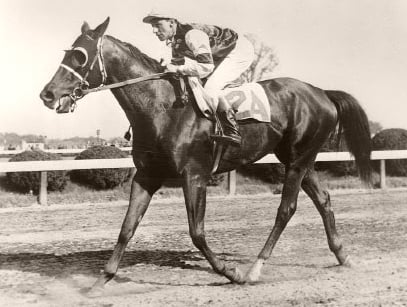
Career record: 42 starts – 18 wins, 6 places, 7 shows | Trainer: Max Hirsch | Jockey: Warren Mehrtens | Color: Chestnut
Assault’s story began before his racing career. As a weanling at King Ranch in Texas, he stepped on something sharp – commonly identified as a surveyor’s stake – that pierced his right front foot. The injury left him with a misshapen hoof and an altered way of going at slower gaits. He wore a special shoe on that foot for the rest of his life and eventually became known as the “Club-Footed Comet.”
At a gallop, however, Assault showed no sign of the problem. He became the first – and still only – Texas-bred horse to win the Triple Crown, sweeping the Kentucky Derby, Preakness Stakes, and Belmont Stakes in 1946. His Kentucky Derby was especially decisive: after saving ground under Warren Mehrtens, he found room on the rail and drew away to win by eight lengths.
Assault’s Triple Crown was not the end of his career. He raced through 1950, won 18 times from 42 starts, and earned $675,470. In 1948, he won the Brooklyn Handicap over rival Stymie and briefly surpassed Whirlaway as North America’s all-time leading money winner.
Miles’s Take: Assault is a reminder that a horse should never be judged only by how he looks standing still. Conformation flaws and old injuries deserve respect, but the real test is how a horse moves, trains, competes, and recovers. Assault carried a damaged foot through his career and still became one of the toughest and most durable champions the sport has produced.
8. Citation (1948)
Career record: 45 starts – 32 wins, 10 places, 2 shows, 1 fourth | Trainer: Ben Jones | Jockey: Eddie Arcaro | Color: Bay

Citation was already a champion before his Triple Crown season began. He won eight of nine starts as a two-year-old, then returned at three to win 19 of 20 races in 1948. His 15-race winning streak included the Kentucky Derby, Preakness Stakes, and Belmont Stakes. By the end of 1948, Citation had won 27 of his first 29 starts.
Calumet Farm had such depth in 1948 that Eddie Arcaro had a choice between riding Citation and his stablemate Coaltown in the Kentucky Derby. Arcaro chose Citation, while Coaltown finished second. Citation gave Arcaro his second Triple Crown after Whirlaway in 1941 and made Ben Jones a two-time Triple Crown-winning trainer. Arcaro rode both of Jones’s Triple Crown winners.
An osselet injury sidelined Citation for all of 1949, but he returned in 1950 to extend his winning streak to 16 races. He raced until age six, won 32 times from 45 starts, and became the first Thoroughbred to earn more than $1 million. Citation’s career was not simply a brilliant two-year run; he remained a top-level horse through four demanding seasons.
9. Secretariat (1973)
Career record: 21 starts – 16 wins, 3 places, 1 show | Trainer: Lucien Laurin | Jockey: Ron Turcotte | Color: Chestnut
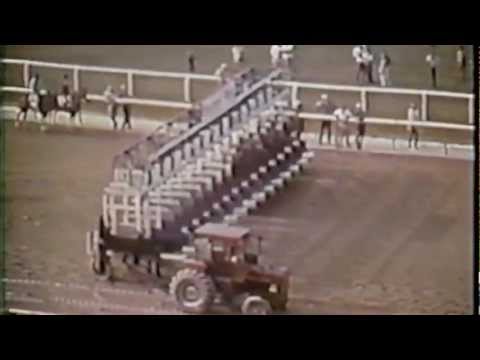
Secretariat ended a 25-year Triple Crown drought and produced the most dominant Belmont Stakes performance in racing history. His Kentucky Derby time of 1:59 2/5 was the first sub-two-minute Derby and remains the track record. In the Preakness, he defeated Sham by 2½ lengths in 1:53, a time later recognized as the stakes record after years of debate over the official clocking. At the Belmont, he won by 31 lengths in 2:24 flat, still the American record for a mile and a half on dirt.
Secretariat’s fractions were extraordinary for two different reasons. In the Kentucky Derby, he ran each successive quarter-mile faster than the last – a rare pattern over a mile and a quarter. In the Belmont, he did not keep accelerating all the way around; instead, he set a rapid early pace, reached the mile in 1:34 1/5, and hit the quarter pole in 1:59 – faster than his Kentucky Derby record at the same mile-and-a-quarter distance. He then carried that speed another quarter-mile to finish in 2:24 flat.
Miles’s Take: The remarkable thing is not that Secretariat kept getting faster through every Belmont quarter – he did not. No horse can keep accelerating forever over a mile and a half. What makes the race extraordinary is that he reached the mile in 1:34 1/5, hit the quarter pole in 1:59, and still had enough left to finish in 2:24 flat. From a horseman’s standpoint, that is not just speed; it is the ability to carry high cruising speed farther than any horse in the race could live with.
10. Seattle Slew (1977)
Career record: 17 starts – 14 wins, 2 places, 0 shows | Trainer: Billy Turner | Jockey: Jean Cruguet | Color: Dark Bay
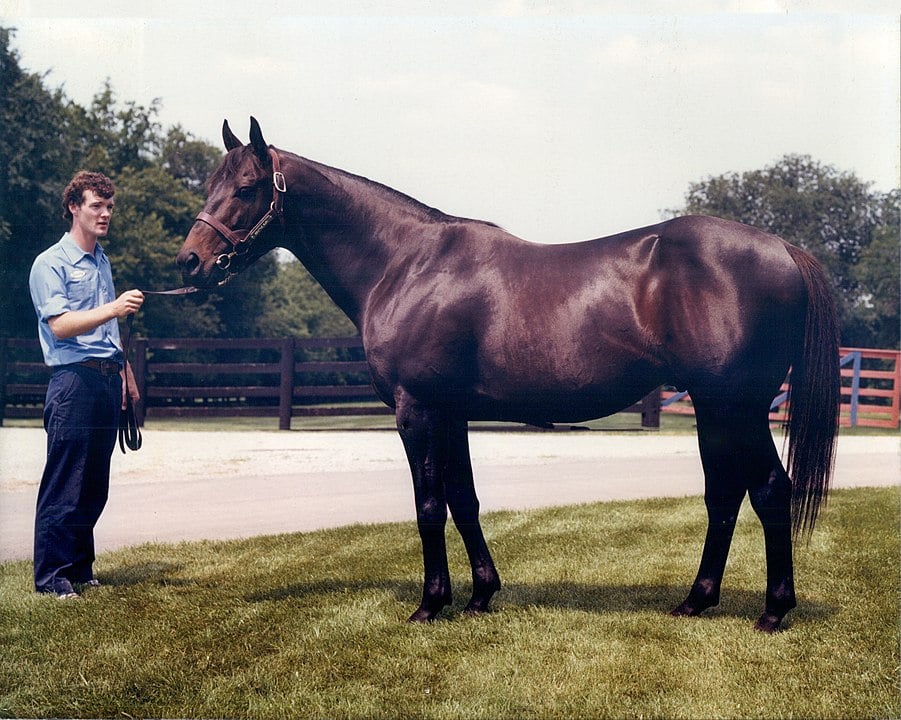
Seattle Slew was purchased as a yearling for $17,500, a modest price for a colt who would become one of racing’s great champions. He was the first horse to complete the Triple Crown while undefeated and remained the only one until Justify matched the achievement in 2018.
His story did not end with the Triple Crown. Early in his four-year-old season, Seattle Slew became seriously ill, and his survival was uncertain. He recovered, returned to training, and went on to defeat 1978 Triple Crown winner Affirmed in the Marlboro Cup at Belmont Park. Seattle Slew won by three lengths in the first meeting between two Triple Crown winners, then added victories in the Woodward Stakes and Jockey Club Gold Cup later that fall.
After racing, Seattle Slew at stud became as influential as he had been on the track. He was North America’s leading freshman sire in 1982 and leading sire overall in 1984. His offspring included Kentucky Derby and Belmont Stakes winner Swale and Hall of Famer A.P. Indy, whose descendants continue to influence major American bloodlines today.
11. Affirmed (1978)
Career record: 29 starts – 22 wins, 5 places, 1 show | Trainer: Laz Barrera | Jockey: Steve Cauthen | Color: Chestnut

Affirmed’s Triple Crown was the closest three-race battle any Triple Crown winner had faced. Alydar, trained by John Jacobs for Calumet Farm, finished second in all three races, and the margin narrowed each time: 1½ lengths in the Kentucky Derby, a neck in the Preakness, and a head in the Belmont. At Belmont, the two colts ran side by side through the stretch, with Steve Cauthen keeping Affirmed in front by the smallest of margins.
The rivalry had been building since their two-year-old seasons. Affirmed and Alydar met 10 times, with Affirmed winning seven, but their Triple Crown series defined both horses. Alydar accounted for three of Affirmed’s five career second-place finishes, while Affirmed denied him victories in all three Triple Crown races. Few champions have had to beat the same elite rival three times in five weeks to claim the Triple Crown.
Affirmed remained a top horse after the Triple Crown, earning Horse of the Year honors in both 1978 and 1979. He retired with 22 wins from 29 starts and $2,393,818 in earnings, becoming the first North American Thoroughbred to earn more than $2 million.
12. American Pharoah (2015)
Career record: 11 starts – 9 wins, 1 place, 0 shows | Trainer: Bob Baffert | Jockey: Victor Espinoza | Color: Bay

American Pharoah ended the longest drought in Triple Crown history when he won the 2015 Belmont Stakes by 5½ lengths. No horse had completed the sweep since Affirmed in 1978, and 13 horses had won the Kentucky Derby and Preakness only to fall short at Belmont. Under Victor Espinoza, American Pharoah controlled the race from the start and pulled away through the Belmont stretch to give the sport its 12th Triple Crown winner. He was named 2015 Horse of the Year and retired with a 9-1-0 record from 11 starts.
American Pharoah nearly changed hands before he ever raced. In 2007, Ahmed Zayat bought back Pioneerof the Nile after the colt failed to meet his reserve price at auction. Six years later, Zayat bought back American Pharoah for $300,000 after the yearling also failed to reach his reserve. The second buyback produced the first Triple Crown winner in 37 years – and American Pharoah added the Breeders’ Cup Classic later that fall, becoming the first horse to win the modern Grand Slam of American racing.
Miles’s Take: I watched the 2015 Belmont at the barn on Saturday evening with a few friends. The 37-year drought was not abstract anymore. We had watched a few horses win the Derby and Preakness, then come up short at Belmont. When American Pharoah turned for home and the gap wasn’t closing, everyone began cheering.
13. Justify (2018)
Career record: 6 starts – 6 wins, 0 places, 0 shows | Trainer: Bob Baffert | Jockey: Mike Smith | Color: Chestnut
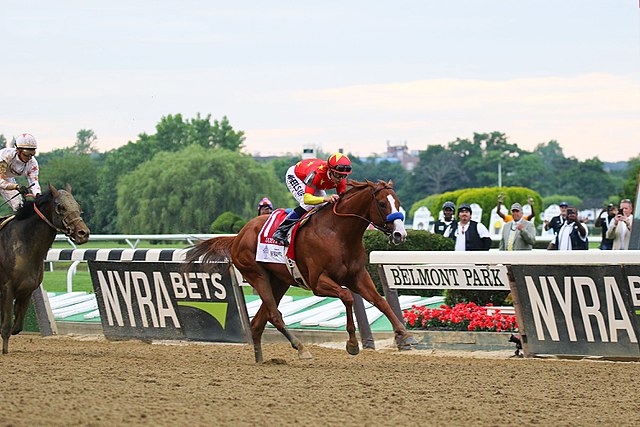
Justify went from an unraced maiden to Triple Crown winner in 112 days. He made his first career start on February 18, 2018, then completed the sweep at the Belmont Stakes on June 9 with his sixth straight victory. His entire racing career lasted six starts, and every one ended in a win.
Justify also broke the so-called “Apollo Curse.” He became the first horse since Apollo in 1882 to win the Kentucky Derby without racing as a two-year-old, ending a 136-year stretch in which every Derby winner had started as a juvenile. He was the second Triple Crown winner, after Seattle Slew, to enter the series without a loss – and the first to retire with a perfect record.
Justify was retired after ankle inflammation raised concerns about continuing his racing career, leaving the Belmont Stakes as his final race. His Triple Crown gave Bob Baffert a second winner after American Pharoah in 2015, joining Sunny Jim Fitzsimmons and Ben Jones as the only trainers with two Triple Crown champions.
Earlier Triple Crown winners often had long, demanding careers: Whirlaway made 60 starts and Citation 45. Justify took a different path. He retired after only six undefeated races, reaching the highest level of the sport just 112 days after his first start.
For official race results and historical profiles of every winner, see the New York Racing Association’s Triple Crown winners archive.
FAQs About Triple Crown Winners
Who was the last horse to win the Triple Crown?
Justify was the last Triple Crown winner, completing the sweep in 2018. He won the Kentucky Derby, Preakness Stakes, and Belmont Stakes while remaining undefeated across all six career starts. Justify was trained by Bob Baffert and ridden by Mike Smith.
Who was the first Triple Crown winner?
Sir Barton in 1919 was the first horse to win all three races – the Kentucky Derby, Preakness Stakes, and Belmont Stakes – in the same season. However, the term ‘Triple Crown’ wasn’t coined until 1930, when sportswriter Charles Hatton used it after Gallant Fox’s sweep. Sir Barton’s achievement was recognized retroactively.
Which Triple Crown winner had the best career record?
Citation had the strongest combined record across his two- and three-year-old seasons – 27 wins from 29 starts. He ended his three-year-old season on a 15-race winning streak, then extended it to 16 after returning from injury in 1950. Whirlaway had the most career starts (60) and wins (32) of any Triple Crown winner. Justify had the highest win rate at 100% from 6 starts, though his career was the shortest by far.
Has a filly ever won the Triple Crown?
No. All 13 Triple Crown winners are stallions. Three fillies have won the Kentucky Derby – Regret (1915), Genuine Risk (1980), and Winning Colors (1988) – but none has completed the Triple Crown. Genuine Risk finished second in the Preakness in 1980. Rachel Alexandra won the Preakness in 2009 but did not run the Derby.
Which horses won the Triple Crown while undefeated?
Only two horses won the Triple Crown while entering the series undefeated: Seattle Slew (1977), who won the first nine races of his career including all three Triple Crown races, and Justify (2018), who won all six career starts including the Triple Crown. Justify also retired undefeated.
Who trained the most Triple Crown winners?
Bob Baffert trained two Triple Crown winners – American Pharoah (2015) and Justify (2018) – the most of any active trainer. Sunny Jim Fitzsimmons also trained two – Gallant Fox (1930) and Omaha (1935). Eddie Arcaro is the only jockey to ride two Triple Crown winners – Whirlaway (1941) and Citation (1948).
What was the longest gap between Triple Crown winners?
The longest gap was 37 years, between Affirmed (1978) and American Pharoah (2015). During that span, 13 horses won the Kentucky Derby and Preakness but failed to win the Belmont Stakes. The second-longest gap was 25 years, between Citation (1948) and Secretariat (1973).
About Miles Henry
Racehorse Owner & Author | 30+ Years in Thoroughbred Racing
Miles Henry (legal name: William Bradley) is a professional horseman based in Folsom, Louisiana. He holds Louisiana Racing License #67012 and has spent over three decades managing Thoroughbreds at premier tracks including Fair Grounds, Delta Downs, and Evangeline Downs.
Expertise & Hands-On Experience: Beyond the track, Miles has decades of experience in specialized equine care, covering everything from hoof health and nutrition to training protocols for Quarter Horses, Friesians, and Paints. Every guide on Horse Racing Sense is rooted in this “boots-on-the-ground” perspective.
30 of their last 90 starts
Equibase Profile.

Connect with Miles: