
Last updated: June 29, 2026
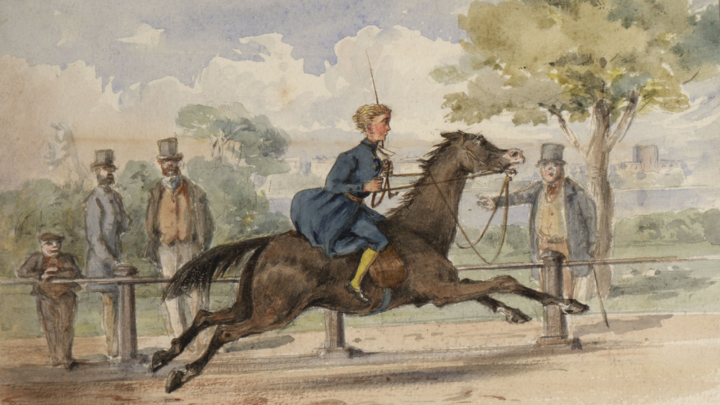
Horse racing has origins tracing back thousands of years, likely emerging alongside early horse domestication on the Eurasian steppes. Over time, it evolved through ancient Greece and Rome, was formalized in Britain, and later became a major sport in America, where races like the Kentucky Derby, Preakness Stakes, and Belmont Stakes defined the modern era.
Horse Racing History — Key Dates at a Glance
- ~4500 BC — Horses domesticated in Central Asia; early riding and speed contests likely emerge
- 680 BC — Chariot racing debuts at the ancient Greek Olympics in Olympia
- 1176 AD — Earliest believed horse race in Great Britain, at Smithfield, London
- 1600s — Thoroughbred breeding begins in England under royal patronage
- 1791 — General Stud Book published, formalizing Thoroughbred bloodlines
- 1665 — One of the earliest recorded horse races in America, Hempstead, New York
- 1875 — First Kentucky Derby run at Churchill Downs
- Today — Horse racing is a global sport with billions in annual wagering
About this guide: Historical claims are drawn from a mix of archaeological records, classical writings, and established historical accounts of equestrian sport and breeding.
Table of Contents
Ancient Origins: The First Riders and Races
The earliest roots of horse racing trace to the Eurasian steppes, where nomadic tribes in Central Asia first domesticated horses around 4500 BC. These early riders used horses for travel, warfare, and herding — and almost certainly tested their animals for speed. Archaeological finds in Kazakhstan show evidence of riding equipment and organized equine use going back thousands of years.
In Persia, horsemanship and equine speed are referenced in the Avesta, a collection of sacred texts written in the ancient Persian language between approximately 1500 and 1000 BC. These references describe horse culture and skill with horses rather than organized racing as a formal sport — but they suggest the practical foundations of speed contests predate Greece and Rome by centuries.
What those early races actually were: They were not sporting events in the modern sense. They were functional contests — riders testing which horse was fastest over distance, which had the most endurance, which was worth breeding from. The competitive impulse that turned those tests into sport developed gradually, once horses became wealth rather than just tools.
Chariot Racing: The Ancient World’s Greatest Spectacle
In ancient Greece and Rome, horse racing evolved into one of the most dramatic forms of public entertainment the world had yet seen. Chariot racing dominated sporting culture for centuries, drawing enormous crowds to hippodromes and circuses where horse-drawn teams competed in high-speed, high-danger contests that mixed athletics with politics, celebrity, and gambling.

The earliest widely documented chariot race in Europe is believed to date to the ancient Olympic Games in 680 BC. Xenophon, the Greek philosopher and horseman, left detailed written accounts of equestrian competition that remain some of the most vivid descriptions of ancient racing. In Rome, the Circus Maximus could hold more than 150,000 spectators — a crowd size that modern racing venues rarely match. The British Museum’s collection on chariot racing documents how deeply embedded the sport was in ancient Roman public life.
The Thoroughbred: How Modern Racing Was Built
Modern flat racing as we know it today was shaped almost entirely in England, beginning in the 17th century. The foundation of the Thoroughbred breed came from three Arabian stallions — the Byerley Turk, the Darley Arabian, and the Godolphin Arabian — each imported and bred to English mares. Every registered Thoroughbred alive today traces its male lineage directly to one of those three horses.
- King Charles II was instrumental in formalizing English racing, establishing the King’s Plates and building the foundation of organized race governance.
- The General Stud Book, first published in 1791, documented Thoroughbred bloodlines with enough rigor to preserve breed integrity across generations.
- The Jockey Club, formed in the 1750s, created the rules that shaped how racing was organized, officiated, and regulated.

Horseman’s Perspective — Why the Thoroughbred Matters to Handicappers: The three foundation sires are not just trivia. When I study pedigrees for a claiming race — looking at whether a horse has the right bloodline for a distance or surface — I am working in a system built on those three imports. The entire modern Thoroughbred pedigree structure descends from decisions made in England in the 1700s. Understanding that history makes you a better handicapper.
Racing Takes Root in Great Britain
England became the center of organized horse racing for several centuries before the sport spread internationally. Records from the 12th century are thin — the Smithfield race often cited as Britain’s first is more anecdote than documented meeting — but by the 16th century the country was producing some of the oldest and most prestigious races still run today, with clear rules, formal racecourses, and a betting culture that drove the sport’s expansion worldwide.
| Race / Venue | Country | First Run | Why It Matters |
|---|---|---|---|
| Chester Racecourse | England | 1539 | Oldest active racecourse in the world |
| St Leger Stakes | England | 1776 | Oldest of the British Classics |
| Epsom Derby | England | 1780 | Benchmark Classic; influenced Triple Crown races worldwide |
| 2,000 Guineas | England | 1809 | First leg of the English Triple Crown |
| Grand National | England | 1839 | Most famous steeplechase in the world |
Horse Racing in America
Organized horse racing in North America began during the colonial era. The first recorded race in America took place in 1665 on a course in what is now Hempstead, New York — named the Newmarket course after the English racing center. From there, the sport expanded south and west, eventually developing the major racing circuit that defines American Thoroughbred racing today.
America’s first major horse race was held in 1823 at Union Course on Long Island, drawing one of the largest sporting crowds in American history at the time. By the mid-1800s, racing had spread to the South and Midwest, laying the groundwork for the classic races that followed. For a deeper look at how horses shaped early American culture, see our full guide on the history of horses in America.
The Races That Defined the Sport
The 19th and 20th centuries produced the races that now carry the most prestige in the sport. Each one emerged from a different culture and tradition — but they all share the same core appeal: the best horses in the world, competing at the limits of what horses can do.
- Kentucky Derby — First run in 1875 at Churchill Downs. The “Run for the Roses” and the first leg of the American Triple Crown. Only 13 horses have ever won all three legs.
- Epsom Derby — Run since 1780, it remains the cornerstone of British flat racing and part of the English social calendar.
- Melbourne Cup — Australia’s most famous race, first run in 1861. Known as “the race that stops a nation.”
- Grand National — First run in Liverpool in 1839. The world’s most famous steeplechase.
- Breeders’ Cup — Launched in 1984 as an end-of-season championship series. Now draws the best horses from every major racing country.

Horseman’s Perspective — The Kentucky Derby in Person: I have been to the Kentucky Derby and experienced it firsthand. No television coverage prepares you for what it feels like to stand on that track as 150,000 people go quiet before the bugle. As a racehorse owner who has competed at Louisiana tracks, watching the Derby live changes how you think about what the sport can be at its highest level.
Technology That Changed Racing
Horse racing adopted new technology faster than most sports, because the stakes of getting a result wrong — financially and competitively — were higher than almost anywhere else in athletics. The most significant advances all solved the same underlying problem: reducing human error in moments where fractions of a second or inches at the wire determined who got paid.
- Starting gates — Introduced in the late 19th century to eliminate false starts and give every horse an equal break. Modern starting gate procedures are among the most regulated parts of a race.
- Photo finish cameras — Developed in the early 20th century to resolve close finishes the human eye cannot determine. Now standard at every track worldwide.
- Totalisator systems — automated wagering boards that replaced manual odds calculation, making pari-mutuel betting scalable and accurate across thousands of simultaneous bets.
- Breeding science — Genetic analysis and modern breeding practices now give owners and breeders tools that would have been unimaginable a generation ago.
- Digital platforms — Simulcasting, online wagering, and real-time race data have opened horse racing to a global audience that never needs to leave home to participate.

Horse Racing Today: A Global Sport
Today, horse racing is a global sport practiced on every continent, with major racing industries in the United States, United Kingdom, Ireland, France, Japan, Australia, Hong Kong, and the UAE. The formats vary — flat racing, jump racing, harness racing, and endurance riding all draw their own audiences — but the core appeal is unchanged: the speed, unpredictability, and beauty of the horse.
What strikes me most about horse racing’s history is how consistent the passion has remained — that continuity is the real story. Watching horses train at dawn, standing at the rail during claiming races, studying pedigrees before a card, I see the same dedication that built the General Stud Book in 1791 or filled the Circus Maximus two thousand years before that. A groom checking a leg at 5 a.m. at Delta Downs is doing the same job, for the same reasons, as someone walking a horse through ancient Olympia.

FAQs: Horse Racing History
When was the first horse race?
The earliest recorded horse races occurred in Persia and Central Asia. In Persia, horse racing is mentioned in the Avesta, sacred texts written between approximately 1500 and 1000 BC. Archaeological evidence from Kazakhstan suggests horses were domesticated and tested for speed as far back as 4500 BC.
When was the first horse race in Europe?
The first recorded horse race in Europe occurred in Olympia, Greece, in 680 BC. It was a chariot race held as part of the ancient Olympic Games. The Greek philosopher and horseman Xenophon left detailed written accounts of ancient equestrian competition.
When was the first horse race in Great Britain?
The first recorded horse race in Great Britain is believed to have taken place in 1176 at Smithfield in the City of London. Chester Racecourse, which opened in 1539, is the oldest horse racecourse in the world still in active use today.
When was the first horse race in America?
The first recorded horse race in America took place in 1665 on the Newmarket course in what is now Hempstead, New York. America’s first major match race was held in 1823 at Union Course on Long Island.
When was the first Grand National horse race?
The first Grand National horse race was held on February 26, 1839, in Liverpool, England. It has been run almost every year since and is now widely regarded as the most famous steeplechase in the world.
What is the oldest horse racecourse in the world?
Chester Racecourse in Chester, England, is considered the oldest horse racecourse in the world still in active use, having opened in 1539. It has been in continuous operation for nearly 500 years.
How did the Thoroughbred breed develop?
The Thoroughbred was developed in England during the 17th and 18th centuries by crossing imported Arabian stallions with English mares. Every modern Thoroughbred traces its male lineage to one of three foundation sires: the Byerley Turk, the Darley Arabian, or the Godolphin Arabian. The General Stud Book, published in 1791, formalized these bloodlines.
When was the first Kentucky Derby?
The first Kentucky Derby was run on May 17, 1875, at Churchill Downs in Louisville, Kentucky. Aristides won the inaugural race, ridden by jockey Oliver Lewis. The Derby is now the first leg of the American Triple Crown.
Key Takeaways: Horse Racing History
- The sport has roots stretching back more than 6,000 years — from functional speed contests on the Central Asian steppes to the organized global industry we have today
- Ancient Greece formalized it as spectacle — chariot racing entered the Olympics in 680 BC; Rome’s Circus Maximus drew over 150,000 spectators, a crowd most modern venues still can’t match
- Every modern Thoroughbred traces to three stallions — the Byerley Turk, Darley Arabian, and Godolphin Arabian, imported to England in the 17th and 18th centuries
- Britain helped codify the rules — the General Stud Book (1791) and the Jockey Club created the regulatory and breeding infrastructure that racing still runs on
- America’s racing tradition is older than most realize — the first recorded U.S. race was in 1665, predating the Declaration of Independence by over a century
- The classics define the sport’s peak — the Kentucky Derby (1875), Epsom Derby (1780), and Grand National (1839) remain the benchmarks for what a horse race can mean at its highest level
- Technology changed racing without changing its core — starting gates, photo finishes, and digital wagering transformed the logistics; the horse running at its limit is still what draws the crowd

About Miles Henry
Racehorse Owner & Author | 30+ Years in Thoroughbred Racing
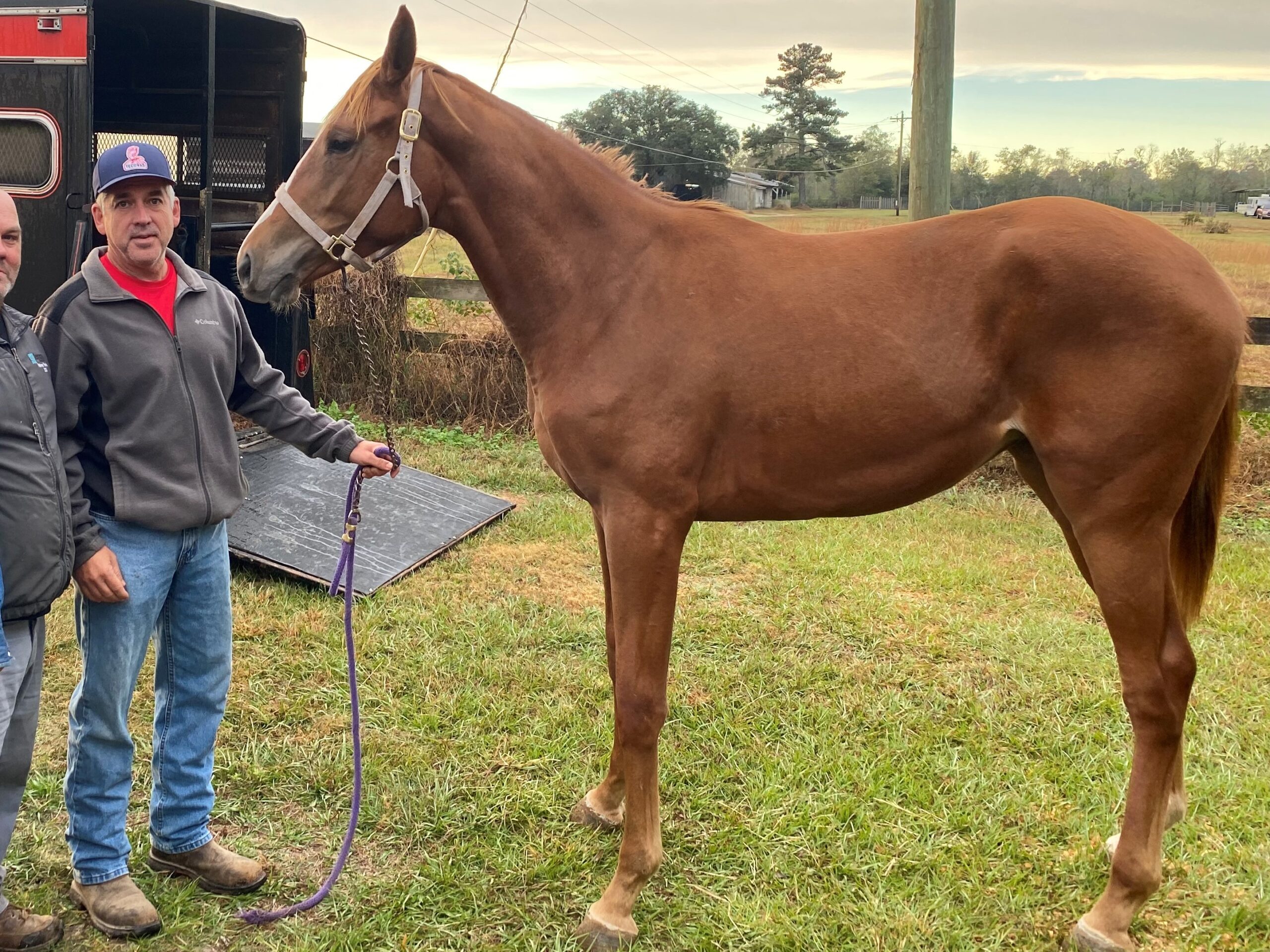
Miles Henry (legal name: William Bradley) is a professional horseman based in Folsom, Louisiana. He holds Louisiana Racing License #67012 and has spent over three decades managing Thoroughbreds at premier tracks including Fair Grounds, Delta Downs, and Evangeline Downs.
Expertise & Hands-On Experience: Beyond the track, Miles has decades of experience in specialized equine care, covering everything from hoof health and nutrition to training protocols for Quarter Horses, Friesians, and Paints. Every guide on Horse Racing Sense is rooted in this “boots-on-the-ground” perspective.
30 of their last 90 starts
Equibase Profile.

Connect with Miles: