
Last updated: September 7, 2026
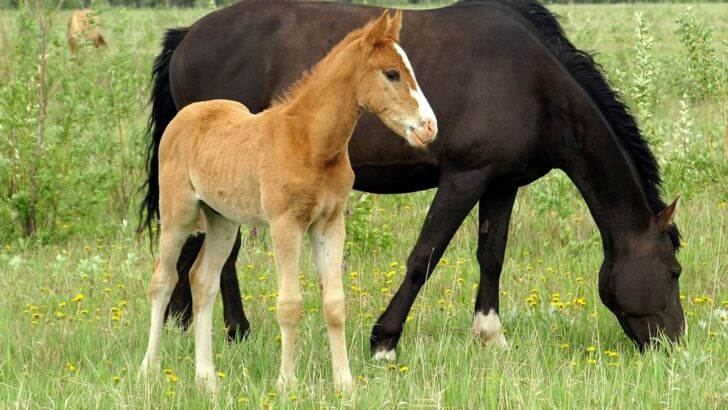
Watching a foal take its first wobbly steps is one of the best parts of raising horses. Then, sooner or later, that same foal samples its mother’s manure and makes a you wonder whether something is wrong.
Foals commonly eat their mother’s manure, a behavior called coprophagy. It is usually normal in the first couple of months of life and is not, by itself, a sign that the mare lacks milk or that the foal is sick. Researchers believe it helps establish the microbes a young horse will need as its digestive system matures and it begins using forage.
The important question is not whether you catch a foal tasting manure once or twice. It’s whether the foal is nursing, gaining weight, acting bright, and developing normally. Below, I’ll explain why foals do it, when it deserves a call to your veterinarian, and why it’s different from manure eating in an adult horse.
Why Do Foals Eat Their Mother’s Manure?
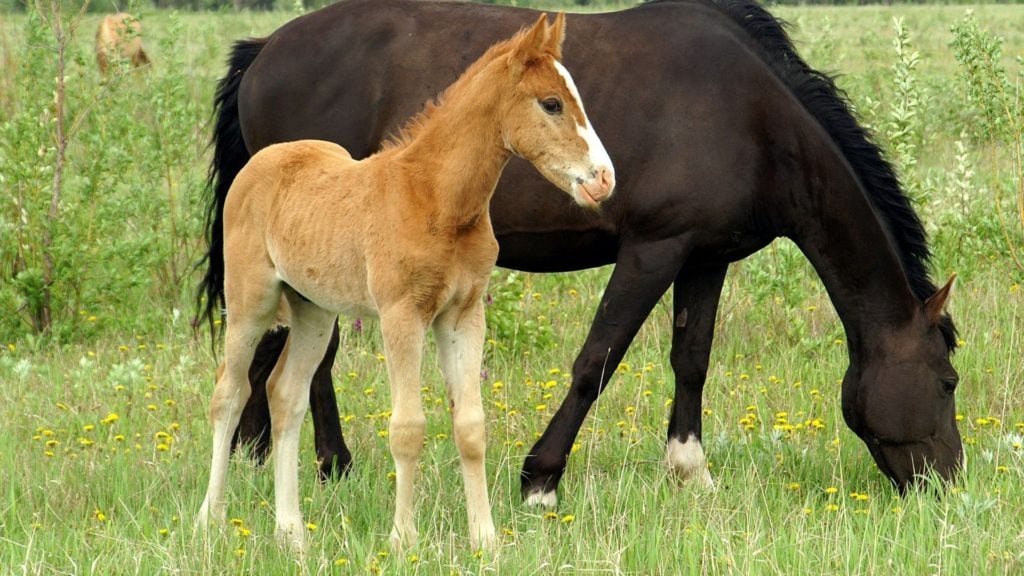
Coprophagy – manure eating – is most common during a foal’s first two months and usually becomes less frequent as the foal matures. It is normal behavior, and Kentucky Equine Research notes that it is not a sign of nutritional deficiency. Foals often show a preference for their own dam’s manure, and maternal scent cues may play a role in guiding that choice, though they may occasionally sample manure from other horses as well.
The best-supported explanation is that a foal’s manure eating helps seed and develop its hindgut microbial population as it matures toward digesting forage. Foals are born with an immature digestive system, and researchers believe the dam’s manure helps introduce microbes involved in fermentation later in life. That doesn’t mean manure is the foal’s nutrition, or that every foal must be seen eating it to develop normally.
Foals get their real nutritional and immune head start from the dam’s colostrum and milk, not from manure – a foal is born with limited natural immunity, and colostrum in the first hours of life is what actually delivers those antibodies. Manure eating is a separate, secondary behavior running alongside that, not a substitute for it.
The practical concern is parasite exposure, not the normal manure-eating behavior itself. Keep paddocks and stalls picked up as well as your setup allows, and work with your veterinarian on a parasite-control plan for the mare and foal. A good program is based on the horses, their age, the farm, and fecal testing – not simply deworming everything on a calendar, a point AAEP’s internal parasite control guidelines make clearly. Foals are particularly susceptible to Parascaris exposure from a contaminated environment, which is one more reason good sanitation matters here.

When Manure Eating Is Actually Worth Attention
A foal eating its dam’s manure in the first couple of months is not, on its own, a reason to worry or assume the mare’s milk supply is inadequate. Call your veterinarian if the foal is weak, dull, not nursing well, failing to gain weight, has diarrhea, or seems unwell. If manure eating becomes frequent in an older weanling or young horse, bring it up at your next veterinary visit so you can review diet, management, and parasite control. This article explains a normal behavior; it can’t tell you what’s wrong with an unwell foal.
| What You Notice | Usually Normal? | What to Do |
|---|---|---|
| A bright, nursing foal samples its dam’s manure in the first weeks | Yes | Usually no action needed – don’t try to stop it simply because it looks unpleasant |
| Foal is weak, dull, not nursing, losing condition, or has diarrhea | No – needs attention | Contact your veterinarian promptly |
| An adult horse begins eating manure regularly | Not typical | Review forage, management, stress, and health with a veterinarian or nutritionist |
Miles’s Take: Every foal I’ve raised has sampled manure to some degree in those first couple of months, and they’ve all grown out of it without me trying to stop them. What I pay attention to is the bigger management picture: a reasonably clean paddock, a healthy mare, a foal that’s nursing and gaining, and a veterinarian-guided parasite-control plan.
What About Adult Horses Eating Manure?
Adult horses eating manure is a different discussion. It’s less typical than normal foal coprophagy and is worth looking into, especially if the behavior is new or frequent. Start with the basics: enough long-stem forage, turnout and social contact where possible, changes in routine, body condition, manure quality, and whether the horse seems uncomfortable. A veterinarian or qualified equine nutritionist can help you sort out whether diet, management, stress, or an underlying health issue deserves attention.
Other Foal Behaviors New Owners Ask About
Manure eating isn’t the only thing that catches a new owner off guard. Two others come up often:
Snapping or lip smacking: a foal may open and close its jaw, sometimes with its head lowered, as a submissive signal toward an older horse. Horse people often call this lip smacking or snapping. It generally fades as the horse matures and doesn’t need to be corrected. See my full guide on how horses communicate for more on reading this and other body language.
Biting: usually play, self-protection, or a foal testing its place in the herd’s social order. Foals get teeth fast – around eight within two weeks of birth – so even playful nipping can genuinely hurt, and it’s worth correcting calmly but consistently from the start rather than letting it slide because “it’s just a foal.” See my full guide on why horses bite and how to stop it for more.
FAQ
Why do foals eat their mother’s poop?
Foals commonly eat their dam’s manure, especially during their first two months. This normal behavior, called coprophagy, is thought to help develop the hindgut microbes they’ll use to ferment forage as they mature. It’s not usually a sign that the mare is short on milk.
Do foals eat their mother’s poop?
Yes. Many foals sample their own dam’s manure, and research observations suggest they often prefer it over manure from other horses. The behavior usually becomes less frequent as the foal grows.
Is it bad for a foal to eat manure?
Usually not. Normal manure eating alone isn’t a reason to panic, but manure can carry parasite eggs, so good sanitation and a veterinarian-guided parasite-control plan matter. Call your veterinarian if the foal is weak, not nursing normally, failing to gain weight, has diarrhea, seems ill, or shows other concerning changes.
Why do adult horses eat poop?
Manure eating is less typical in adult horses than in young foals. If it’s new or frequent, review forage access, turnout, boredom or stress, recent management changes, and overall health with your veterinarian or an equine nutritionist.
A foal sampling its dam’s manure during the first couple of months is usually normal, not a problem by itself. Watch the foal rather than fixating on the behavior: a bright foal that nurses well and gains weight is telling you far more than a mouthful of manure. Call your veterinarian if the foal seems weak, dull, off its feed, has diarrhea, or is not developing normally.
About Miles Henry
Racehorse Owner & Author | 30+ Years in Thoroughbred Racing
Miles Henry (legal name: William Bradley) is a professional horseman based in Folsom, Louisiana. He holds Louisiana Racing License #67012 and has spent over three decades managing Thoroughbreds at premier tracks including Fair Grounds, Delta Downs, and Evangeline Downs.
Expertise & Hands-On Experience: Beyond the track, Miles has decades of experience in specialized equine care, covering everything from hoof health and nutrition to training protocols for Quarter Horses, Friesians, and Paints. Every guide on Horse Racing Sense is rooted in this “boots-on-the-ground” perspective.
30 of their last 90 starts
Equibase Profile.

Connect with Miles: